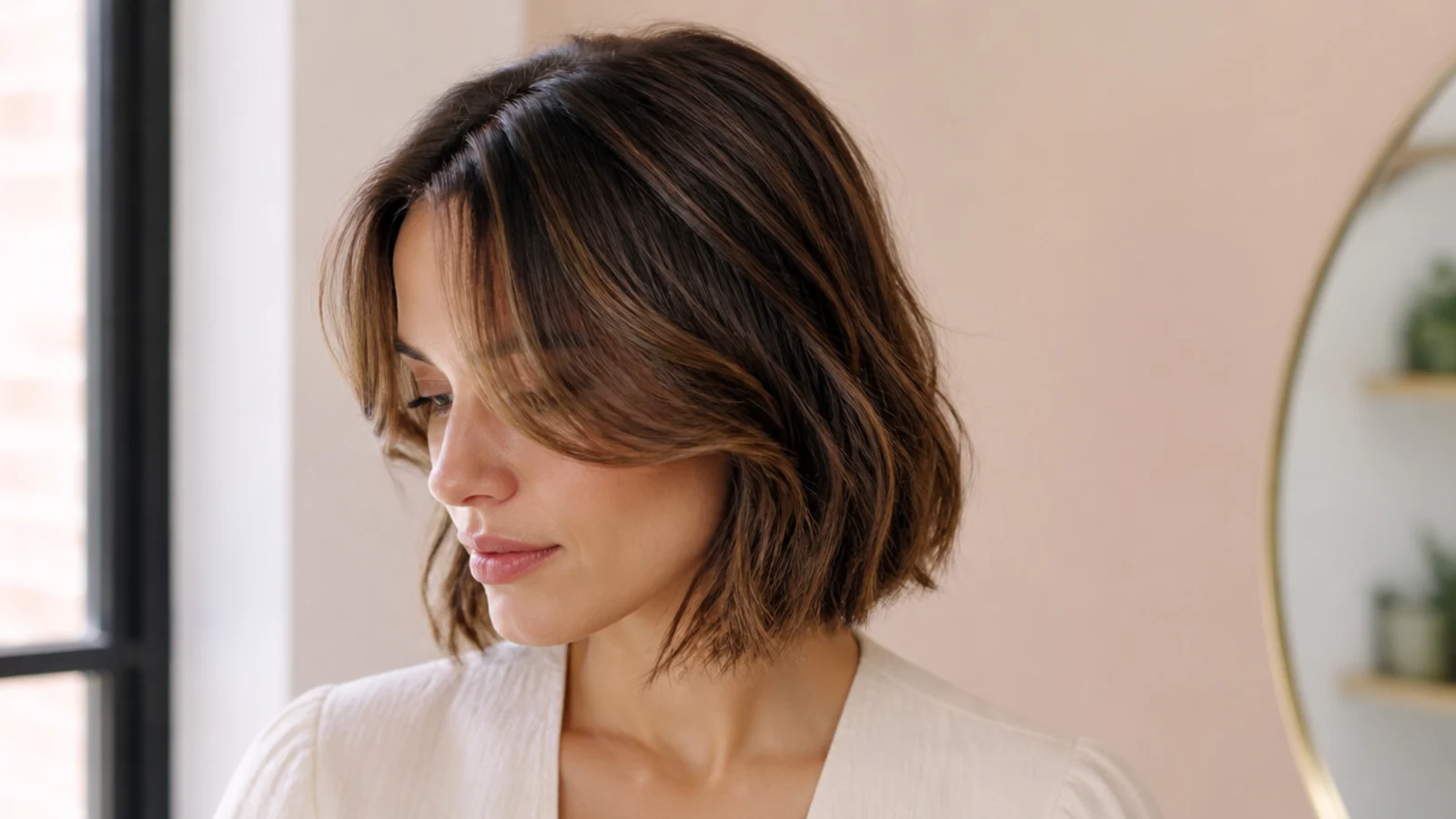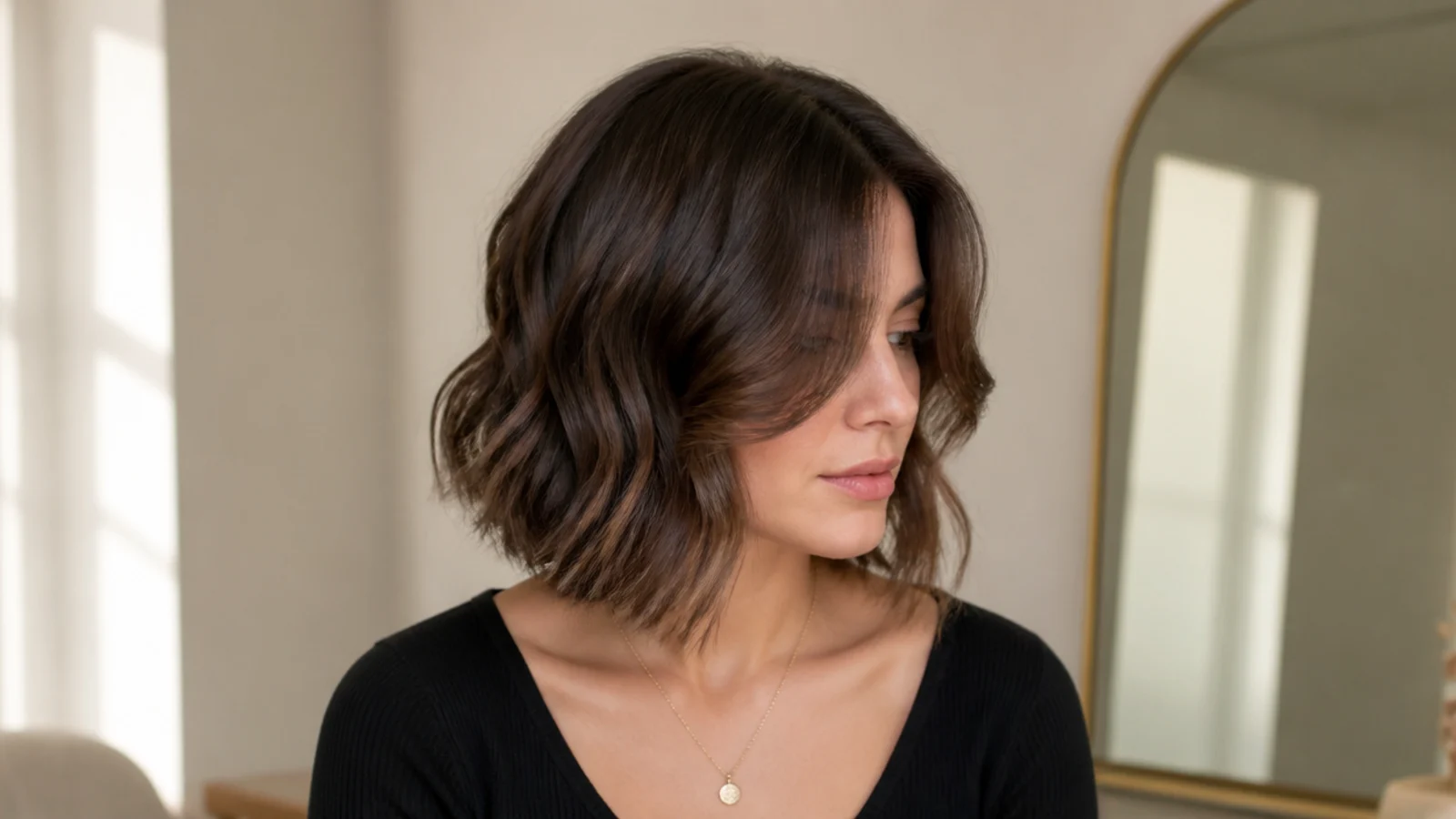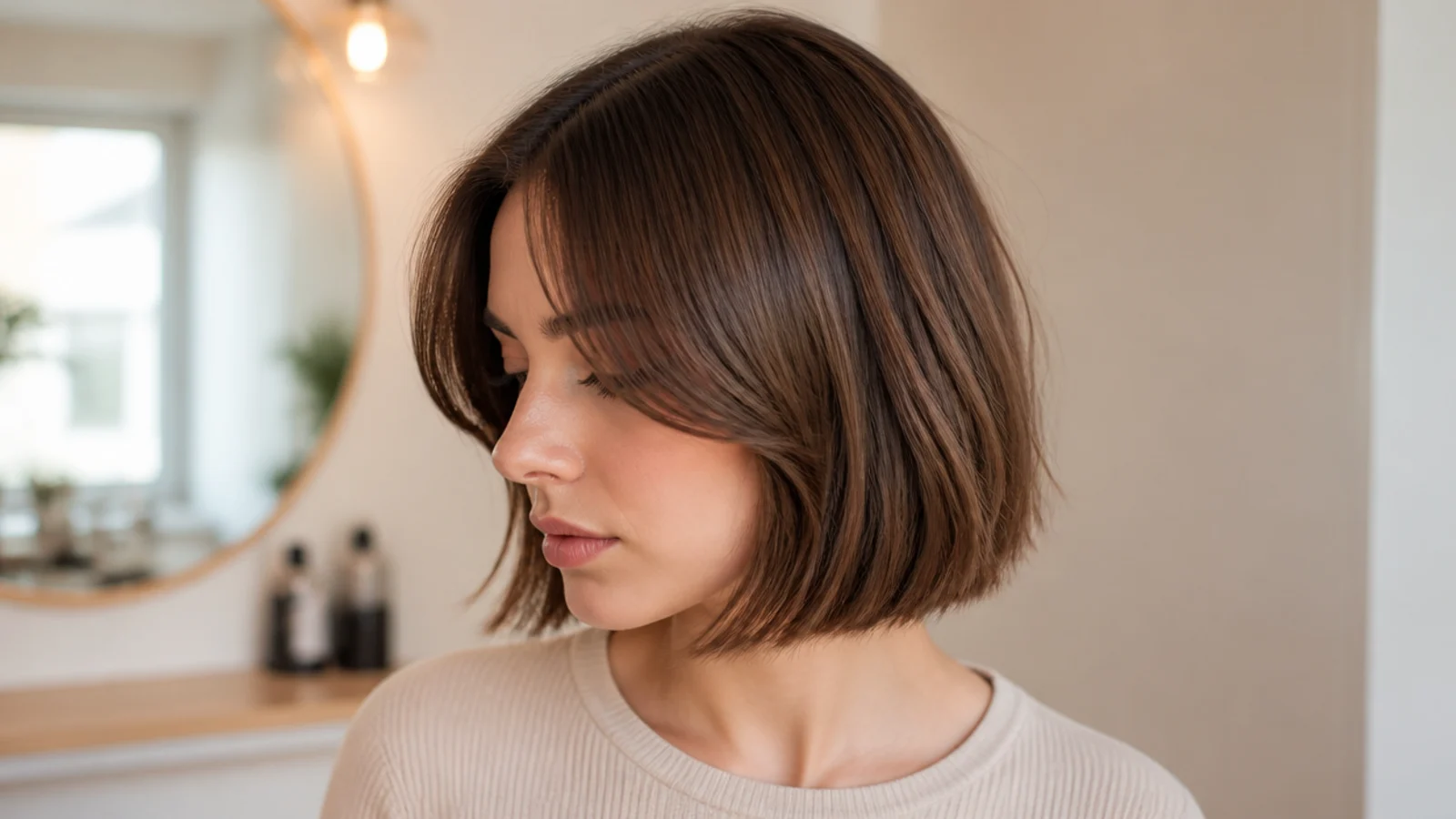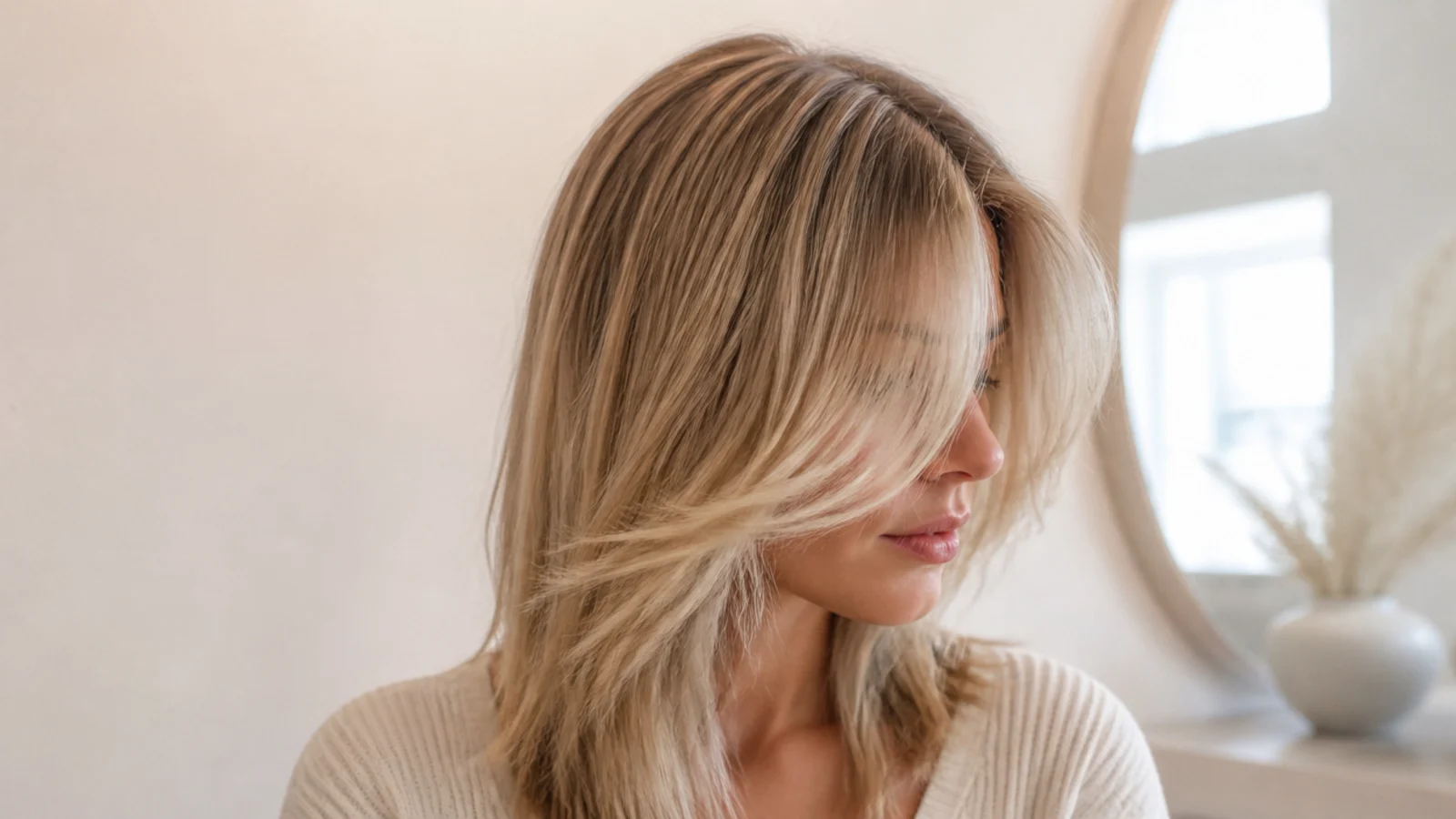
Quick Comparison
| Short Curtain Bangs on Fine Hair | Blunt Full Fringe on Fine Hair | |
|---|---|---|
| Section depth required | Shallow triangle, 1 to 1.5 inches back from the part | Deep section, 2.5 to 3 inches back, often to the crown |
| Risk of exposing scalp behind the fringe | Low; too little hair is removed to leave a thin patch | High; a deep section on fine hair thins the area behind it |
| Cutting technique | Point-cut or slide-cut ends, about half an inch deep | Cut straight across with a solid perimeter line |
| How it reads on low density | Airy and deliberate; gaps look intentional | Sparse; every gap in the solid line is visible |
| Daily styling time | 3 to 4 minutes with a 1 inch round brush on wash day | 5 to 7 minutes, and it must be restyled every single day |
| Trim interval | Every 3 to 5 weeks, usually free between paid cuts | Every 2 to 3 weeks or it drops into your lashes |
| Grow-out behavior | Blends into face-framing layers by about week 20 | Awkward for months; no layer to blend into |
| Products that work | Mousse and root-lift spray at the base, texture spray at the ends | Needs smoothing product, which weighs fine hair down fast |
| Reversibility if you hate it | Pin it back or side-part it within a week | Nothing hides it; you wait it out |
1. Baby Curtain Bangs on Fine Hair
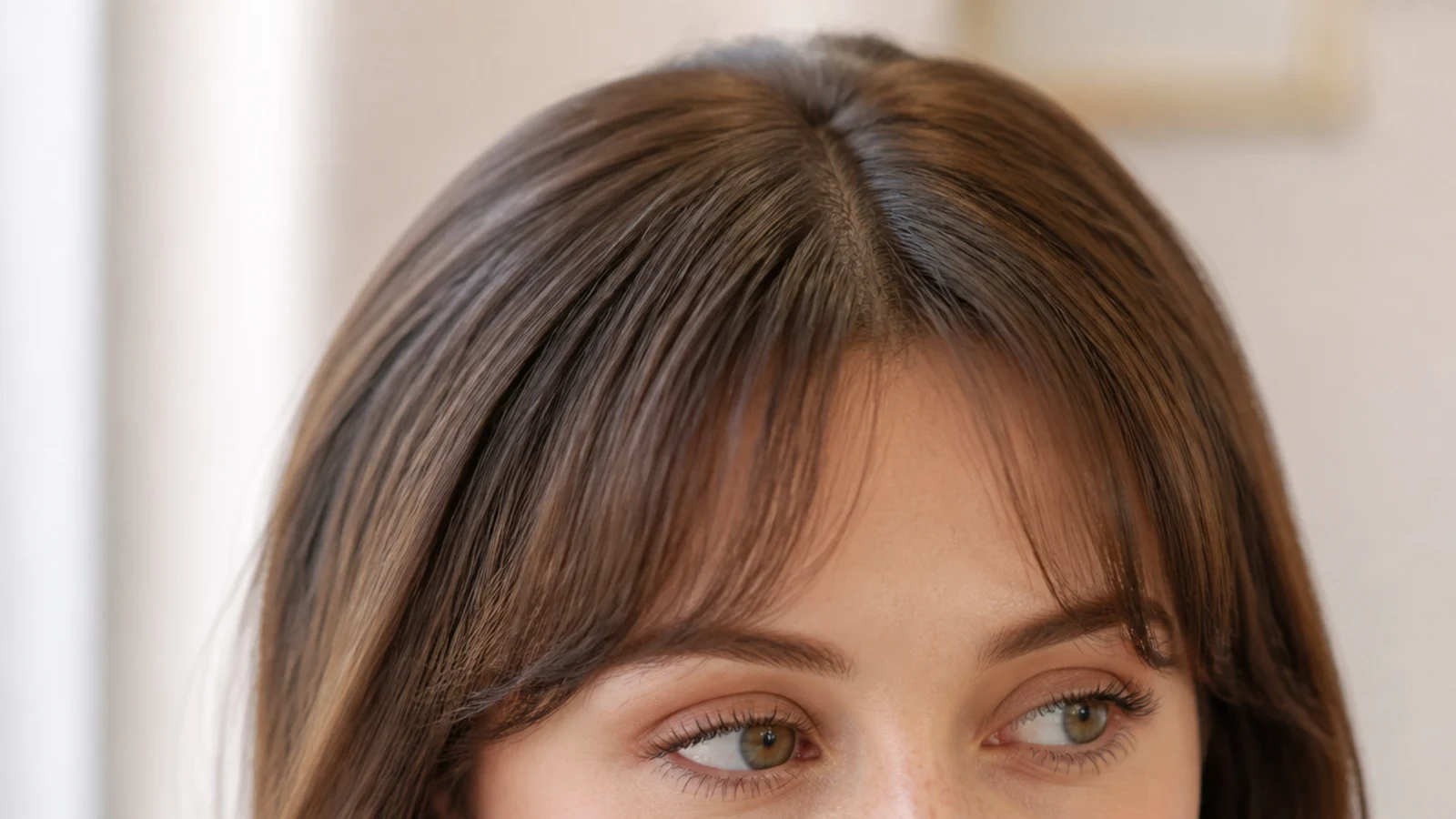
The shortest interpretation on this list: the center point sits about half an inch above the eyebrow, roughly 3 inches from the hairline, and the sides angle down to brow level at the temples. On fine hair this works because a very short fringe has almost no weight to drag it flat, so it stands off the forehead on its own with no product. It reads deliberate and fashion-forward rather than accidental. Ask for a shallow 1 inch section so you are not borrowing density from behind the hairline.
Who it suits: Oval and heart faces, high foreheads, fine straight hair that goes flat by noon.
Tip: Ask your stylist to cut it a quarter inch longer than target on the first pass, then refine dry.
2. See-Through Wispy Curtain Bangs
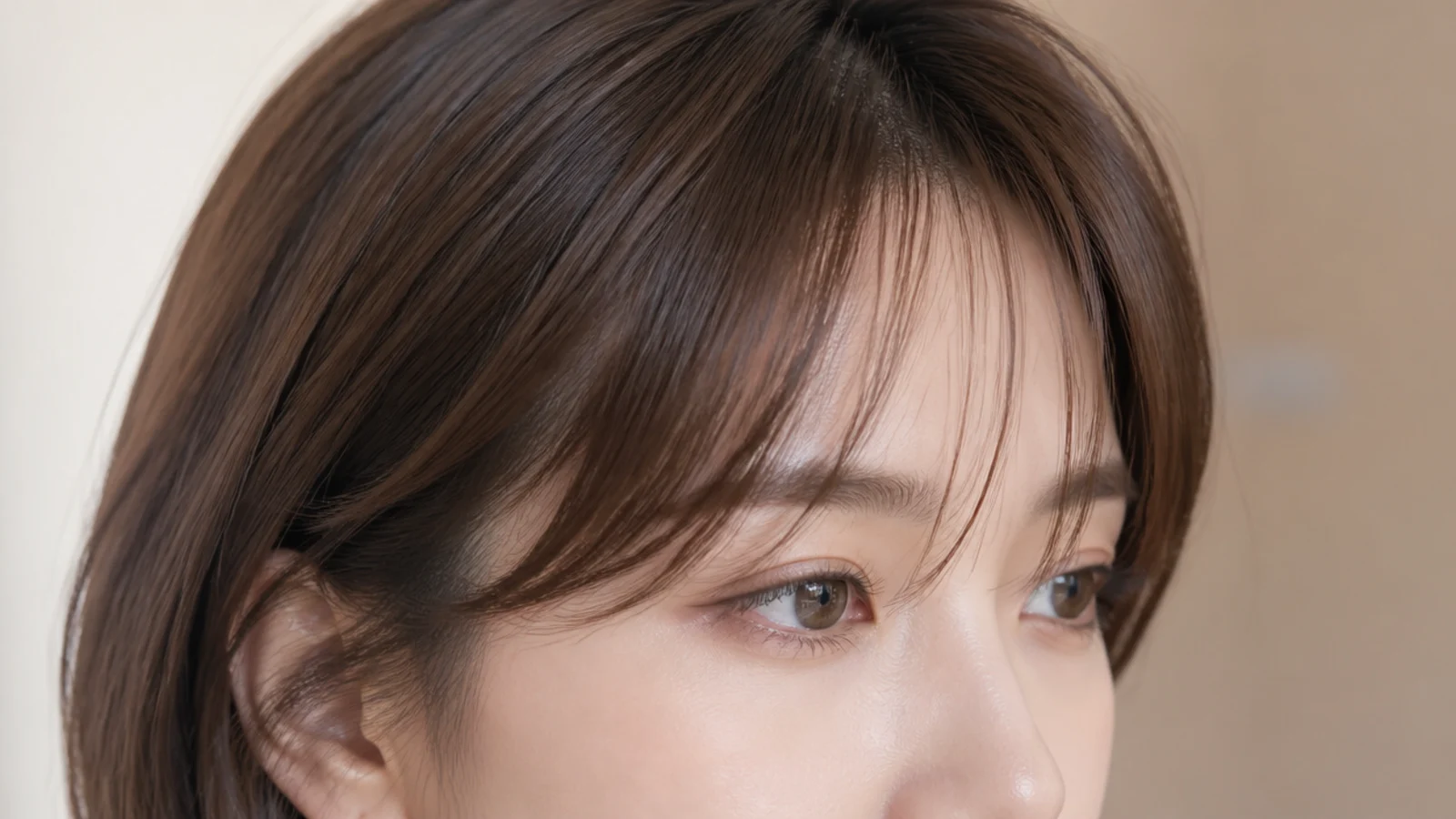
Deliberately low density, with the forehead showing through in gaps between soft strands. Counterintuitive on thin hair, but it is the safest version there is: because the look is meant to be sheer, nobody reads the gaps as sparseness. The stylist takes a narrow triangle, then slide-cuts the ends so each strand tapers to a point rather than ending in a line. Brow-grazing at the center, cheekbone at the outer edge. It also grows out more forgivingly than any other version here.
Who it suits: Very fine or low-density hair, first-time fringe wearers, Korean-inspired cuts.
Tip: Say see-through density, tapered ends, no thinning shears, so the stylist does not create frizzy regrowth.
3. Brow-Grazing Curtain Bangs on Fine Straight Hair
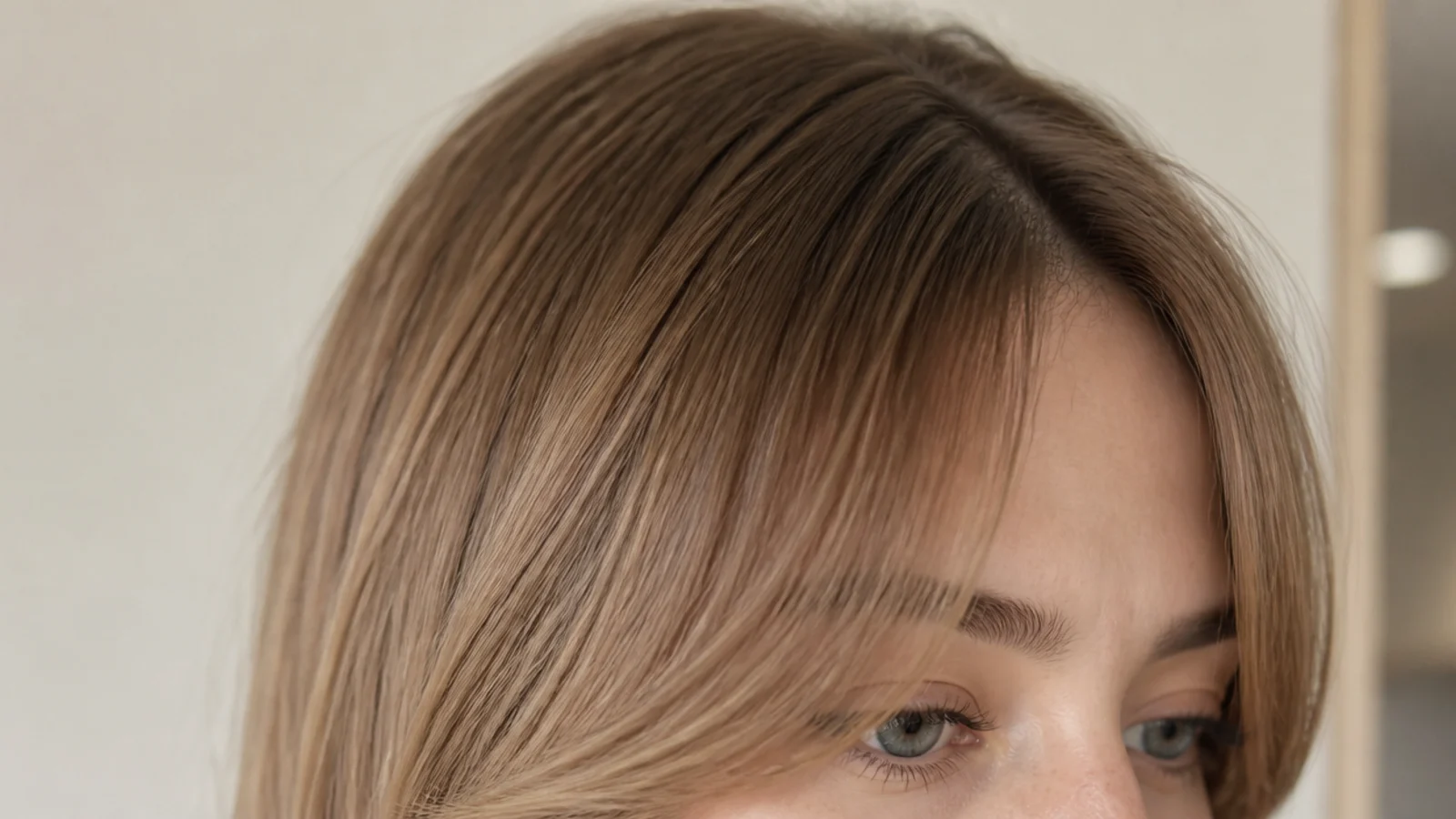
The default short curtain bang: shortest point sitting right at the eyebrow, sides sweeping out to the top of the cheekbone. Fine straight hair is the trickiest texture for it because it shows every cut line and has no natural bend, so point-cutting depth matters more here than anywhere else. Ask for the ends point-cut about half an inch deep into the hair rather than a quarter inch, which softens the perimeter enough that it never reads blunt. The cowlick and cut-line problems specific to this texture are covered in straight short curtain bangs.
Who it suits: Fine 1A to 1C hair, oval and oblong faces, anyone who wants the classic shape.
Tip: Use mousse at the root while damp; serum on straight fine bangs is what causes the midday collapse.
4. Cheekbone-Length Curtain Bangs for Fine Hair
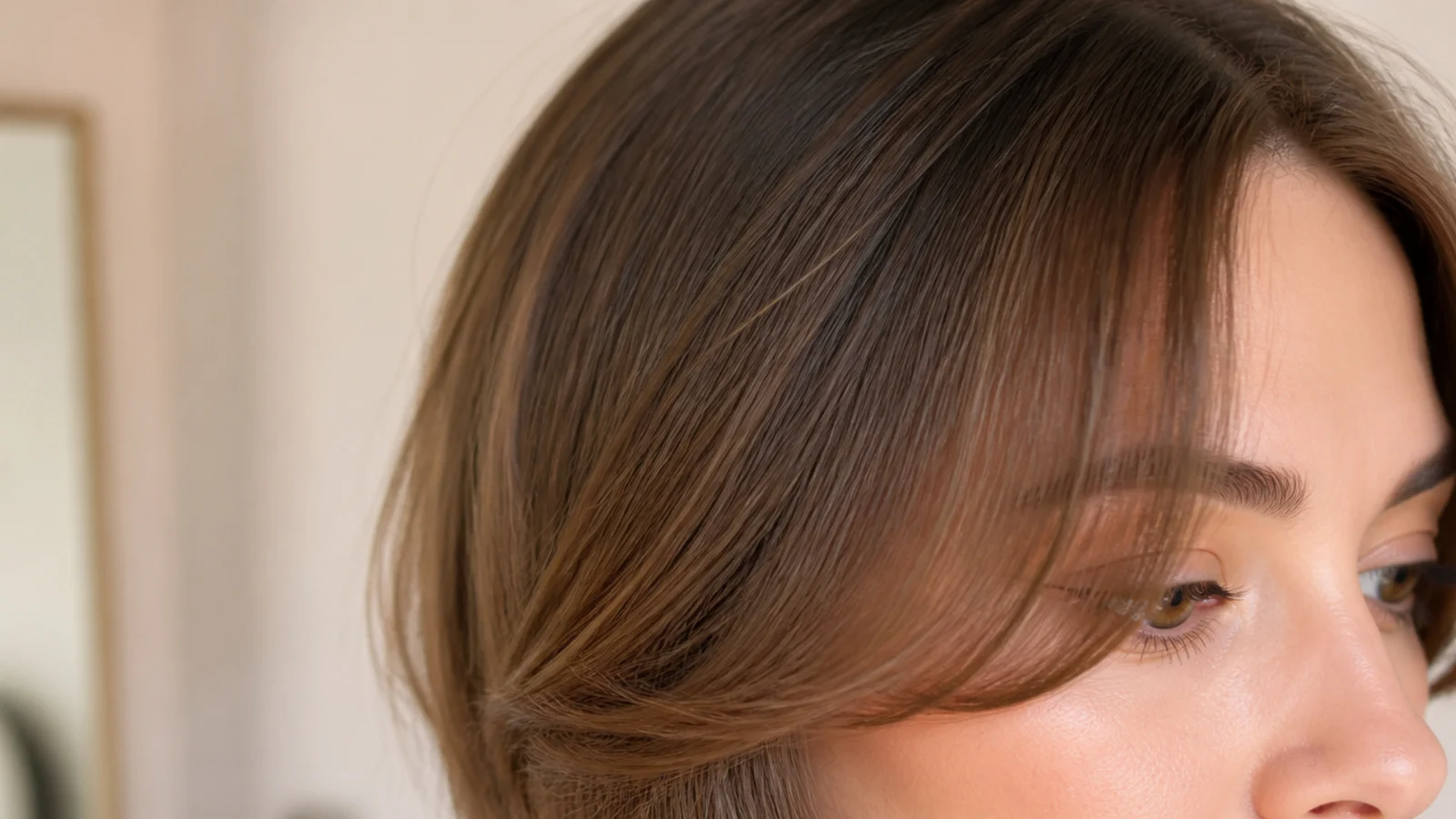
The longest reading of short, with the center point at the top of the cheekbone rather than the brow. It is the version to pick if you are nervous, because it blends into face-framing layers within about ten weeks instead of going through a lash-level awkward phase. On fine hair it carries slightly more weight, so it needs more root lift to avoid lying flat, but it gives you far more coverage across the forehead. Round faces should start here rather than at brow length, for the reasons set out in short curtain bangs for a round face.
Who it suits: Round faces, cautious first-timers, fine hair that already has long layers.
Tip: Lift at the root for a full 20 seconds per side before you start sweeping the brush outward.
5. Curtain Bangs on a Fine-Haired French Bob
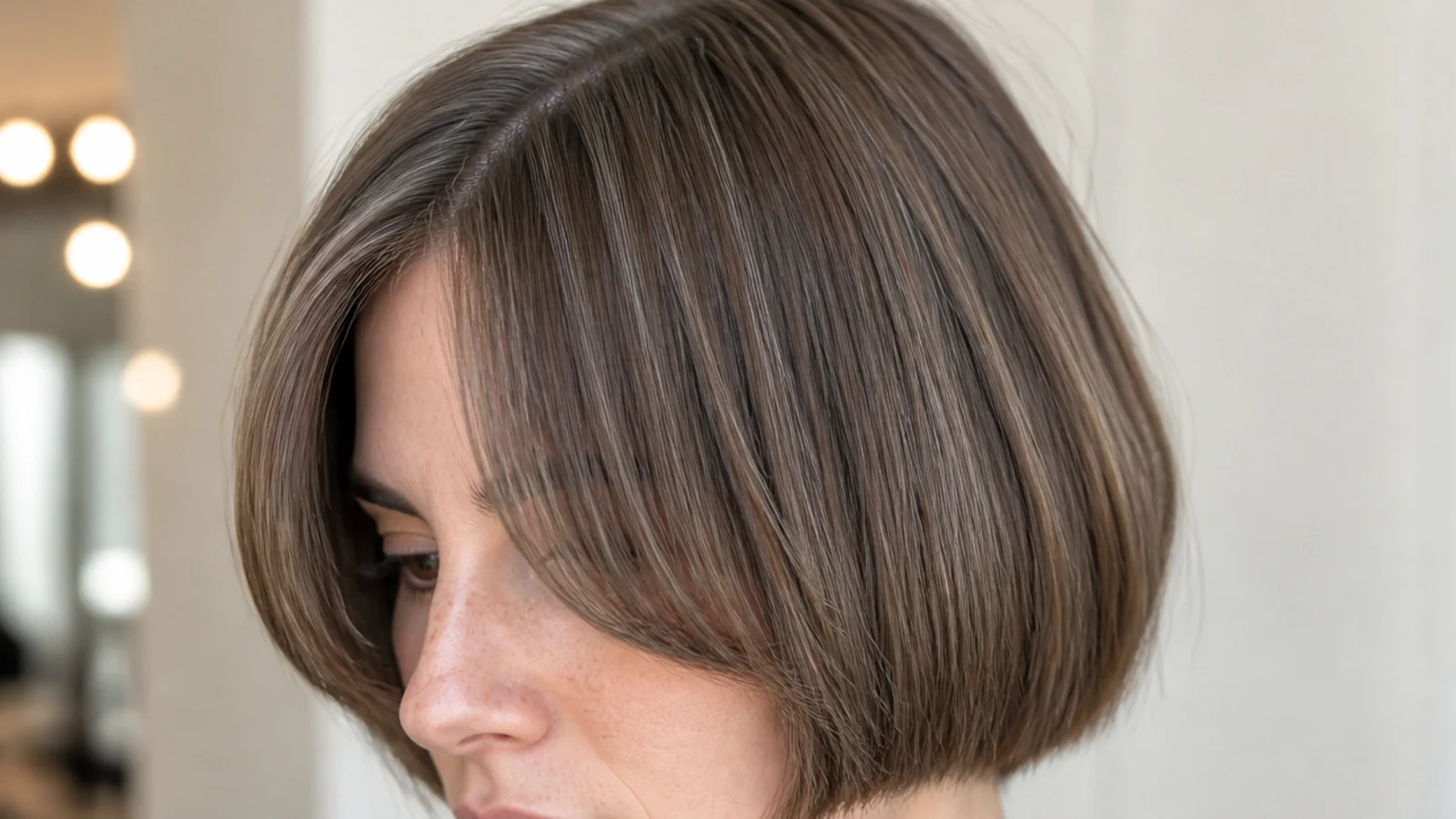
A chin-length bob cut with one blunt perimeter line, paired with a wispy brow-grazing fringe. The contrast is the whole trick: a solid bottom edge makes fine hair look denser overall, while the airy fringe keeps the front soft. Because the bob removes length, all your remaining density concentrates into a shorter section, which is the single most reliable way to make fine hair look thicker. Keep the fringe density low so the two elements do not compete. More at short curtain bangs with a bob.
Who it suits: Fine hair under shoulder length, square and heart faces, low-maintenance wearers.
Tip: Ask for the bob perimeter blunt and the fringe point-cut; never both blunt on fine hair.
6. Shag Layers With Short Curtain Bangs
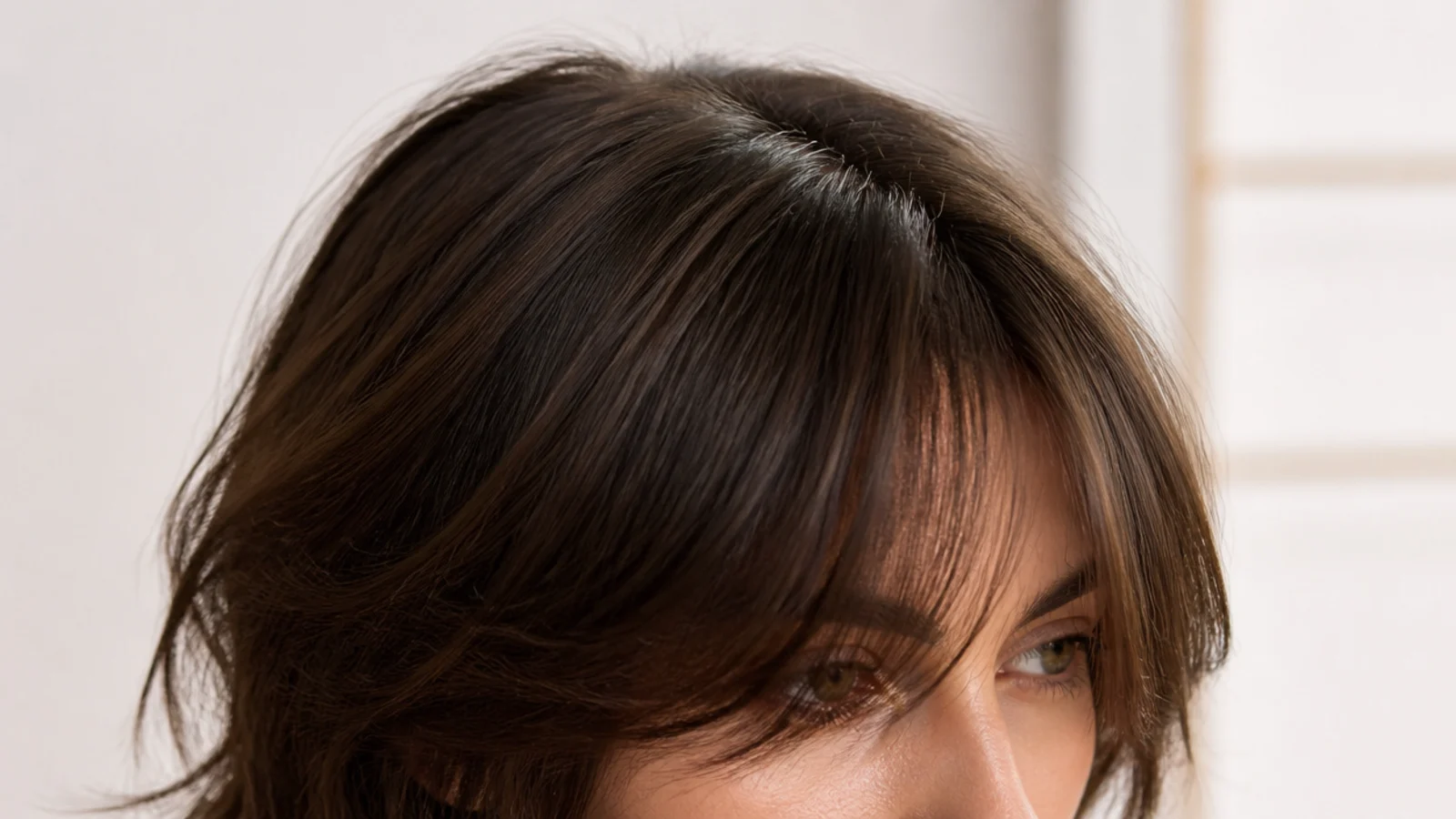
Short crown layers that start around the top of the ear and blend directly into the fringe, so the curtain bang stops looking like a separate piece and becomes the front of a connected shape. On fine hair a shag is polarizing: cut too aggressively it thins the ends into wisps, but cut with only two or three layer lengths it builds visible height at the crown. Ask for layers that stop at the cheekbone and connect outward, not for heavy internal texturizing.
Who it suits: Fine wavy hair, oval faces, anyone who wants volume without daily blow-drying.
Tip: Say connected layers, minimum internal texturizing, so the stylist does not remove weight you need.
7. Short Curtain Bangs With a Fine-Hair Lob
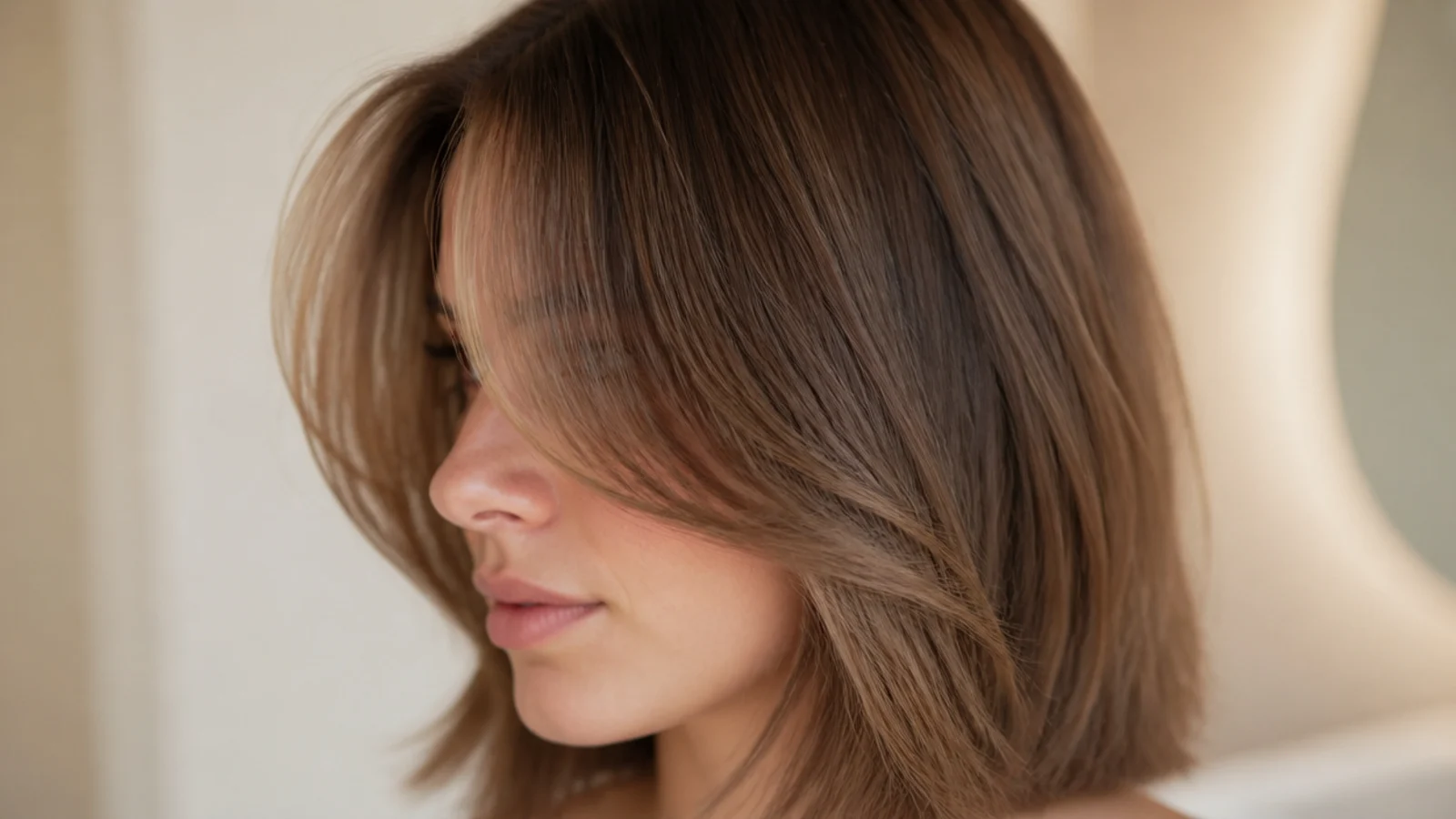
A collarbone-length lob with a blunt or barely-graduated perimeter and a brow-to-cheekbone fringe. This is the most wearable pairing on the list because the lob keeps enough length for a ponytail while sitting above the point where fine hair starts to look stringy, usually about two inches below the collarbone. The fringe adds the face-framing detail a lob otherwise lacks. If you are between lengths, mid-length haircuts for fine hair covers the trade-offs.
Who it suits: Fine hair that needs ponytail length, oblong and heart faces, office settings.
Tip: Keep the lob perimeter one length; graduation removes the weight line fine hair relies on.
8. Side-Swept Short Curtain Bangs
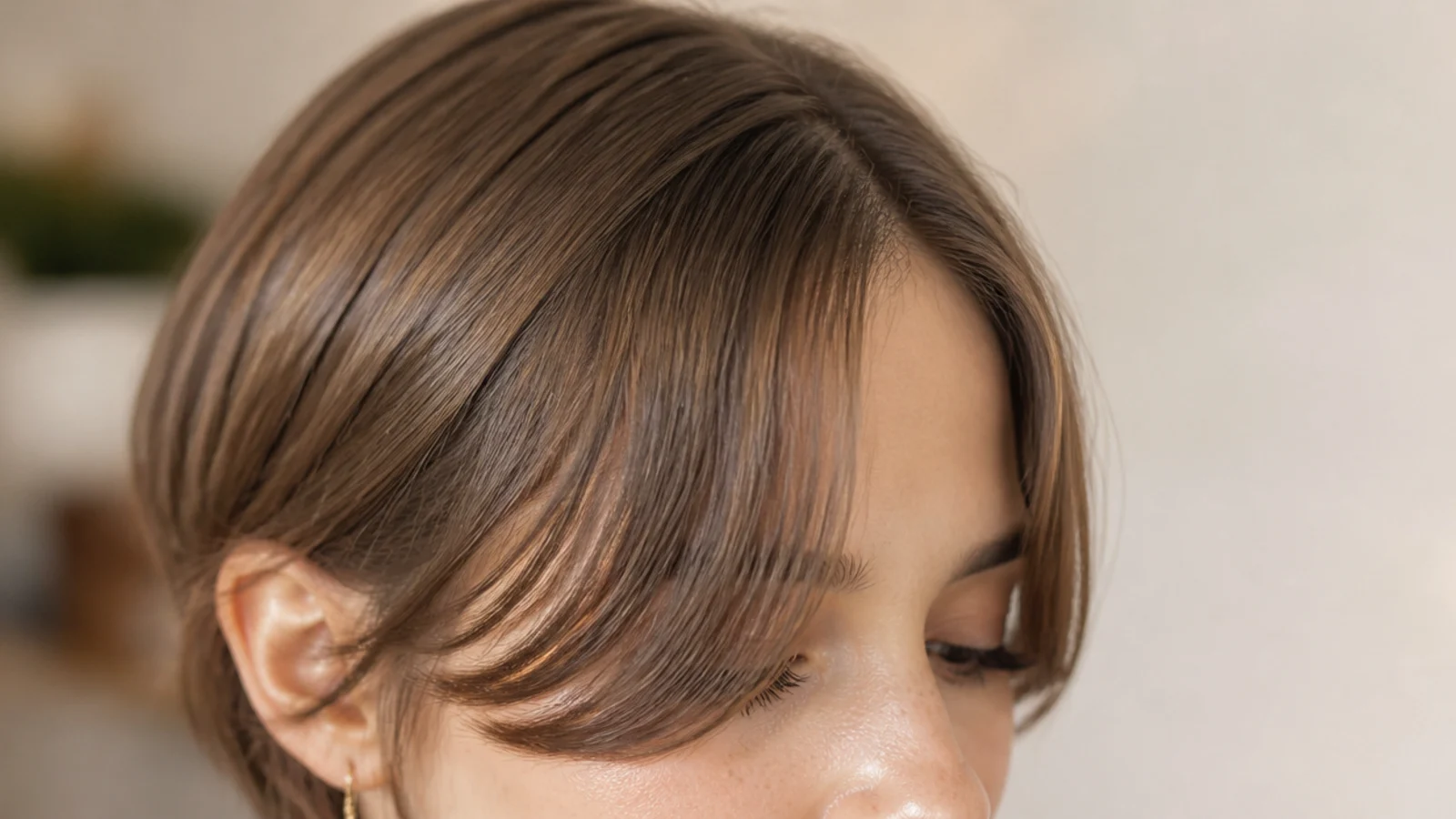
The same cut worn from an off-center part, so one side carries more hair and sweeps across at brow level while the other stays light. It is the practical answer to two fine-hair problems at once: it disguises a center-part cowlick, and stacking more hair on one side reads as more density than an even split does. You can switch between center and side parting day to day without recutting anything, which makes it the most flexible entry on this list.
Who it suits: Fine hair with a stubborn cowlick, asymmetric faces, anyone bored of a center part.
Tip: Move the part half an inch off center, no more; further and it stops reading as curtain bangs.
9. Short Curtain Bangs on Fine Wavy Hair
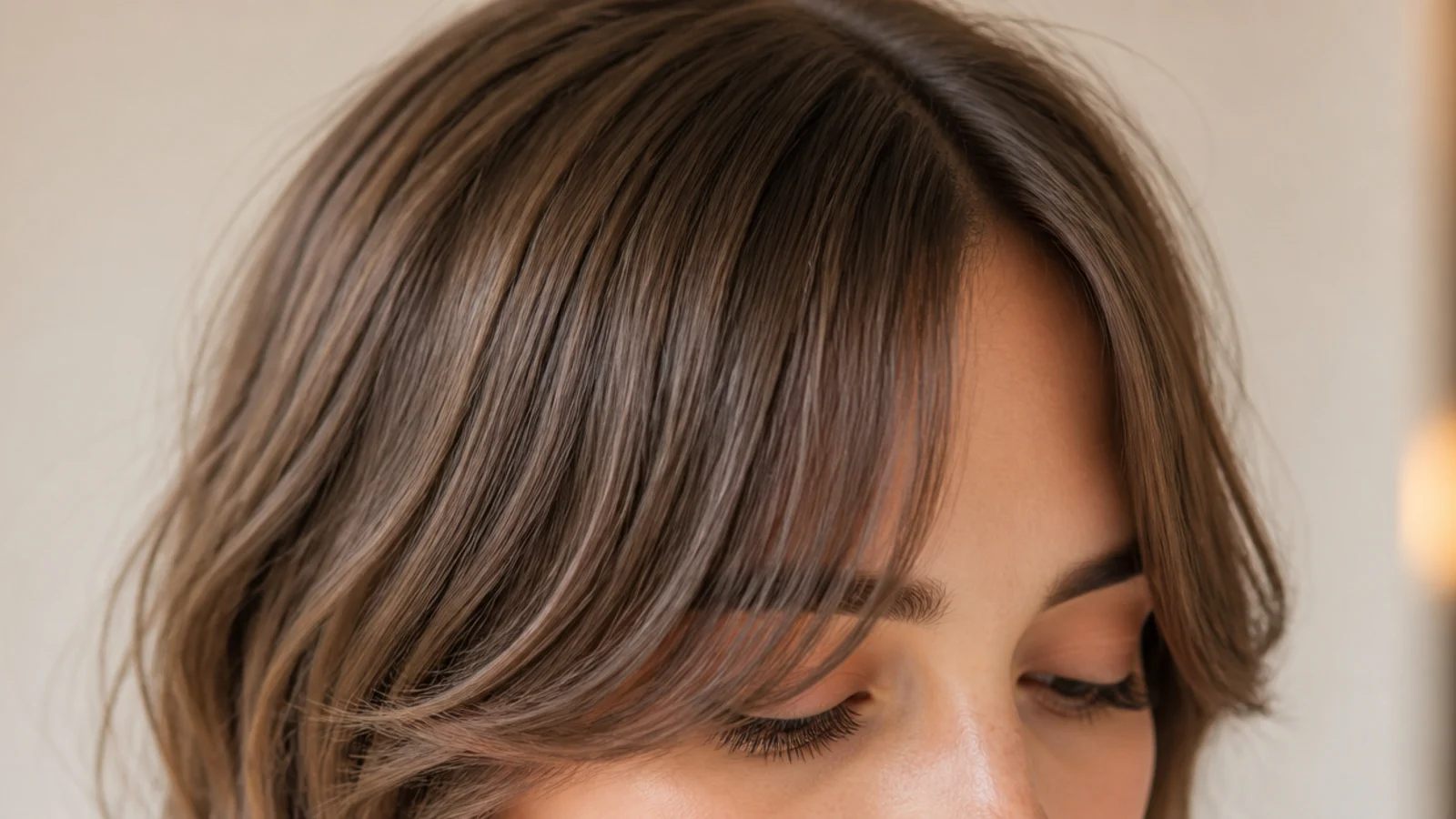
Fine hair with a 2A to 2B wave is the easiest combination for this fringe, because the natural bend does the outward sweep that straight hair has to fake with a brush. The catch is springback: a wavy fringe pulls up roughly half an inch as it dries, so it has to be cut dry, in its natural pattern, and left slightly long on the first pass. Diffuse rather than round-brush if you want to keep the wave. Full springback math in wavy short curtain bangs.
Who it suits: Fine 2A to 2B waves, air-dry devotees, low-effort routines.
Tip: A dime of mousse scrunched into the damp fringe holds the bend without adding any weight.
10. Root-Lifted Short Curtain Bangs
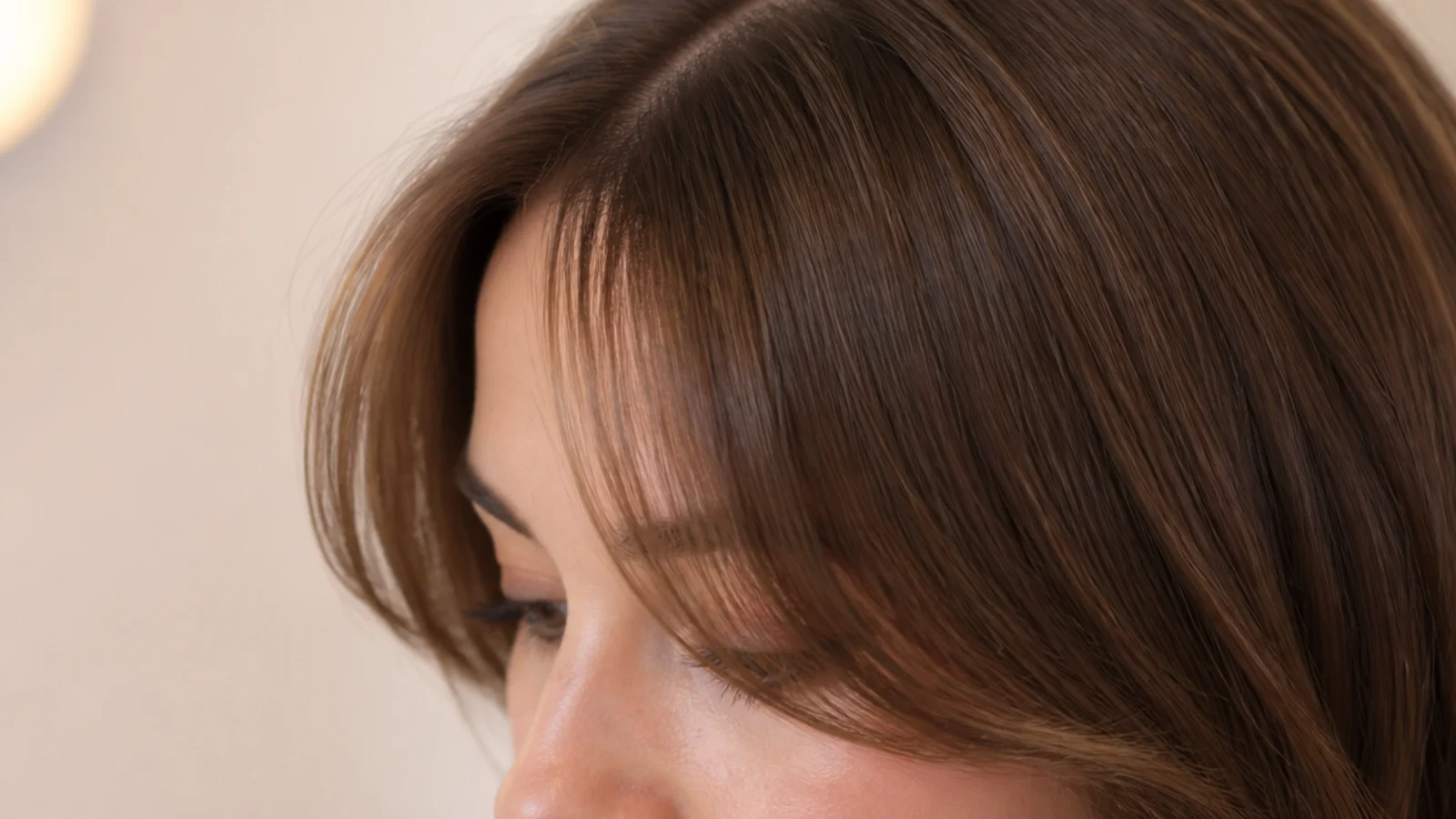
Less a cut than a finish, and the one that changes fine hair the most. The fringe is dried with the nozzle aimed up and back at the roots, then a 1 inch round brush sweeps each half away from the center and toward the temple, held for a cool shot at the end. The result is a fringe that stands off the forehead by about half an inch instead of lying against it. Root-lift spray or mousse at the base only, never through the lengths.
Who it suits: Fine straight hair that collapses by lunchtime, flat crowns, humid climates.
Tip: Dry the fringe first, before the rest of your hair, while it is still genuinely soaking wet.
11. Micro Curtain Bangs for Very Fine Hair
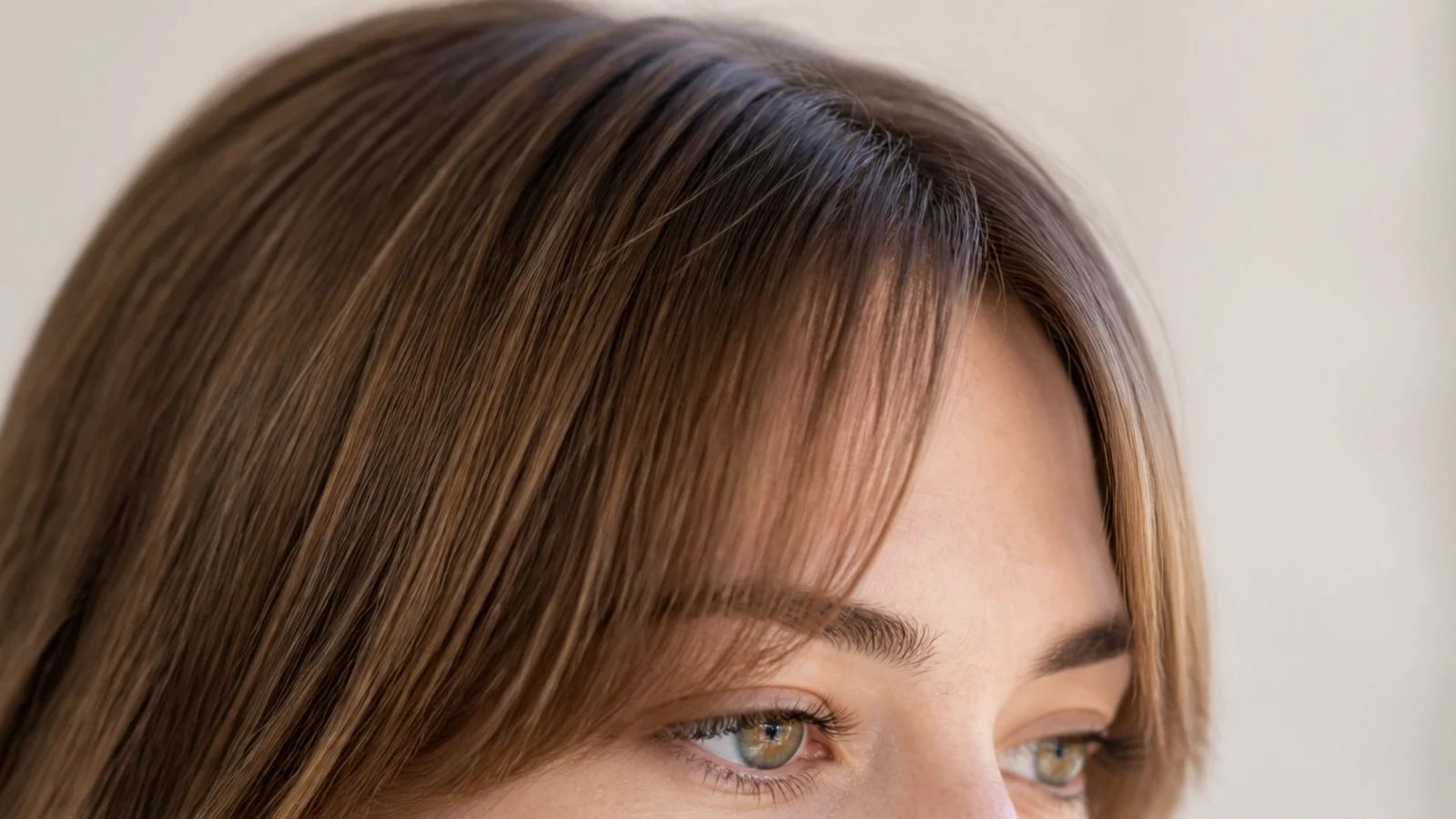
A curtain bang taken from an unusually narrow triangle, out only to the inner corner of each eyebrow rather than to the temples, and cut about 1 inch deep. It exists for hair fine enough that a standard section would leave a visible thin patch behind the fringe. Because so little hair is involved, the whole fringe weighs almost nothing and stays lifted all day. It reads delicate rather than sparse as long as the ends are tapered.
Who it suits: Genuinely low-density hair, fine hair with a visible part line, postpartum regrowth.
Tip: If you can see scalp through the top of your part in daylight, this is the only version to try.
12. Short Curtain Bangs on a Fine-Hair Pixie
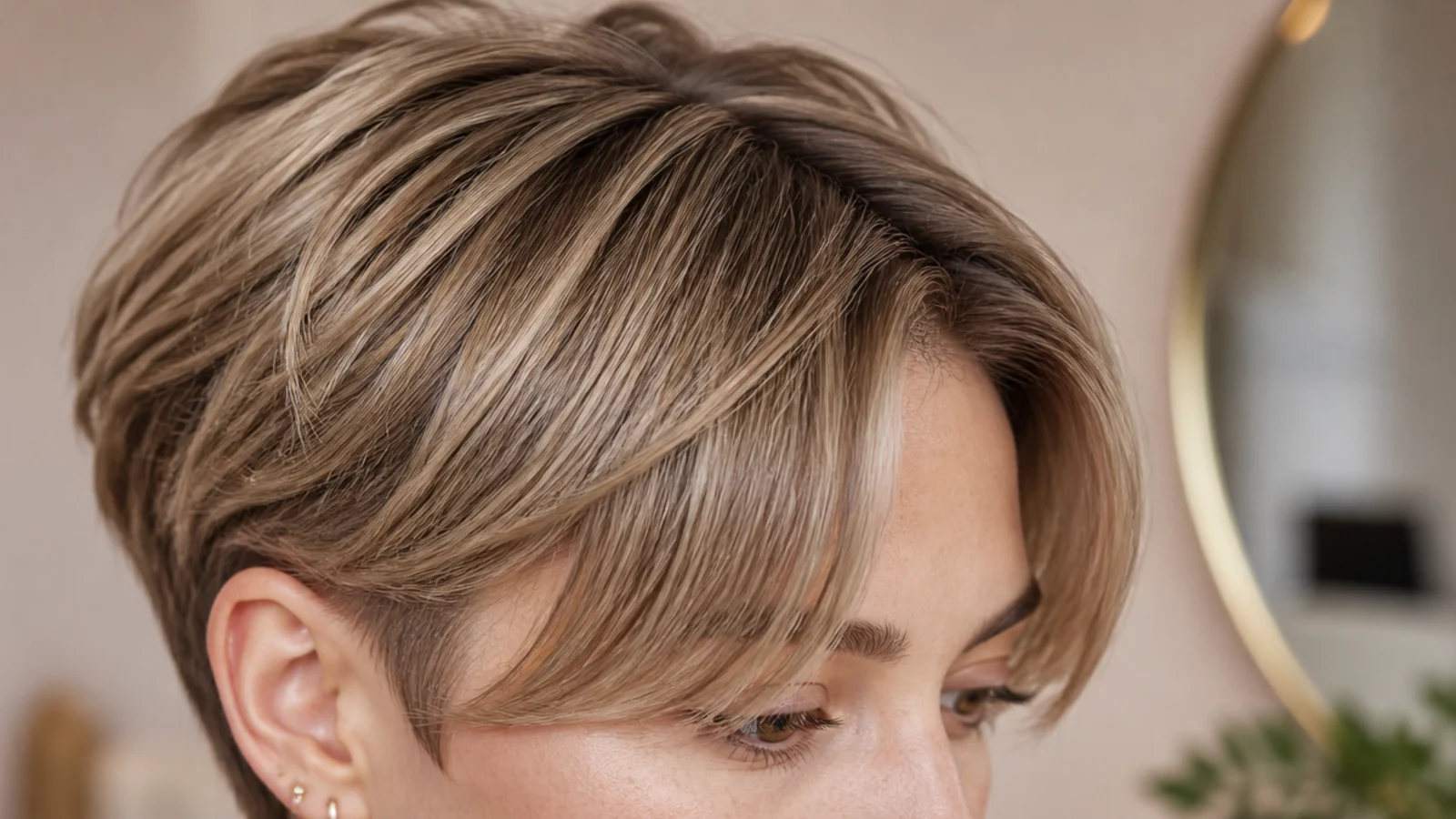
A pixie with the front section left long enough to part down the middle and sweep outward past the brow, while the back and sides stay cropped to about an inch. On fine hair a pixie is the maximum-density illusion, because removing almost all the length leaves nothing to lie flat. The curtain fringe stops it looking severe and keeps a soft frame around the eyes. Styling is 90 seconds with a dab of paste on the fingertips, no brush required. If you are weighing a pixie against a bob first, bob haircuts lays out the lengths.
Who it suits: Fine hair of any wave pattern, strong bone structure, minimal-routine mornings.
Tip: Ask for the front section left at least 4 inches so it still parts and sweeps rather than sticking up.
13. Soft Blended Curtain Bangs for Fine Hair
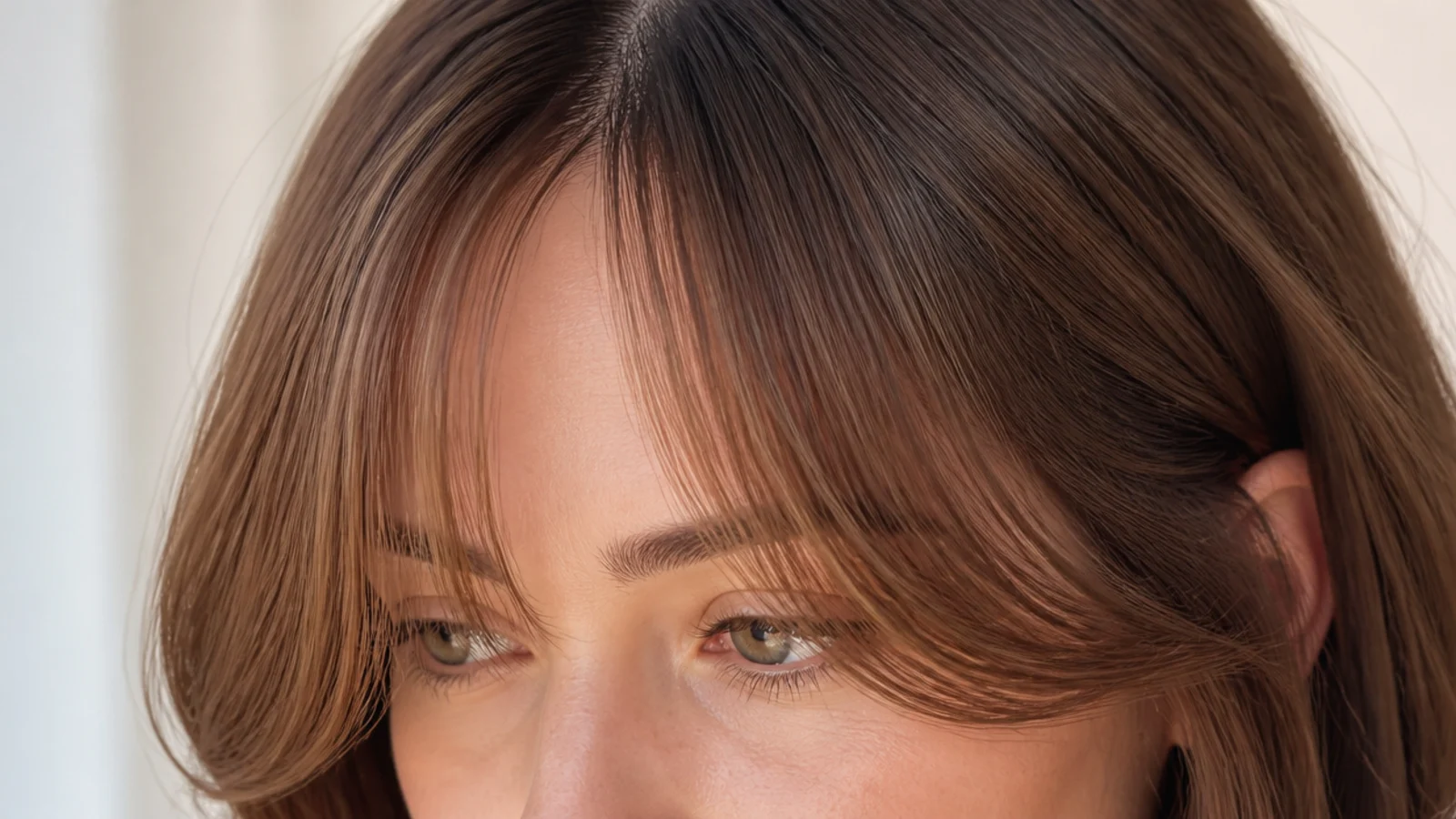
Medium density with tapered ends that merge seamlessly into the first face-framing layer, so there is no visible line where the fringe stops. Soft sits between wispy and blunt: more coverage than see-through, none of the hard perimeter that makes fine hair look thin. The blending is done with slide cutting down the outer edges rather than with thinning shears. It is the version that survives a grow-out best, because there is no step to disguise.
Who it suits: Fine hair with existing layers, square jaws, anyone who dislikes obvious fringes.
Tip: Ask for the outer edges slide-cut into the layers so there is no shelf when you tuck it behind an ear.
14. Face-Framing Highlights With Short Curtain Bangs
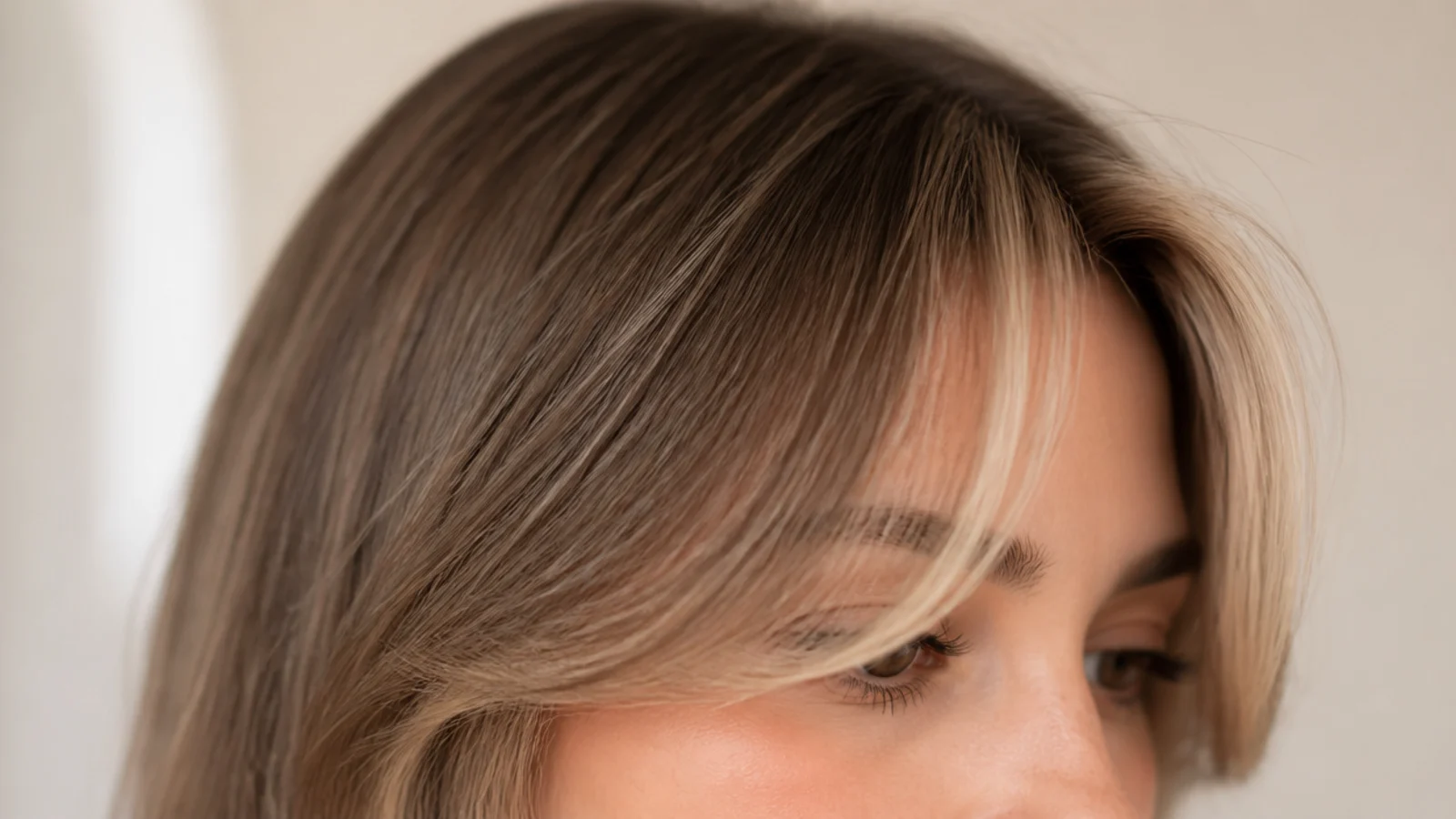
Two to four fine foils placed through the fringe and the first inch behind it, taken two shades lighter than your base. Color contrast at the front does something a cut cannot: multiple tones reflect light at different points along each strand, which reads as more strands. On fine hair this is the cheapest volume trick available, usually 60 to 120 dollars as a partial. Keep it to a partial foil so you are not putting lightener through hair that is already fragile. It sits naturally alongside face-framing mid-length cuts.
Who it suits: Fine hair of any base color, anyone wanting fullness without a big cut.
Tip: Ask for a partial money piece, two shades up, and a bond builder in the same appointment.
15. Short Curtain Bangs With a Half-Up Style
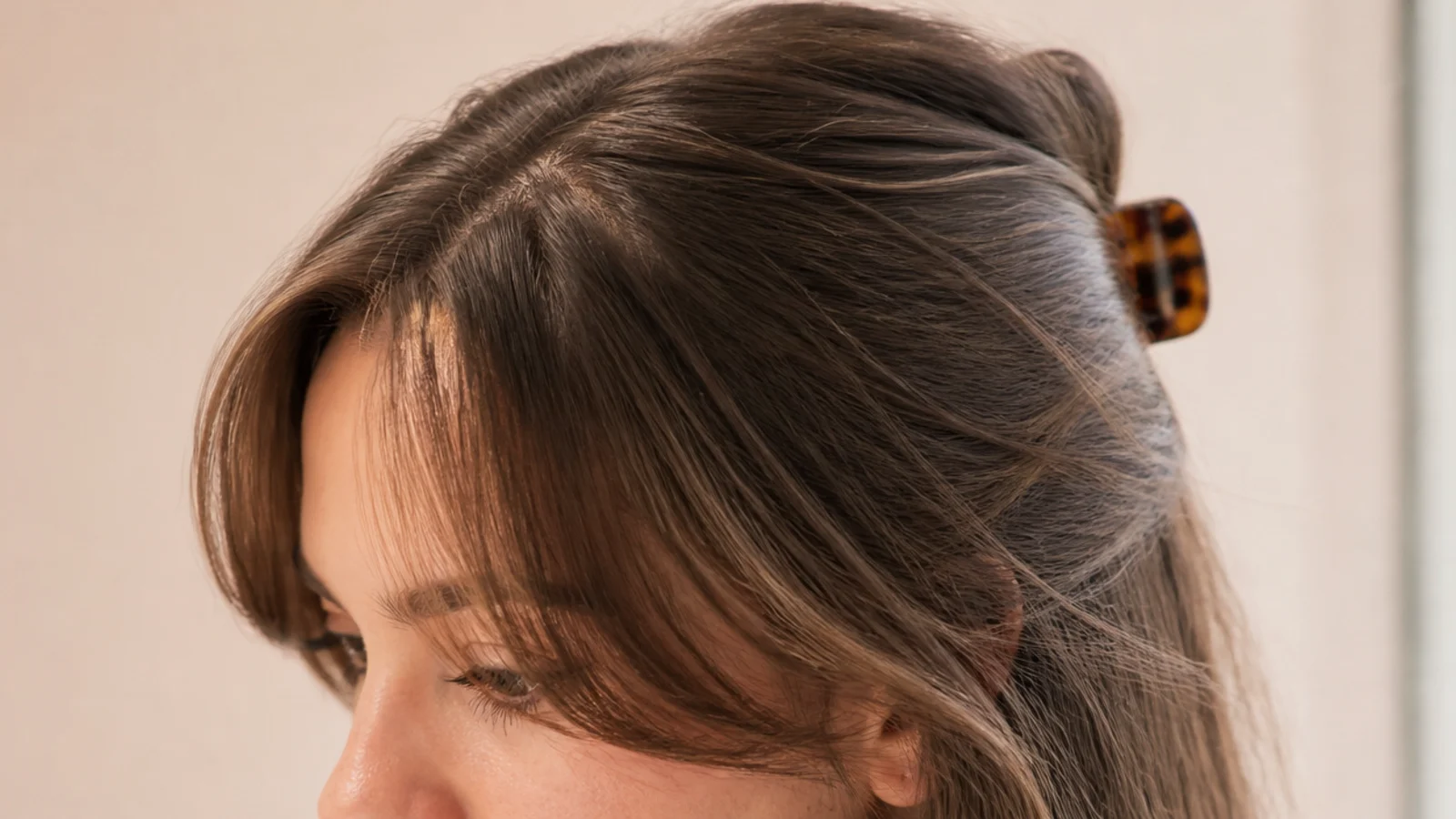
The everyday wear, not a separate cut: hair pulled into a half-up claw clip or small ponytail with the curtain bangs left out. On fine hair this solves the biggest complaint about tying hair back, which is that a bare hairline exposes how little density there is. The fringe covers the front hairline while the clip adds visible bulk at the crown. It takes about 30 seconds and works on second-day and third-day hair better than on clean hair. More fringe-friendly options are in 5 minute everyday hairstyles and ponytail styles.
Who it suits: Fine hair on non-wash days, workouts, anyone who lives in claw clips.
Tip: Backcomb the crown lightly before clipping; the fringe hides the entry point completely.
What Short Curtain Bangs Are vs a Full Fringe
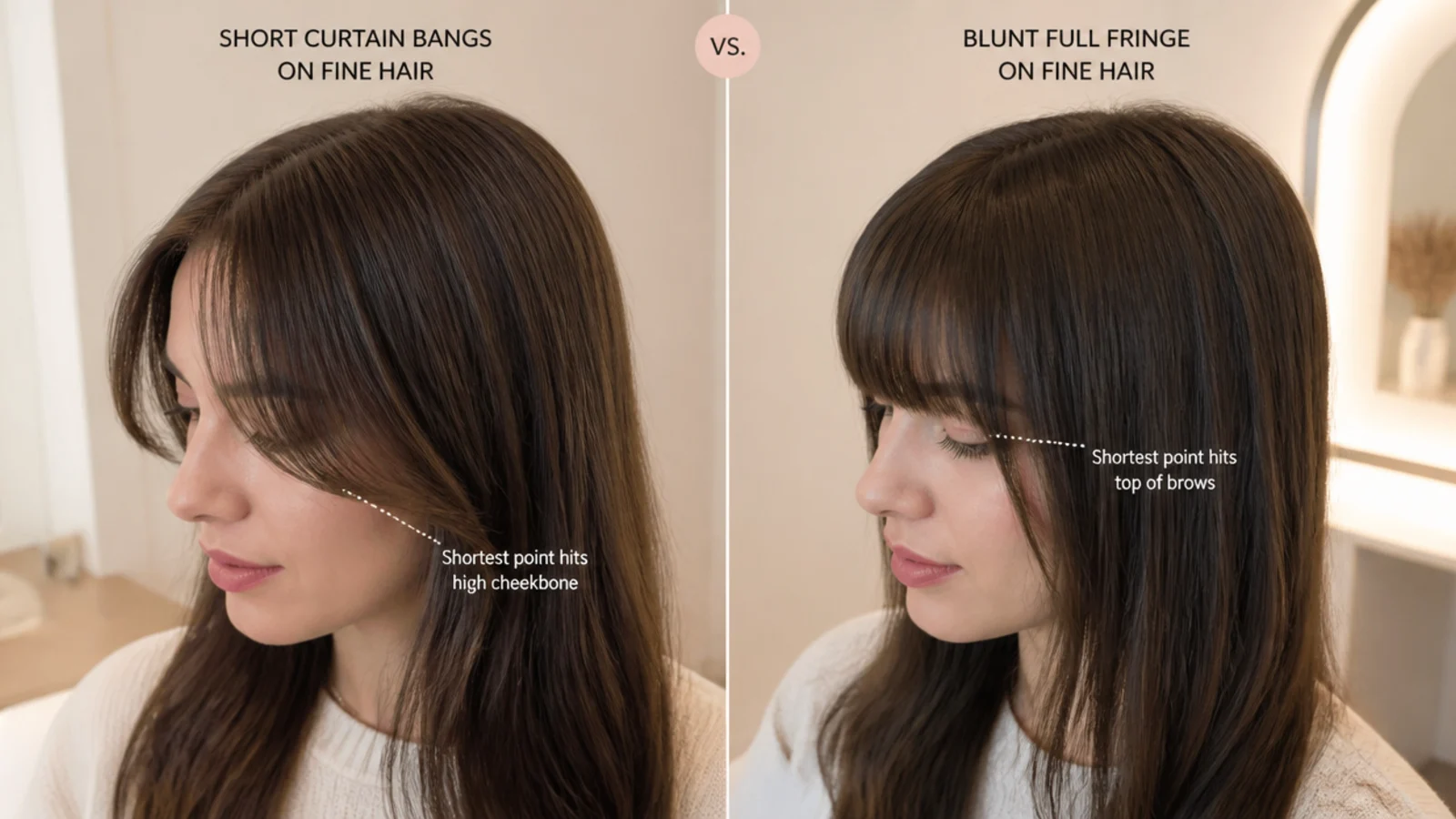
Curtain bangs are cut so the shortest hair sits at a center part and gets progressively longer toward the temples, so the two halves fall away from the face like drawn curtains. A full fringe is the opposite: one length straight across the forehead, a solid perimeter, brows hidden. On fine hair that difference is not cosmetic, it is structural. A full fringe needs a deep section, often 2.5 to 3 inches back from the hairline, and on low-density hair that borrowed section leaves a visibly thinner patch behind it. A curtain bang needs only 1 to 1.5 inches, which is why it is the fringe fine hair can actually afford. The other word worth defining is short, because almost nobody does. Short describes the fringe, not your haircut: the shortest point sits between the eyebrow and the top of the cheekbone, while long curtain bangs start at the cheekbone and run toward the jaw. You can wear short curtain bangs on waist-length hair. If you came looking for curtain bangs on short hair instead, the short curtain bangs pillar covers both readings.
Do Short Curtain Bangs Suit Fine Hair, and How Fine Is Too Fine
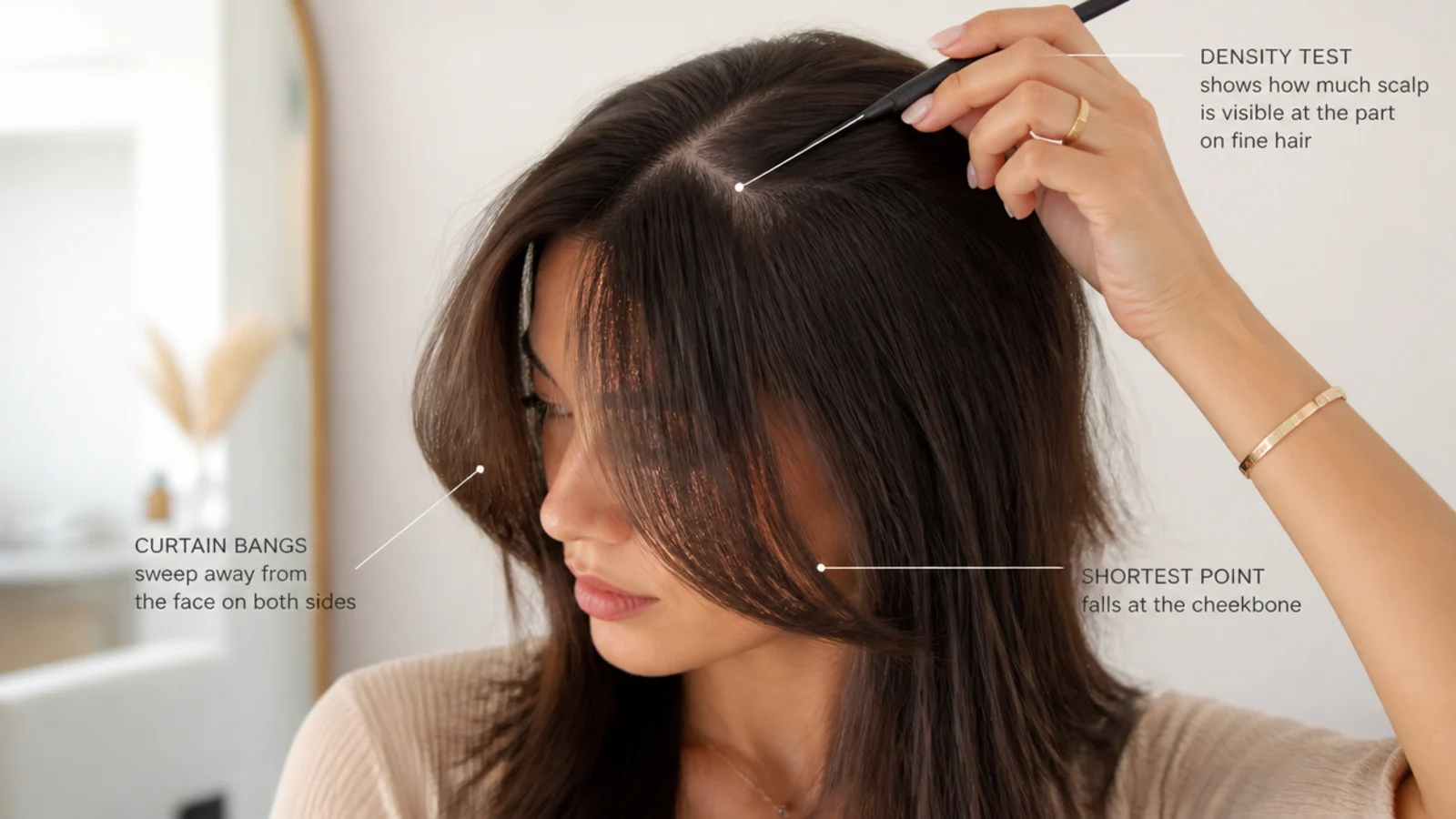
Yes, with one honest limit. Fine describes strand thickness and thin describes density, and the two do not always travel together. If your individual strands are fine but you have plenty of them, a short curtain bang is close to the ideal cut, because spreading hair across the forehead in a tapered shape reads as more coverage than the same amount piled in a block. The limit is density, not strand width. Do the part test in daylight: comb a center part and look at the first 2 inches behind the hairline. If you can see a clear stripe of scalp there before any hair is removed, a standard fringe section will widen that stripe, and you want the micro version taken only to the inner brow corners, cut 1 inch deep. Thinning, postpartum and traction-affected hairlines are a separate case. Regrowth at the front hairline is short, fine and often stands up, and it can be blended into a curtain bang beautifully, but only if the stylist works with the regrowth rather than cutting through it. Ask for a consultation first. If your density is fine overall rather than only at the front, how to style short fine hair has the volume basics.
Which Face Shapes Short Curtain Bangs Flatter on Fine Hair
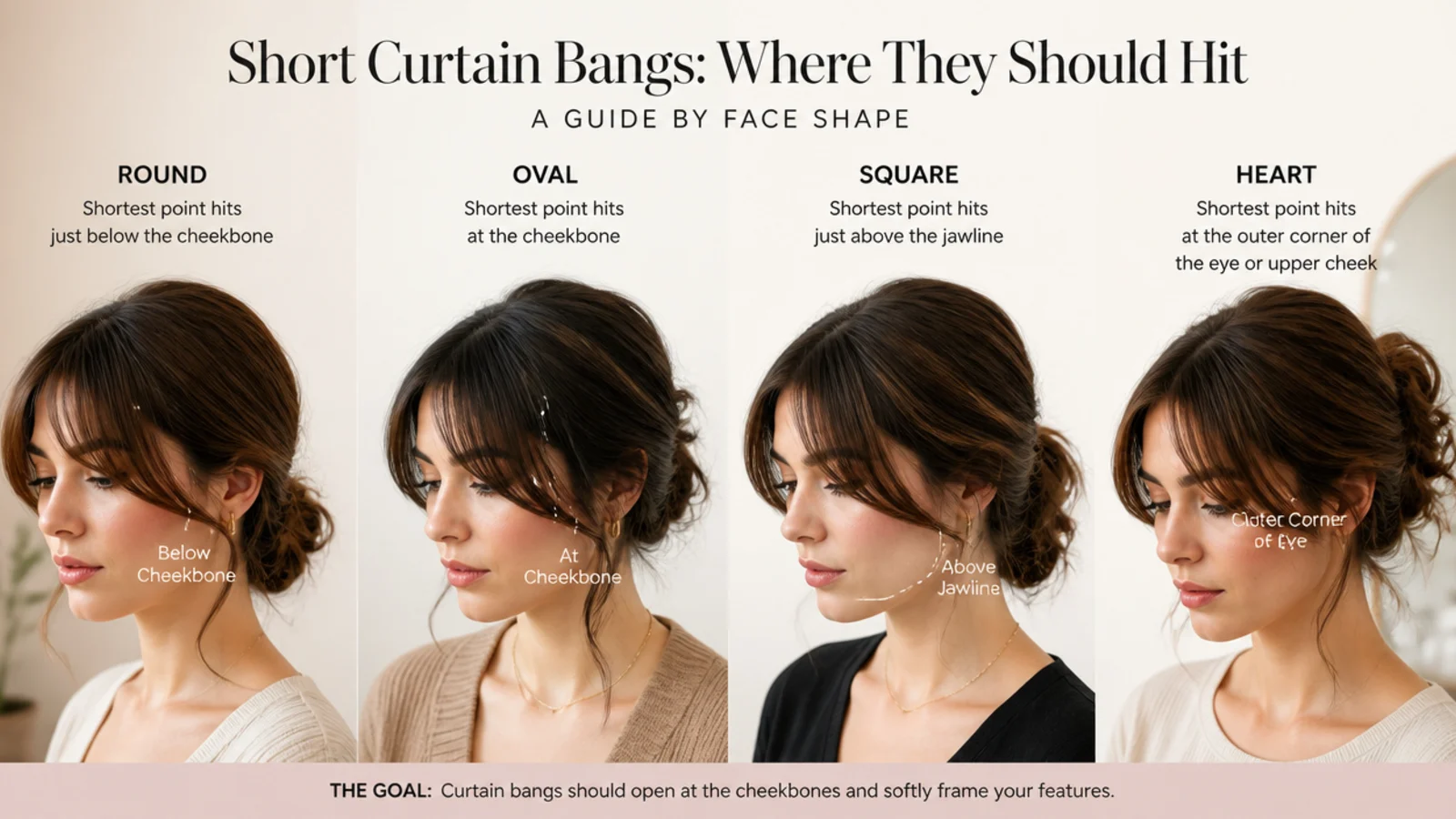
Face shape decides two variables: where the shortest point lands, and how wide the section runs. Oval faces take anything, including a baby fringe half an inch above the brow. Heart-shaped faces are the natural fit, since a fringe that is short at the center and longer at the sides narrows a wide forehead and balances a narrow chin. Oblong or long faces benefit from a shorter, denser fringe, because covering forehead height visually shortens the face, though on fine hair denser means running the section a little wider rather than deeper. Square and strong-jawed faces want the outer edges cut long enough to reach past the jaw corner and soften it, with the center kept short so the whole thing stays light. Round faces have the only firm rule: keep the shortest point at or below the cheekbone, keep the density wispy, and never let the fringe sit blunt at cheek level, which widens the face instead of lengthening it. The full geometry is in short curtain bangs for a round face, and hairstyle for your hair type sorts out texture first.
How to Style Short Curtain Bangs on Fine Hair in 4 Minutes
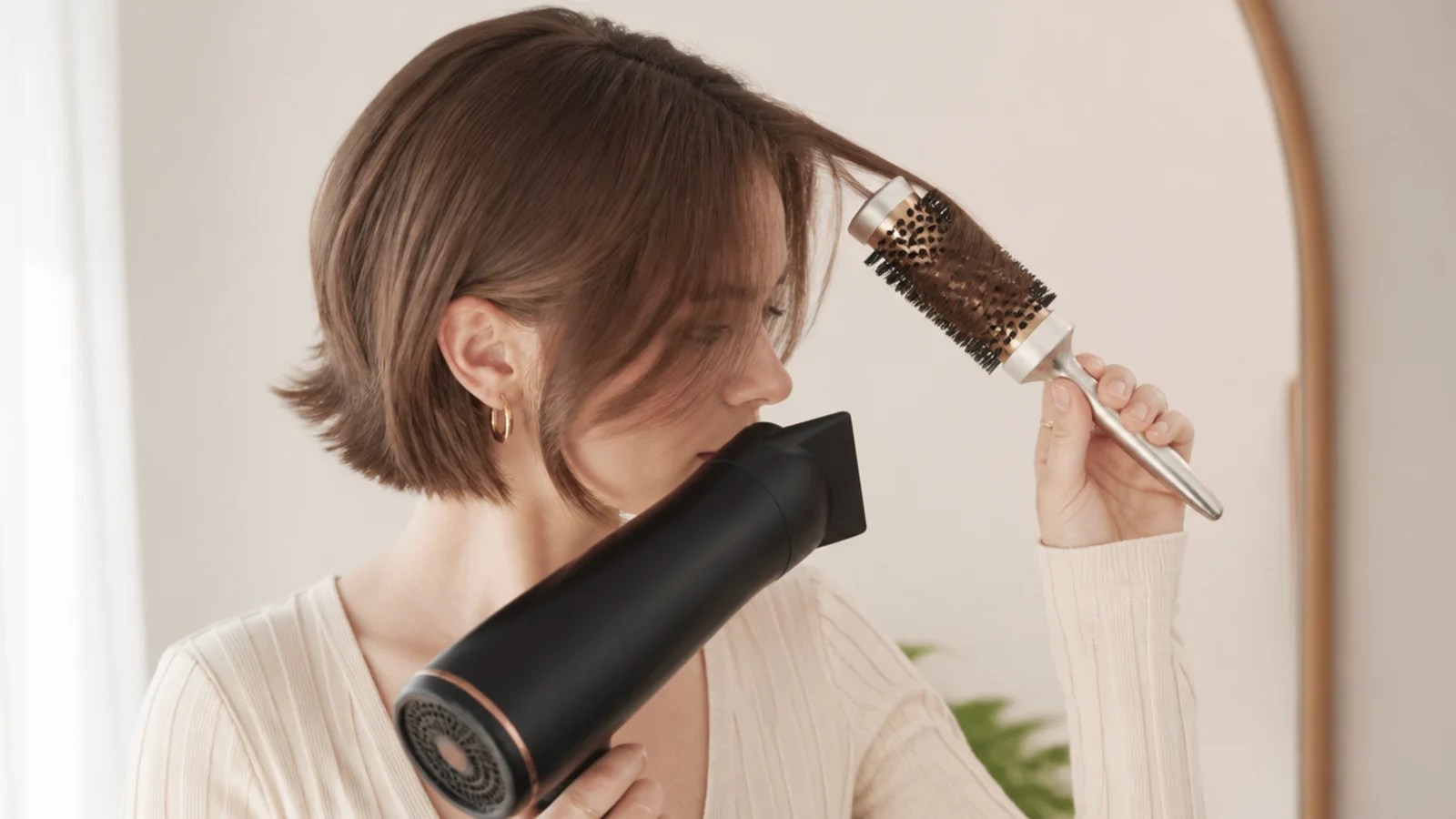
There is one rule that matters more than every other piece of advice on this page: style the fringe first, while it is soaking wet, before you touch the rest of your hair. Fine hair sets permanently wherever it air-dries, and once the fringe has chosen a direction you cannot change it without re-wetting the whole section. The sequence takes about 4 minutes. Work a dime of mousse or two pumps of root-lift spray into the damp roots only, never the lengths. Comb the center part in hard. Take a 1 inch round brush, aim the dryer nozzle up and back at the roots, and hold each side there for about 20 seconds before you start sweeping outward toward the temple. Follow the brush with the nozzle down the hair shaft, then finish with a full cool shot on each side to lock the lift. Break the shape up with a light mist of texture spray on the mid-lengths and ends only. Skip every cream, serum and oil, which is the single most common reason fine bangs collapse by noon. Day two takes 30 seconds with a water spray and the same brush; day three, dry shampoo at the roots. Heat-free options are in heatless curl tools compared, and if your fringe never lasts past lunch, cute hairstyles that last all day goes deeper on hold. Tighter textures need a different sequence, set out in curly short curtain bangs.
Fixing Flat Fringe, Greasy Roots and the Gappy Bang
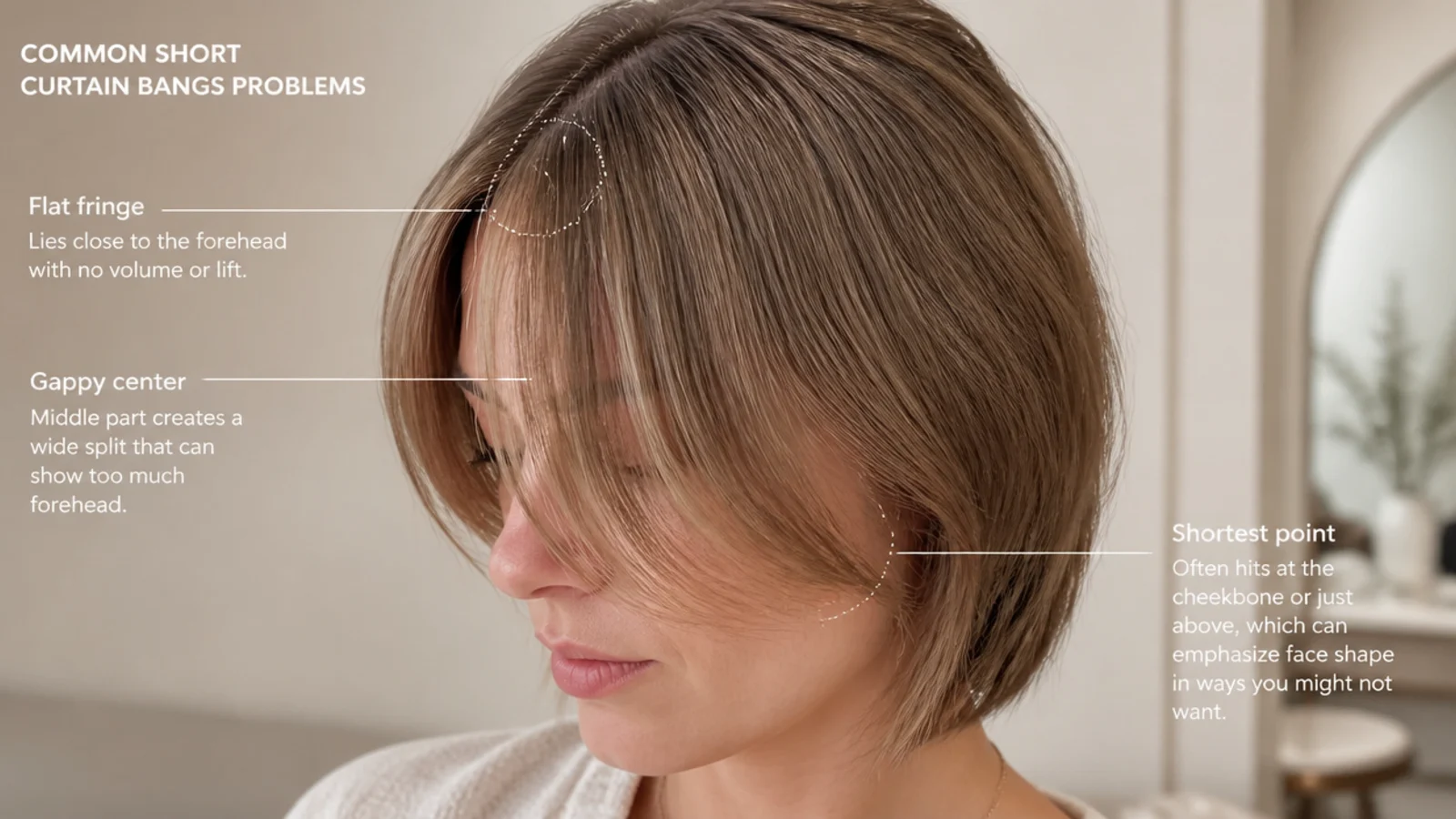
Every gallery of curtain bangs is aspirational, so here are the three failures fine hair actually has. Flat by noon is a product and technique problem, not a cut problem. It happens when the fringe was dried without root lift, or when conditioner, serum or a smoothing cream reached the first two inches. Keep conditioner off the fringe entirely, use mousse at the base, and hold the cool shot longer than feels necessary. Greasy fringe is faster on fine hair because there is less surface area to absorb the same amount of scalp oil, and because a fringe touches your forehead all day. The fix is timing: apply dry shampoo at the fringe roots on the night of day one, before it looks greasy, not after. The gappy bang is a hole at the center part where the two halves separate and skin shows through. On fine hair it is almost always caused by a blunt cut, because a hard perimeter has no tapered strands to bridge the middle. Have the ends point-cut about half an inch deep, and take the triangle out to the outer corner of each brow rather than only the inner corner, which gives the two halves enough hair to overlap.
Trim Cadence, Cost and Growing Fine Short Curtain Bangs Out
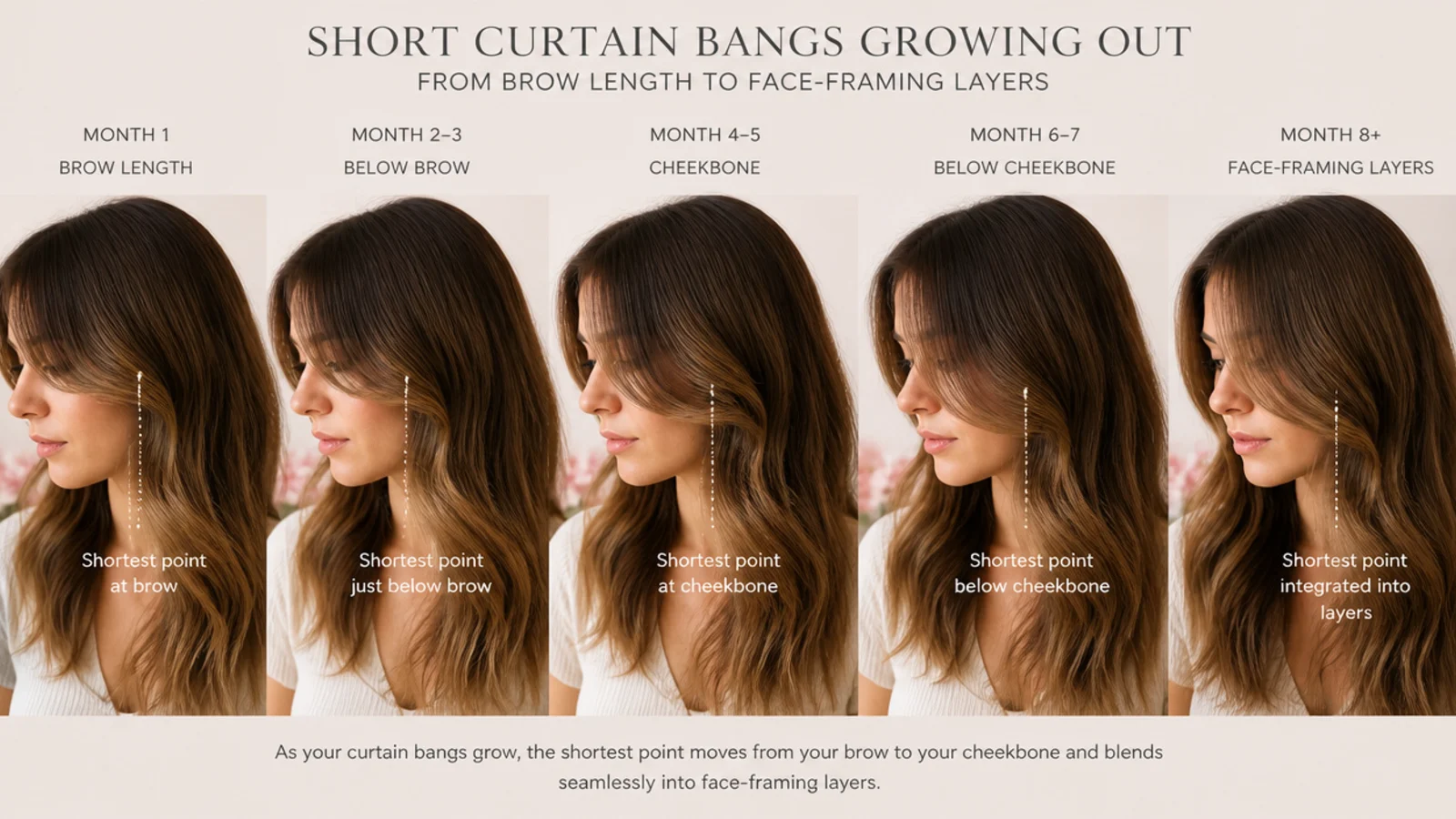
Hair grows roughly half an inch a month, and a short curtain bang loses its shape as soon as the shortest point drops below the top of the cheekbone, so the trim window is every 3 to 5 weeks. That sounds expensive and usually is not: most salons do a fringe trim free between paid cuts, so ask when you book your main appointment. Budget for a paid cut every 10 to 12 weeks and 10 to 17 fringe visits a year that mostly cost nothing. If you do trim at home, cut dry, take tiny amounts, and point the shears vertically into the ends rather than across them. Growing them out runs on a predictable timeline. Weeks 0 to 4 stay brow-skimming. Weeks 4 to 10 are the awkward phase, when the shortest point sits at lash and eye level and catches on your lashes constantly; tuck the fringe behind your ears while it is still wet so it dries blended, and resist trimming, since one small trim costs you two months. Weeks 10 to 20 give you a workable cheekbone-length curtain. Past week 20 it merges into a face-framing layer. Switching to a side part and a paddle-brush blow-dry disguises the whole middle stretch, and mid-length haircuts with curtain bangs shows where it ends up.
Frequently Asked Questions
Do curtain bangs suit fine hair?
Yes, and they are the best fringe option for fine hair. Because the shape spreads hair across the forehead in a tapered curtain rather than massing it in a solid block, it creates the impression of more coverage from the same amount of hair. The requirement is a shallow section, 1 to 1.5 inches back from the part, and point-cut ends rather than a blunt line.
Will curtain bangs make thin hair look thinner?
Only if they are cut wrong. The risk comes from section depth, not from the fringe itself. A deep section borrows density from the area behind the hairline and leaves a visible thin patch. Keep the triangle to 1 to 1.5 inches deep and the fringe wispy, and the front of your head looks fuller, not sparser, because the hair sits off the forehead instead of flat against it.
How do I style curtain bangs on fine hair?
Style the fringe first, while it is still soaking wet, before the rest of your hair. Fine hair sets wherever it air-dries. Put mousse or root-lift spray at the roots only, comb the center part, aim the dryer up and back at the base for 20 seconds per side, then sweep outward with a 1 inch round brush and finish with a cool shot. Texture spray at the ends, no cream.
How often do curtain bangs need trimming?
Every 3 to 5 weeks for a short curtain bang. Hair grows about half an inch a month, and the shape breaks down once the shortest point falls below the top of the cheekbone. Long curtain bangs stretch to 6 to 8 weeks. Most salons will trim a fringe free between paid haircuts, so ask about it when you book your main appointment.
Are curtain bangs high maintenance on fine hair?
Moderately. Budget 4 minutes on wash day, a 30 second reset with a water spray on day two, dry shampoo on day three, and a trim every 3 to 5 weeks. That is more than long curtain bangs need and considerably less than a blunt full fringe, which has to be restyled daily and trimmed every 2 to 3 weeks to stay out of your lashes.
What face shape suits curtain bangs?
Oval, heart and oblong faces suit them most easily, and square or strong jaws do well when the outer edges are long enough to sweep past the jaw corner. Round faces can wear them, but the shortest point should sit at or below the cheekbone and the density should stay wispy, never blunt at cheek level, which widens rather than lengthens the face.
What is the difference between curtain bangs and wispy bangs?
Curtain bangs describe a shape: shortest at a center part, longer toward the temples, sweeping away from the face. Wispy describes density: low, see-through, tapered ends. They are settings on different dials, not alternatives. On fine hair you generally want both at once, which is a wispy curtain bang rather than a soft or blunt one.
Should curtain bangs on fine hair be cut wet or dry?
Dry, on clean hair in its natural texture. Fine straight hair shows every cut line, so the stylist needs to see exactly where the perimeter falls, and fine wavy hair springs up around half an inch as it dries. A safe approach is to cut slightly long on the first pass, comb the section forward, then refine in a second pass once it is fully dry.
What products work best on fine curtain bangs?
Mousse or a root-lift spray at the base while damp, and a dry texture spray on the mid-lengths and ends once dry. Dry shampoo at the fringe roots from day two. Avoid every leave-in cream, serum and oil on the first two inches, and keep conditioner off the fringe entirely, since weight is what makes fine bangs collapse against the forehead by lunchtime.
Which short curtain bangs look are you saving?
If you take one thing from these 15 looks, make it the section rule: a shallow triangle, 1 to 1.5 inches back from the part, point-cut at the ends, worn wispy rather than blunt. That single specification is the difference between a fringe that makes fine hair look fuller at the front and one that pulls density away from the crown and shows scalp. Style it first while it is genuinely wet, lift at the root with a 1 inch round brush, finish with a cool shot and a mist of texture spray, and keep every cream and oil off the first two inches. Book fringe trims every 3 to 5 weeks; most salons do them free between paid cuts. Start with the short curtain bangs pillar or browse the whole short curtain bangs hub.