
Quick Comparison
| Layered Jellyfish Haircut | Blunt Jellyfish Haircut | |
|---|---|---|
| Where the layers sit | Entirely in the tentacle section, below the disconnection | Nowhere; both sections are cut to one solid length |
| How the disconnection reads | Clear, but softened by movement in the length | Maximum contrast, two flat planes of hair |
| Best hair density | Medium to very thick; layers remove needed weight | Fine to medium, where every strand counts |
| Daily styling time | About 10 minutes; layers fall into place on their own | 15 to 20 minutes; flat plane shows every flick and bend |
| Trim cadence | Bell every 6-8 weeks, layered ends every 12-16 weeks | Every 6-8 weeks all over to keep both lines sharp |
| Grow-out behavior | Settles into a shag; awkward phase around 4-6 weeks | Awkward wedge on the shoulders for roughly 2-3 months |
| Wearing it up | Layers hide the loose bell reasonably well in a ponytail | Bell hangs loose and obvious around the face |
| Best texture | Wavy 2B to 2C, and thick straight hair | Straight 1A to 2A, where the flat planes stay flat |
| Typical salon cost | 100 to 220 dollars, 90 minutes of chair time | 85 to 200 dollars, 75 minutes of chair time |
1. Long Layers Through the Tentacles, Blunt Bell on Top
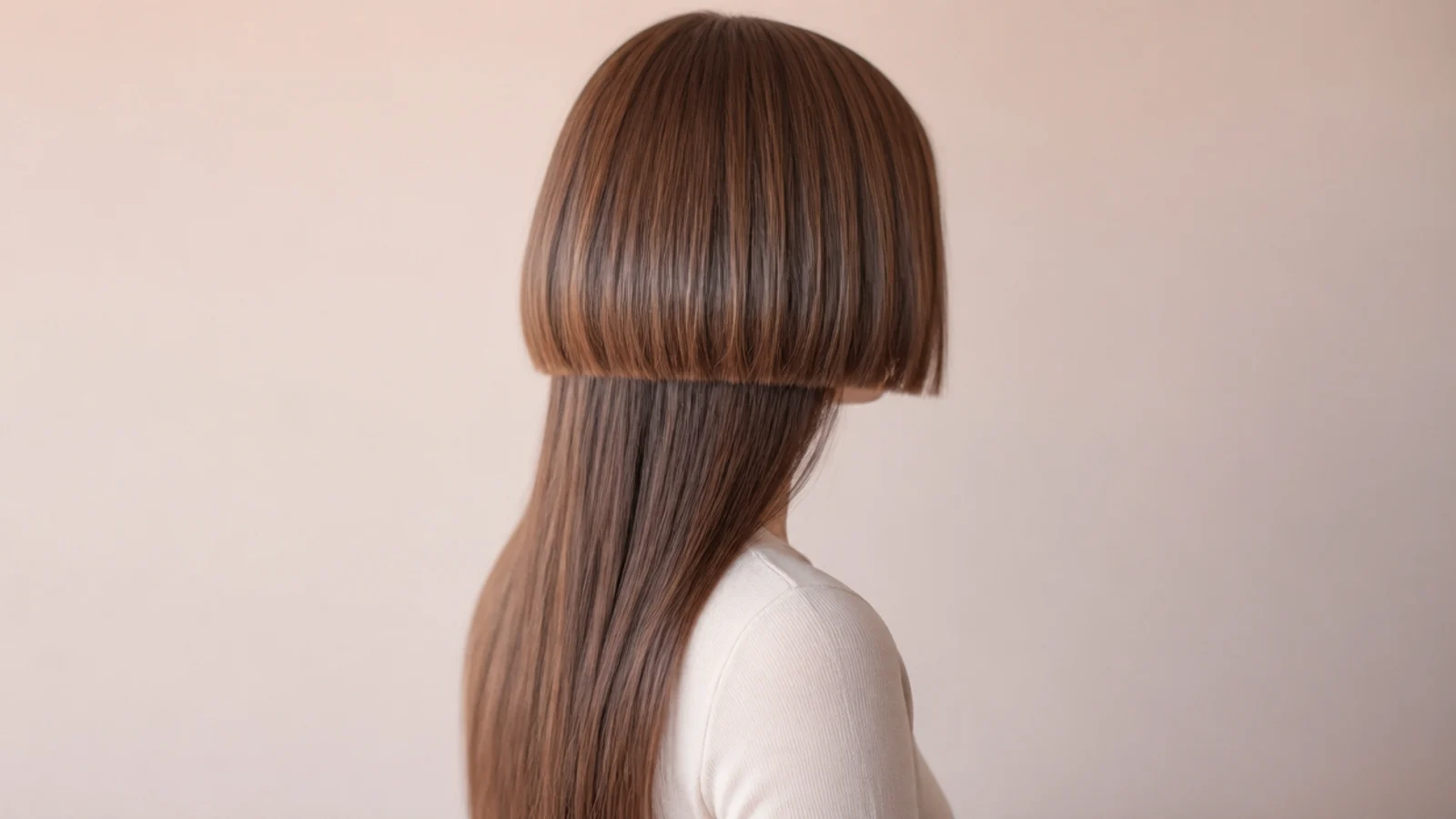
The default version and the one to ask for first. The bell is cut blunt at the chin with no internal layering at all, and the tentacle section below it takes long layers starting about 4 inches beneath the disconnection line. Nothing shorter than that, or the top of the layered section starts competing with the bell for attention. From the front you see two clean tiers; in motion the length underneath separates and swings. This is the layering that gives a jellyfish cut movement without ever softening the break that defines it.
Who it suits: Straight to wavy hair at shoulder-blade length or longer, medium density, any face shape.
Tip: Say keep the bell blunt, start the layers four inches below the disconnection line.
2. Short Stacked Layers Under a Chin-Length Bell
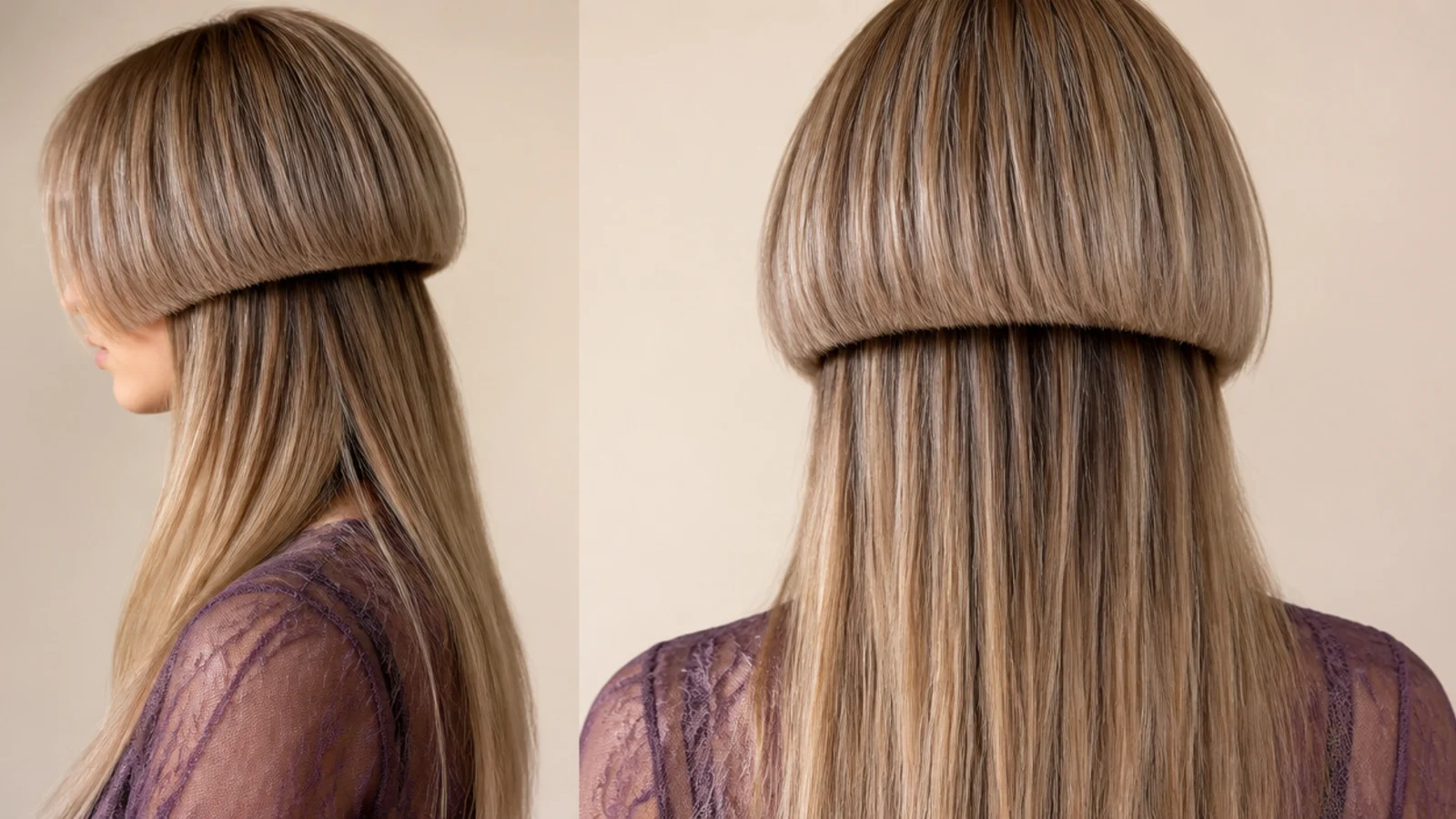
Instead of long sweeping layers, the top 6 inches of the tentacle section are stacked in short graduated steps, each about an inch apart, so the hair immediately below the bell builds volume rather than falling flat. The effect is a second, softer bell shape sitting under the hard one, which reads almost like a double tier. It needs real density to work; on fine hair the stacked ends go wispy and the illusion collapses. Best kept to the back and sides, leaving the front sections long.
Who it suits: Thick, coarse straight or wavy hair that goes heavy and flat below the disconnection.
Tip: Ask for stacked layers one inch apart through the top six inches of the length only.
3. Invisible Internal Layers on a Waist-Length Jellyfish Cut
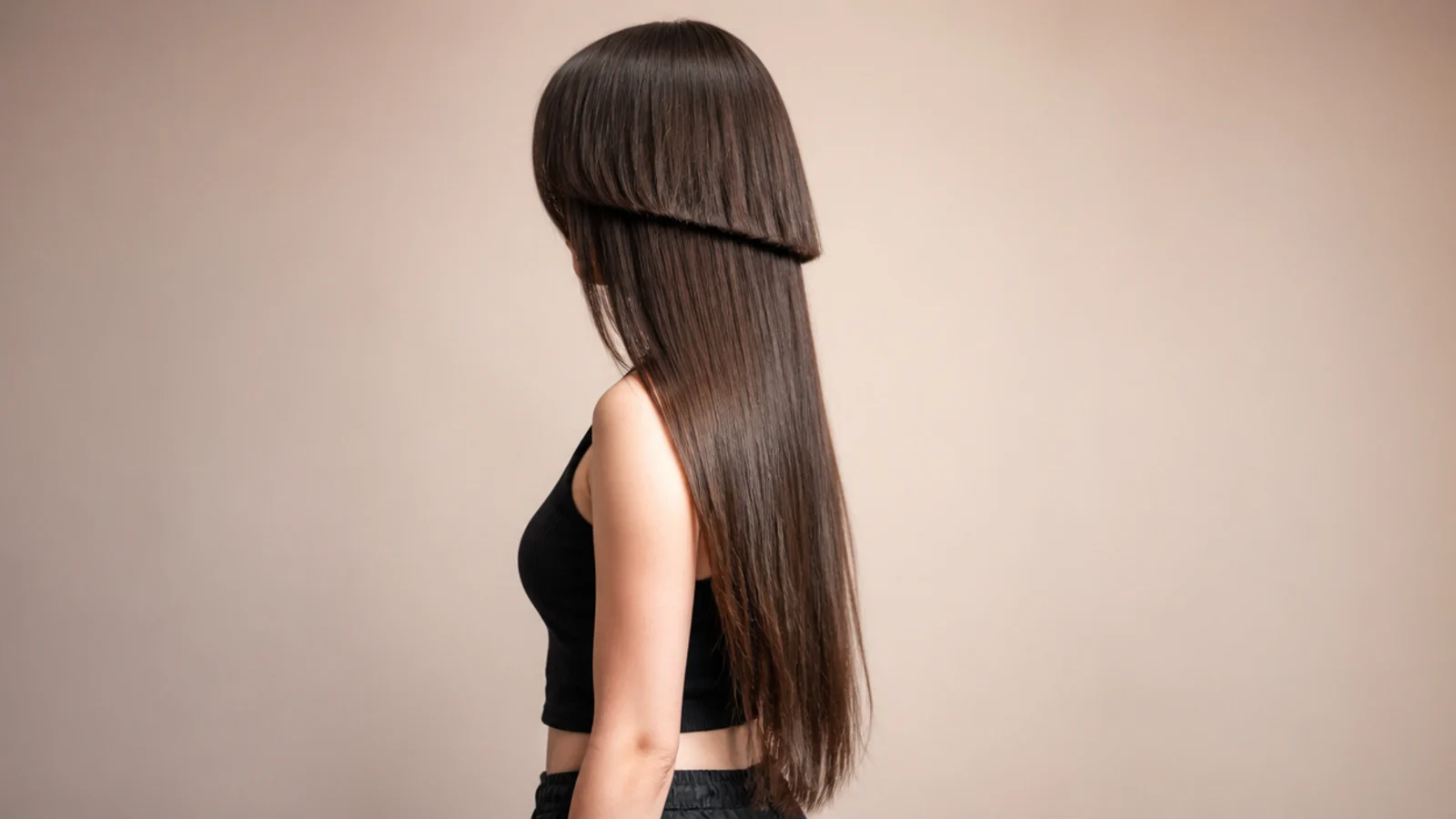
For anyone protecting serious length. The perimeter stays one blunt line at the waist and every layer is cut internally, hidden beneath the surface, so nothing short is visible anywhere. All they do is remove interior weight so the tentacles do not hang like a curtain. Stylists call these ghost layers or invisible layers. Paired with a cheekbone bell, the contrast is at its most extreme, and yet the length itself looks completely untouched from every angle. It also grows out for four months without a single awkward stage.
Who it suits: Very long, very heavy hair, and anyone who has been burned by visible layers before.
Tip: Say invisible internal layers only, keep the waist perimeter blunt, remove interior weight.
4. Razored Ends on the Tentacle Section
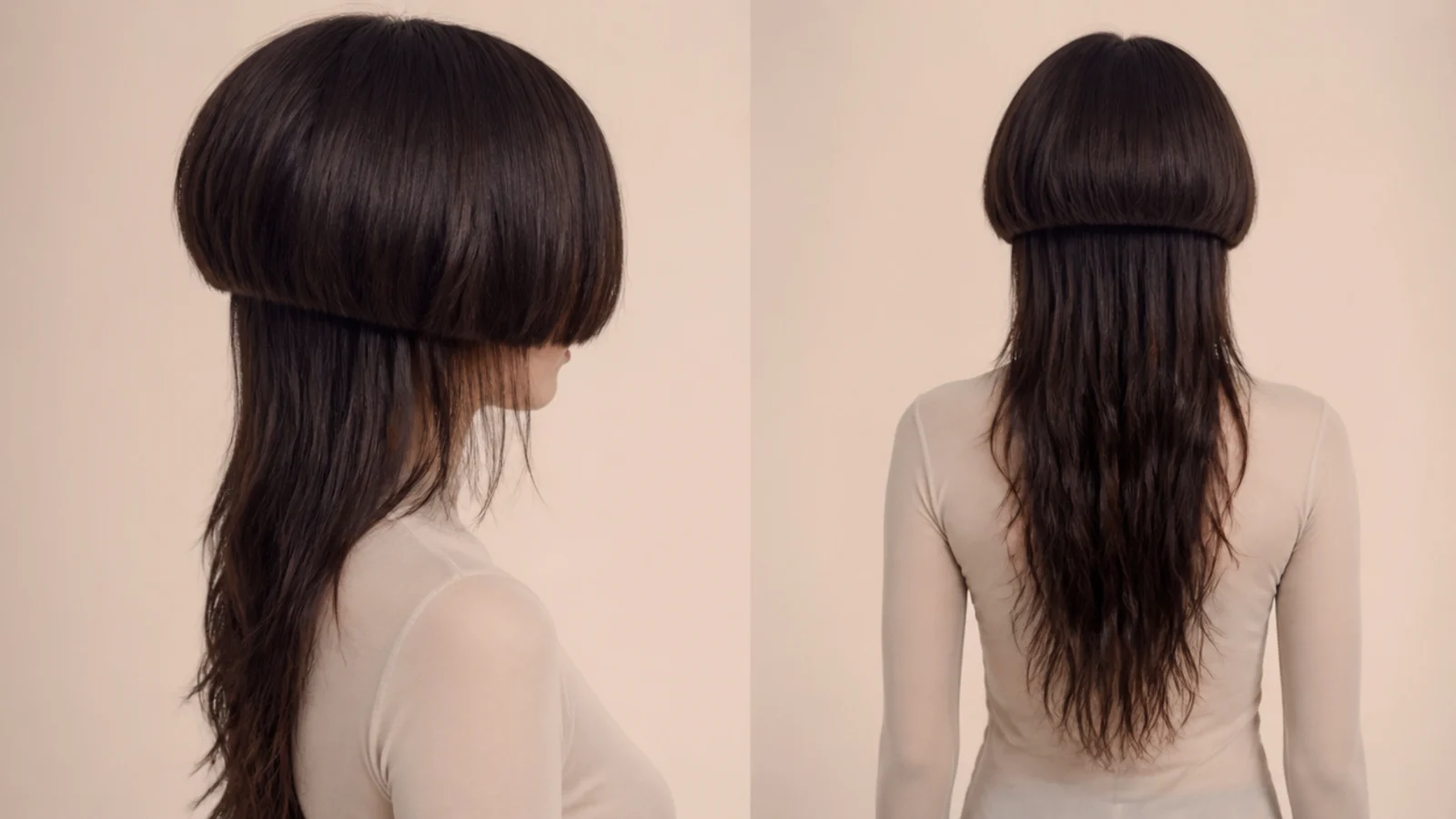
A razor taken through the last 3 to 4 inches of the length only, feathering the ends into wispy points while the bell stays scissor-cut and blunt. The contrast between a hard edge on top and a dissolving edge at the bottom is the most editorial version of this cut. Razoring is texture-dependent: it is beautiful on thick, straight, healthy hair and a disaster on fine or color-damaged hair, where it frays. Ask whether your stylist razors regularly before agreeing to it, and expect ends to need a refresh every 12 weeks.
Who it suits: Thick, straight, undamaged hair; skip it on fine, bleached or highly porous hair.
Tip: Say razor the last three inches of the length only, nothing near the bell.
5. Face-Framing Layers Only, Bell Left Untouched
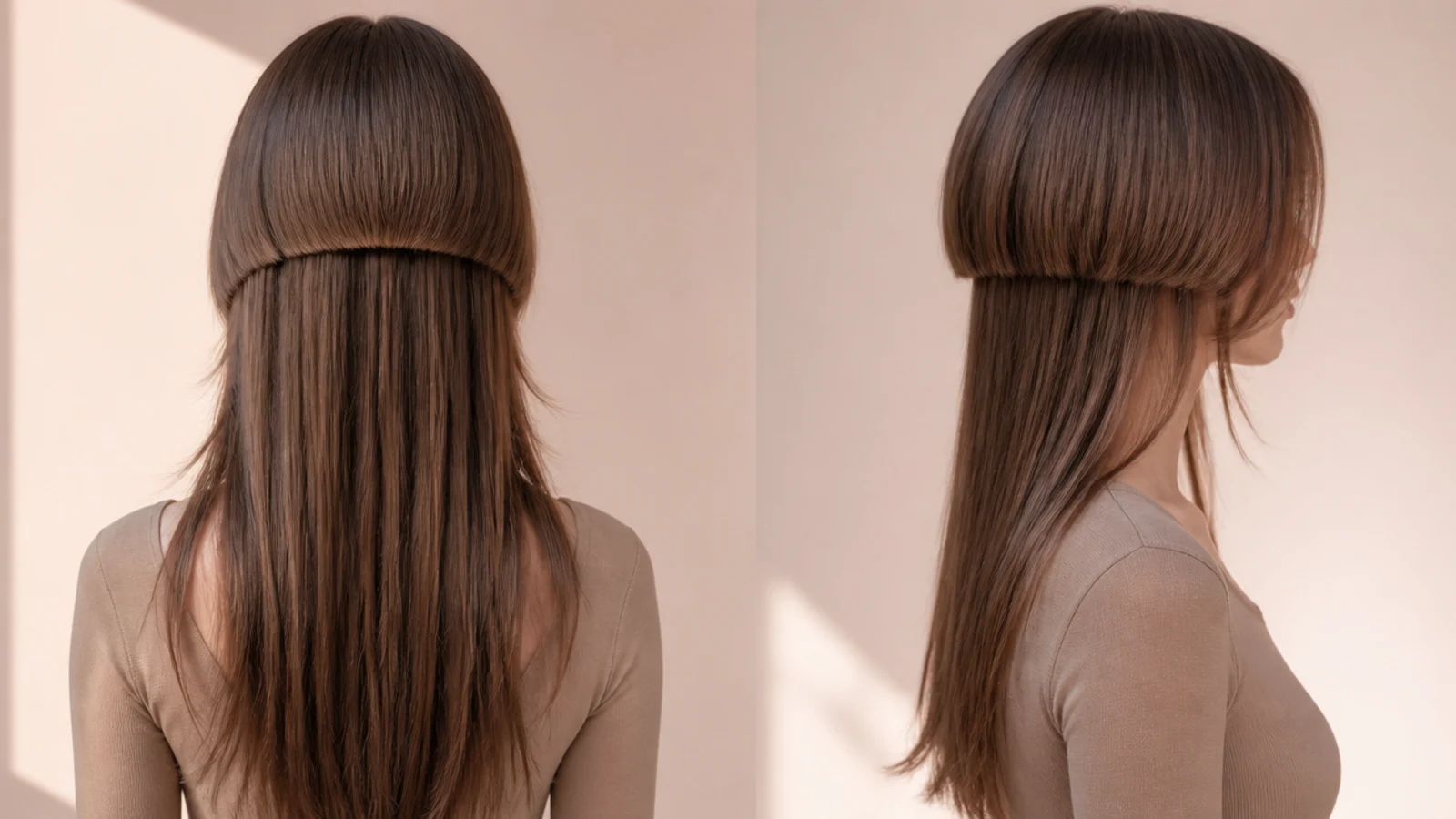
The most restrained layering on this list. The back and sides of the tentacle section stay one length, and only the two front pieces are layered, angling from the jaw back into the length. It softens the way the long section meets your face without adding a single visible step anywhere else. This is the version for people who love the jellyfish shape but find full layers too busy underneath an already dramatic cut, and it is also the easiest to grow out. See more front-section variations in the short jellyfish haircut ideas.
Who it suits: Fine to medium hair, minimal-effort routines, and anyone who wants layers they can undo.
Tip: Ask for face-framing from the jaw down into the length, no layers in the back.
6. Layered Jellyfish Haircut With Curtain Bangs
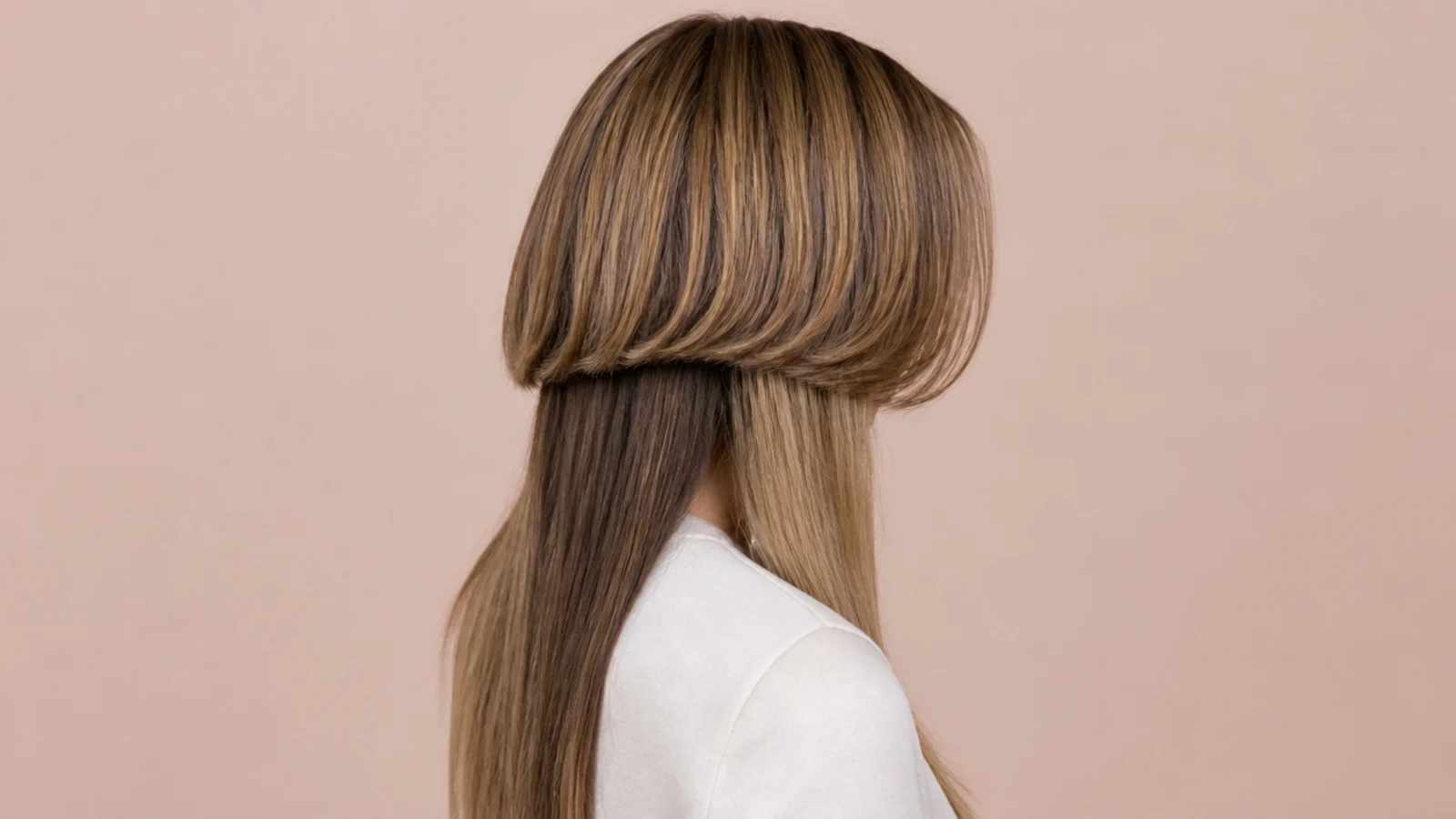
Curtain bangs split at the center, with the shortest point at the brow and the longest sweeping into the front edge of the bell around the cheekbone. Because the fringe and the bell are both part of the upper layer, they blend into each other rather than creating a third tier, which is exactly what you want. The tentacles below keep their long layers untouched. It softens the severity of a bowl-shaped bell more effectively than any amount of texturizing, and it is the friendliest entry point to the cut. More options in jellyfish haircut bangs.
Who it suits: Round and square faces, and anyone who finds a hard bowl outline too severe.
Tip: Say curtain bangs blended into the front of the bell, shortest point at the brow.
7. Point-Cut Bell for a Softer Disconnection Line
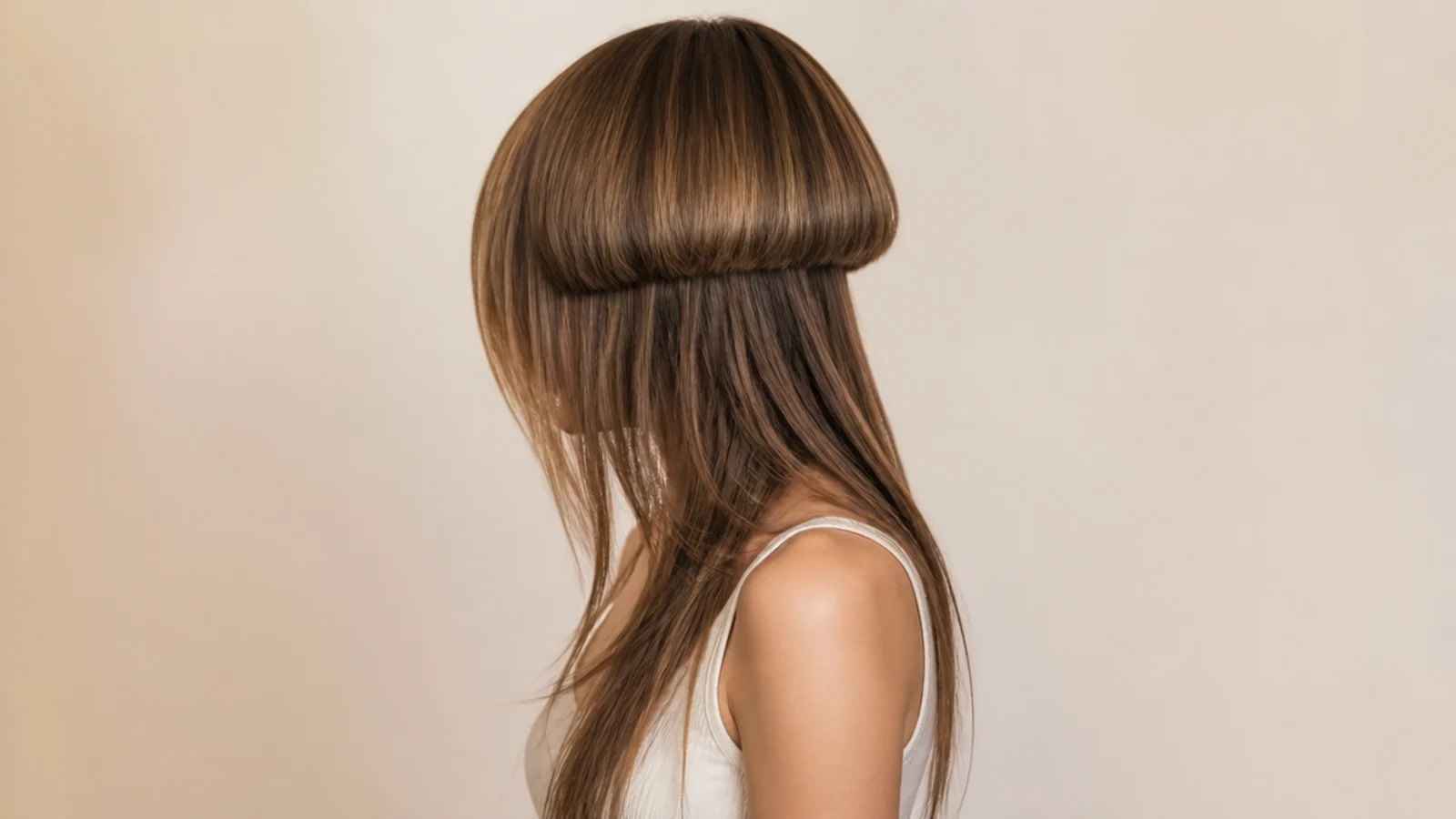
The one place layering genuinely belongs in the bell: the very edge. The stylist point-cuts vertically into the last half inch of the bell perimeter, breaking the outline into small serrations. The disconnection stays completely intact because the length does not change, but the edge stops looking like a helmet. This is the fix for anyone who tried a blunt jellyfish cut and felt the top read too heavy. It also buys time between trims, since a textured edge grows out at 10 to 12 weeks rather than 6 to 8.
Who it suits: Medium to thick hair, and anyone whose blunt bell looked heavier in person than in photos.
Tip: Say point-cut half an inch into the bell edge only, do not change the length.
8. Heavy Layers on Thick Hair for Weight Removal
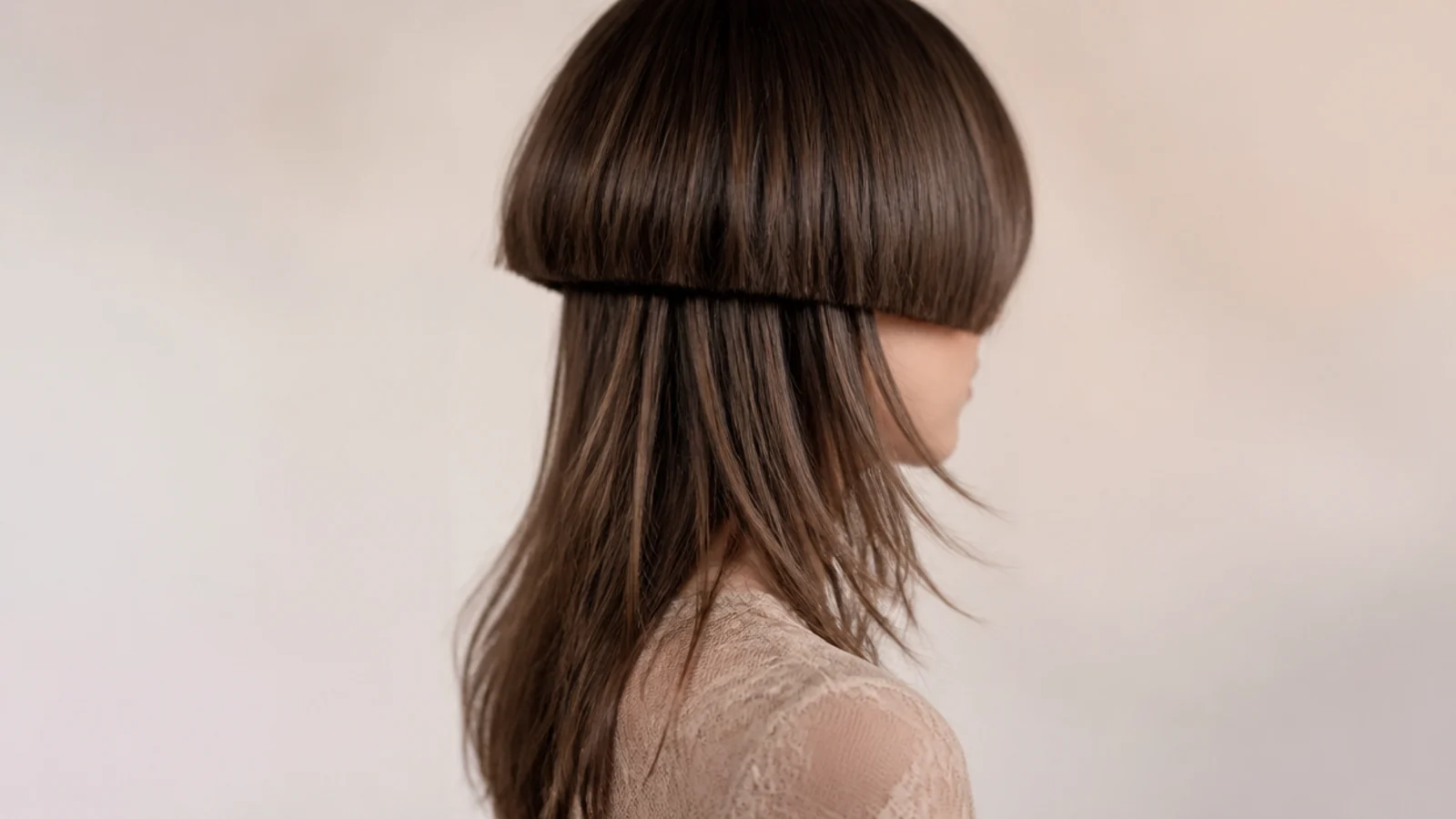
Very thick hair turns the tentacle section into a solid triangle, and the disconnection line disappears into the bulk. The fix is aggressive interior layering, at three distinct lengths through the bottom section, plus deliberate weight removal at the mid-lengths using a slide cut rather than thinning shears. Thinning shears leave fluff exactly where you need smoothness. Done properly the tentacles hang narrow and the bell reads clearly against them again. Budget an extra 30 minutes of salon time for this on genuinely coarse hair.
Who it suits: Coarse, dense hair type 1C to 2C that goes wide and triangular at the ends.
Tip: Ask for a slide cut through the mid-lengths for weight, no thinning shears.
9. Minimal Layering on Fine Hair, Two Lengths Only
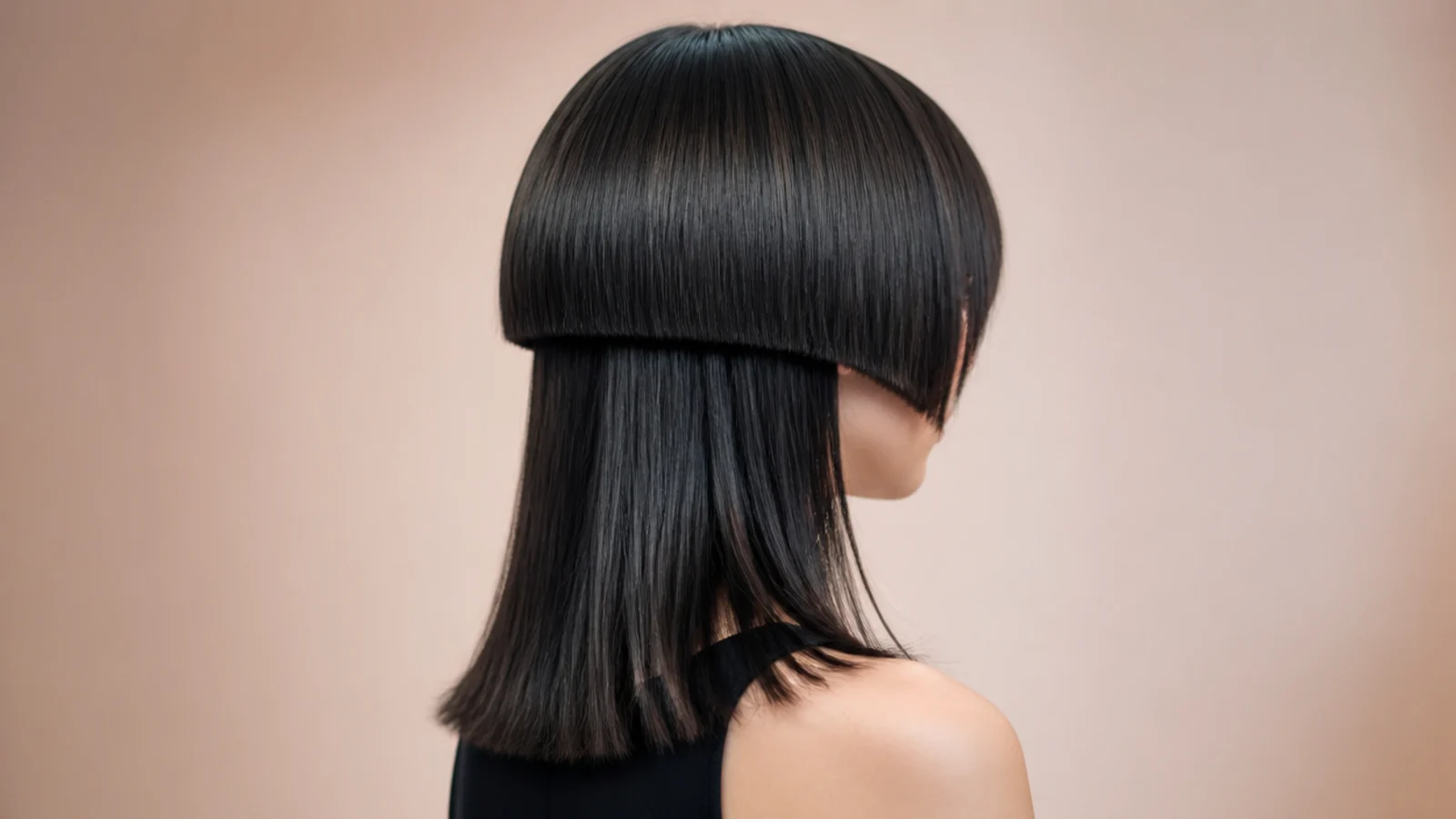
Fine hair loses the disconnection fast, because every layer removes density the shape depends on. The working version uses exactly two layer lengths in the tentacles, roughly 3 inches apart, with a blunt perimeter kept absolutely intact. The bell stays fully blunt and slightly deeper than usual, taking hair from further back on the crown so it has enough weight to hold its bowl. The rule is simple: on fine hair the layers exist to add movement, not volume. The same density logic drives a mid-length haircut for fine hair.
Who it suits: Fine or low-density hair that goes see-through at the ends with heavy layering.
Tip: Say two layers only in the length, blunt perimeter, take the bell deeper for weight.
10. Medium Layered Jellyfish Haircut at Collarbone Length
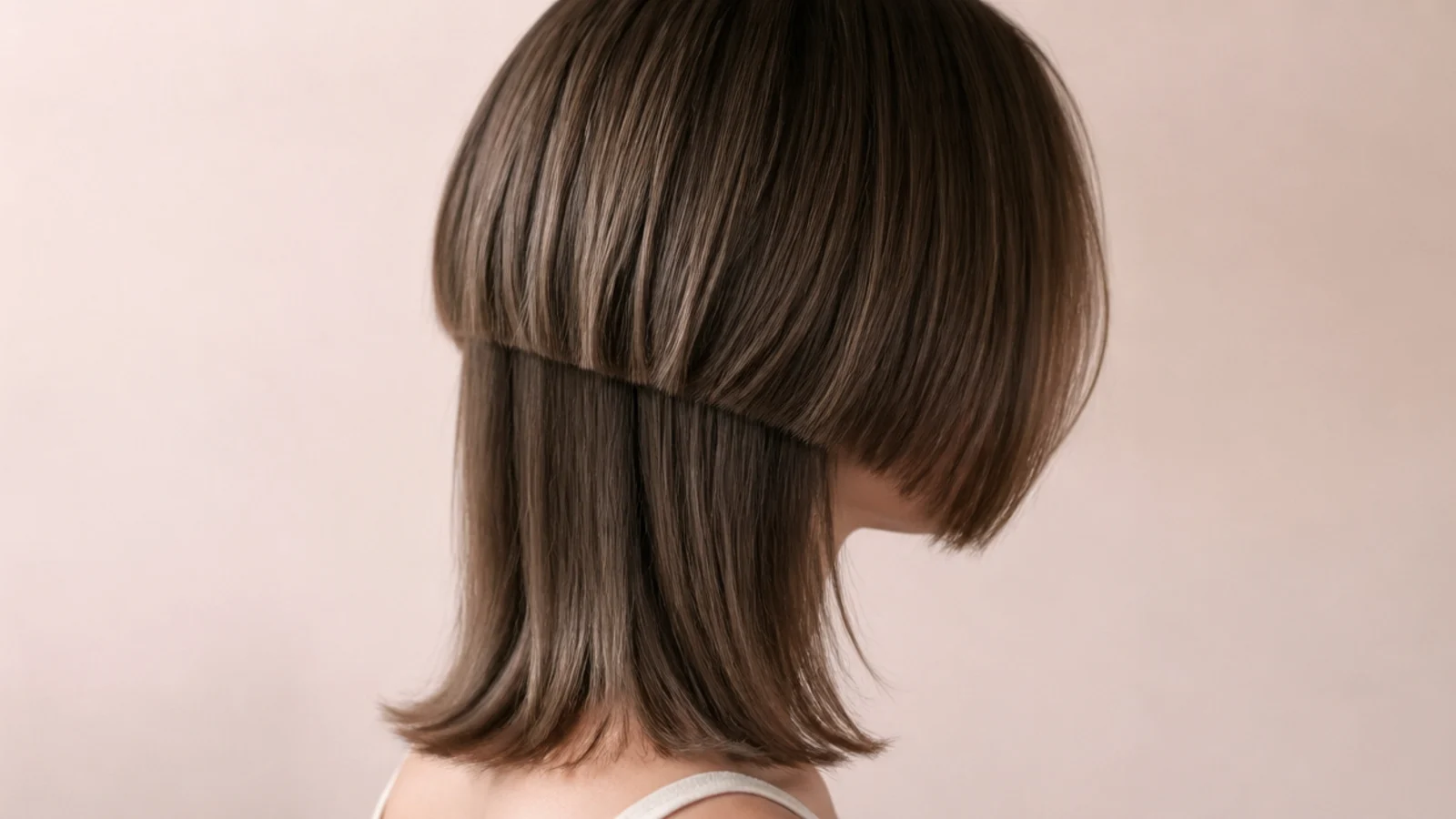
The most wearable proportion on the board. The bell sits at the jaw, the tentacles end at the collarbone, and the gap between them is roughly 4 inches, which is enough contrast to read as a jellyfish cut but small enough to pass at an office. Layers sit in the bottom 3 inches only, keeping the ends airy so the short gap does not look blocky. It also has the shortest awkward phase of any version, because the bell reaches collarbone length in around eight months. Compare against mid-length haircut layers if you want the softer route.
Who it suits: First-timers, conservative workplaces, and anyone testing the trend before committing.
Tip: Ask for a jaw-length bell, collarbone perimeter, layers in the bottom three inches.
11. Layered Jellyfish Haircut on Wavy Hair

Waves at 2B to 2C are arguably the best texture for this cut, because the bell holds a rounded shape on its own while the tentacles do the moving. Layers should be cut about an inch longer than they look, since waves lift as they dry and every layer springs up. Keep the bell one solid length so the wave pattern inside it forms a smooth dome instead of a frizzy halo. A dry texturizing spray at the roots of the bell and a curl cream on the tentacles only keeps the two sections visually separate. Full detail in wavy jellyfish haircut ideas.
Who it suits: Natural 2B to 2C waves, air-dryers, and anyone who wants volume without a round brush.
Tip: Say cut the layers an inch longer than target to allow for wave lift, bell stays one length.
12. Layered Jellyfish Haircut on 3A Curls
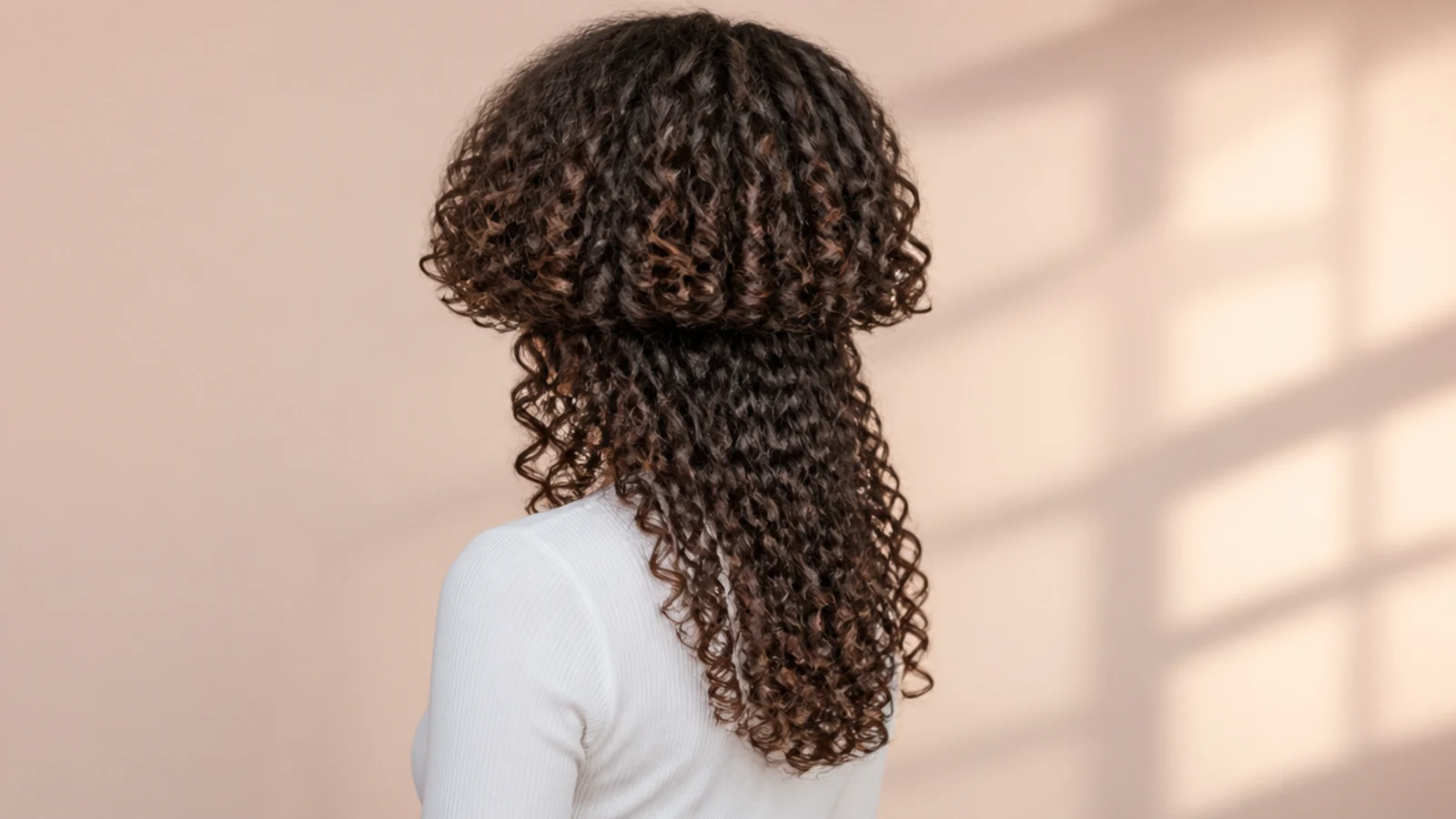
Curls at 3A can carry this cut if it is cut dry, curl by curl, and if the bell is left 2 to 3 inches longer than the finished length you want, because that is roughly how much a 3A curl shrinks as it dries. Layers in the tentacles should be cut into the curl clumps rather than in horizontal sections, or you get shelves. The honest limit is 3B: past that the coils blur the horizontal disconnection into a soft cloud and the shape stops announcing itself. Read the full breakdown in curly jellyfish haircut.
Who it suits: Loose 3A curls with defined clumps; consider a curly mid-length haircut past 3B.
Tip: Say cut dry, curl by curl, and leave the bell two to three inches long for shrinkage.
13. Short Layered Jellyfish Haircut With a Cheekbone Bell
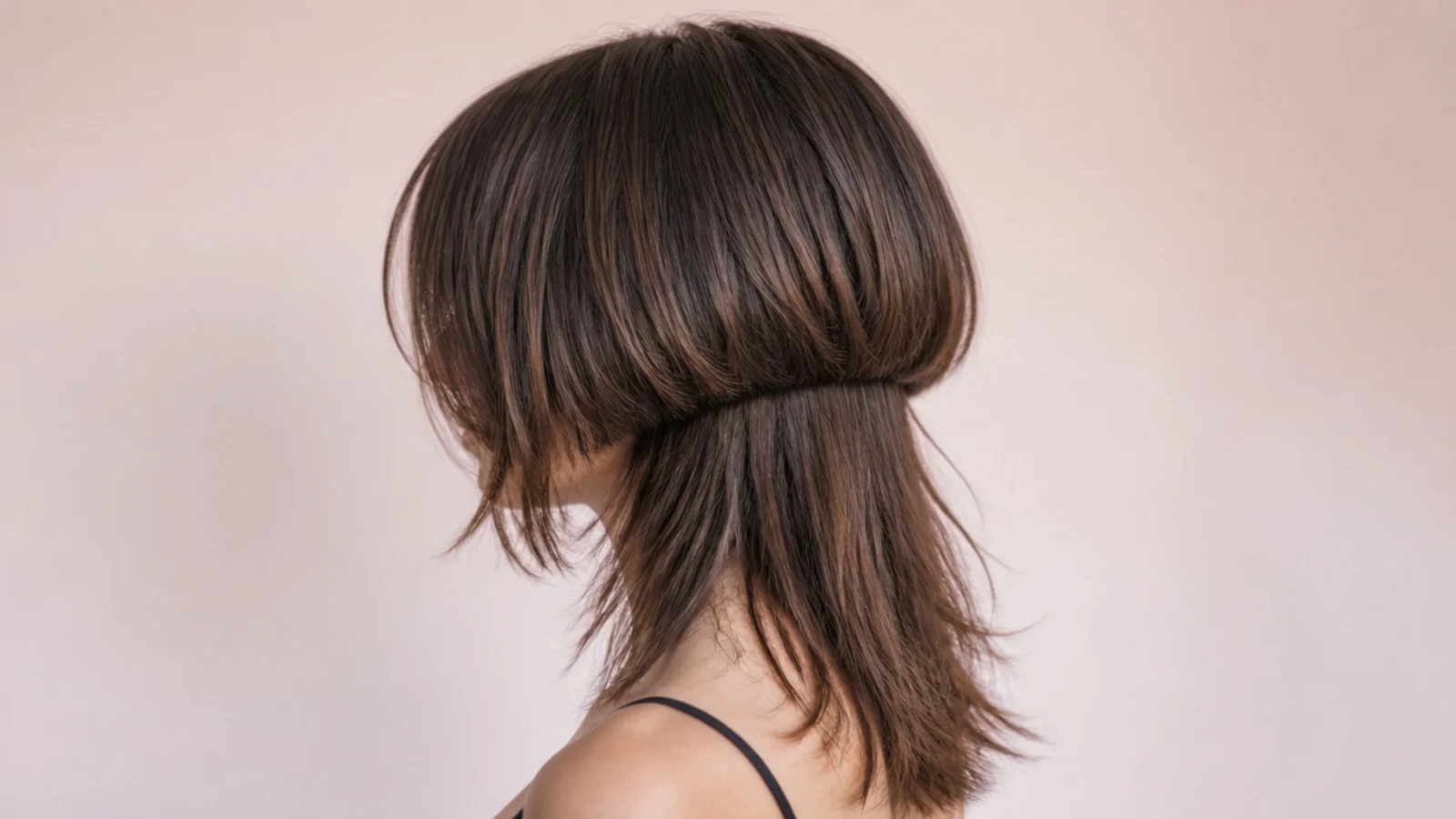
The bell sits high, level with the cheekbone, roughly 3 inches shorter than a standard chin bell, over tentacles that stop at the shoulder. Because both sections are short, the layers have to be minimal, no more than two lengths, or the whole cut turns into a pixie-shag hybrid. The payoff is the sharpest contrast per inch of hair on this list, and it makes cheekbones the focal point of the face. It is also the least forgiving version, and the one that most needs a stylist who has cut a disconnection before.
Who it suits: Oval and heart faces, straight hair, and anyone with strong cheekbones to show off.
Tip: Ask for the bell level with the top of my cheekbone, two layer lengths maximum below.
14. Long Layered Jellyfish Haircut to the Waist
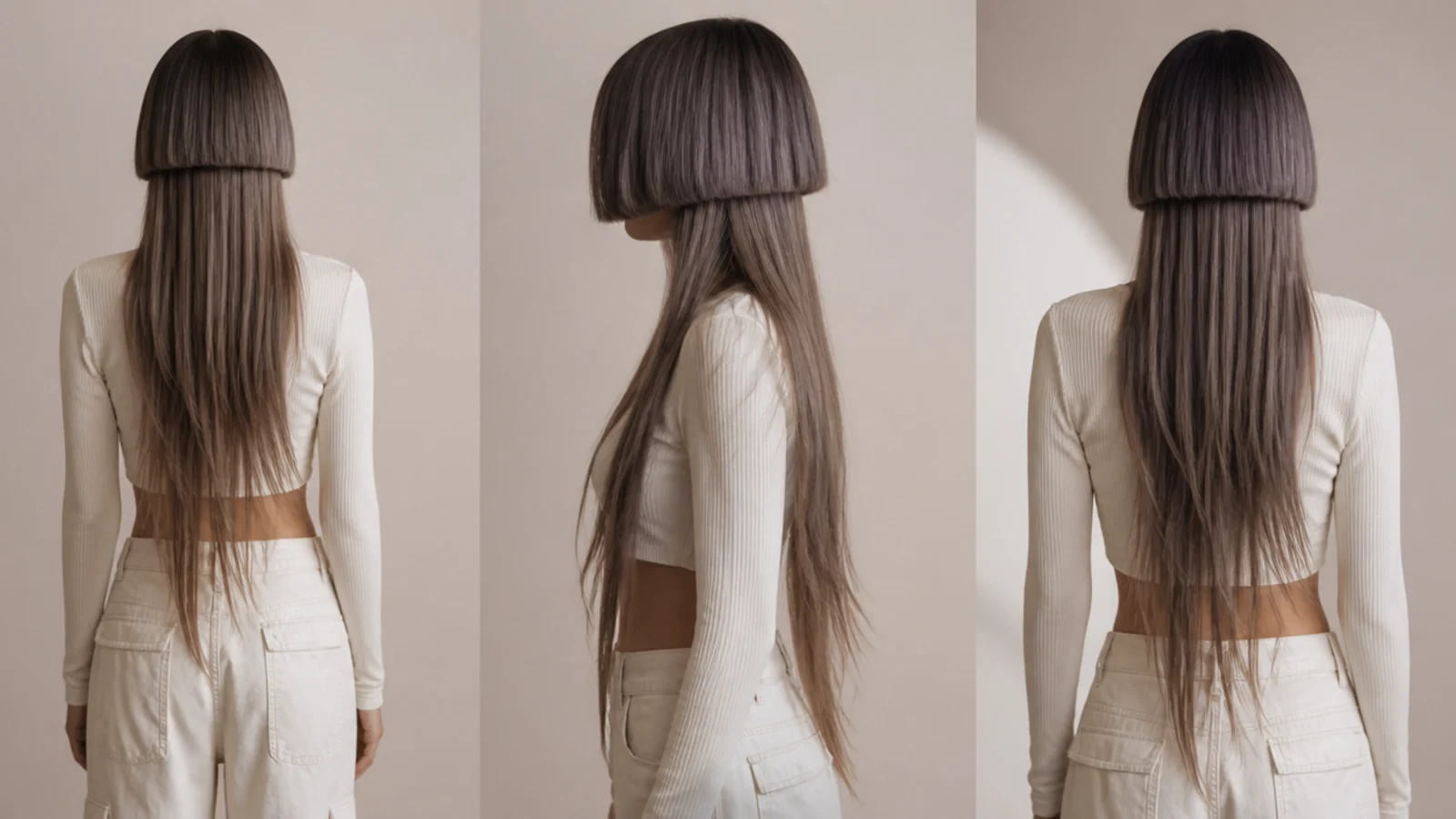
Waist-length tentacles with a chin-length bell is the most dramatic proportion the cut offers, and the layering becomes structural rather than decorative. Without layers, 26 inches of hair below a disconnection line hangs like a curtain and swallows the bell entirely. Long layers starting at the shoulder blade and continuing every 4 inches to the ends keep the section tapered so the eye still reads two tiers. Wearing it up is the trade-off nobody mentions: a ponytail leaves the bell hanging loose. See long jellyfish haircut for the full-length guide.
Who it suits: Hair at mid-back length or longer, medium to thick density, patient growers.
Tip: Say long layers starting at my shoulder blade, every four inches down to the ends.
15. Double-Tier Butterfly Layered Jellyfish Haircut
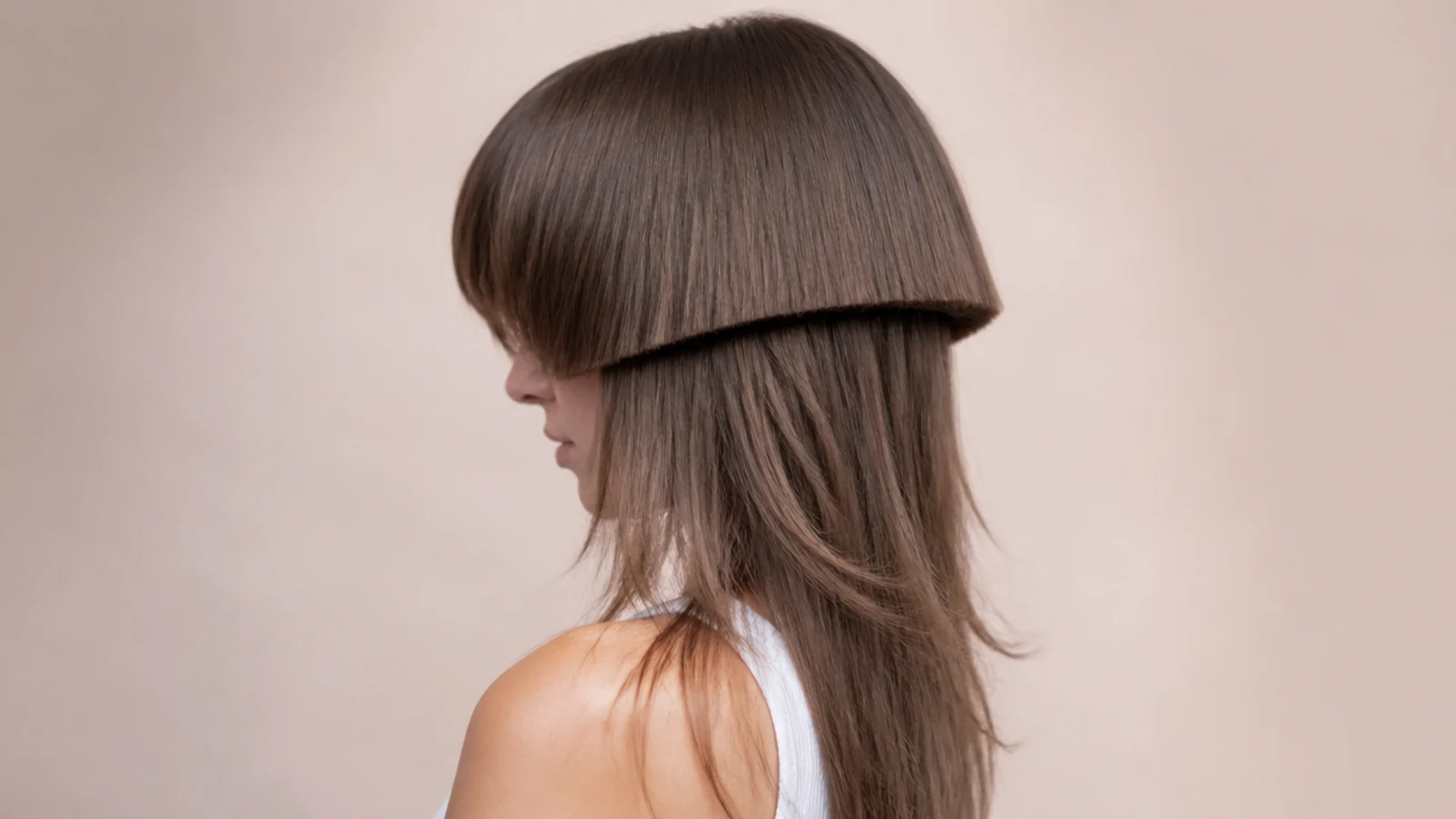
A three-section variant borrowed from the butterfly cut. Blunt bell at the chin, a soft heavily layered mid tier ending at the collarbone, and untouched length beneath that. The mid tier is where all the volume lives, and it partly cushions the disconnection so the cut looks less severe from behind. It needs genuine thickness, since three tiers on thin hair simply looks sparse. This is also the best-looking version when the hair is pulled half-up, because the mid tier fills the space the bell leaves behind.
Who it suits: Thick medium to coarse hair, long faces wanting width, half-up wearers.
Tip: Ask for three tiers, blunt bell at chin, soft layered mid tier at collarbone, long ends below.
16. V-Shaped Layered Perimeter on the Tentacles
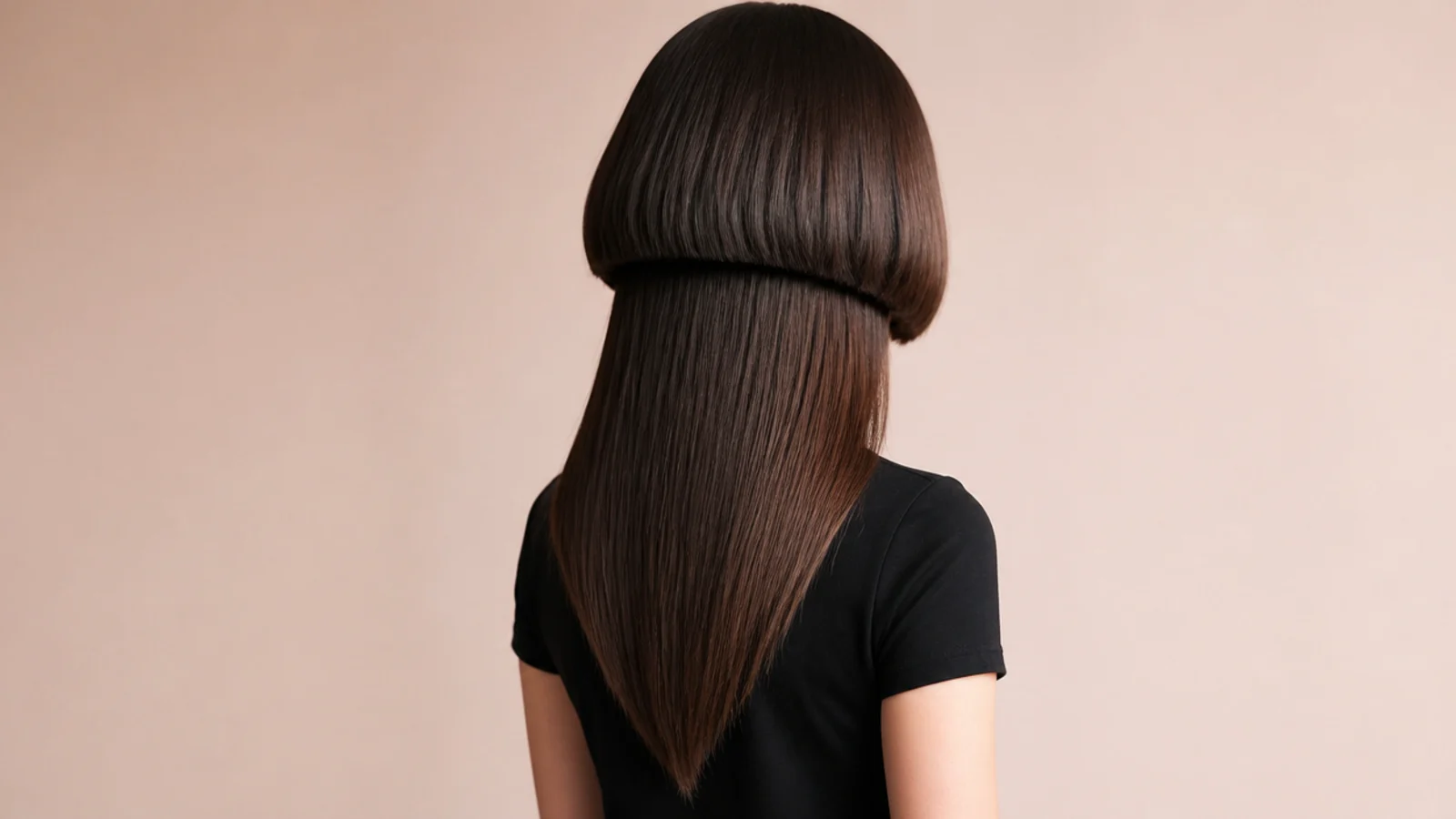
Instead of layering the interior, the perimeter itself is cut into a deep V, with the center back 4 to 5 inches longer than the sides. It creates the illusion of layers from behind while the hair is technically all one connected line, so the cut keeps maximum density. The V also echoes the rounded bell above it, giving the silhouette a deliberate hourglass. It photographs exceptionally well from the back, which matters, because the back view is the angle most people never check before booking.
Who it suits: Medium to thick hair, anyone who wants shape without losing interior density.
Tip: Say a deep V perimeter, center back four inches longer than the sides, no interior layers.
17. U-Shaped Rounded Perimeter With Soft Layers
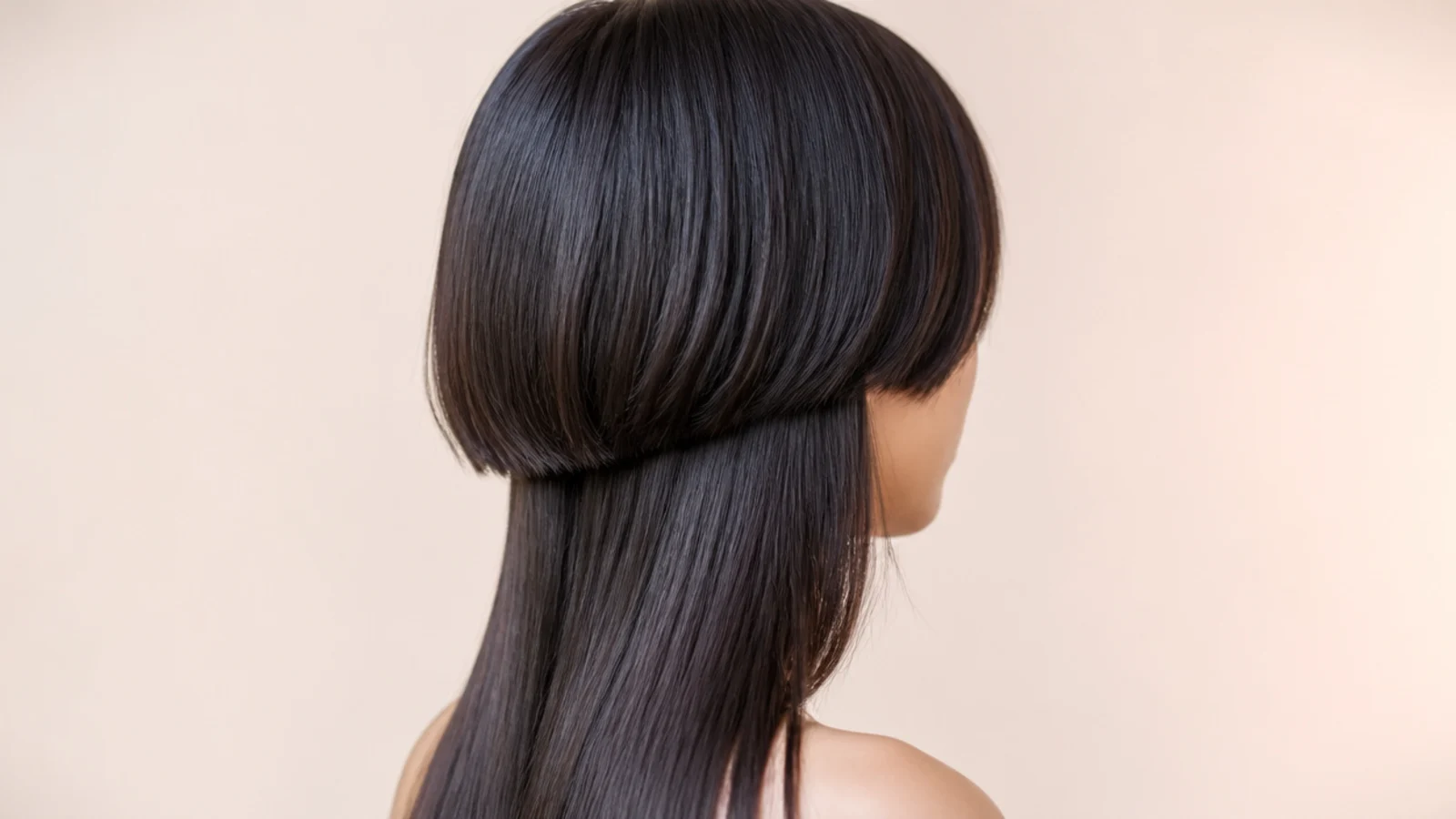
The gentler sibling of the V. The perimeter curves in a shallow U, with the center back only about 2 inches longer than the sides, and soft long layers sit inside it. Because the U mirrors the curve of the bowl-shaped bell, the two sections rhyme instead of fighting, and the whole cut looks softer and more expensive than the sharp version. It is also more forgiving on wavy hair, where a hard V point tends to curl up and lose its line entirely by lunchtime.
Who it suits: Wavy hair, softer aesthetics, and anyone who found the V version too severe.
Tip: Ask for a shallow U perimeter, two inches of difference, soft long layers inside it.
18. Two-Tone Color on a Layered Jellyfish Haircut
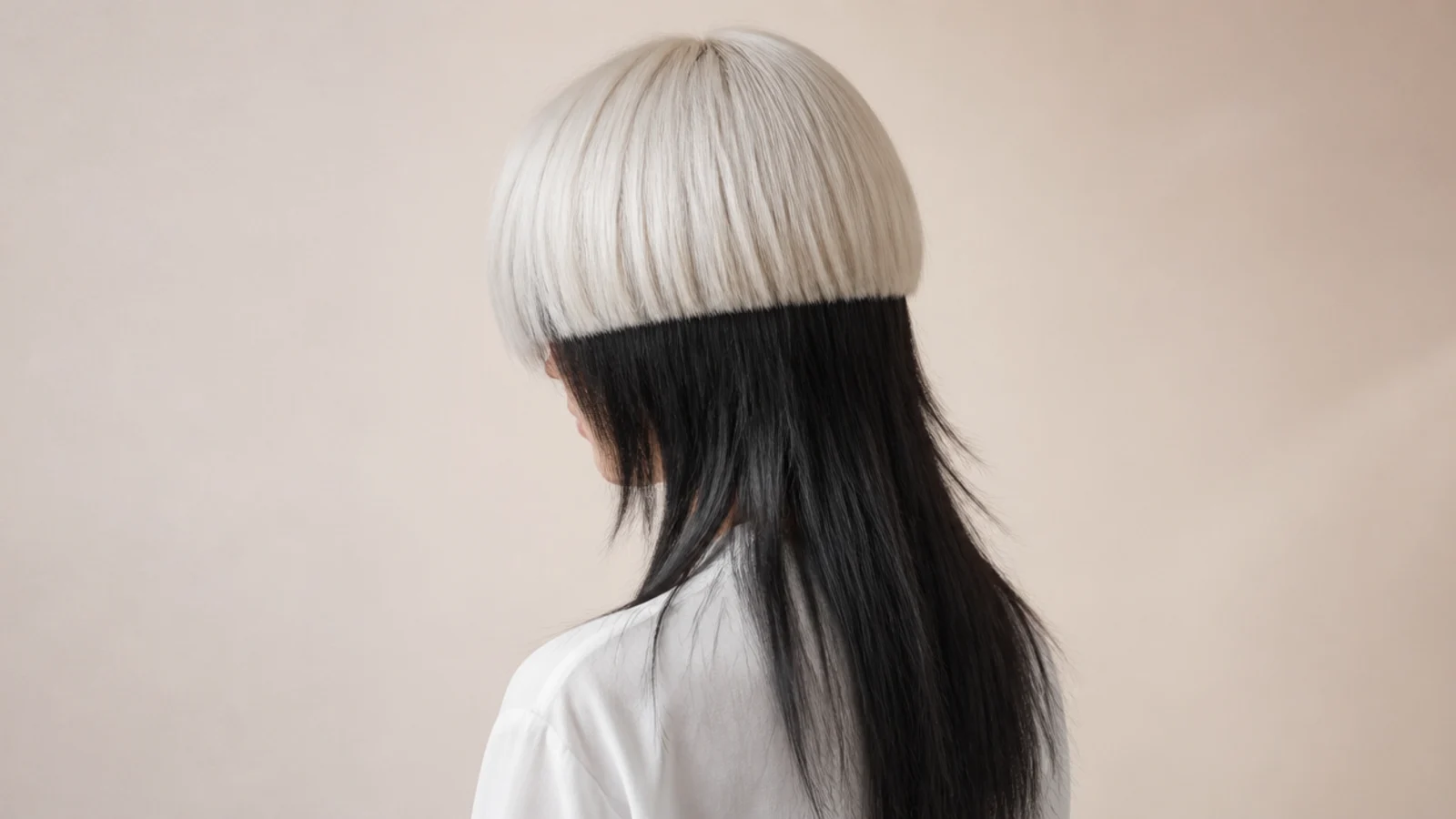
Color placed along the disconnection line rather than through it. The bell is lifted to platinum or a vivid, the tentacles stay natural, and the layers underneath flash the contrast every time the hair moves. It works precisely because the sections are disconnected: there is a clean boundary to color to, which a blended shag cannot offer. Budget 180 to 350 dollars for a full bell lift plus toner every 6 to 8 weeks, and expect the bell to fade faster than the rest since it takes most of the heat styling. A money piece is the cheaper test version.
Who it suits: Anyone already coloring, with healthy hair strong enough to lift the top section.
Tip: Say color the bell section only, stop exactly at the disconnection line, tone every six weeks.
19. Layered Jellyfish Haircut With an Undercut Nape
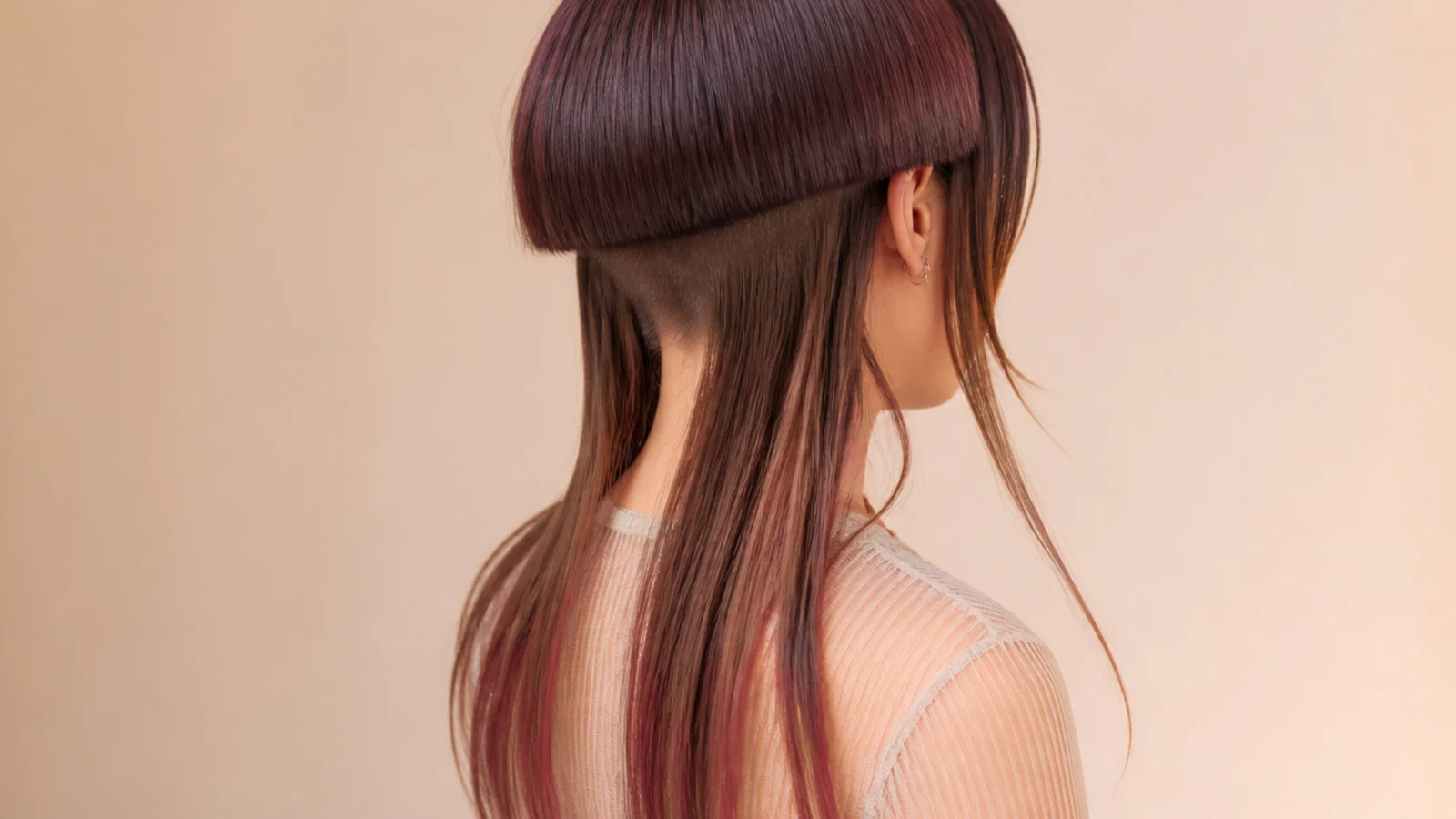
A hidden undercut at the nape, clipped to a number 2 or 3 guard across roughly a 4 inch wide panel, sitting under the layered length. Nobody sees it with the hair down; it flashes when you tie the tentacles up or tuck them behind an ear. Practically it removes serious bulk from very thick hair, which lets the layers hang closer to the head and keeps the bell from looking small by comparison. The commitment is the regrowth: it needs a clipper touch-up every 4 weeks or it puffs the length outward.
Who it suits: Very thick hair, edgier tastes, and anyone who wears their hair up often.
Tip: Ask for a hidden nape undercut, number two guard, four inches wide, kept under the length.
20. Softly Layered Jellyfish Haircut With Partial Disconnection
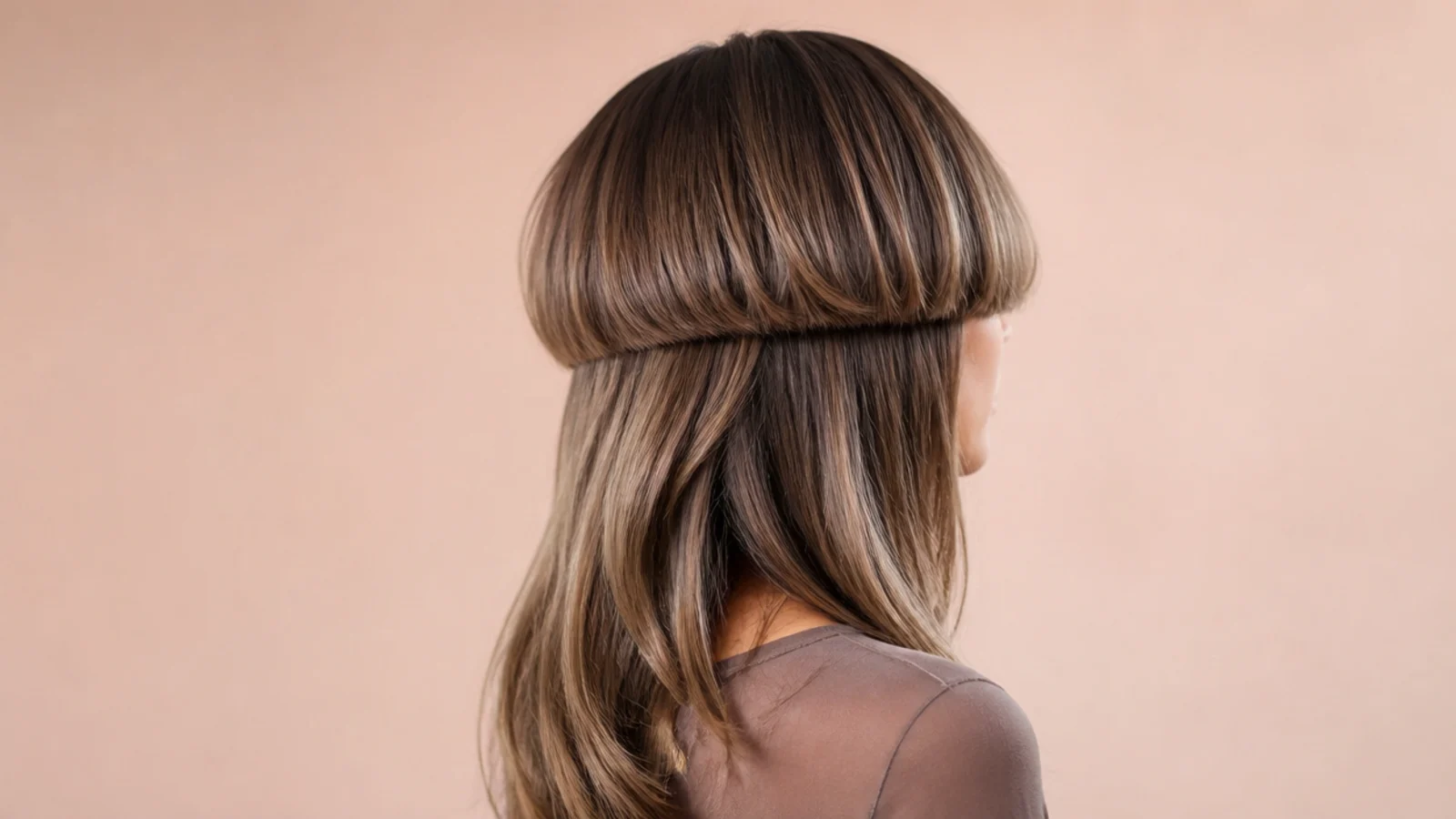
The test drive. The bell sits low, at or just below the jaw, and the stylist blends about half an inch of the disconnection line so the two sections touch instead of breaking. Long layers in the tentacles then carry the eye downward, and from the front the whole thing reads as a dramatic layered cut rather than a jellyfish. It grows out with no awkward stage at all, and if you love it, one appointment sharpens the line into a full disconnection. It is the smartest way to try the shape, and closest in feel to a shaggy mid-length haircut.
Who it suits: Anyone unsure, in a conservative workplace, or with an event in the next three months.
Tip: Say soften the disconnection by half an inch so the layers just touch, do not fully blend.
What Is a Layered Jellyfish Haircut? The Two-Layer Structure
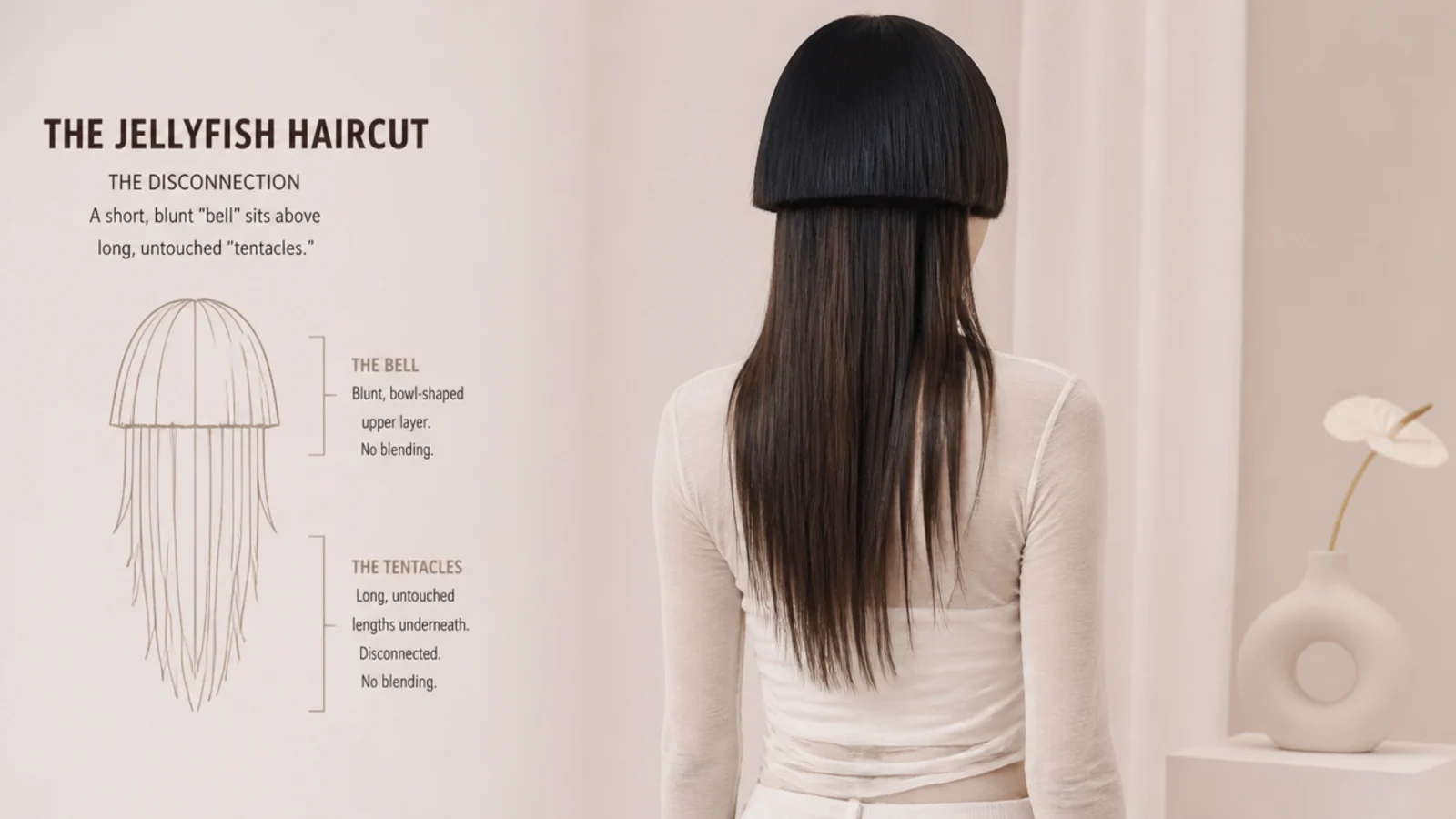
A jellyfish haircut is built from exactly two pieces. The upper section is cut into a short, rounded, bowl-shaped layer that usually falls between the cheekbone and the chin, and stylists call it the bell. Everything below it is left long, and that is the tentacle section. Between them runs a horizontal line the stylist deliberately refuses to blend, and that refusal is the entire definition of the cut. Blend the two together and you have a shag; leave the break visible and you have a jellyfish. Adding layers does not change any of that, because in a layered jellyfish haircut the layers live below the line, not across it. The bell stays blunt no matter how much layering happens underneath. That is the single fact that separates a good layered jellyfish cut from an expensive accident, and it is the fact almost no reference photo makes obvious. Browse the wider jellyfish haircut hub to see how the two-tier structure plays out across every length and texture.
Where the Layers Actually Go: Blunt Bell, Layered Tentacles
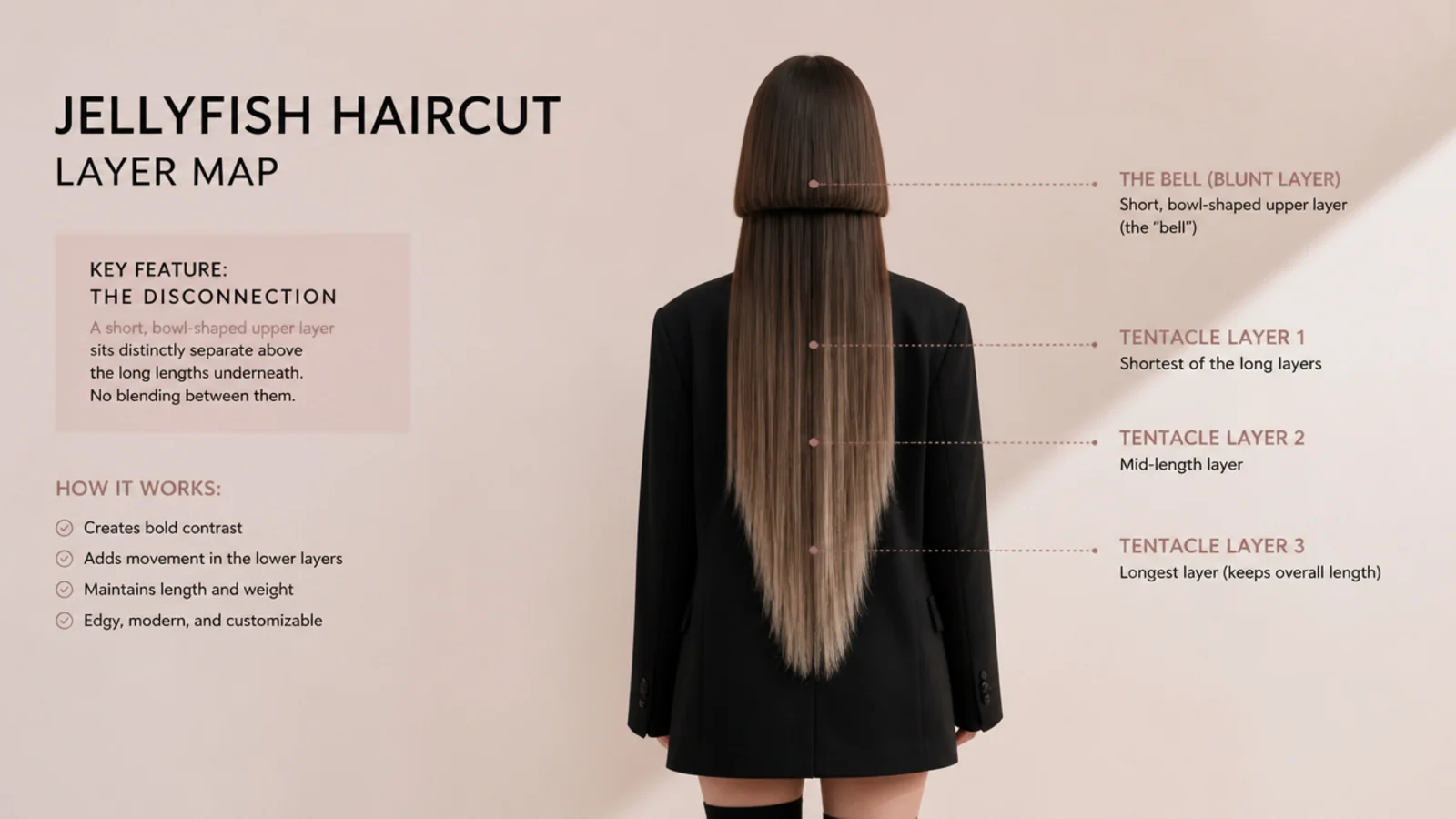
Start the first layer at least 4 inches below the disconnection line. Any higher and the layer competes with the bell, creating a third visual tier that reads as confusion rather than structure. From there, three layer lengths is the working maximum on long hair, spaced roughly 4 inches apart; a fourth and the tentacle section starts to shatter and the whole cut collapses into a wolf cut. On medium length hair, two lengths is the ceiling. Technique matters as much as placement. Point-cutting removes length while keeping the ends dense and is the safe default. A slide cut removes interior weight without touching the outline, which is what very thick hair needs. A razor feathers the ends into wisps and belongs only on thick, healthy, undamaged hair. Thinning shears are the one tool to refuse outright: they leave short fluffy regrowth exactly where you want a smooth fall. The same placement logic drives any layered mid-length haircut, but the stakes are higher here, because a misplaced layer erases the disconnection you paid for.
Who a Layered Jellyfish Haircut Suits: Face Shape and Hair Texture
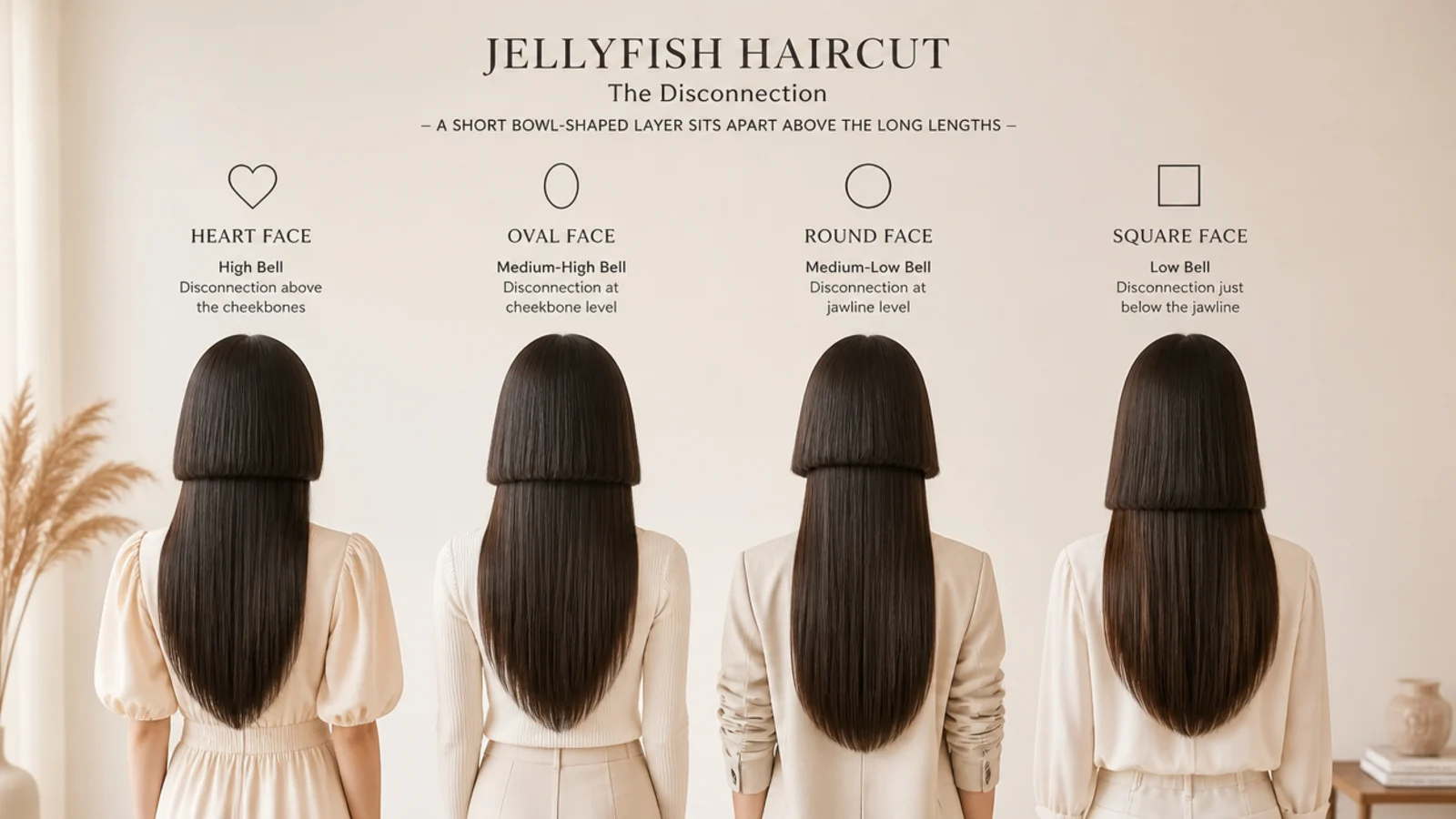
Texture decides whether the cut works at all; face shape decides where the bell sits. Straight hair from 1A to 2A shows the disconnection at its sharpest, and it needs the fewest layers, often just one length through the tentacles. Waves at 2B to 2C are the sweet spot, since the wave pattern gives the bell a natural dome and the layers make the length move. Loose 3A curls work if the bell is cut dry and left 2 to 3 inches longer for shrinkage. Past 3B the coils blur the horizontal line into a soft cloud. On face shape, oval faces can carry the highest bell at the cheekbone. Round faces should drop it to the jaw with the front corners left longer so the line runs vertically rather than across the widest point, exactly the logic behind short curtain bangs on a round face. Square jaws want a diagonal front edge and a bell falling below the jawline. Heart shapes do best at chin length, where the bell adds width low on the face to balance a narrow jaw. Fine hair benefits more than expected, because concentrating density into a short blunt bell reads as instant crown volume.
Layered Jellyfish Haircut vs Wolf Cut vs Mullet vs Shag
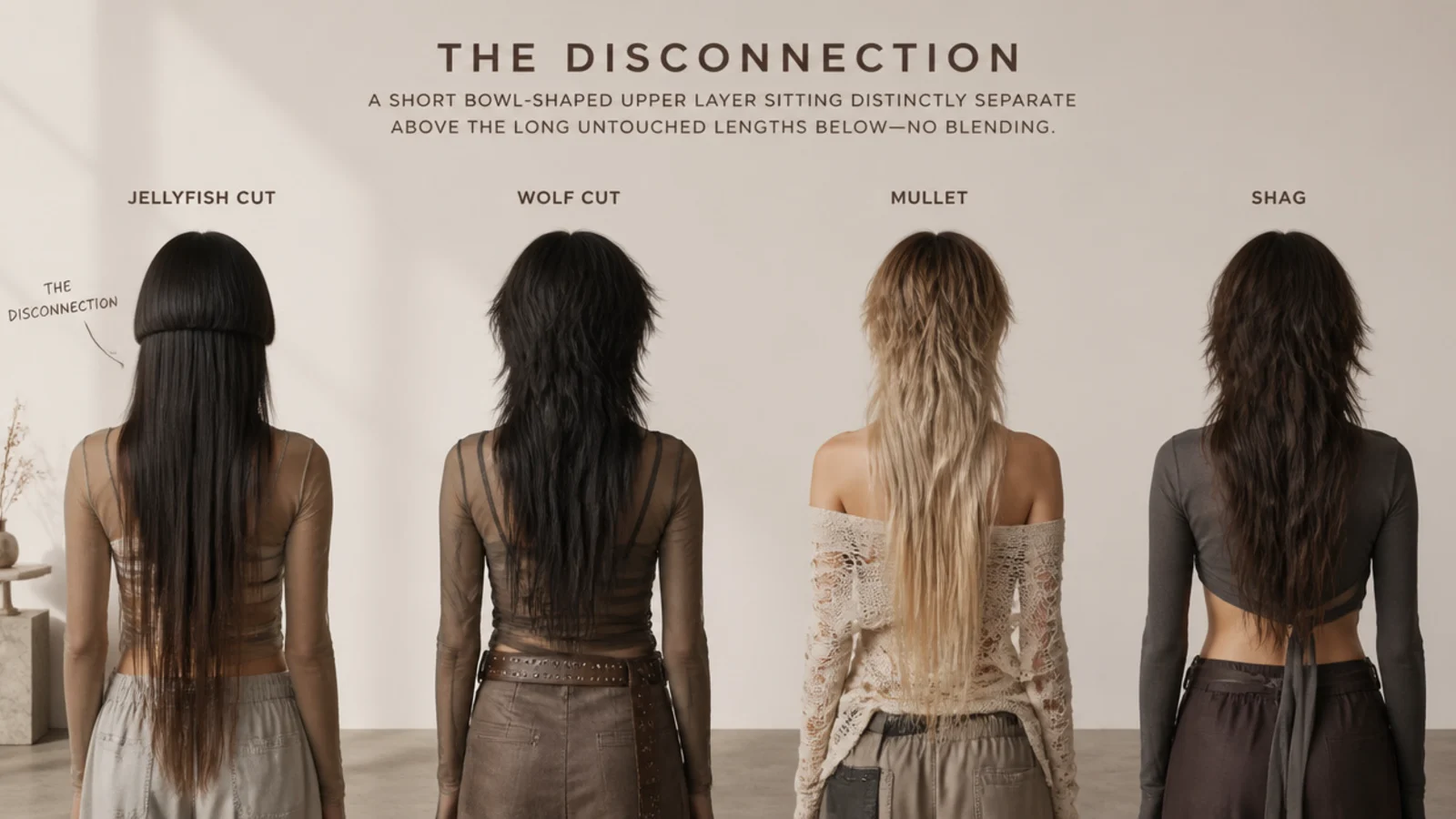
All four cuts stack short hair above long hair, and the difference is entirely in how the two sections meet. A layered jellyfish haircut keeps a hard, unblended break with a rounded bowl on top and all its layers below the line. A wolf cut blends everything, shattering choppy layers from the crown down so there is no line anywhere, which is why it is the version people accidentally end up with when their layers start too high. A shag is softer still: long, connected layers throughout with a fringe, no disconnection at all. A mullet keeps length only at the back with short sides, so its contrast runs front to back rather than top to bottom, while a jellyfish cut keeps its length all the way around the head. The practical test is the mirror: if you can point to a single horizontal line where the hair changes length, it is a jellyfish. If the change happens gradually over 6 inches, it is one of the other three. A choppy mid-length haircut gives similar contrast with none of the grow-out risk.
Styling the Short Bell and the Long Layered Tentacles
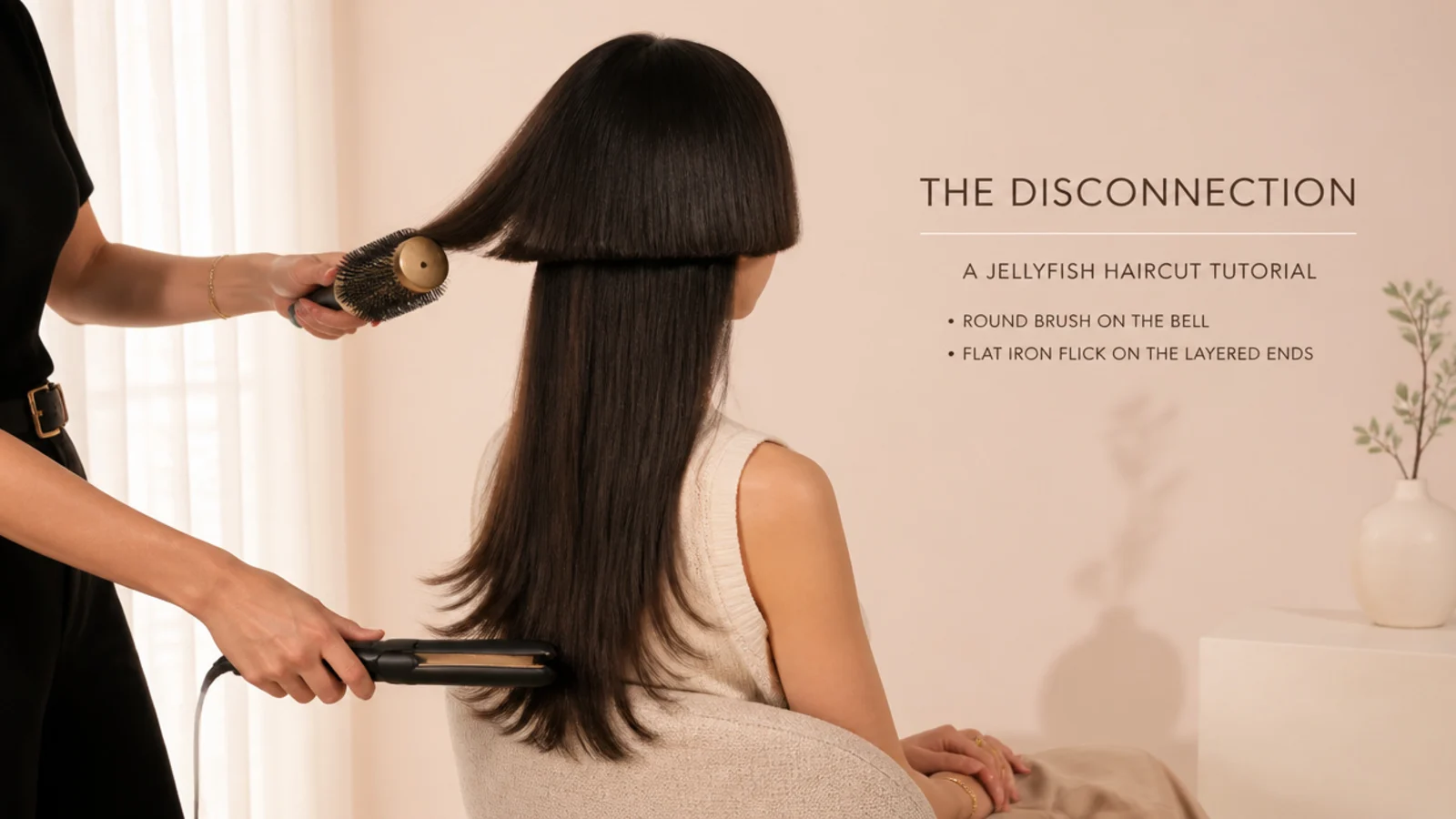
The bell needs direction or it flips out on its own. Two methods work reliably: a 2 inch round brush used for the last 30 seconds of a blow-dry, rolling the ends inward and holding until the section cools, or a flat iron at about 350 degrees held horizontally and rotated at the ends to pull a soft C-curve toward the face. Cooling under tension is what sets the shape, so letting go while the hair is still warm undoes all of it. The layered tentacles want the opposite treatment. Flick the ends outward with the same iron, or leave them straight, so the two sections curve against each other and the disconnection exaggerates itself. Layers make this easier than a blunt cut does, since the ends already want to separate. Keep products light: a dry texturizing spray at the roots of the bell and a pea of smoothing serum on the layered ends only. Heavy cream on the bell drags it flat and the shape disappears. For a no-heat day, braid only the tentacle section overnight on damp hair the way overnight heatless curls work, and leave the bell out to air-dry.
Growing Out a Layered Jellyfish Haircut and How to Ask for One
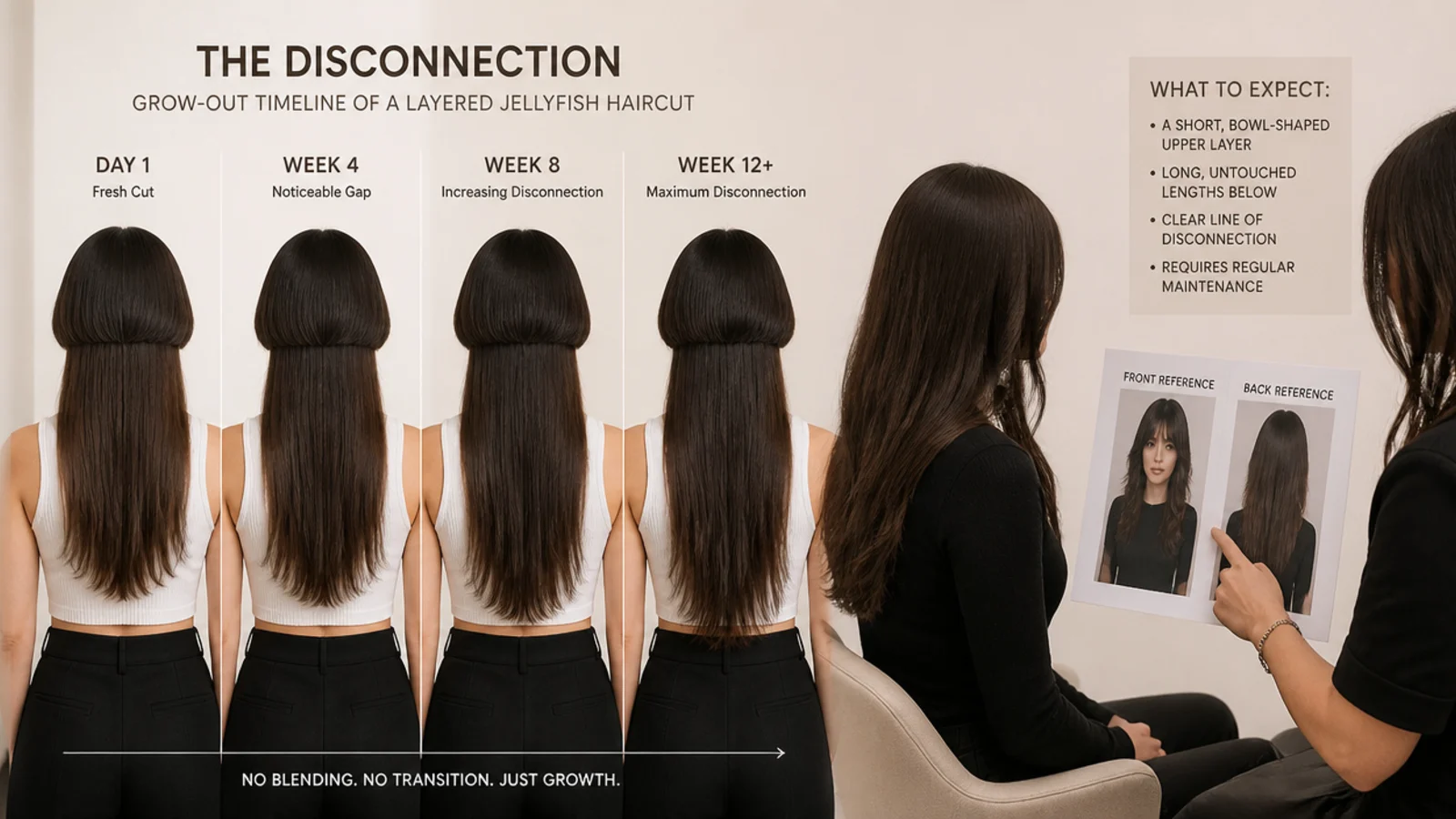
Layers are the reason a layered jellyfish haircut grows out better than a blunt one. Hair grows about half an inch a month, so a chin-length bell reaches the collarbone in roughly eight months. The blunt version spends two to three months as an awkward wedge sitting on the shoulders. The layered version spends four to six weeks looking slightly heavy, and then the dropping bell simply becomes the top layer of a shag, because there are already layers below it for the bell to join. One 20 minute appointment point-cutting the bell edge finishes the transition properly, much like growing out a fringe follows the path in grown out short curtain bangs. To ask for the cut, use this wording: a disconnected bowl-shaped upper layer, with the length left long underneath, and long layers in the bottom section only. Never say bowl cut on its own, and never say layers without saying where. Then name three numbers: where the bell falls against your face, where the tentacles end against your body, and how many layer lengths you want below the line. Bring a front and a back reference photo, and ask directly whether the stylist has cut a disconnected upper layer before.
Frequently Asked Questions
What is a layered jellyfish haircut?
It is a jellyfish haircut with the layering placed entirely in the long section beneath the disconnection line. The short, bowl-shaped bell on top stays blunt so the break between the two tiers still reads clearly, while long layers in the tentacles below add movement and remove weight. The layers never cross the disconnection, which is what keeps it a jellyfish cut rather than a shag.
How many layers should a jellyfish haircut have?
Three layer lengths is the working maximum on long hair, spaced about four inches apart, and two is the ceiling on medium length hair. The first layer should start at least four inches below the disconnection line. Add a fourth length and the tentacle section shatters, the eye loses the horizontal break, and the cut reads as a wolf cut instead of a jellyfish.
Is a layered jellyfish haircut good for thin hair?
It can be, with restraint. Use only two layer lengths in the tentacles, keep the perimeter completely blunt, and have the stylist take the bell deeper from the crown so it holds enough density to keep its bowl shape. Heavy layering on fine hair removes exactly the weight the disconnection depends on, and the two tiers stop looking distinct.
Can you get a layered jellyfish haircut with curly hair?
Loose curls up to about 3A work well if the hair is cut dry, curl by curl, with the bell left two to three inches longer than the finished length to allow for shrinkage. Layers should follow the curl clumps rather than horizontal sections. Past 3B the coils blur the disconnection line into a soft cloud, so the shape stops reading as a jellyfish cut.
What is the difference between a layered jellyfish haircut and a wolf cut?
A layered jellyfish haircut keeps a hard, unblended break between a rounded bell and the long section, with all layers below the line. A wolf cut blends choppy layers continuously from the crown to the ends, so there is no line anywhere. If you can point to one horizontal spot where the length changes, it is a jellyfish cut.
How do you style a layered jellyfish haircut?
Roll the bell inward with a two inch round brush for the last thirty seconds of your blow-dry, or curve it toward your face with a flat iron at about 350 degrees, and let it cool before releasing. Then flick the layered ends outward so the two sections curve against each other. Finish with dry texturizing spray at the bell roots and serum on the ends only.
How often does a layered jellyfish haircut need trimming?
The bell needs a trim every six to eight weeks if it is cut blunt, or ten to twelve weeks if the edge is point-cut. The layered ends underneath can go twelve to sixteen weeks, because layers disguise growth far better than a blunt perimeter does. Most people book the bell alone between full appointments, which is a shorter and cheaper visit.
What does a layered jellyfish haircut look like grown out?
It settles into a shag rather than an awkward wedge. The bell drops about half an inch a month, and because layers already exist below the line, the dropping bell becomes the top layer of a layered cut within roughly four to six weeks. One short appointment point-cutting the bell edge blends it fully and completes the transition into a proper shag.
How much does a layered jellyfish haircut cost?
Expect roughly 100 to 220 dollars at most salons and about 90 minutes of chair time, since the disconnection and the layering are two separate pieces of work. Specialist and city salons sit at the top of that range. Adding two-tone color on the bell section pushes the total to 280 to 570 dollars, with toner needed every six to eight weeks.
Which jellyfish haircut look are you saving?
The thread running through all 20 of these layered jellyfish haircut ideas is placement, not quantity. Keep the bell blunt, start the layers at least four inches below the disconnection line, and stop at three layer lengths, and you keep the structure that makes this cut recognizable while gaining the movement that makes it wearable. Thick hair needs a slide cut for weight, fine hair needs two layer lengths and nothing more, and wavy hair needs everything cut an inch longer than it looks. Take a front photo and a back photo to your consultation, say the words disconnected bowl-shaped upper layer with long layers in the bottom section only, and browse the rest of the jellyfish haircut board before you book.