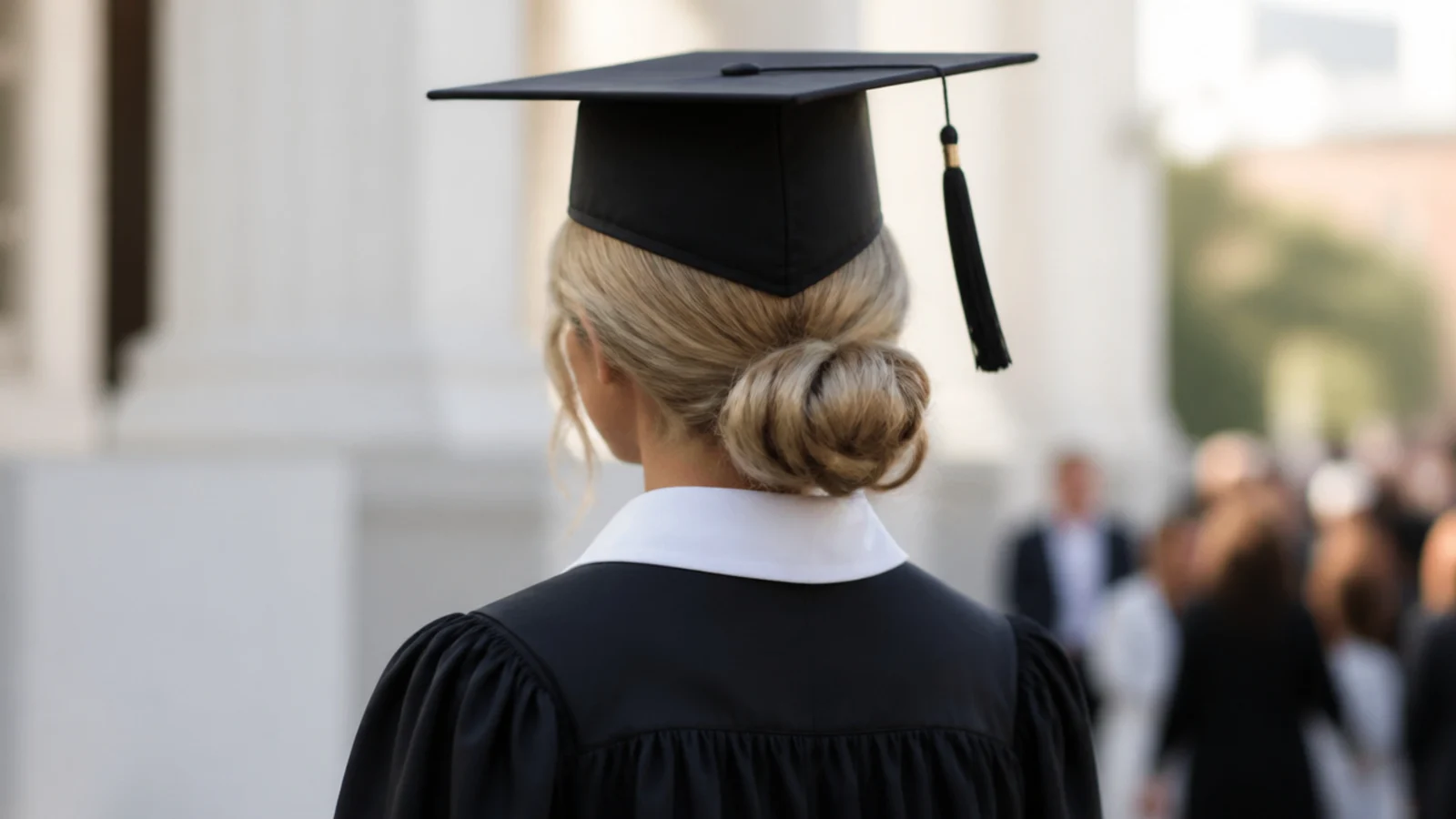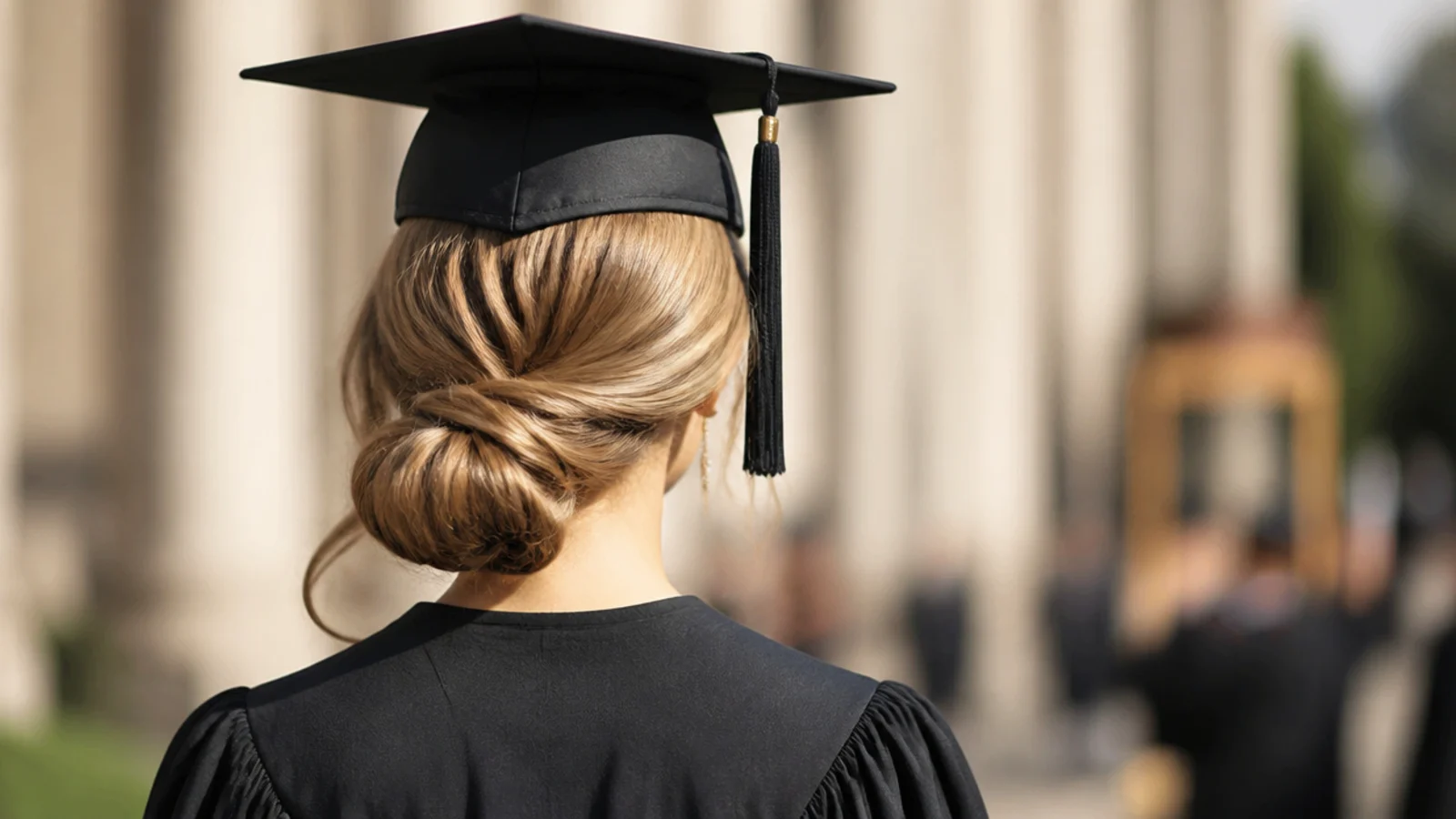
Quick Comparison
| Low Graduation Updo | High Updo or Topknot | |
|---|---|---|
| Fit under the mortarboard band | Clears it entirely; the band sits on a smooth crown | Collides with it; the cap perches forward or slides off |
| Hold across a four-hour ceremony | Strong; weight sits low and close to the skull | Weak; the cap presses down on the knot and loosens it |
| Pin count needed | 8 to 14 pins, plus 2 crossed anchor pins per temple | 10 to 16 pins, and they still work against the cap |
| Photo performance with the cap on | Clean silhouette; the shape shows below the board | Poor; the cap angles upward and reads as ill-fitting |
| Photo performance after the cap comes off | Excellent; the shape is completely unchanged | Mixed; expect a flattened, pressed knot at the crown |
| Comfort under a polyester gown | Good; the neck stays clear and nothing presses | Poor; the knot is compressed against your scalp for hours |
| Styling time the morning of | 10 to 40 minutes depending on the updo | 10 to 25 minutes, but usually redone at least once |
| Best hair lengths | Chin-length bobs through waist-length hair | Shoulder-length and longer, and only with no cap |
| Humidity resistance at outdoor ceremonies | High; pinned low hair cannot expand outward | Medium; the crown swells and pushes the cap higher |
1. Low Chignon Coiled Two Inches Below the Cap Band
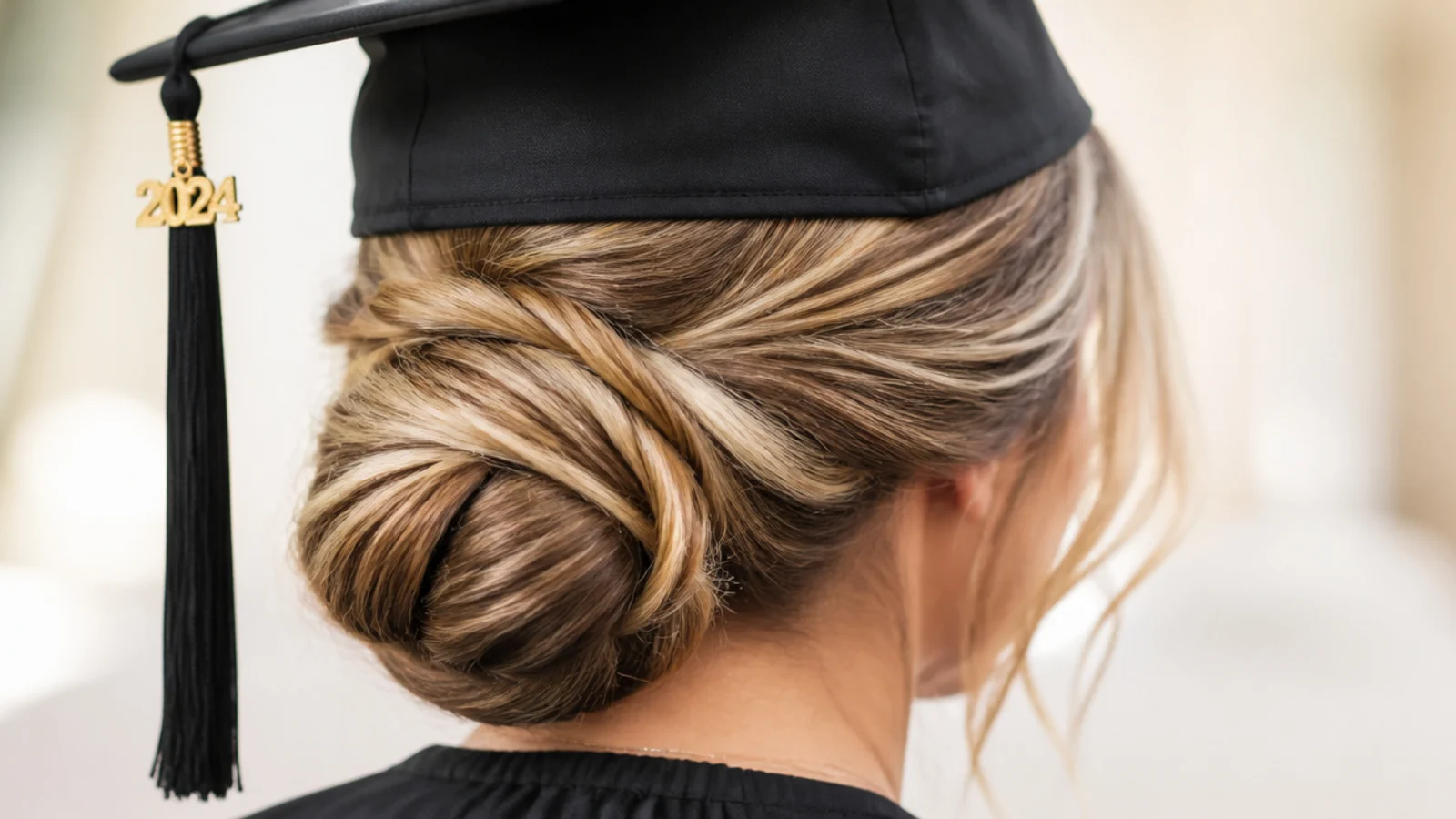
The default elegant graduation updo, and the one that fails least often. Gather everything at the nape, twist the length into a rope, coil the rope flat against the head and secure it with six U-pins pushed in around the outside edge toward the scalp. The coil should sit at or below the occipital bone, roughly two inches under the cap band. Leave the crown slightly soft rather than scraped, because a scraped crown reads severe in ceremony photos and gives the cap nothing to grip. About 15 minutes on shoulder-length or longer hair.
Who it suits: Shoulder-length to waist-length hair, any texture, formal or hooding ceremonies.
Tip: Angle every U-pin downward into the scalp so the bun weight cannot drag the cap backward.
2. Classic French Twist Stopped an Inch Below the Band
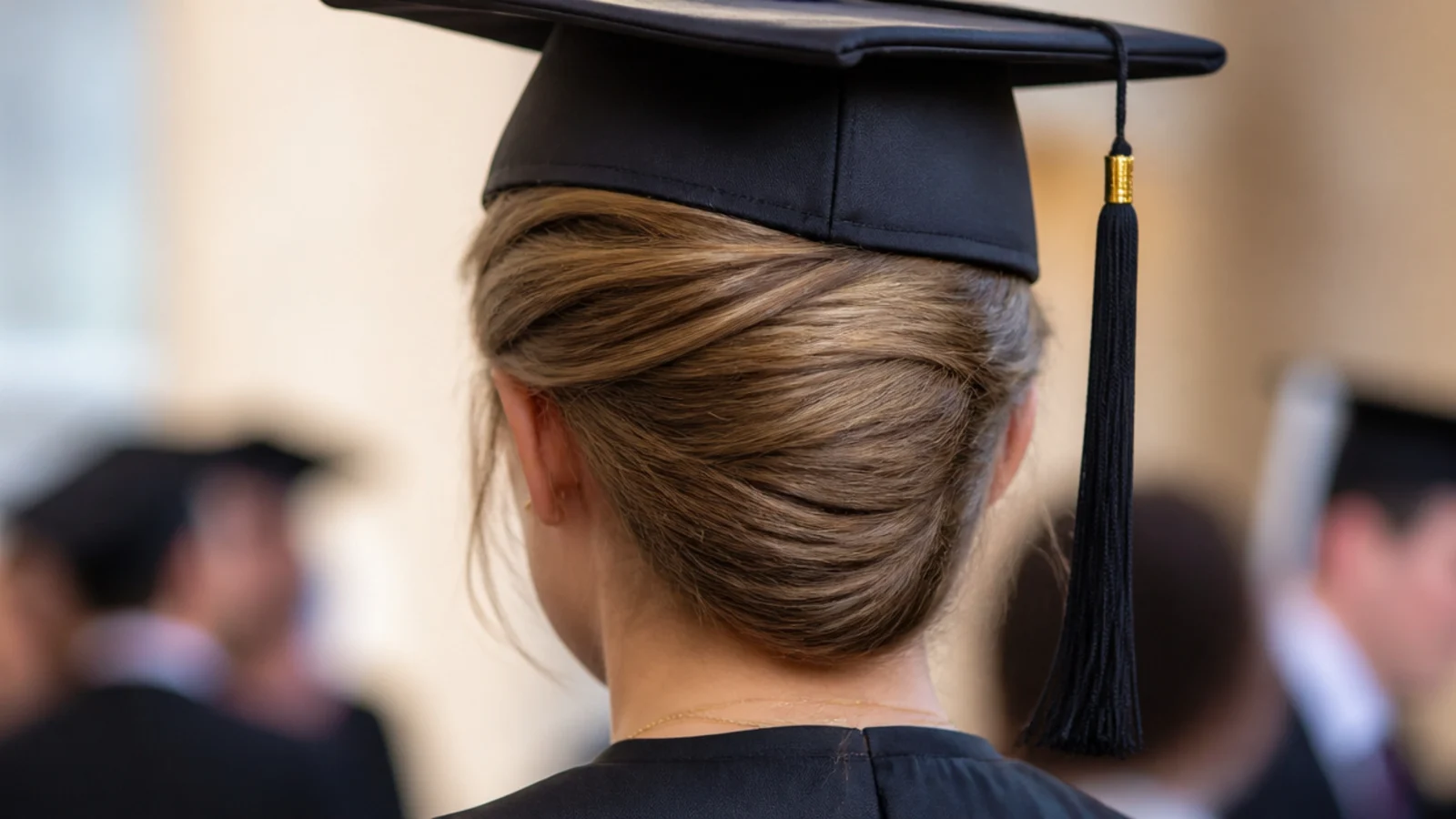
Sweep all the hair to one side at the nape, twist the whole section upward against the head, then roll the twist inward so the ends tuck inside the fold. Pin the seam vertically with eight bobby pins, wavy side against the scalp, working bottom to top. Stop the roll a full inch below where the band lands. Rolled that low it is the flattest formal updo you can build, which is exactly why it clears a mortarboard. Roll it higher and the top of the twist becomes a ridge that lifts the cap off the front of your head. Around 25 to 30 minutes on yourself.
Who it suits: Shoulder-length to long hair, master's hooding, strict formal dress codes.
Tip: Pin the seam vertically rather than horizontally so the roll cannot unravel over four hours.
3. Braided Crown Updo Dropped a Full Inch Lower
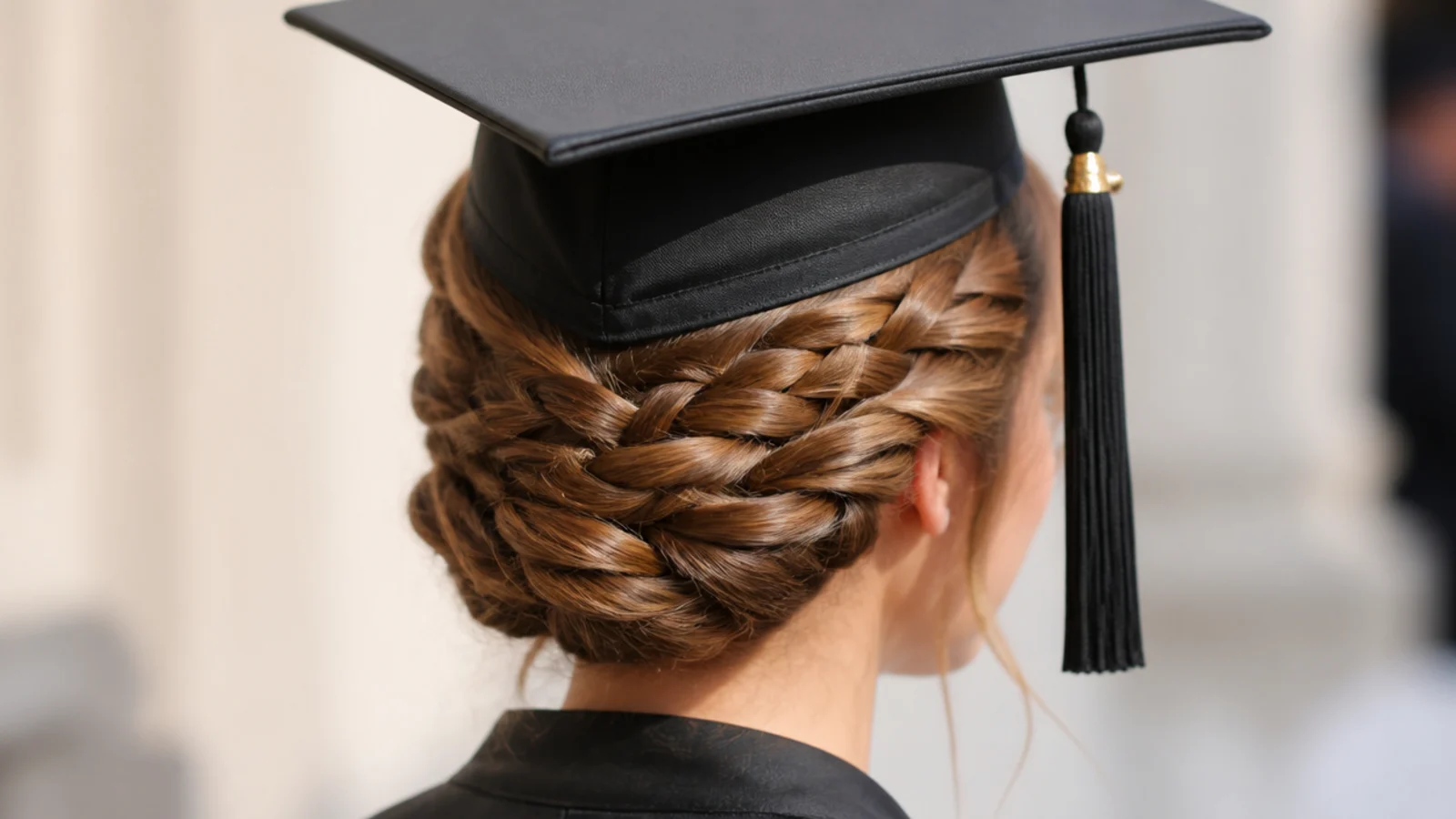
A Dutch braid worked from behind one ear, carried around the back of the head and pinned above the opposite ear. Standard crown braids sit exactly where the mortarboard front edge lands, which is why so many of them look crushed in photos. Drop the entire braid a full inch and the conflict disappears. Braids also hold better than any other updo across four humid outdoor hours and look identical once the cap comes off, with zero dent risk. Ten bobby pins tucked under the braid edge. About 20 minutes, longer if you are braiding blind from behind.
Who it suits: Medium to long hair, outdoor May and June ceremonies, humid climates.
Tip: Pancake the braid outward at the sides only, so the volume lands where the cap never touches.
4. Sleek Ballet Bun Set at the Occipital Bone
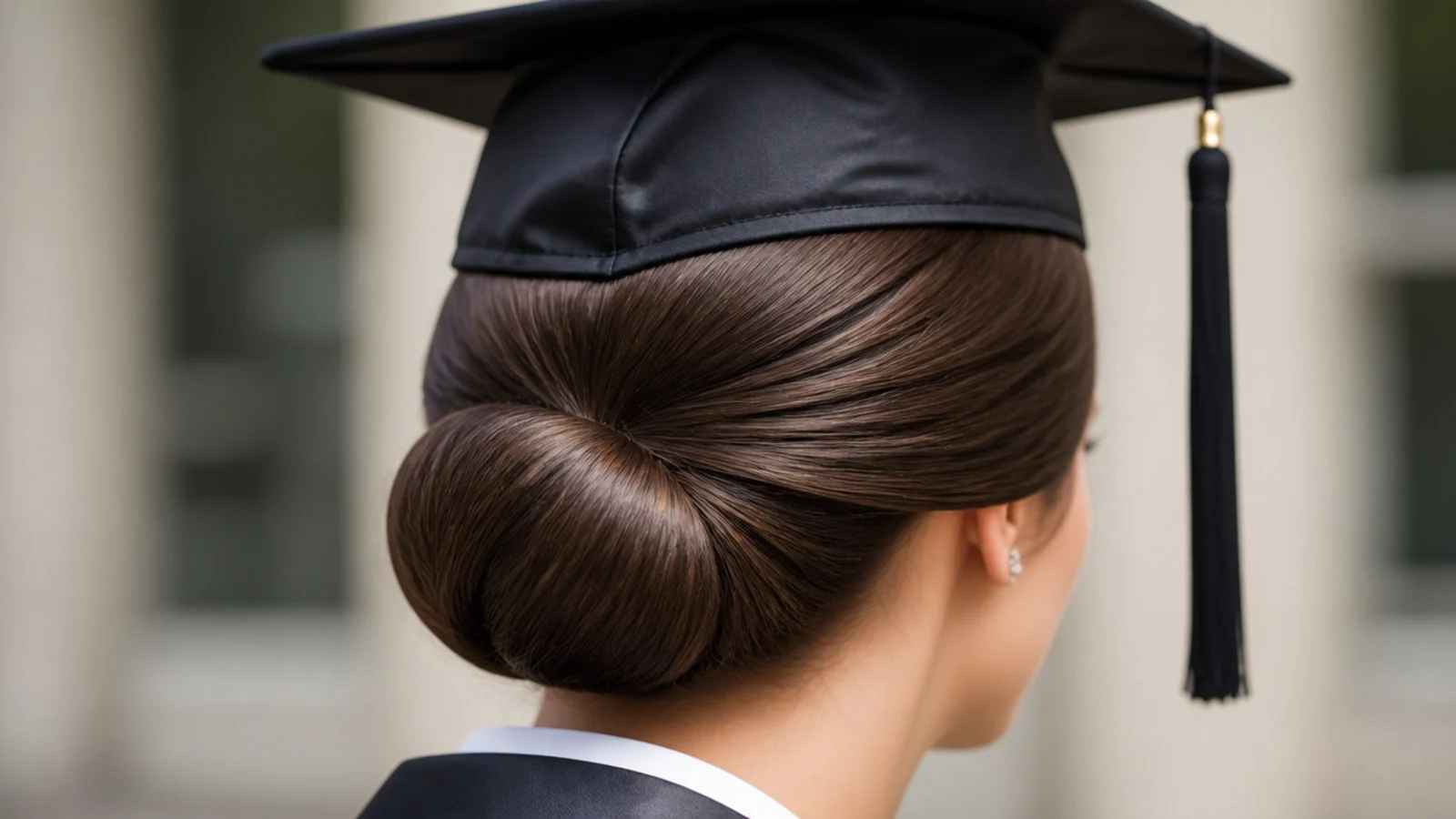
Smooth the hair back with a lightweight cream rather than a heavy gel, tie it at the bony ridge at the back of the skull, twist the tail around the base and pin with eight bobby pins crossed in four X pairs. Placement is the whole game: an inch higher and the elastic sits directly under the band, creating a lump that tilts the mortarboard forward for every photo. Alcohol-free gel on damp hair beats freeze spray here, because spray that dries hard flakes visibly against a black gown. Fifteen minutes, and the most reliable choice for very thick hair.
Who it suits: Thick, long or heavy hair, outdoor ceremonies, anyone wanting zero fuss.
Tip: Smooth the crown with a boar bristle brush instead of a comb to avoid static under the felt cap.
5. Twisted Rope Updo for Heavily Layered Hair
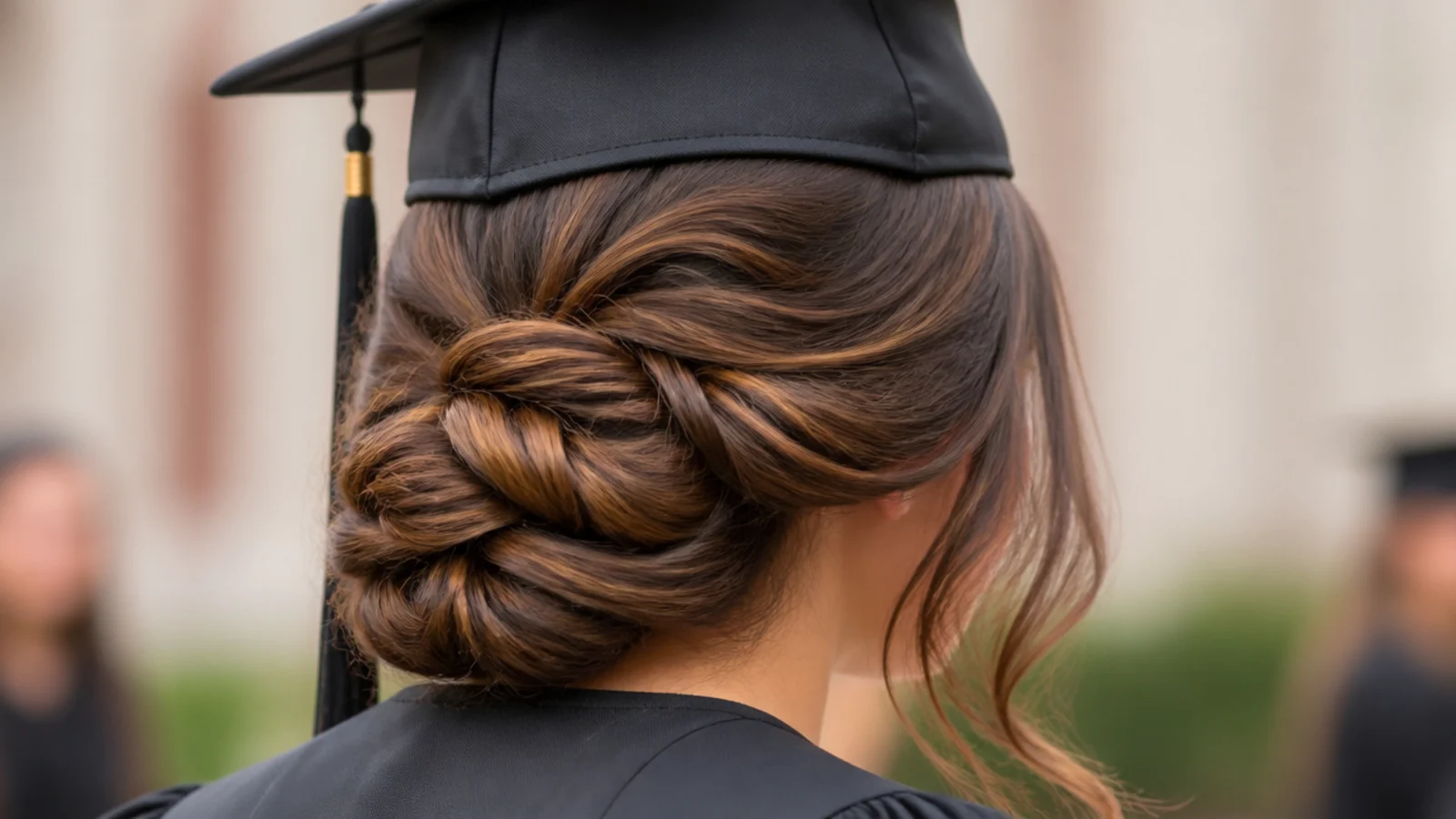
Layers are the reason most updos collapse: short pieces slip out of a single coil within an hour. Instead of one bun, take four two-inch sections at the back, twist each one toward the scalp, and pin each individually at the nape so the twists overlap like shingles. Every layer gets its own anchor point, so nothing can escape. It reads as a soft sculpted updo rather than a bun, and it is far more forgiving than a chignon on a shag or a long layered cut. Twelve pins, about 20 minutes. See also hairstyles by hair type.
Who it suits: Heavily layered cuts, shags, grown-out face-framing pieces.
Tip: Mist each section with texture spray before twisting so the twist grips itself rather than sliding.
6. Soft Messy Low Bun With Two Face-Framing Pieces
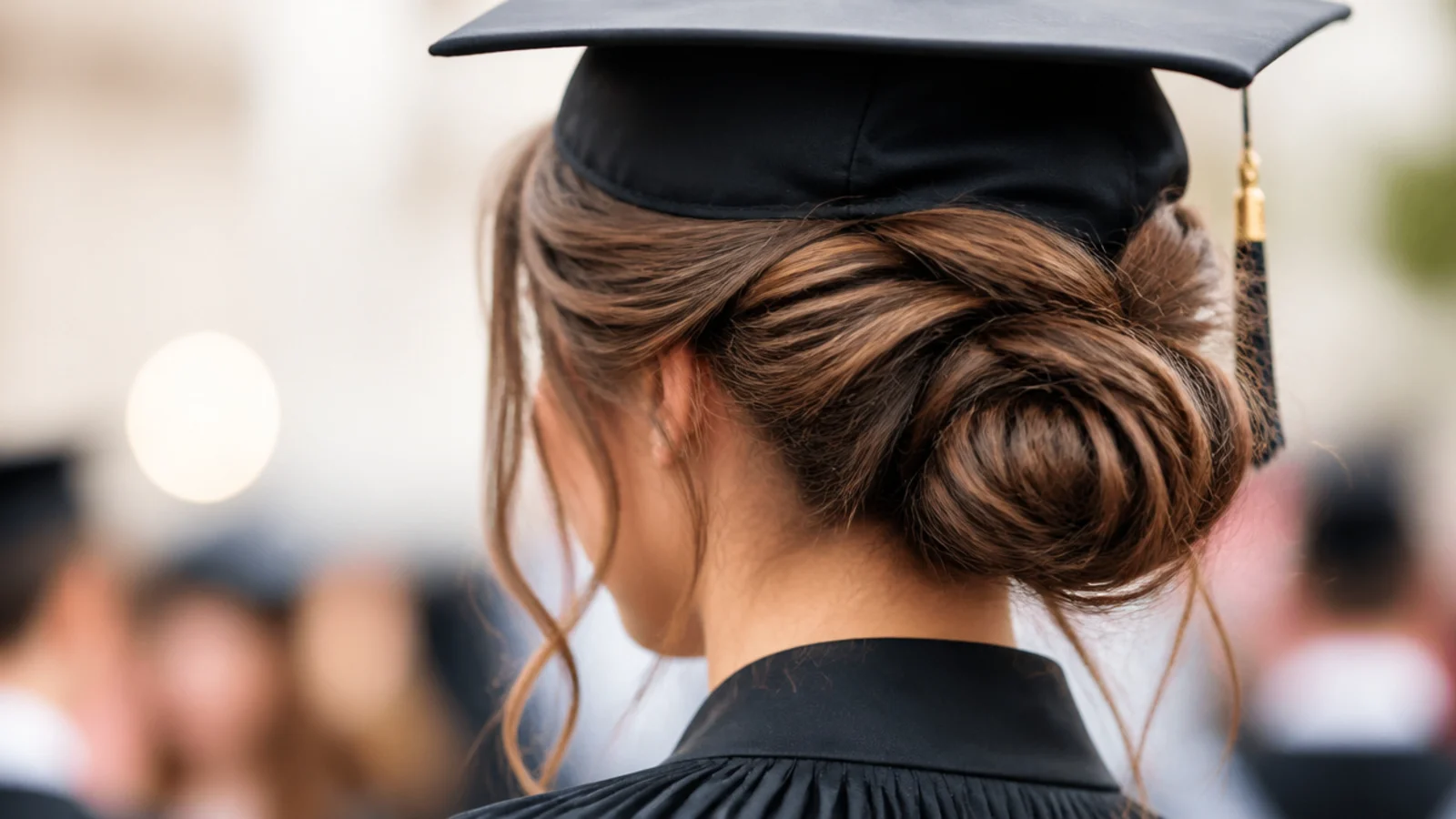
The relaxed version of the chignon, and the fastest elegant updo on this list. Pull hair into a loose low ponytail, twist and wrap it into a bun, pin with six pins, then deliberately pull a few small pieces loose at the crown and nape for softness. Leave one one-inch piece down in front of each ear, curled with a 1-inch iron. Those two pieces do all the work in photos once the cap covers the crown. Ten minutes, no skill floor at all, and it looks better slightly imperfect.
Who it suits: High school graduations, anyone styling themselves in a rush at 6am.
Tip: Pull pieces loose from underneath the bun, not from the top, so the cap does not flatten them.
7. Low Bun With Two Flat Twists for 4C Natural Hair
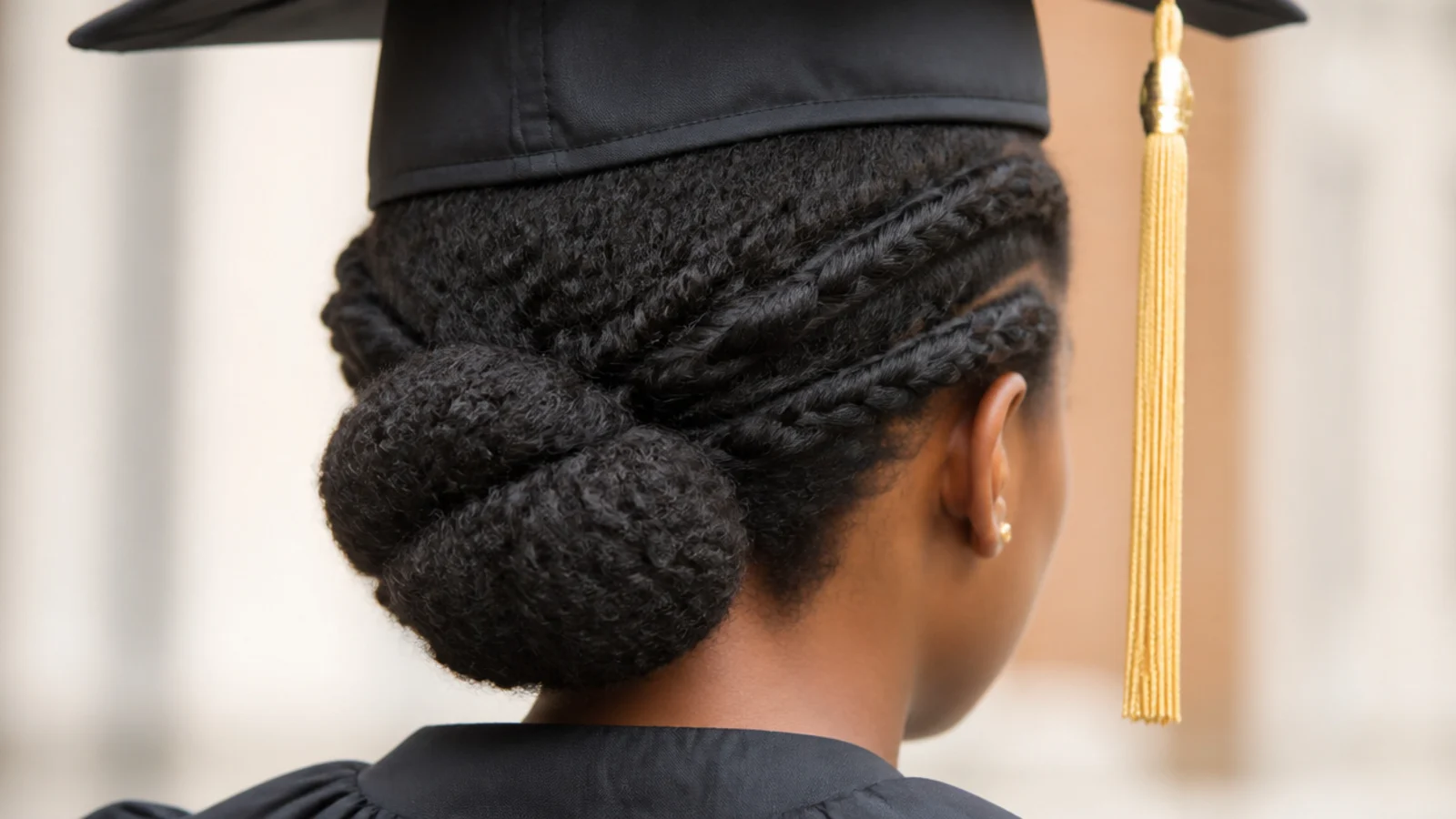
Two flat twists laid close along the scalp from the front hairline to the nape, gathered into a low bun or puff at the back. Flat twists solve the cap problem better than any loose natural style, because they sit flush exactly where the band crosses, so nothing gets compressed and nothing needs reviving afterward. Install them the morning of rather than days ahead: a fresh tight install is genuinely uncomfortable under a cap for four hours. Edge control on the perimeter only. About 35 minutes. More in protective styles for fine 4C hair.
Who it suits: Type 4 natural hair, locs, anyone wanting an updo that needs no cap-off revival.
Tip: Keep the bun at the nape rather than high, so the cap cannot push the twists forward off the hairline.
8. Fishtail Braided Bun for Waist-Length Hair
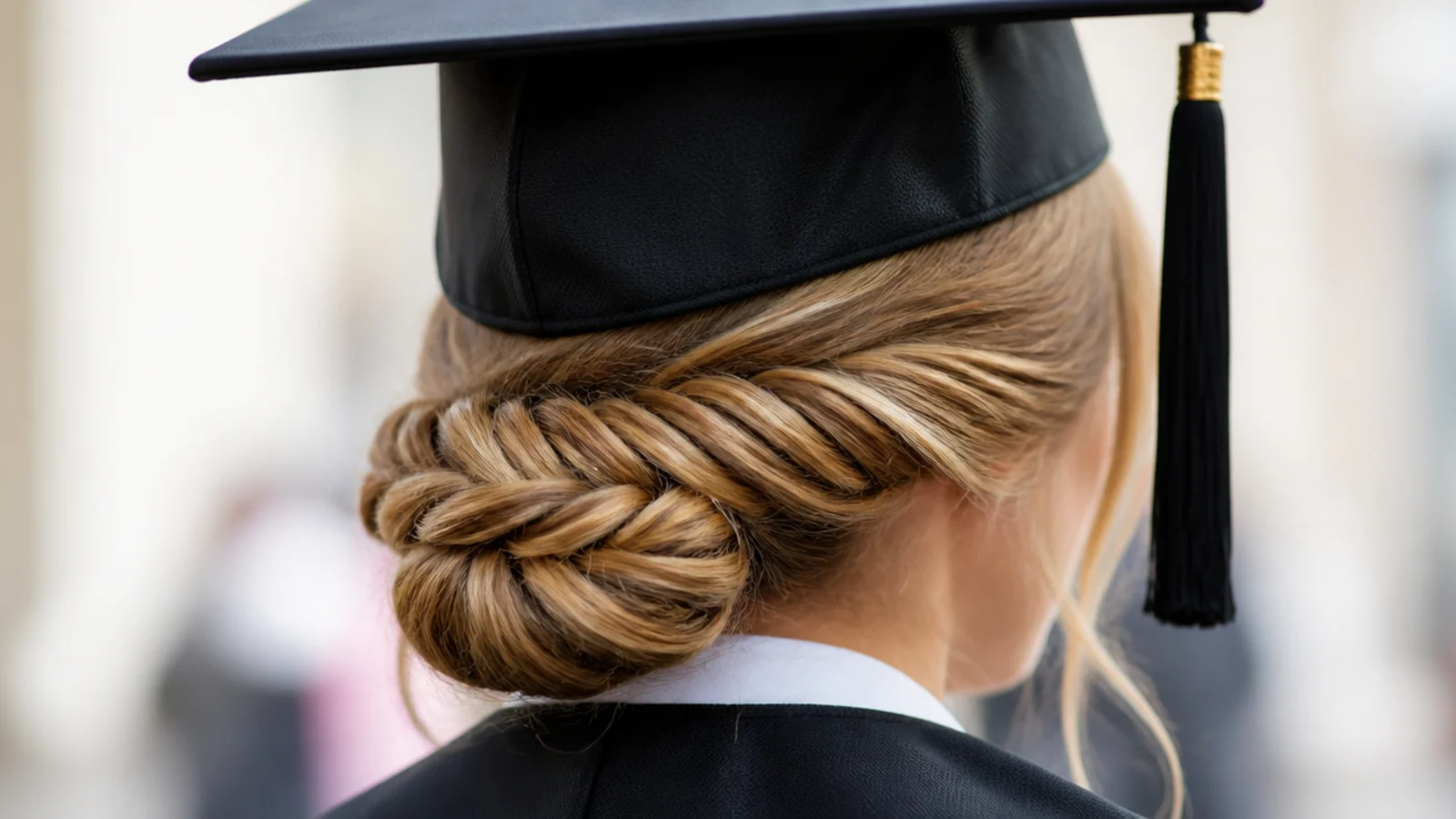
Fishtail the full length loosely, then coil the finished braid into a flat spiral at the nape and pin the spiral at six points. Braiding first is what makes a waist-length updo survive: an unbraided coil of that much hair is heavy, unstable and slowly pulls the mortarboard backward across a long ceremony. Braided, the mass compresses into a tight disc that sits close to the skull. Pancake the braid gently before you coil it so the bun looks fuller than its actual weight. Twelve pins, about 30 minutes. Related setups in graduation hairstyles for long hair.
Who it suits: Waist-length or extremely thick hair that overwhelms a normal bun.
Tip: Pin the coil upward toward the scalp rather than letting it hang, so gravity does not tip the cap.
9. Faux Updo for Bob-Length Hair Too Short to Pin Up
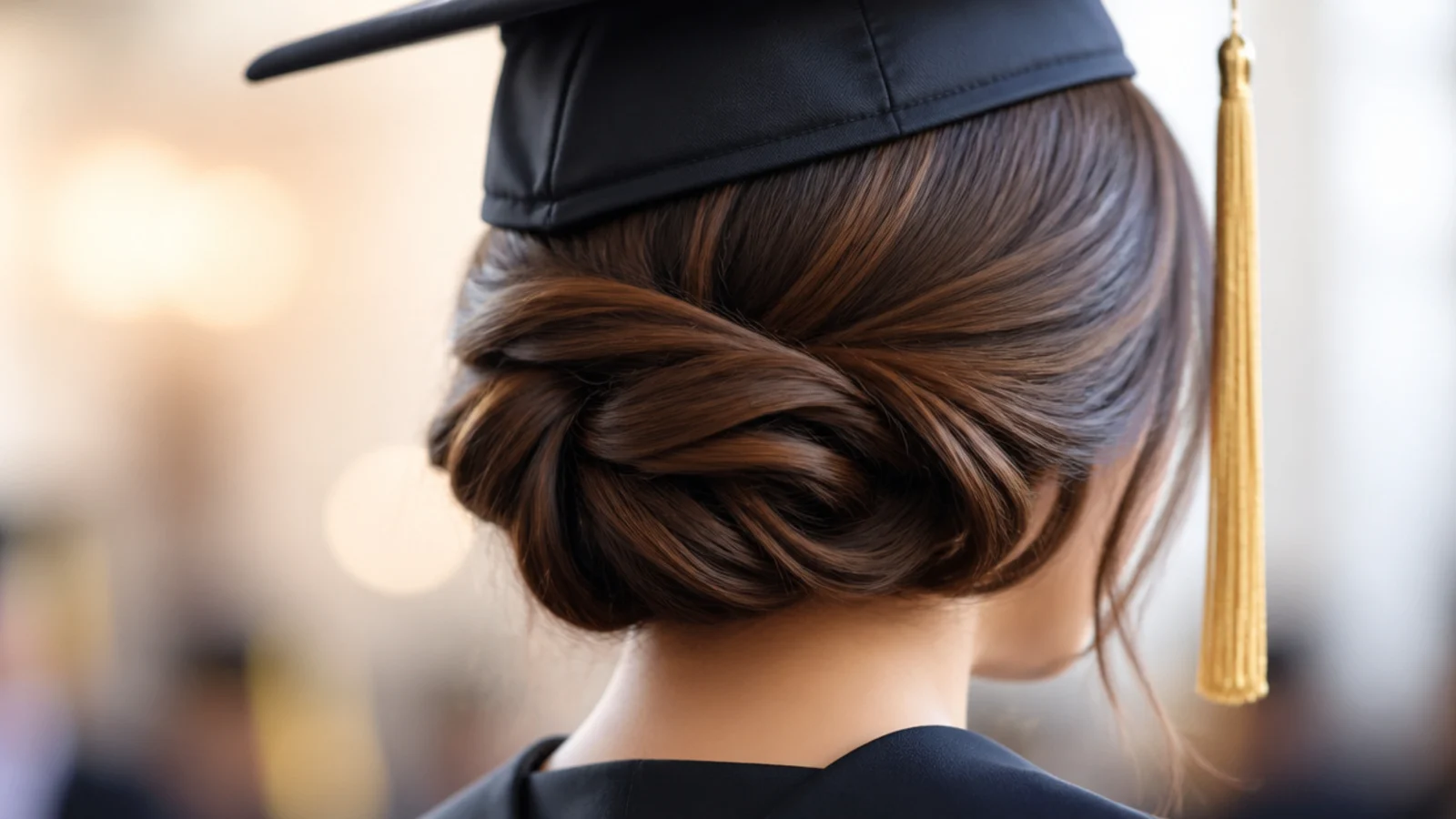
You do not need length for a graduation updo, you need the illusion of gathered hair at the nape. On a chin-length bob, tuck the ends under toward the neck, roll the rolled edge inward, and pin the roll along the bottom with ten small bobby pins spaced an inch apart. From the front and the sides it reads as a tucked updo; from behind it is a neat rolled edge. This is the single most requested style nobody writes instructions for. Fifteen minutes. More short options in graduation hairstyles for short hair.
Who it suits: Chin-length bobs and lobs, anyone told their hair is too short for an updo.
Tip: Use 1.5-inch mini pins rather than full-size ones, since standard pins poke out of short hair.
10. Knotted Double Bun for Fine Hair That Slips
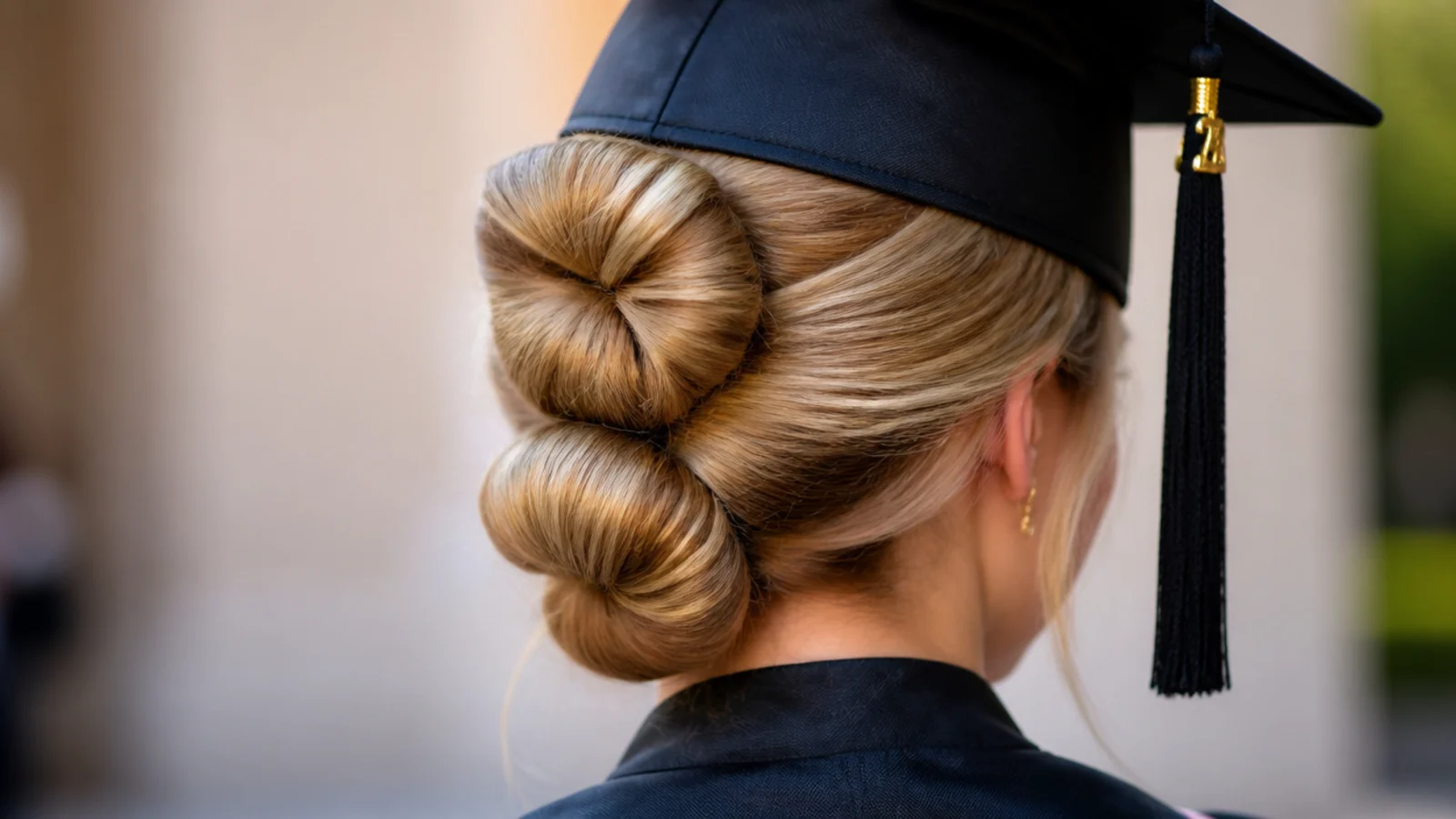
Fine hair has no weight to hold a single pin, so build two small knots instead of one bun. Split the nape section horizontally, tie the lower half into a knot and pin it, then knot the upper half directly over it so the two overlap. Stacked knots give twice the anchor points and read as one fuller bun. Backcomb lightly at the nape only, never at the crown, and use a dry texture spray first for grip. Ten bobby pins crossed in pairs. About 18 minutes. See how to style short fine hair.
Who it suits: Fine, thin or slippery hair that will not hold a standard chignon.
Tip: Spray each bobby pin and let it tack for 5 seconds before sliding it in; the grip roughly doubles.
11. Gibson Tuck Rolled Under a Thin Satin Ribbon
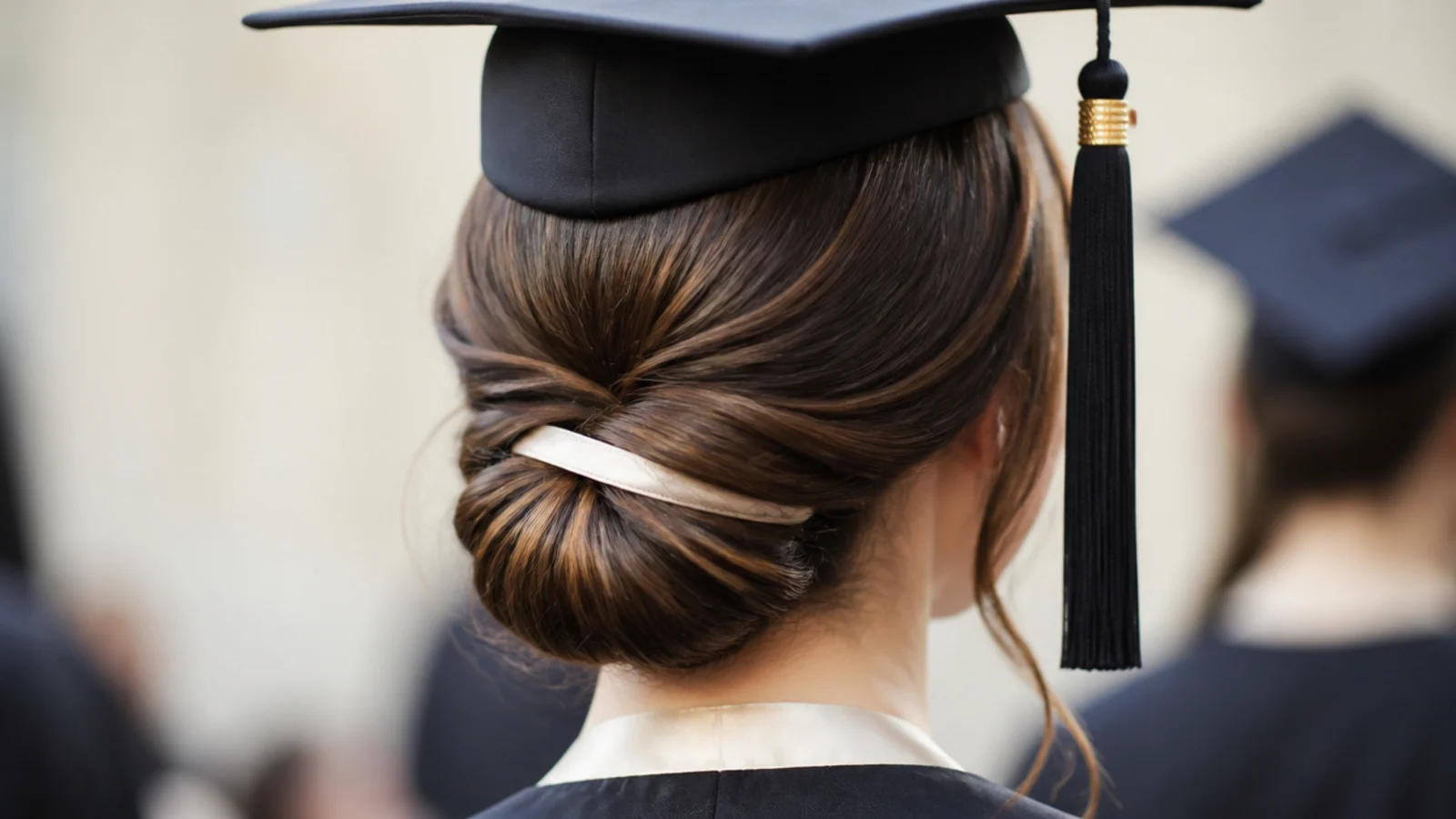
Tie a thin ribbon or a soft headband around the head, sitting low at the nape rather than across the crown. Split the hair below it into two sections and roll each one up and over the ribbon, tucking the ends inside. The ribbon does most of the holding, so you need only four pins to close the gaps. It is the lowest-skill formal updo in existence and one of the flattest, which is why it disappears under a cap completely. Pick a ribbon in your school color for a detail that shows in photos. About 12 minutes.
Who it suits: Shoulder-length to long one-length hair, vintage or romantic dress codes.
Tip: Keep the ribbon fully below the band line so the cap never sits on top of the knot.
12. Pinned Curly Updo for Type 3B Curls
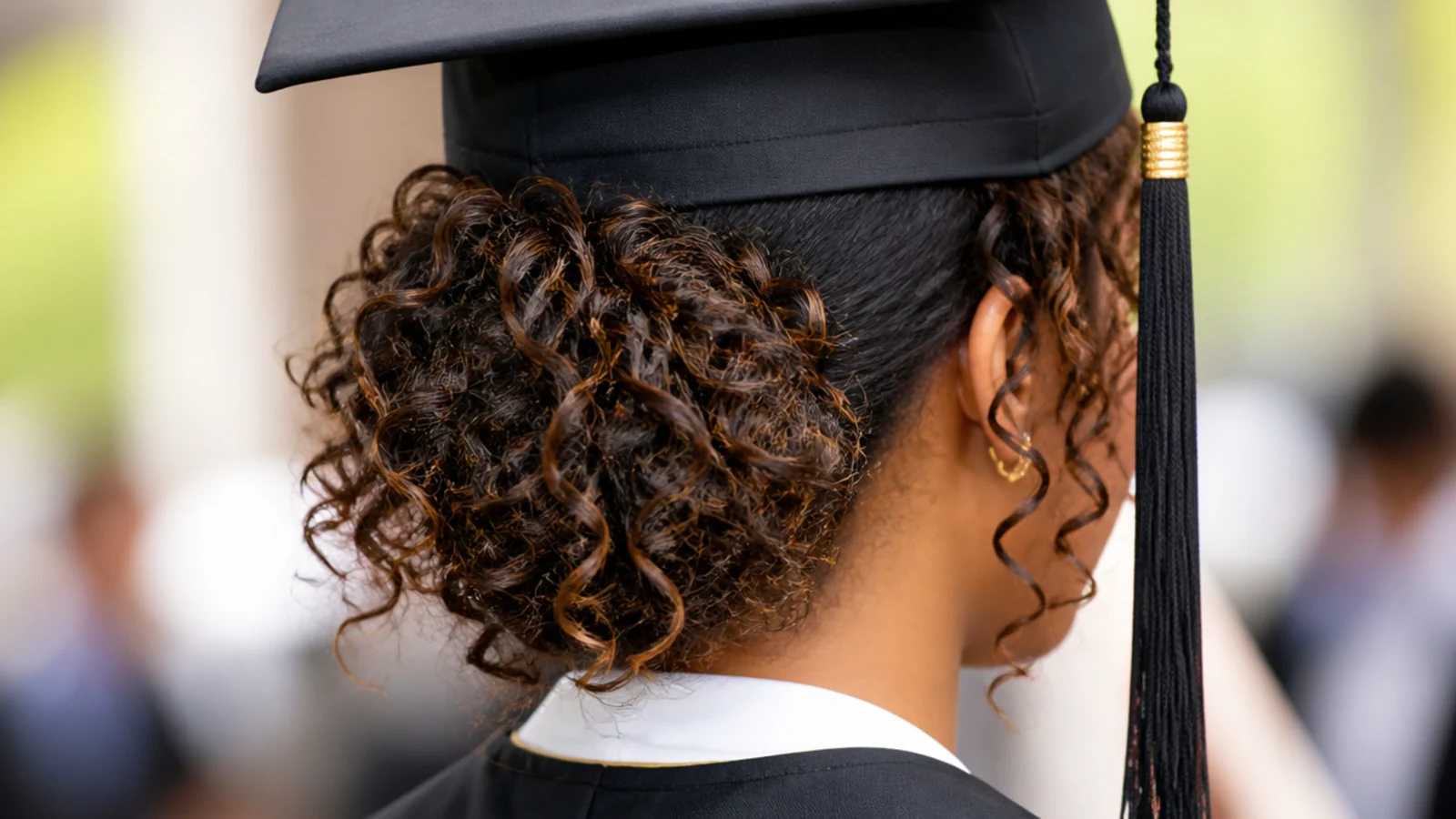
Do not smooth curls into a bun, gather them. Work on second-day hair, sweep everything low, and pin curl clusters individually into a loose cloud at the nape using twelve bobby pins pushed in against the direction each curl falls. The point is to keep the curl pattern visible instead of compressing it into a smooth ball. Skip the crown entirely since the cap covers it, and clip the roots while drying so you start with lift you can afford to lose. About 25 minutes. More in graduation hairstyles for curly hair.
Who it suits: Type 3A through 3C curls, second-day or refreshed hair.
Tip: Carry a small pick and fluff the pinned cloud from underneath before photos, never from the top.
13. Rolled Chignon Built Over a Hidden Hair Donut
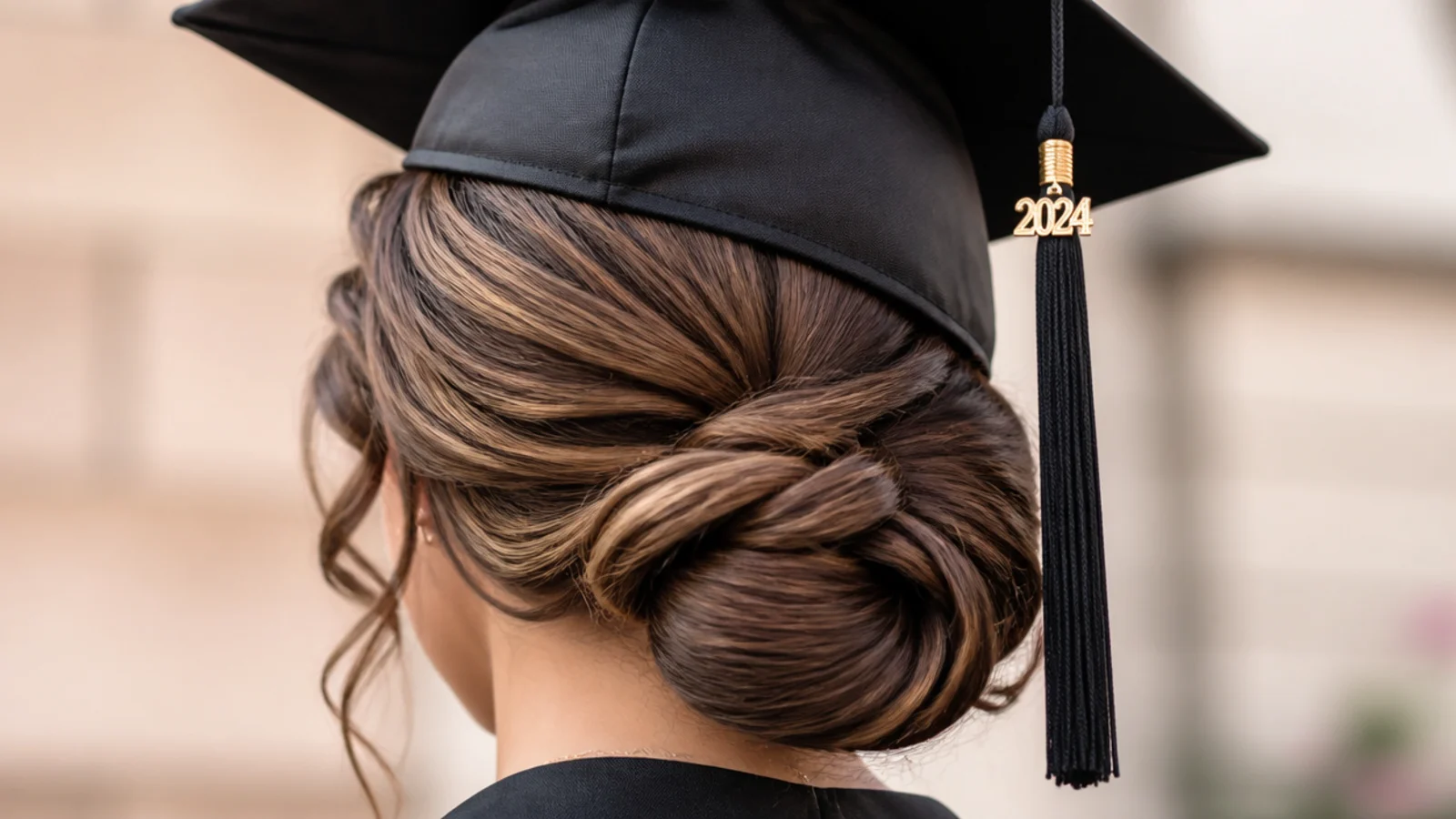
If your hair is shoulder-length and fine, a bare chignon looks small under a wide black gown collar. Slide a hair donut in your own color onto a low ponytail, spread the hair evenly over it, and pin around the rim with eight U-pins. The donut sits flat against the head rather than projecting, so it adds width, not height, which is exactly the direction you want under a mortarboard. Donuts cost roughly 6 to 10 dollars in a drugstore. About 15 minutes and the most consistent shape on this list.
Who it suits: Fine or shoulder-length hair that looks sparse in a plain chignon.
Tip: Buy the donut one size smaller than you think; oversized ones lift the bun into the band.
14. Two-Strand Twist Updo Pinned Into a Low Crown
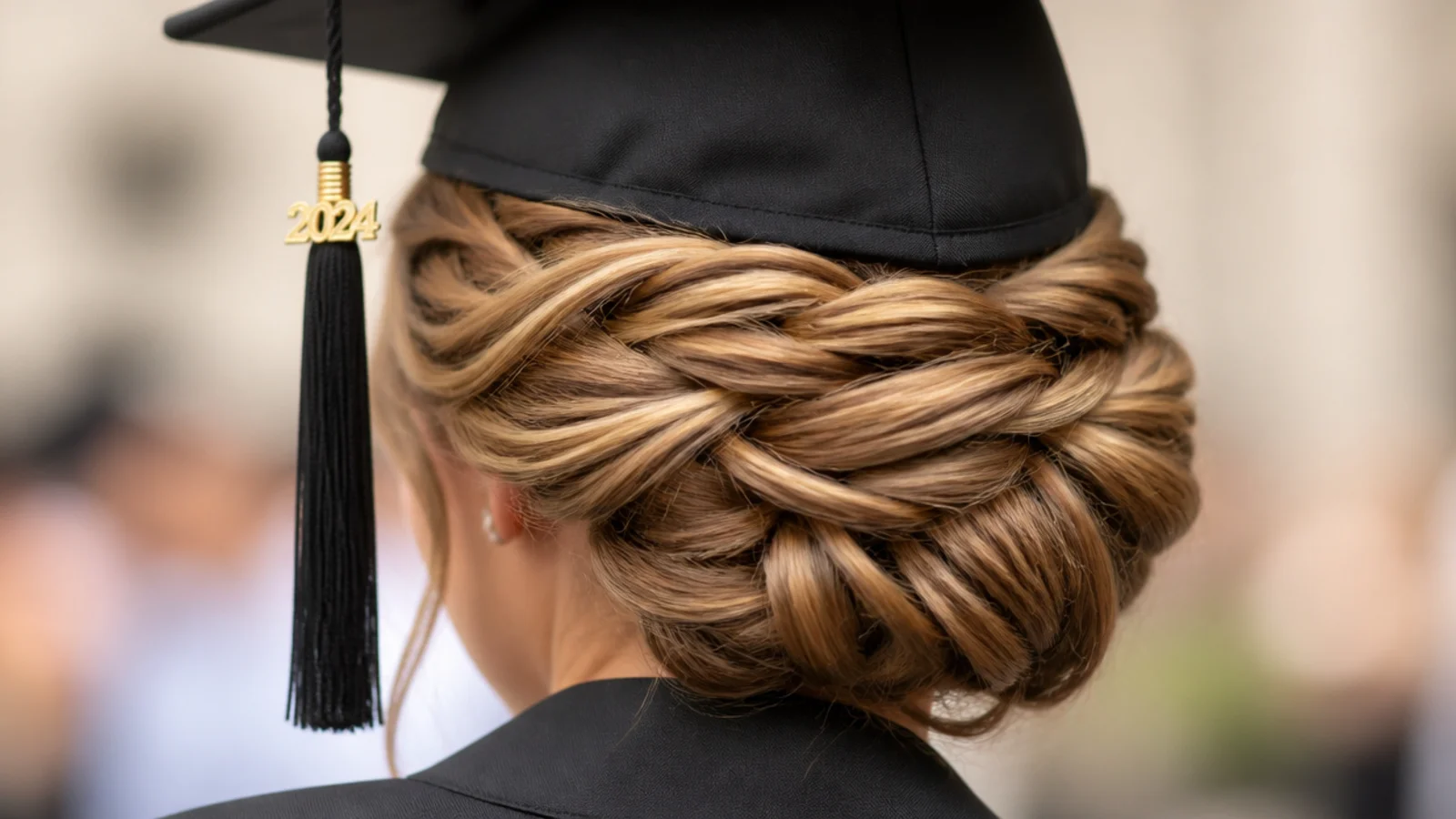
Twist the hair into eight to ten two-strand twists, then pin the twists in a low horseshoe around the back and sides of the head, leaving the crown flat. Because each twist is pinned separately the style cannot collapse as a unit, which is what happens to a single bun in heat. It also requires no purchase, no extensions and no salon, which matters on a SERP full of wig advertisements. Install two or three days ahead if you want twist-out texture afterward. Around 45 minutes. See protective styles for fine 4C hair.
Who it suits: Type 4 hair, transitioning hair, anyone wanting a no-purchase protective updo.
Tip: Leave the crown deliberately flat; that is the section the cap sits on for the entire ceremony.
15. Side-Swept Low Bun Set Behind the Left Ear
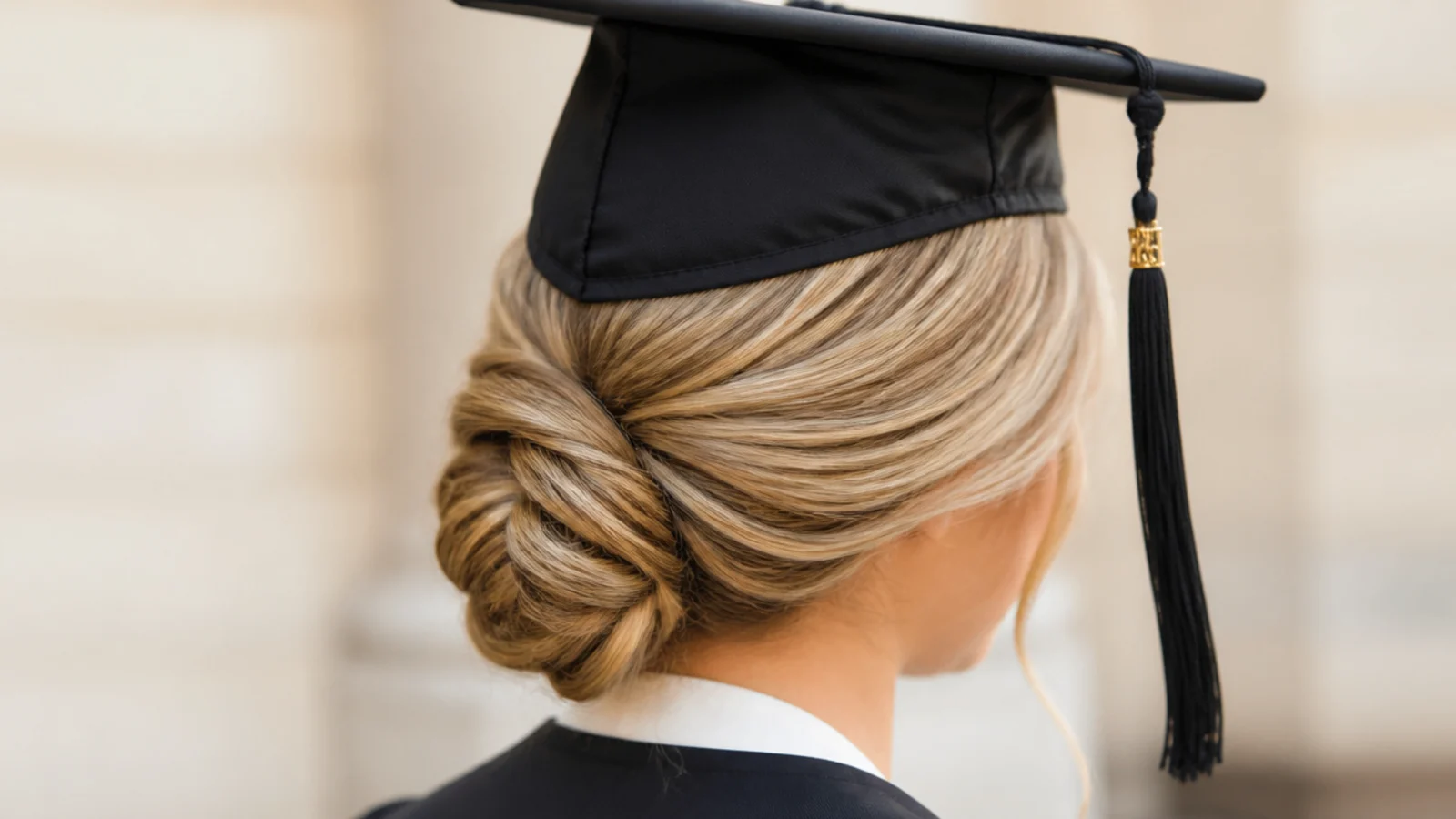
Deep side part, everything swept across the back of the head, and the bun set low behind one ear rather than centered. The asymmetry photographs better than a centered bun because it gives the silhouette a direction against a flat black gown, and it clears the cap band completely on both sides. Keep the sweep across the back smooth with a light cream so it does not bubble up under the band. Eight pins plus two U-pins in the bun itself. About 18 minutes on medium to long hair.
Who it suits: Medium to long hair, off-shoulder necklines, anyone with a strong side part.
Tip: Set the bun on the side your family will be photographing from, not the side facing the stage.
16. Braided Halo Updo With the Tail Tucked Under
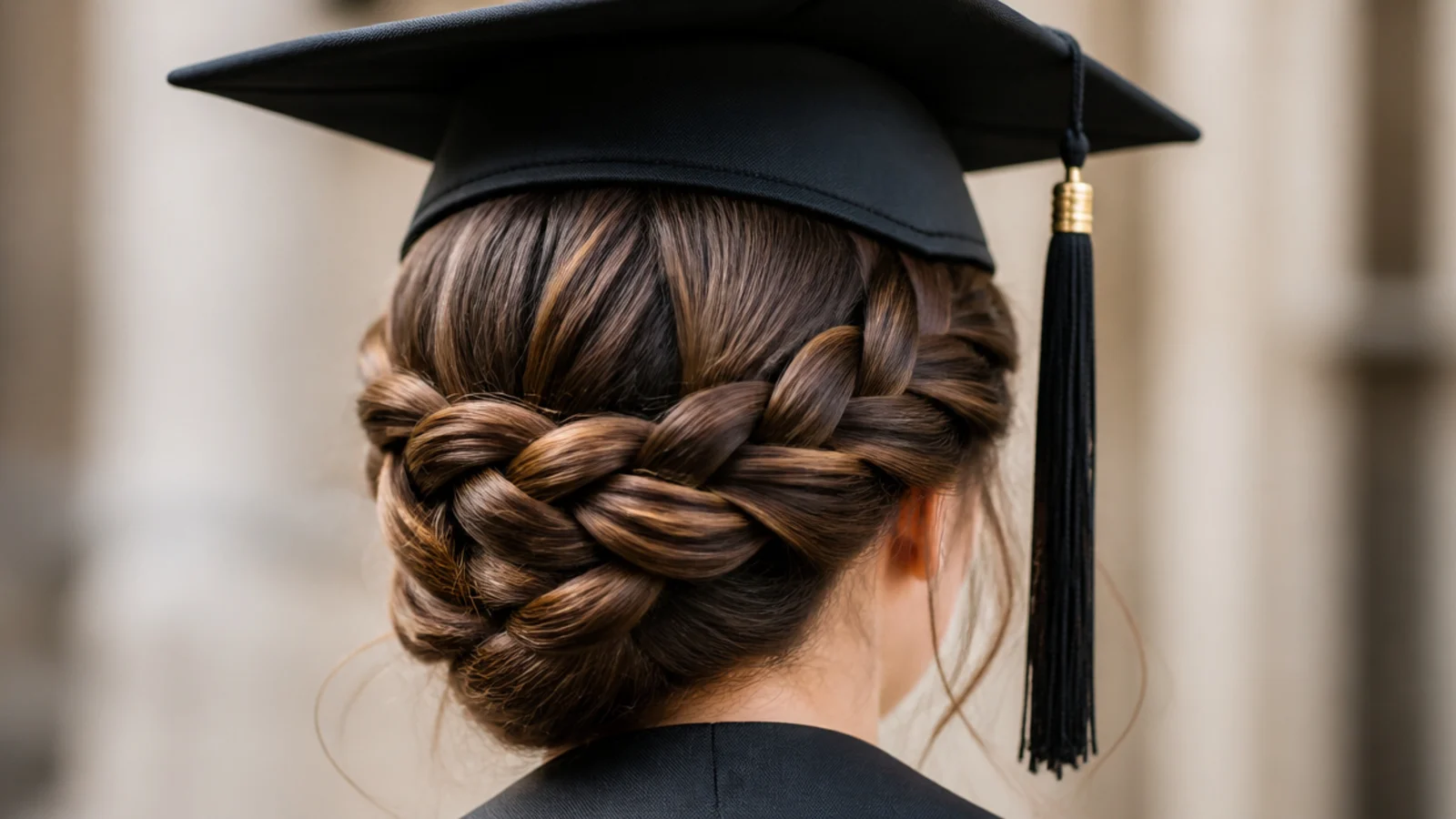
A single French braid worked from the crown straight down the back, then folded upward on itself and pinned flat at the nape so the tail disappears. Because the braid pins completely flush, the cap sits perfectly level with no lumps at all, which is the reason this style shows up on nearly every ranking graduation page without instructions attached. Keep the first three inches of the braid tight, since that is the stretch the band crosses. Six pins. About 22 minutes. Technique detail in easy braided hairstyles.
Who it suits: Medium to long hair, anyone who can French braid their own head.
Tip: Fold the tail upward, not sideways, so the fold sits under the coil instead of beside it.
17. Sculpted Pin Curl Updo for Indoor Ceremony Photos
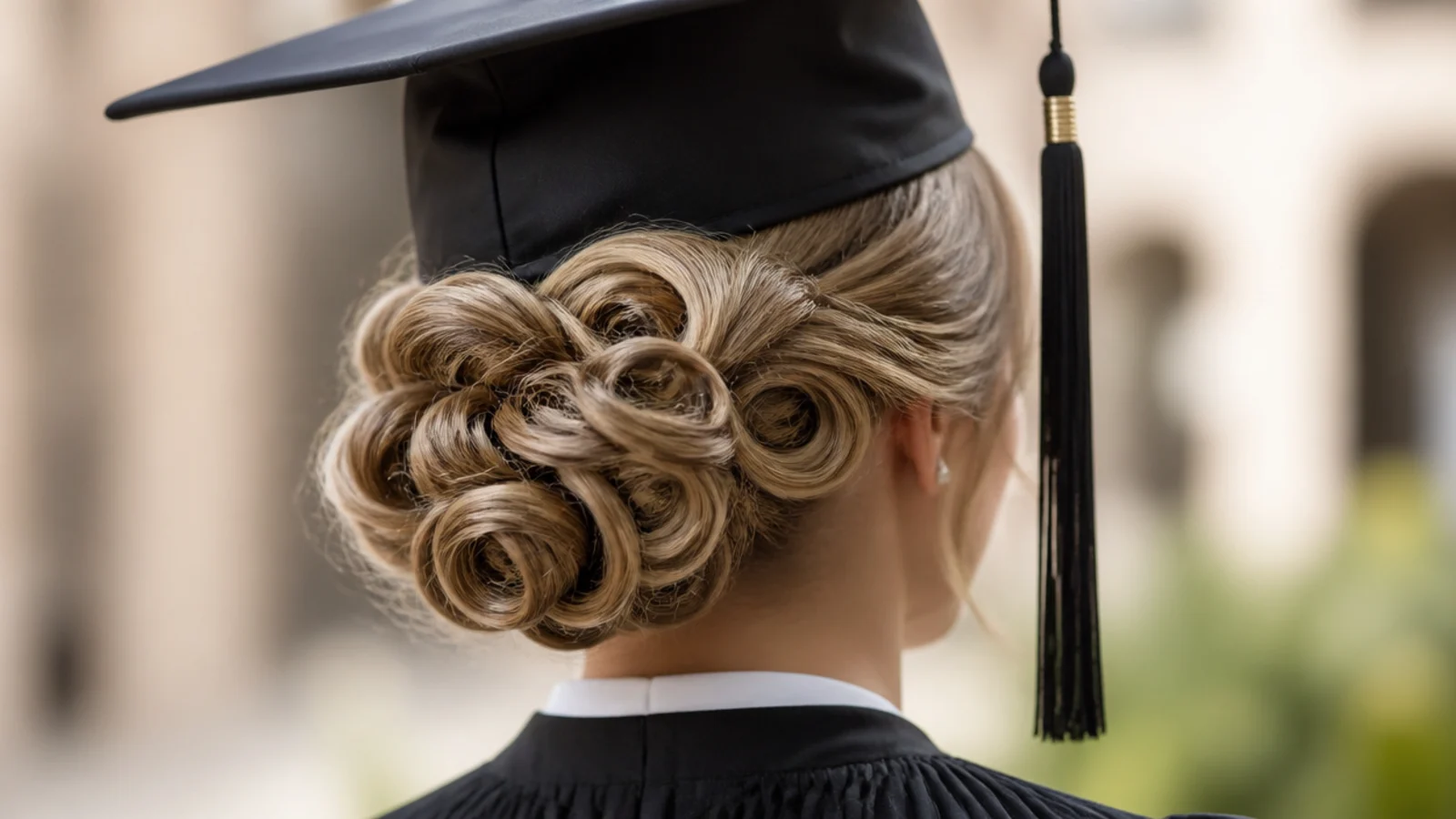
The most formal option here. Curl the hair in one-inch sections with a 1-inch iron, let every curl cool completely for ten minutes, then pin each cooled curl into a low sculpted cluster at the nape with a single pin through the center. Cooling is not optional: pinning a warm curl sets it flat and the whole thing drops within the hour. Fourteen pins total. This is the strongest updo for indoor evening ceremonies and portrait photography, and the weakest for humid outdoor ones. About 40 minutes.
Who it suits: Indoor evening ceremonies, formal portraits, low-humidity days.
Tip: Let curls cool a full ten minutes before the cap goes on, or you will lose the shape completely.
18. Low Bun With Cap Anchor Pins Built In at the Temples
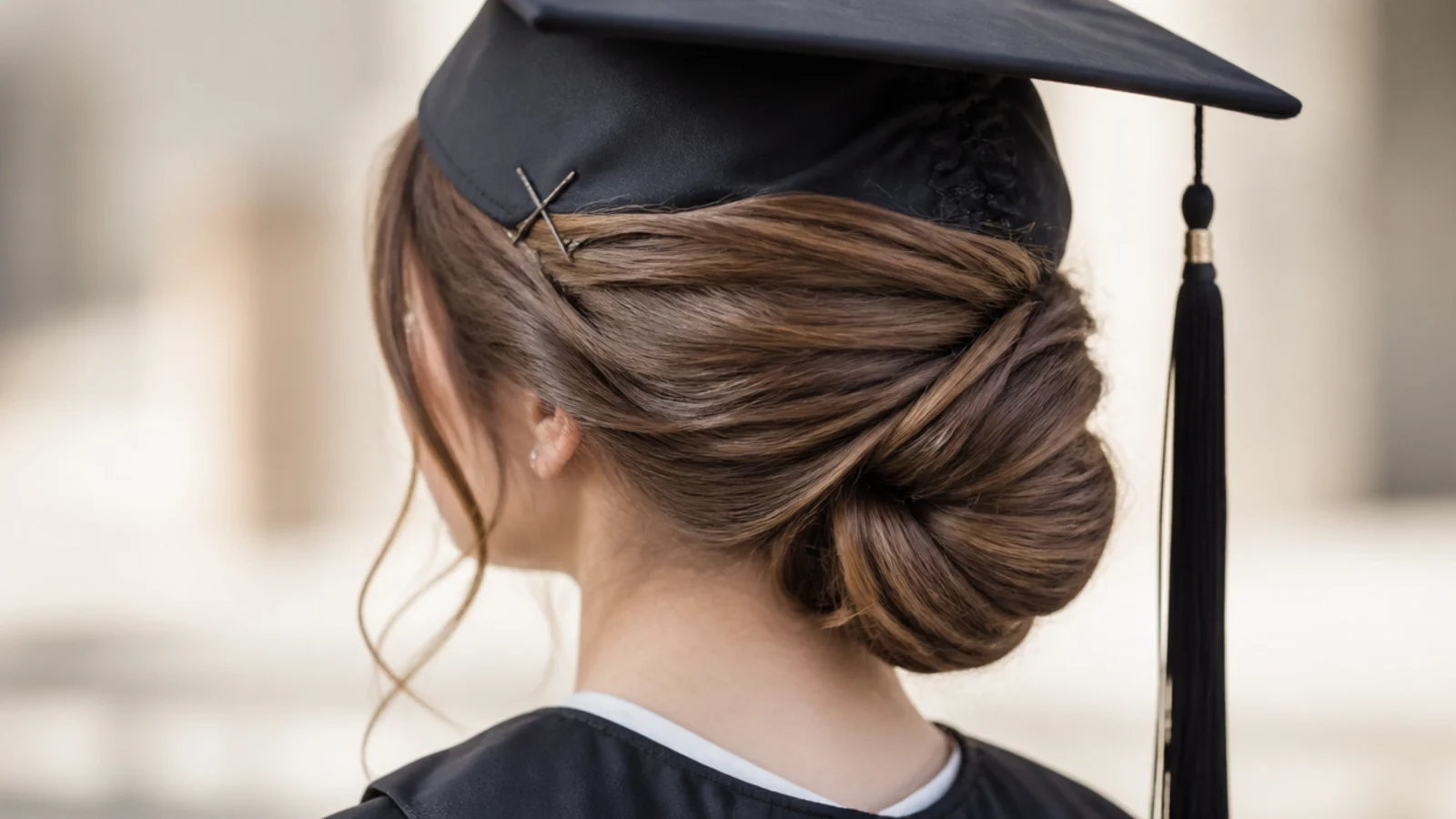
Any low bun becomes a cap-proof updo when you build the anchors into it. As you style, slide two bobby pins into the hair just behind each temple and cross them into an X, leaving a small loop of pin exposed. Once the bun is finished, set the cap on level and hook the inside edge of the band under those crossed loops on both sides. The cap cannot slide forward or back. Use pins that match your hair color, since the band leaves part of each one visible. Adds 3 minutes to any bun.
Who it suits: Anyone whose cap has slid in a practice run, outdoor and windy ceremonies.
Tip: Test the anchor by shaking your head hard before you leave the house, not in the seat.
19. Half Updo With the Top Section Pinned Completely Flat
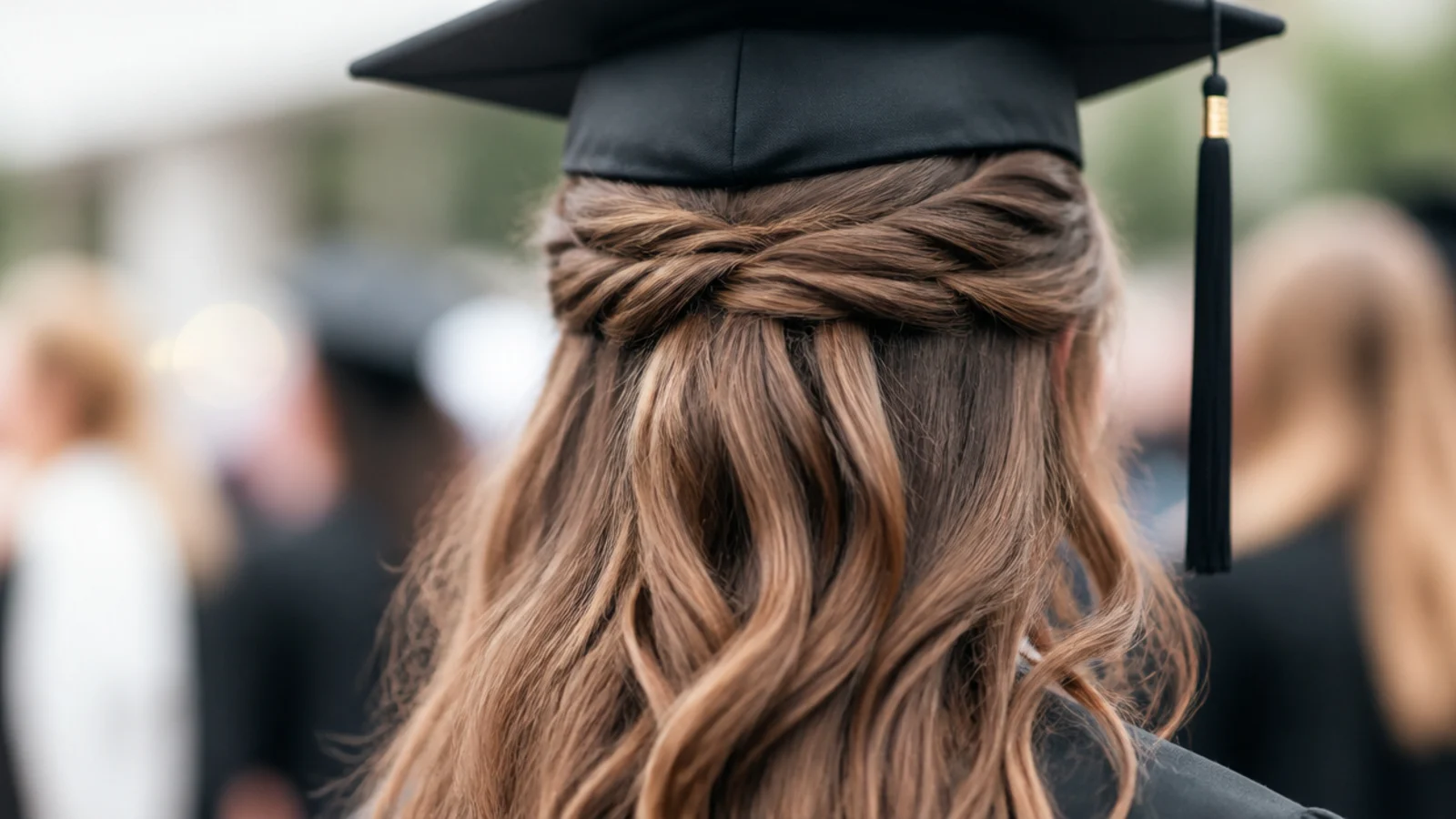
The compromise for anyone who wants length visible in photos. Take the section from temple to temple, twist it back and pin it flat against the head just below the crown rather than gathering it into a puff. The flat pinning is the whole trick: a bouffant half-up fights the band, a flat one vanishes under it. The curled length below does all the visual work. Four pins at the join, two per side. Ten minutes plus curling, and the easiest style to repair mid-ceremony if a pin slips.
Who it suits: Anyone who wants an updo look without committing to hair fully up.
Tip: Set the cap over the pinned join, never in front of it, so the band hides all the hardware.
20. Bantu Knot Crown Updo Worn Low Around the Back
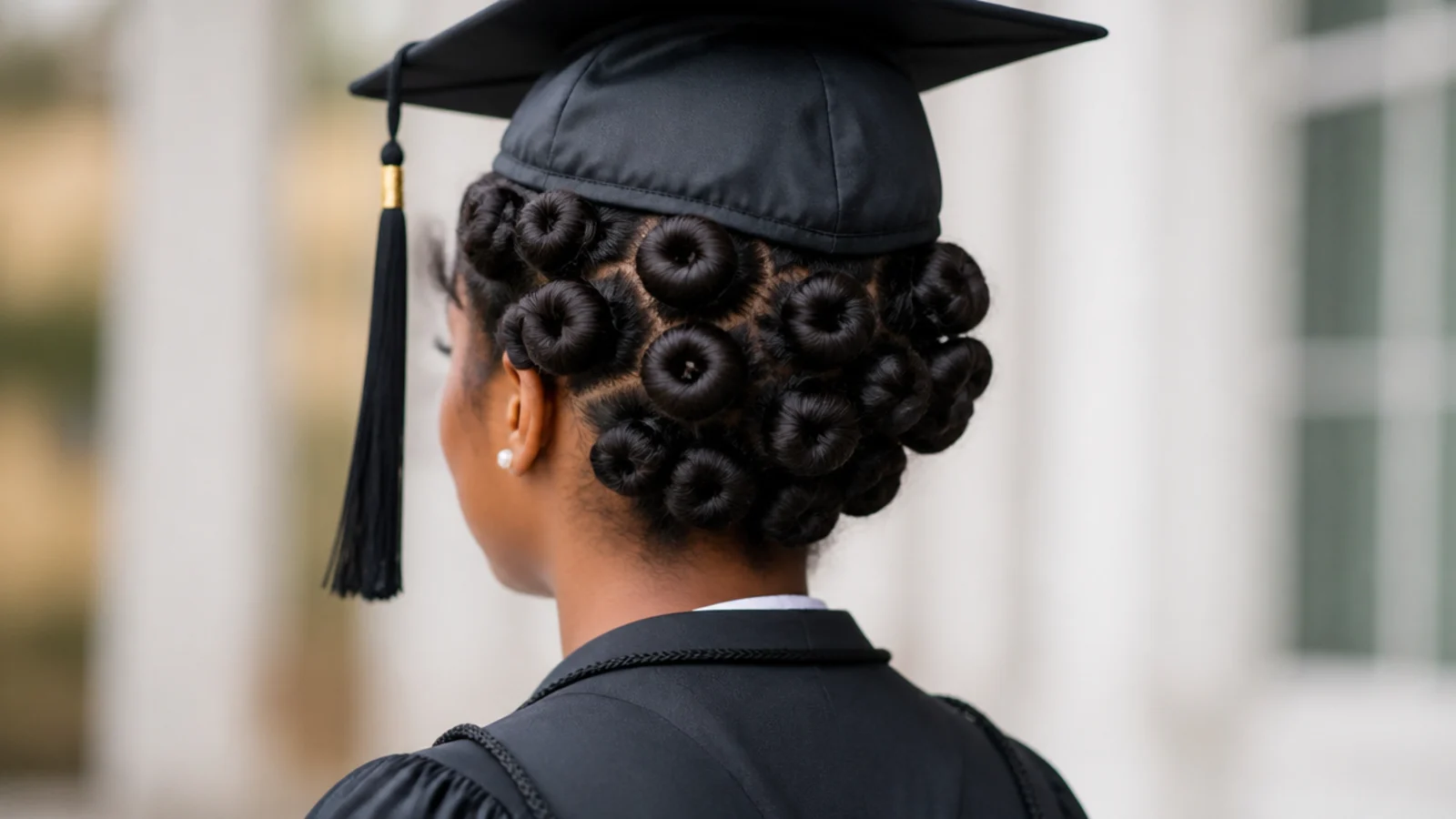
Six to eight small Bantu knots arranged in a low arc around the back and sides, with the crown left smooth and flat for the cap. Knots hold four hours in any weather, need no revival at all, and unravel into defined curls afterward if you want a second look for evening photos. Keep every knot below the band line, because a knot under a mortarboard is a hard lump you will feel for the entire ceremony. Secure each with one pin plus a small elastic. About 40 minutes.
Who it suits: Type 4 and coily hair, anyone wanting one look for the ceremony and another for dinner.
Tip: Unravel the knots only after the cap is off for good, since re-capping over loose curls flattens them.
How to Place a Graduation Updo Around the Cap Band
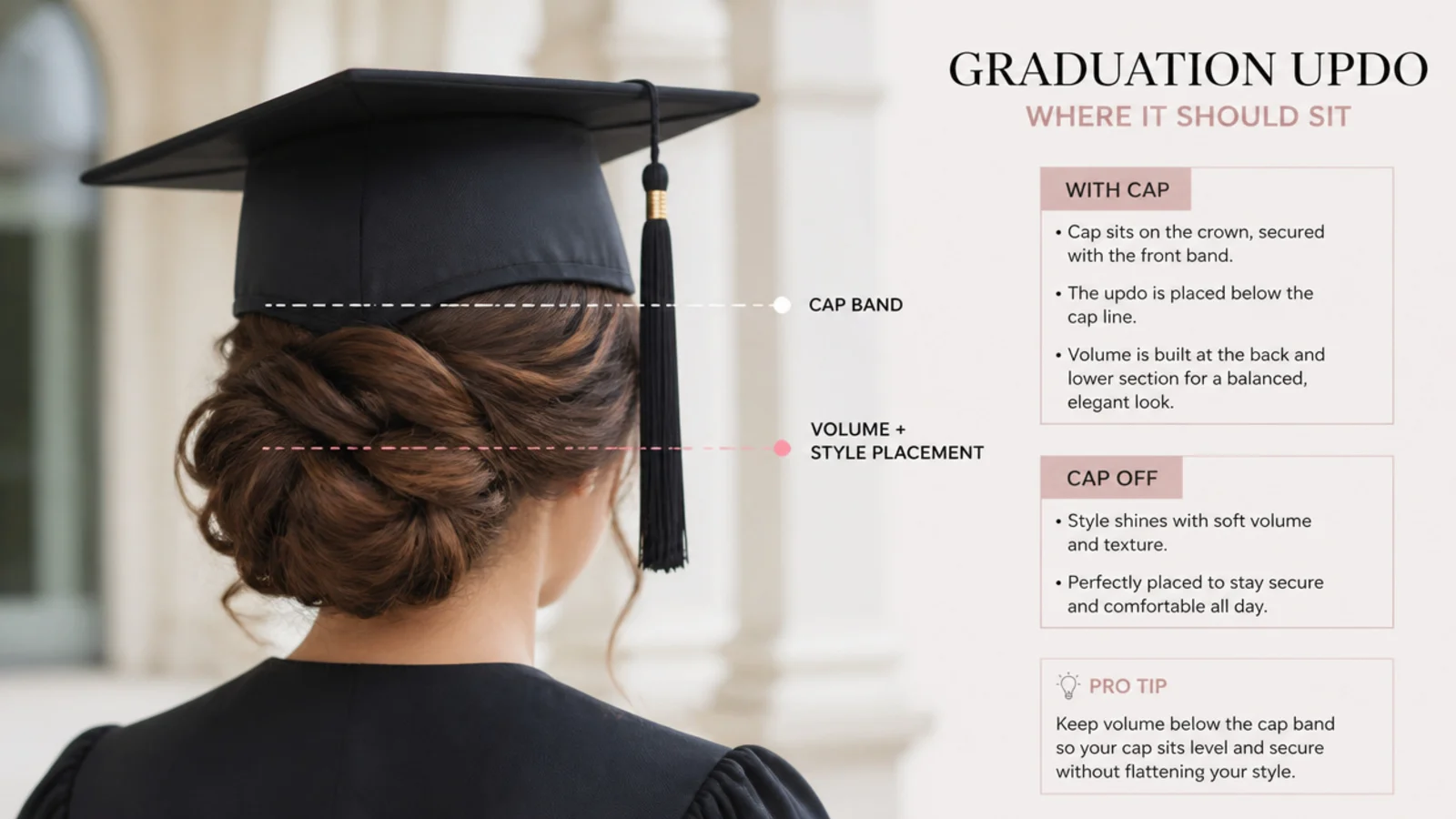
Put your actual cap on before you decide anything. The mortarboard is a flat board on a fitted band, and the band is built to sit level with the floor, which puts the front edge about two fingers above your eyebrows and wraps the head at roughly that height all the way around. Mark that line in the mirror with your fingers, because it is the only measurement that matters. Everything above it is dead space for four hours. Everything below it is where your updo has to live. A chignon at the occipital bone, a French twist stopped an inch under the band, a braided crown dropped a full inch lower than usual: all of these clear the line without effort. A topknot, a crown-height ballet bun or a bouffant sits exactly where the band needs to be, so the cap rides up at the front, tips backward and starts sliding within twenty minutes of sitting down. The odd-angled caps you see in graduation photos are almost never badly made caps. They are caps fighting a hairstyle. Full cap mechanics live in graduation hairstyles with your cap.
Graduation Updos by Hair Length, From Bob to Waist-Length
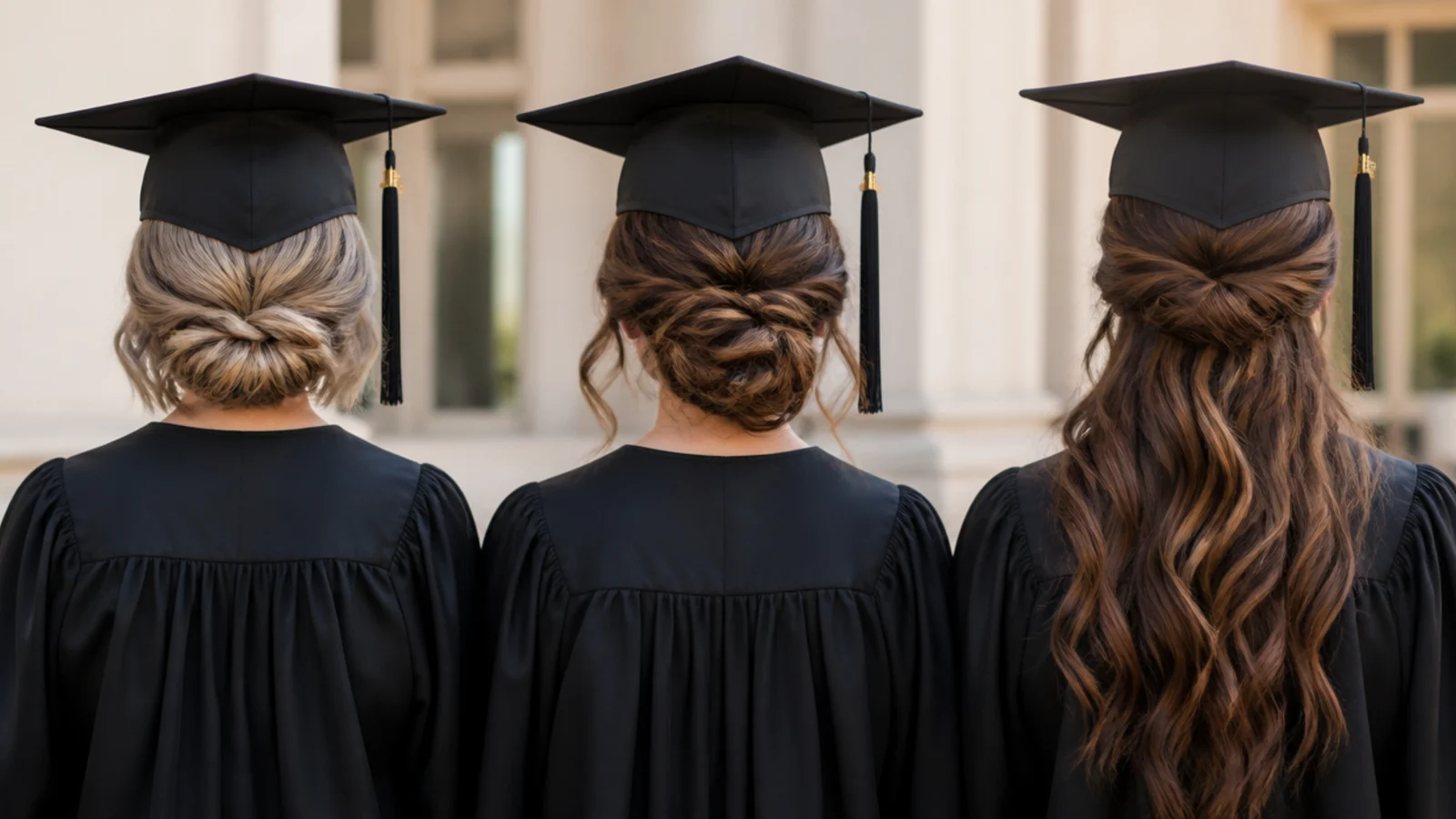
Length changes which updo is even possible. On a chin-length bob you cannot gather hair at the nape, so you fake it: tuck the ends under, roll the edge inward and pin the roll with ten 1.5-inch mini pins, which reads as a tucked updo from the front and sides. Standard full-size bobby pins poke straight out of short hair, so buy the small ones. At shoulder length you have the widest choice on the list, and a hair donut in your own color solves the one problem shoulder-length hair has, which is a chignon that looks sparse against a wide gown collar. From bra-strap length down, weight becomes the real issue. An unbraided coil of waist-length hair is heavy and unstable, and it slowly drags the mortarboard backward across a long ceremony. Braid the length first, then coil the braid, and pin the coil upward toward the scalp rather than letting it hang. Length-specific breakdowns sit in graduation hairstyles for long hair and graduation hairstyles for short hair.
Should You Wear an Updo or Your Hair Down for Graduation Photos?

Updos win with the cap on and down styles win with the cap off, so choose based on which set of photos you will actually keep. A low chignon holds a crisp outline against a black gown in every wide stadium shot, keeps its shape for four hours, and needs nothing done to it the moment the cap comes off. Hair worn down is warmer under a polyester gown, tends to disappear into a dark background in group photos, and always arrives at the photo session with a horizontal crease across the crown where the band sat. The comparison table above breaks this down row by row against a high updo, which is the option people most often try and most often regret. If your ceremony is outdoors in May or June, weight the decision heavily toward pinned styles, because humidity works against loose hair for hours before you reach a single photograph. If you genuinely want length visible, the half updo with a flat-pinned top section is the real compromise, not a down style with a cap balanced on it. More staying-power detail in cute hairstyles that last all day.
Pin Types and Pin Counts That Make an Updo Hold Four Hours
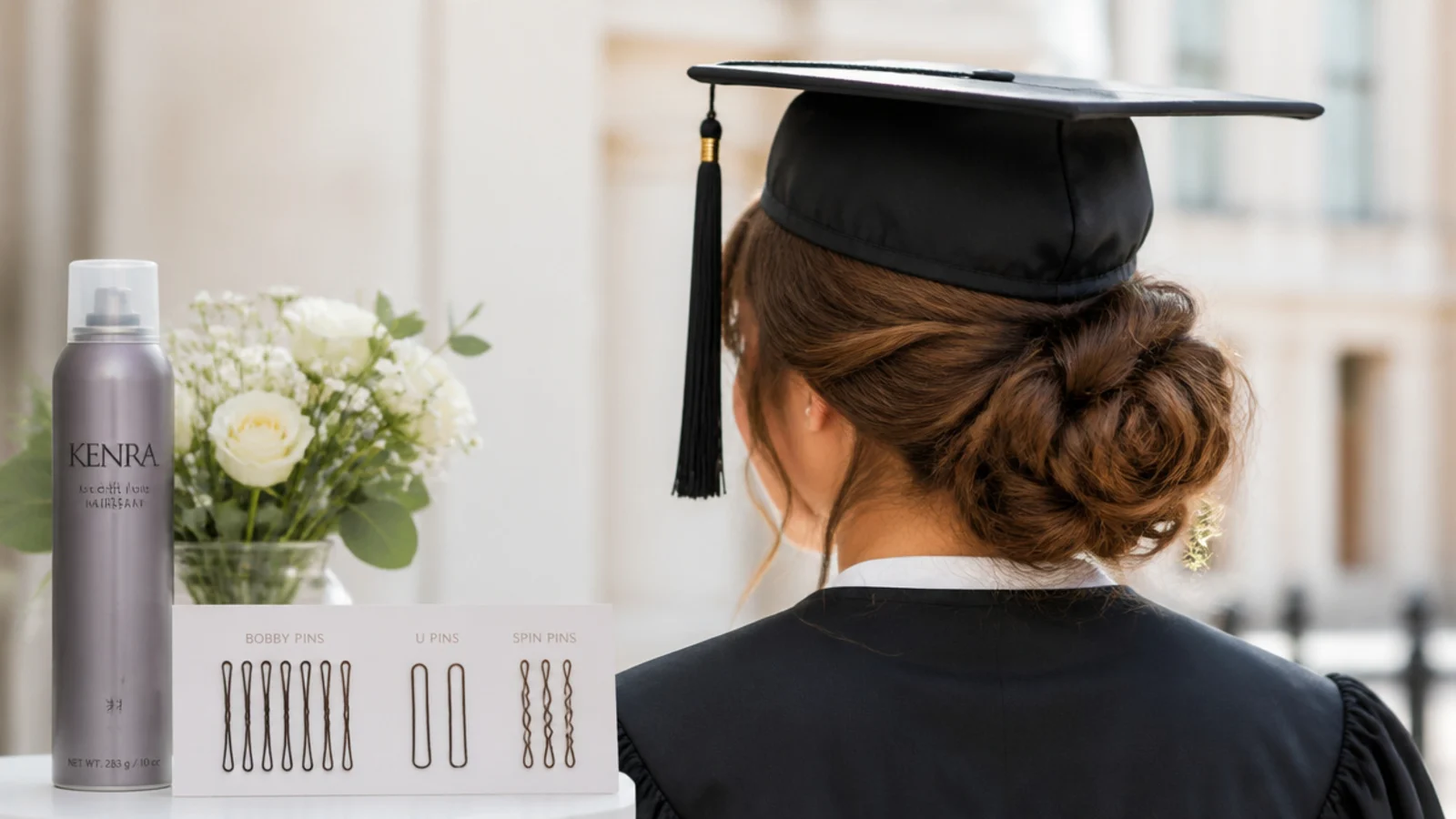
Nobody writing about graduation updos tells you how many pins to use, which is why so many collapse. Plan on 8 to 14 for a full updo, and use the right type for the job. Bobby pins go in crossed in X pairs, wavy side against the scalp, and a crossed pair grips roughly twice as well as two parallel pins. U-pins are for coiled buns and chignons, pushed in around the outside edge and angled downward toward the scalp so the bun weight cannot tip the cap. Spin pins, which look like corkscrews, replace about six bobby pins in a single twist and are worth the 8 dollar drugstore spend for thick hair. Then finish with flexible-hold hairspray rather than a freeze formula. Stiff spray does hold, but it sets hair into whatever shape the cap pressed it into, so the crease survives the cap. Spray in light passes from ten inches away, focus on the sides and nape, and skip the crown entirely because product under felt looks greasy by hour three. Put six spare pins and a travel spray in your bag. More pinning logic in long hair updos that last.
Cap-On to Cap-Off: What Your Updo Looks Like in Photos
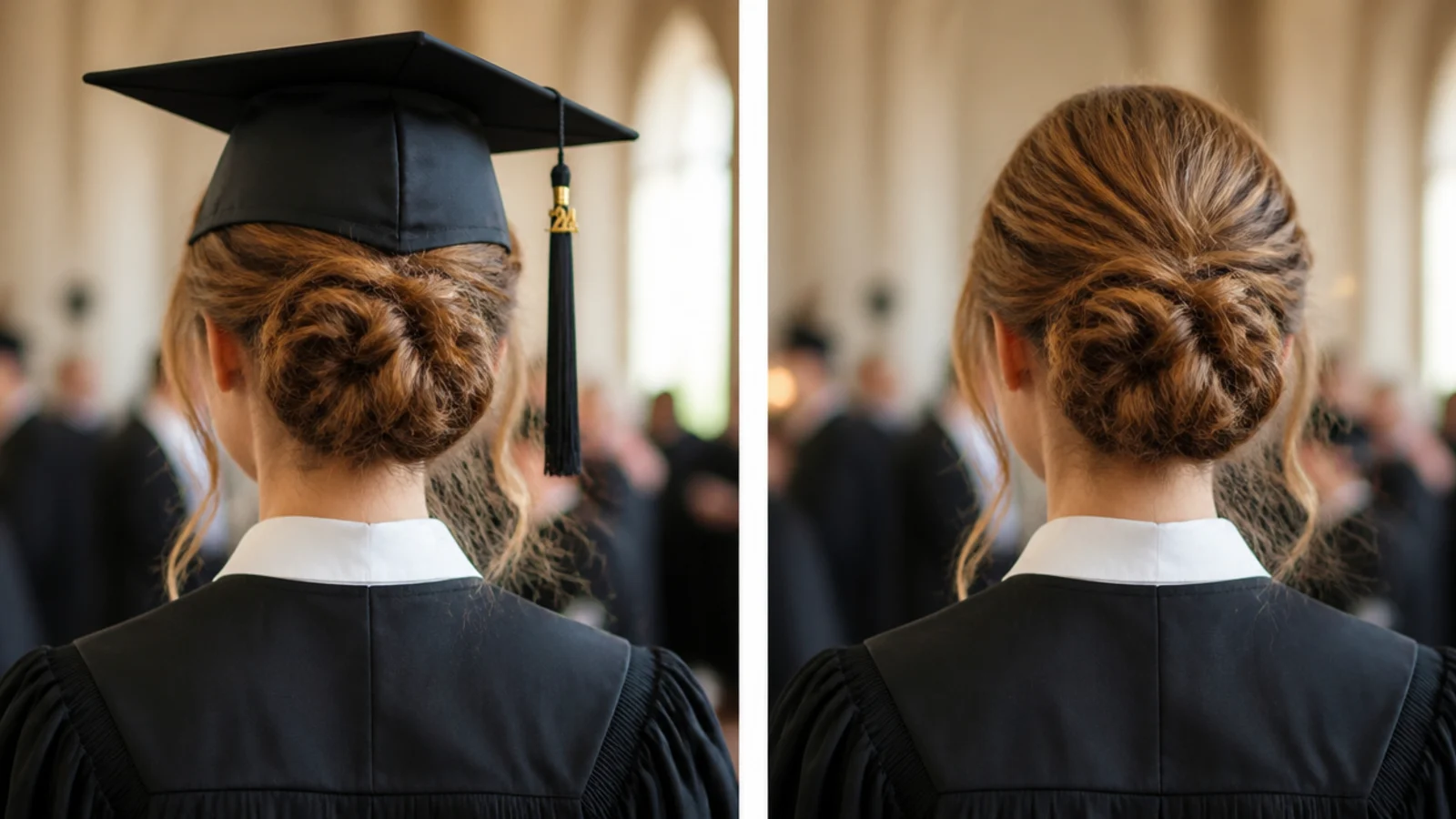
Almost everyone takes the cap off within minutes of walking across the stage, which makes the cap-off reveal part of the hairstyle rather than an afterthought. This is where a low updo quietly wins. A chignon, a French twist or a braided crown looks identical before and after, because nothing about it was ever under the band. The reset takes about 60 seconds: push two pins back into place, pancake a braid outward at the sides, pull a couple of face-framing pieces loose, and you are photo-ready. Curly pinned updos need one extra step, which is a small pick worked from underneath the cluster rather than from the top, since fluffing from above creates frizz instead of volume. If any part of your style did sit under the band and picked up a crease, mist plain water on that section only, finger-comb it, and let it air dry for two or three minutes upright. Never brush a dent, because brushing spreads the flatness across the whole crown instead of lifting it out.
Timing Your Graduation Updo the Morning Of
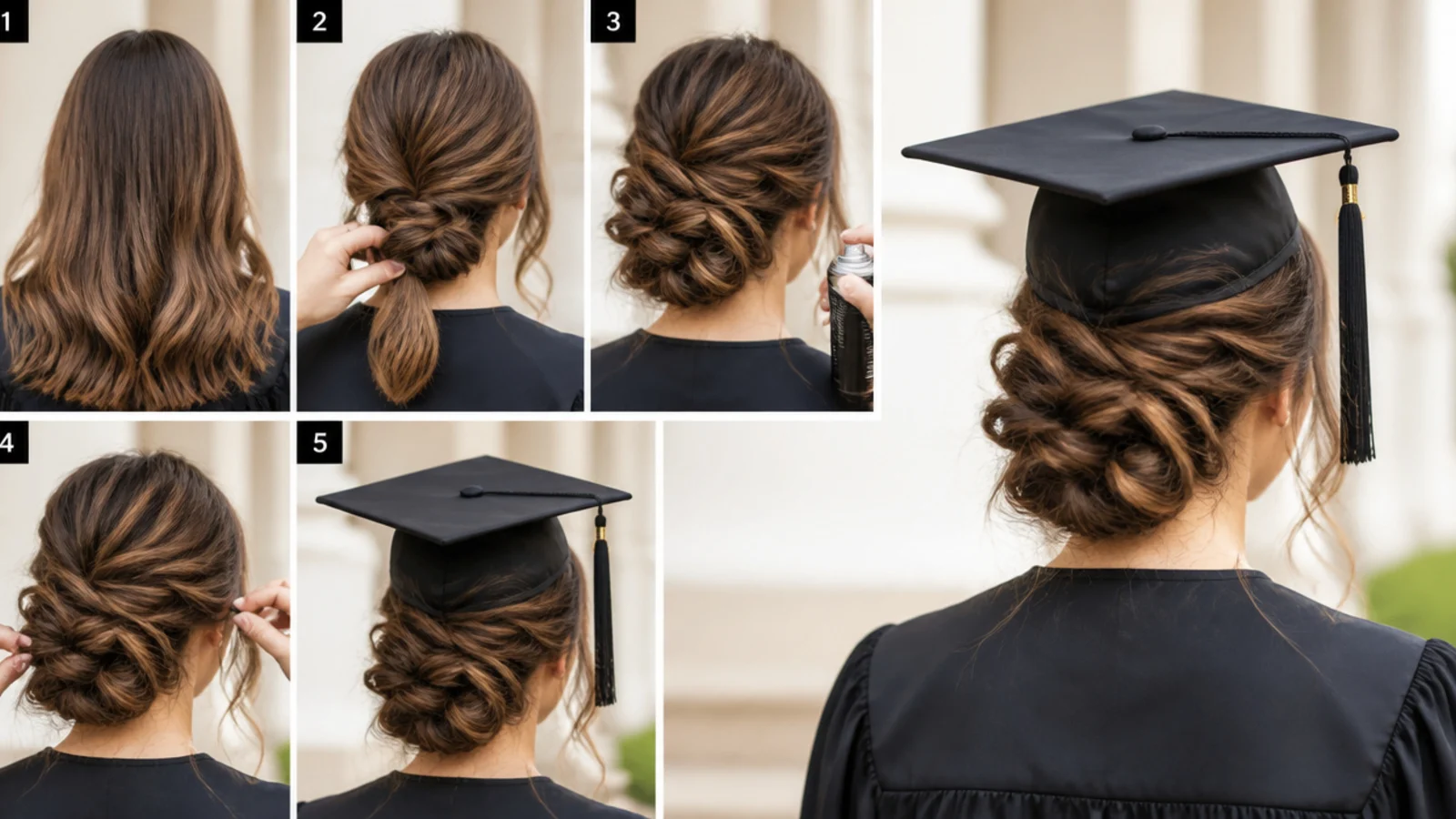
Style one to two hours before you need to be in your seat, not the night before. Overnight gives you a slept-on crown, dropped curls and no time to fix either. The exceptions are braided and twisted updos, which genuinely hold overnight and often look better on second-day hair. Wash the day before rather than the morning of, because freshly washed hair is slippery and pins slide straight out of it, while day-two hair grips pins and holds a bun with almost no product. Budget honestly: a messy low bun is 10 minutes, a chignon 15, a French twist 25 to 30, a pin curl updo 40, and Bantu knots or twists closer to 45. Add ten minutes at the end to sit with the cap on, walk around and turn your head, which is how you discover a slide before it matters. Do a full practice run with the actual cap three days out so you still have time to change your mind. If your morning is genuinely tight, start with easy graduation hairstyles or the 5-minute everyday hairstyle, and browse the full set in graduation hairstyles.
Frequently Asked Questions
Will an updo fit under a graduation cap?
Yes, as long as it sits low. The cap band lands about two fingers above your eyebrows and wraps the head level, so any updo built at or below the occipital bone clears it completely. Low chignons, French twists stopped below the band, braided crowns dropped an inch and side-swept buns all work. A topknot or crown-height bun sits exactly where the band needs to be and will push the cap backward.
How do you do an easy updo for graduation on your own hair?
The fastest reliable version is a messy low bun. Pull hair into a loose low ponytail at the nape, twist the length, wrap it around the base, and pin with six bobby pins crossed in three X pairs. Pull a few pieces loose from underneath for softness and leave one curled piece down in front of each ear. It takes about 10 minutes and has no skill floor.
How many bobby pins does a graduation updo need?
Plan on 8 to 14 pins for a full updo, more for thick or waist-length hair. Use bobby pins crossed in X pairs rather than sliding them in parallel, since a crossed pair grips roughly twice as well. Use U-pins around the edge of a coiled chignon, angled downward toward the scalp. Spin pins replace about six bobby pins in a single twist and are worth buying for very thick hair.
What if my hair is too short or too layered for an updo?
Both problems have fixes. On a chin-length bob, tuck the ends under, roll the edge inward and pin the roll with ten 1.5-inch mini pins for a faux updo that reads as gathered from the front. On heavily layered hair, skip the single bun and pin four separate twisted sections at the nape so each layer gets its own anchor point and cannot slip out during the ceremony.
Should I wear my hair up or down for graduation?
Up wins with the cap on, down wins with the cap off. A low updo holds a crisp outline against a black gown, survives four hours, and looks unchanged the second the cap comes off. Hair worn down is hotter under the gown, can vanish into a dark background in wide shots, and arrives at photos with a crease across the crown. A half updo with the top section pinned flat is the real compromise.
How do I stop my graduation updo from falling out during the ceremony?
Wash your hair the day before rather than the morning of, because clean hair is slippery and pins slide out of it. Cross your bobby pins in X pairs with the wavy side against the scalp. Use flexible-hold hairspray in light passes on the sides and nape. Then build two crossed anchor pins behind each temple so the cap hooks under them instead of pulling on your style.
What kind of hairspray should I use for a graduation updo?
Flexible or medium hold, never an extra-strong freeze formula. Stiff spray locks your hair into whatever shape the cap pressed it into, so the crease is permanent for the rest of the day. Flexible hold lets the hair recover once the cap comes off. Spray from about ten inches away in light passes, and skip the crown entirely so it does not look greasy after four hours under felt.
Can I do my graduation updo the night before?
Only if it is braided or twisted. Braided crowns, twist updos and Bantu knots hold overnight and often look better on day-two hair. Chignons, French twists, pin curl updos and anything relying on curl set should be built one to two hours before the ceremony, so you have time to fix a slipped pin or a dropped curl before you leave the house.
How long does a graduation updo take to do yourself?
It depends on the style, and this is worth planning around. A messy low bun is about 10 minutes, a Gibson tuck 12, a low chignon or ballet bun 15, a braided halo 22, a French twist 25 to 30, a fishtail braided bun 30, a pin curl updo 40, and Bantu knots or two-strand twists closer to 45. Add ten minutes at the end for a cap test.
Which graduation hairstyles look are you saving?
The elegant graduation updo that works is almost always the low one. Put your actual cap on before you choose anything, find where the front band lands, and commit to building every twist, coil and braid at least two inches below that line. Buy real pins rather than the drugstore multipack that slides, cross them in pairs, and count on 8 to 14 for a full updo. Wash the day before so your hair has grip, style one to two hours ahead, and finish with flexible-hold spray so nothing sets into a crease. Then browse the rest of the graduation hairstyles hub, or compare silhouettes in graduation hairstyles with your cap.