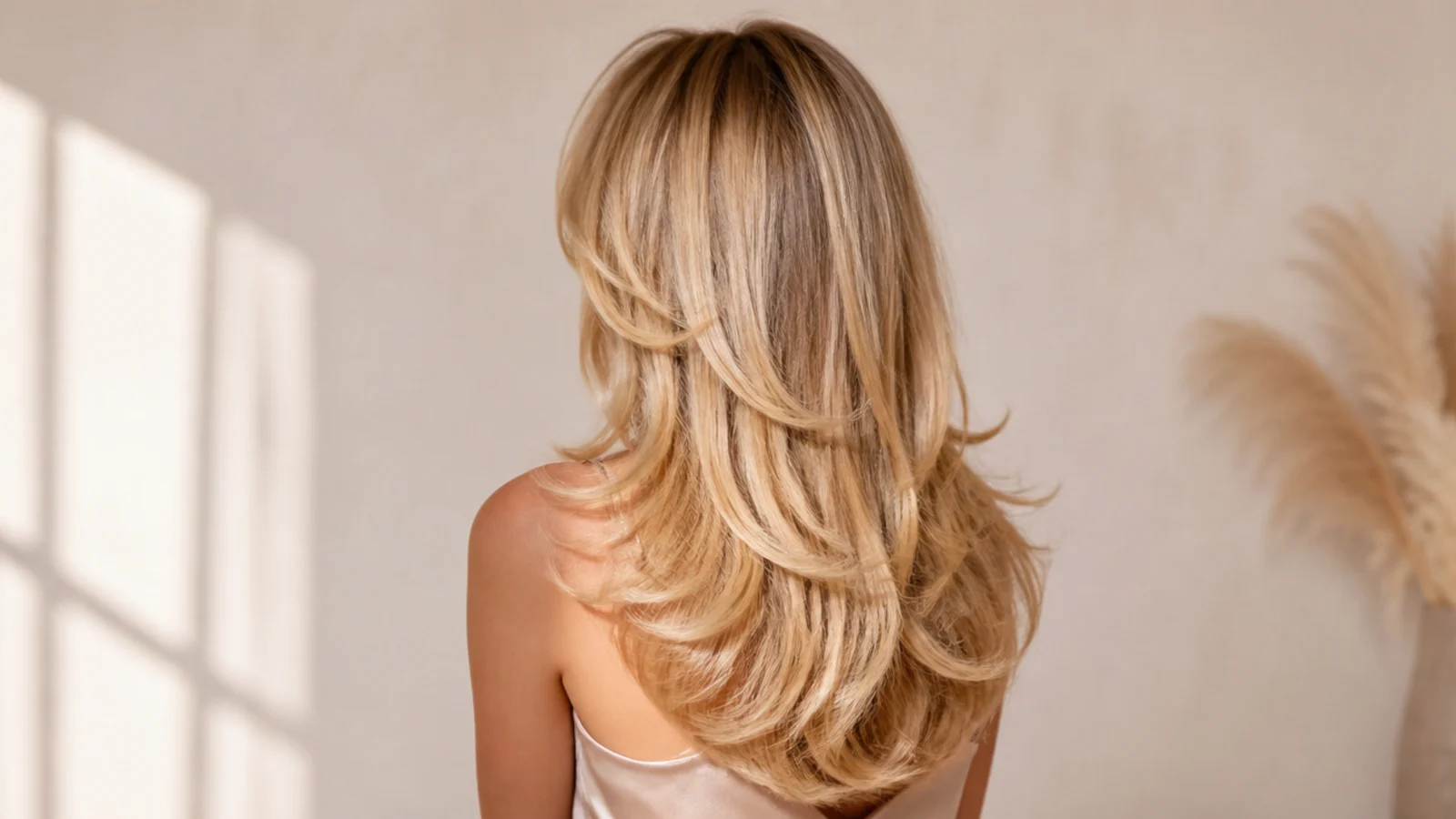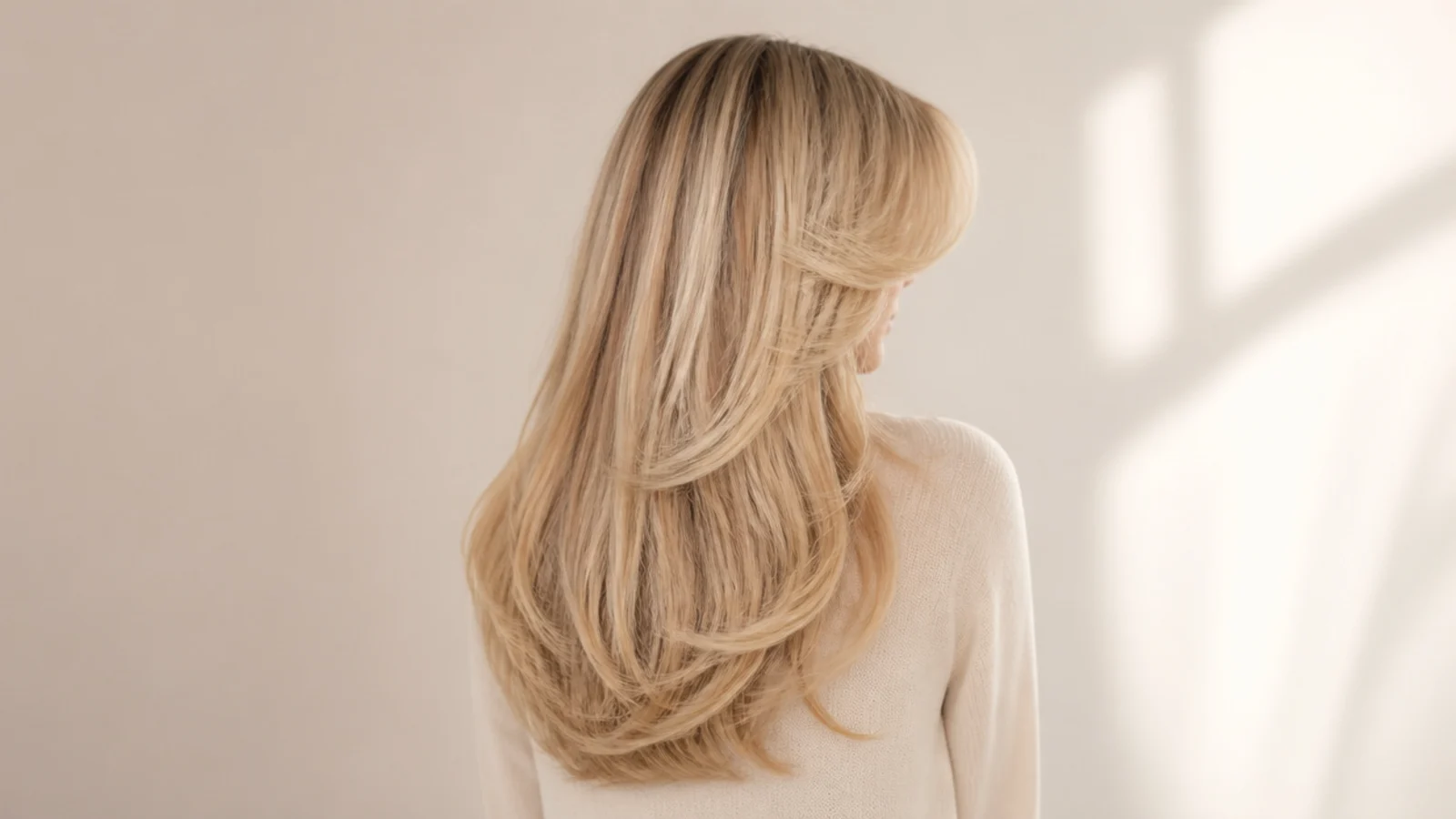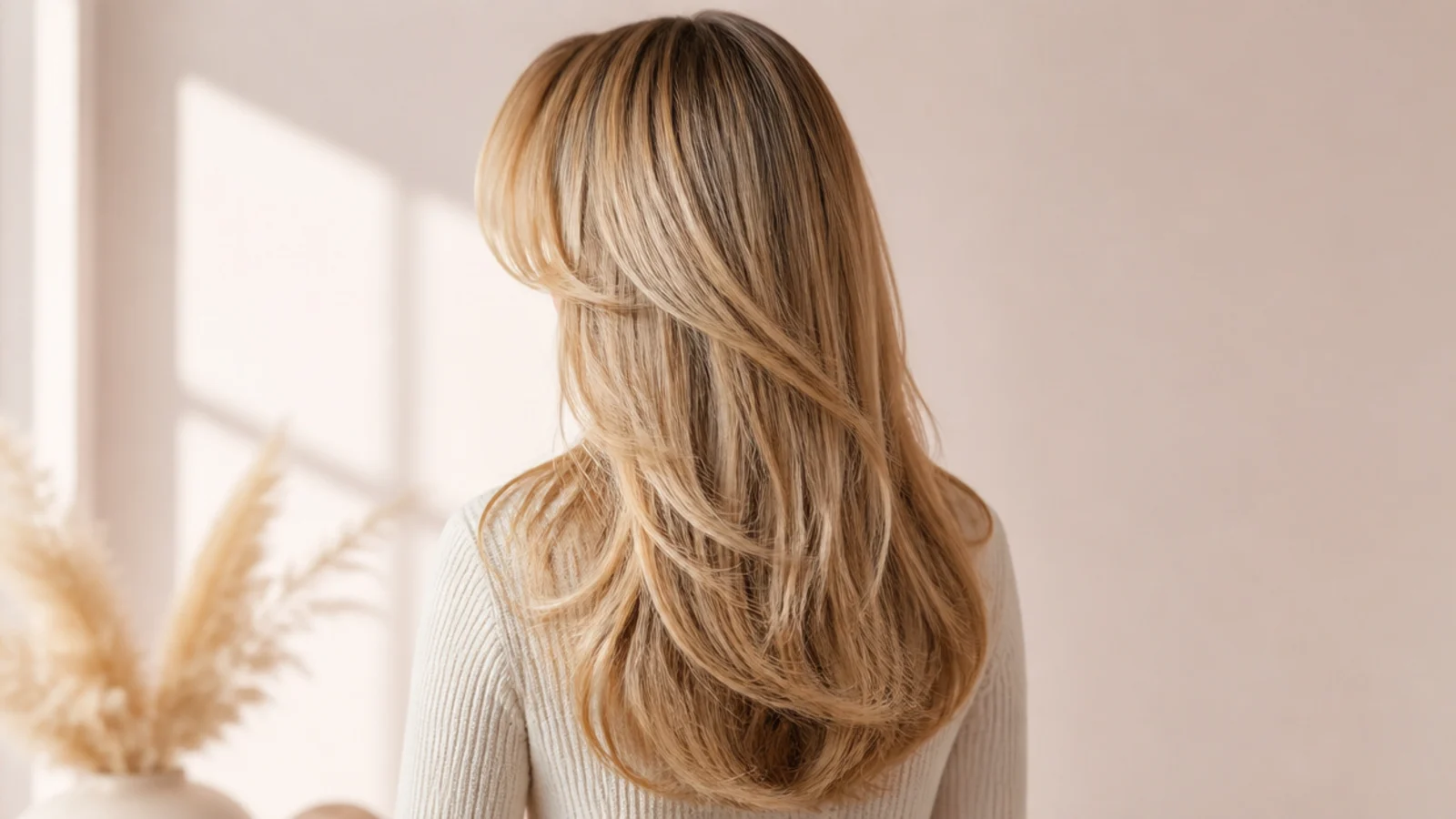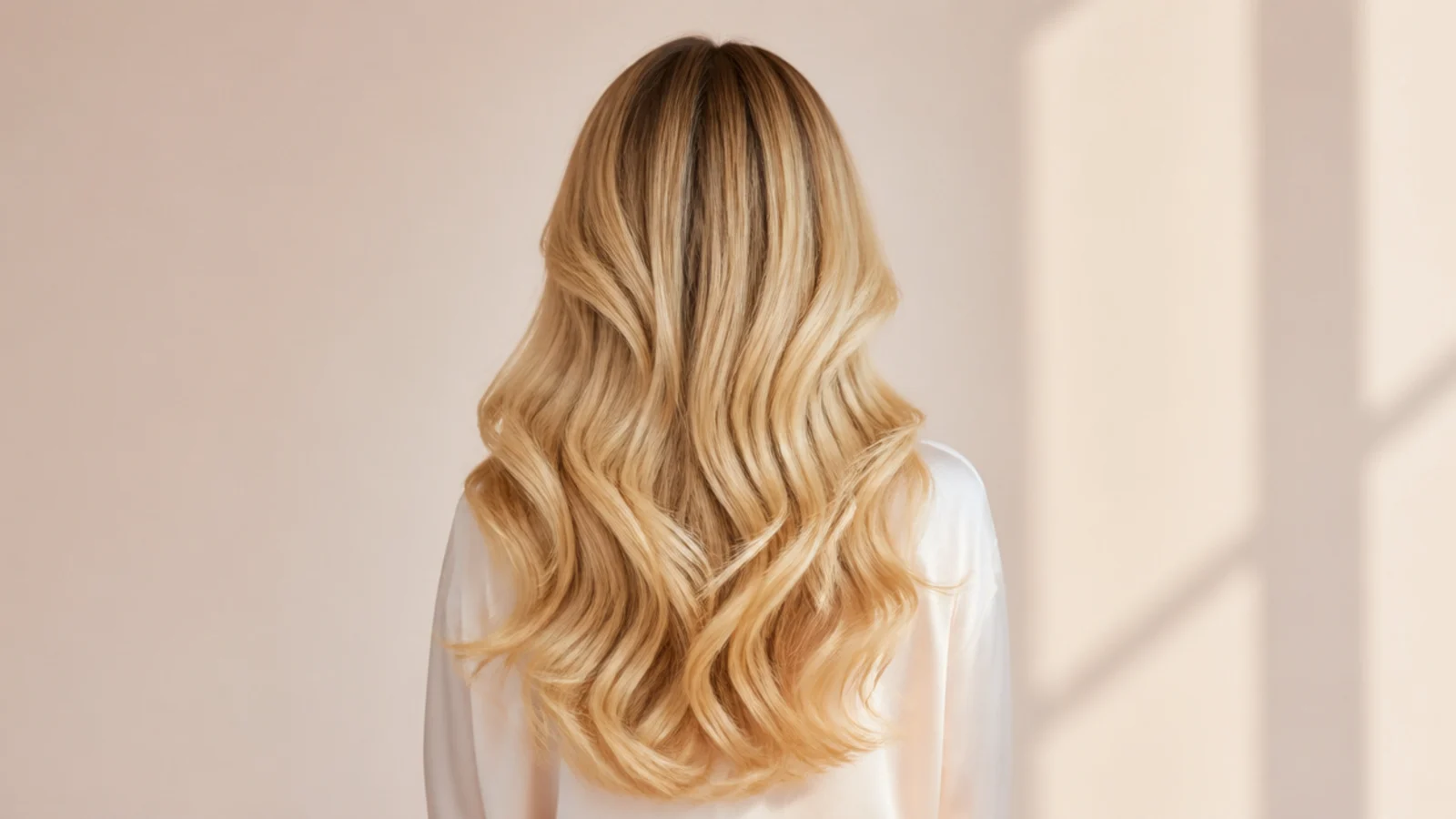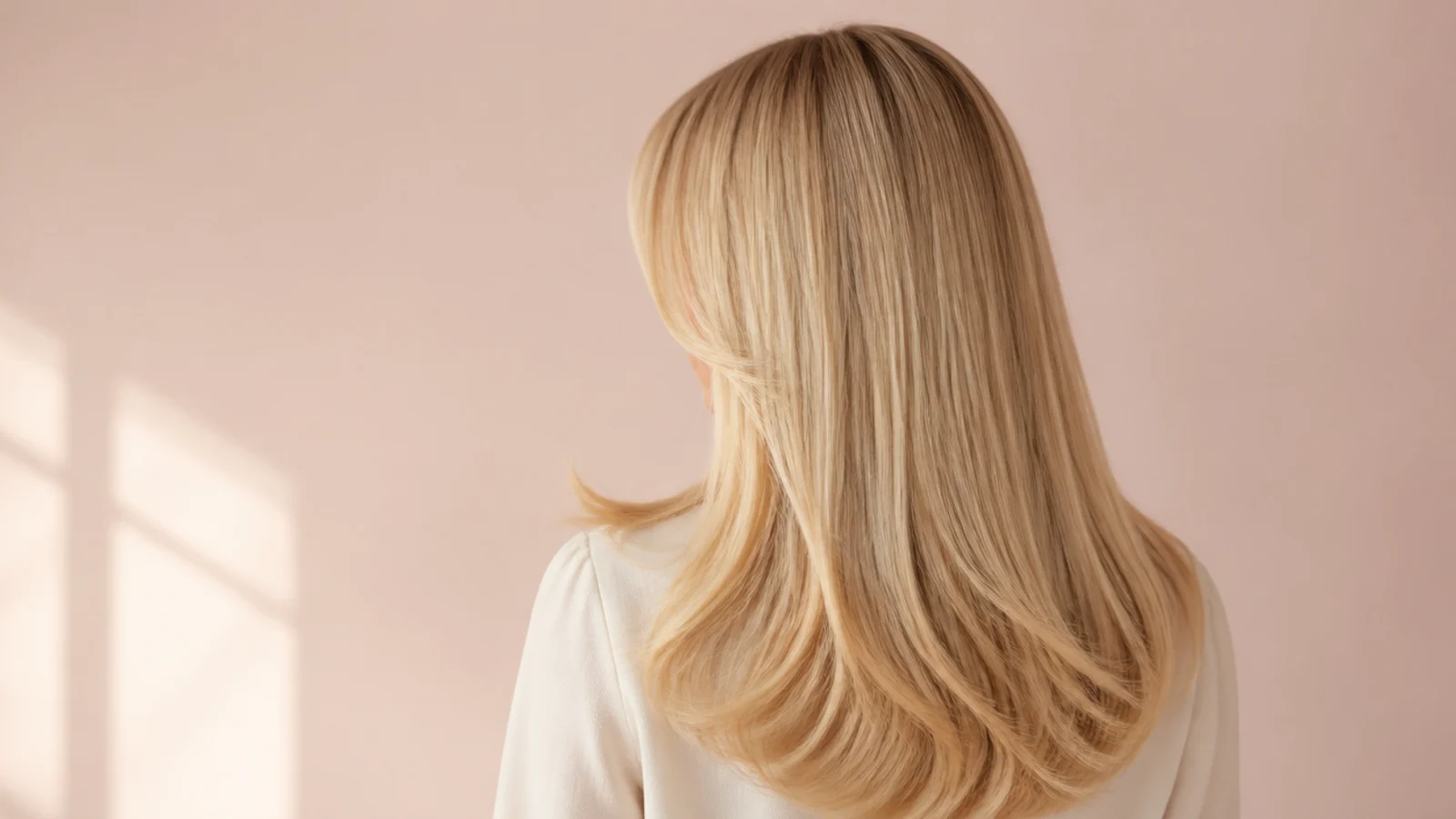
Quick Comparison
| Sleek Pin-Straight | Straight with a Blowout Bend | |
|---|---|---|
| Finish at the ends | Flat and blunt all the way to the tips | Last 2 to 3 inches curved under toward the jaw |
| Main tool | Flat iron, half to one-inch sections | Large round brush, 2 to 2.5 inch barrel, plus a cool shot |
| Styling time on long hair | 20 to 30 minutes | 25 to 35 minutes |
| Best density | Medium to thick; fine hair can look sparse | Fine to medium; the bend fakes thickness at the ends |
| How long it holds | Two to three days if you avoid humidity | One day, less in humidity, but revives with a brush |
| Face shape it flatters | Round and square, since the flat line lengthens | Long and narrow, since the curve adds width at the jaw |
| Heat exposure | Higher; the iron touches every strand | Lower; brush and dryer only, no plates |
| How the layers read | Layers show as a soft taper at the perimeter | Layers show as visible movement and separation |
| Curtain fringe treatment | Round brush the fringe separately or it goes flat | Fringe is styled with the same brush, so it matches |
1. Center-Part Sleek Straight Hair with Curtain Bangs
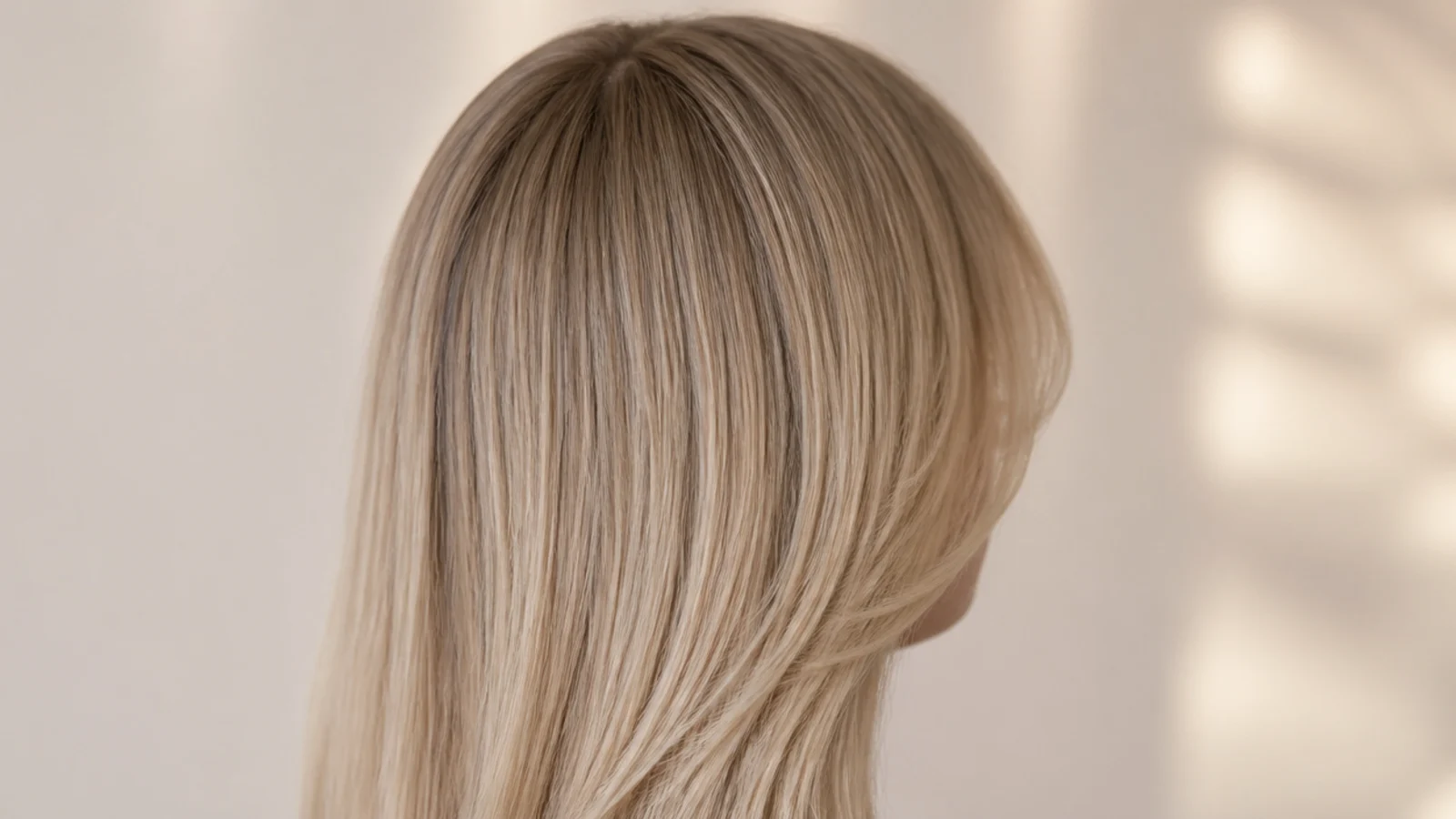
The core look: a dead-center part, lengths pressed flat from root to end, and a curtain fringe split down the middle so it opens across the cheekbones. The lengths sit around 22 to 24 inches with the shortest face-framing layer at the jaw, which is what stops the center part from reading like a curtain of flat hair. Press the lengths at 300 to 330F in one-inch sections, then leave the fringe alone and shape it separately with a round brush so it keeps a soft bend.
Who it suits: Oval and heart face shapes, fine to medium density, straight or loosely wavy hair.
Tip: Ask your stylist for face-framing layers starting at the jaw, blended into long internal layers.
2. Glass Hair Straight Blonde with a Gloss Finish
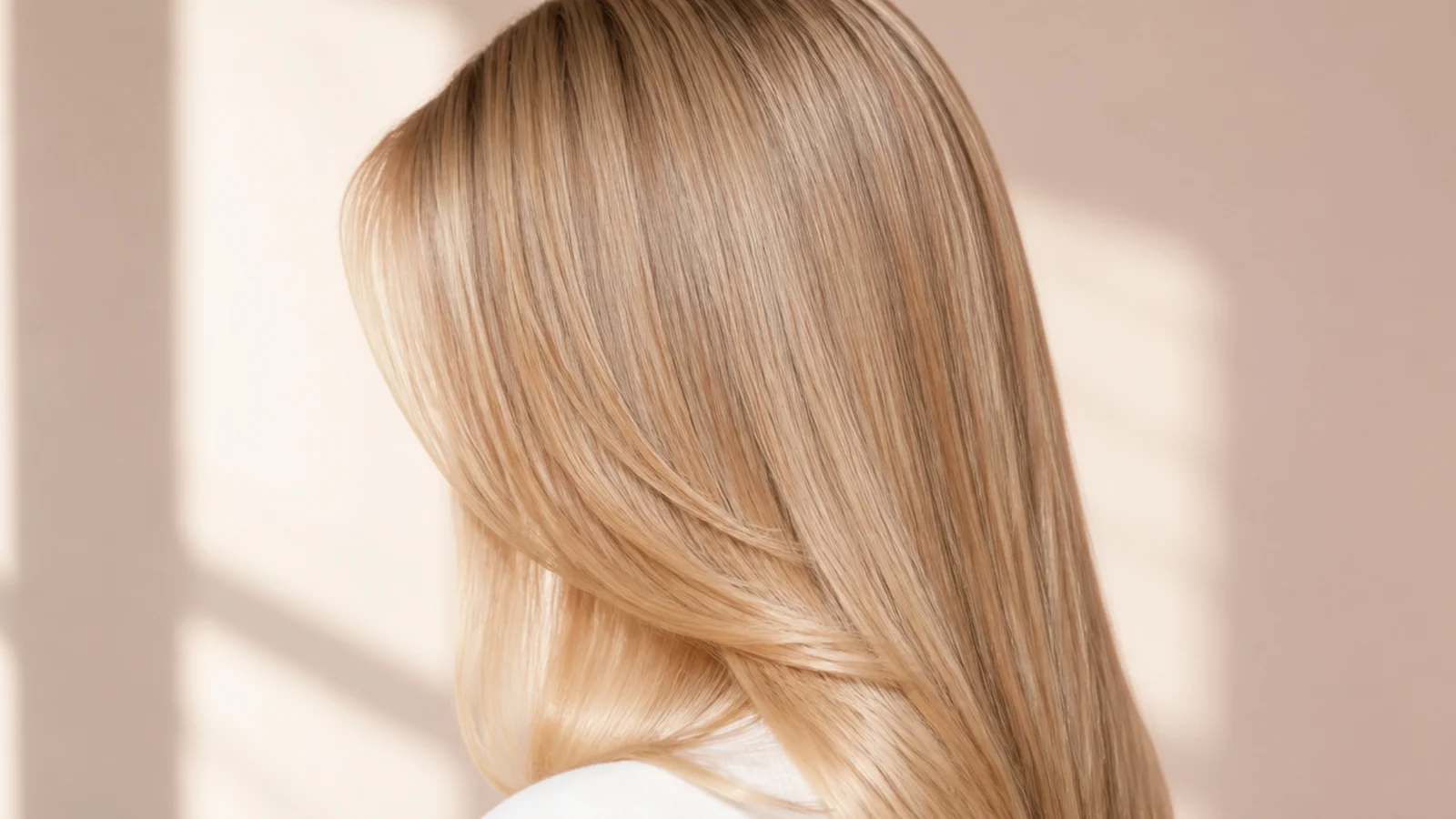
Glass hair is a finish, not a cut: one pass of the iron per section, a clear or warm-toned in-salon gloss, and a pea-sized drop of lightweight hair oil worked through the last six inches only. The shine comes from the cuticle lying flat in one direction, so the iron has to travel slowly and evenly rather than being dragged back and forth. On bleached blonde this reads expensive because gloss fills the porous mid-lengths that normally scatter light and look dull.
Who it suits: Anyone with a healthy mid-length; least forgiving on split, over-processed ends.
Tip: Book a demi-permanent gloss every 4 to 6 weeks; it does more for shine than any serum.
3. Deep Side Part Straight Hair for Round Faces
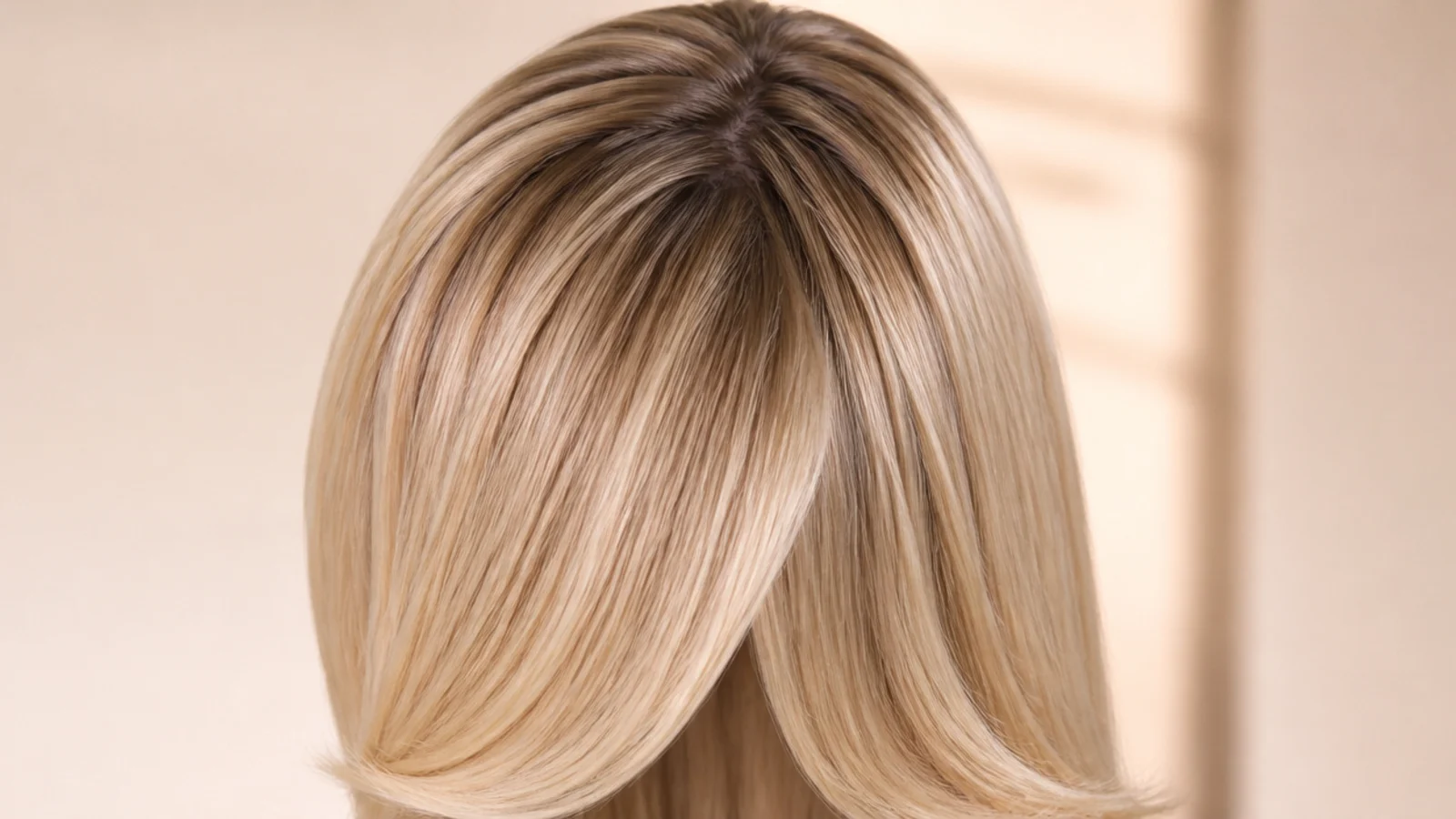
Moving the part about two inches off center throws most of the hair to one side and creates a long diagonal across the face, which is the fastest way to add length to a round or full-cheeked face without cutting anything. The curtain fringe becomes a long side-swept piece instead of a split fringe. Straightening exaggerates the diagonal because the hair stays exactly where you put it. Set the part at the wet stage and dry the root against its natural direction so it holds.
Who it suits: Round and square faces, and anyone whose center part looks too widening.
Tip: See more on part placement in short curtain bangs for a round face.
4. Straight Long Layers That Start at the Jaw
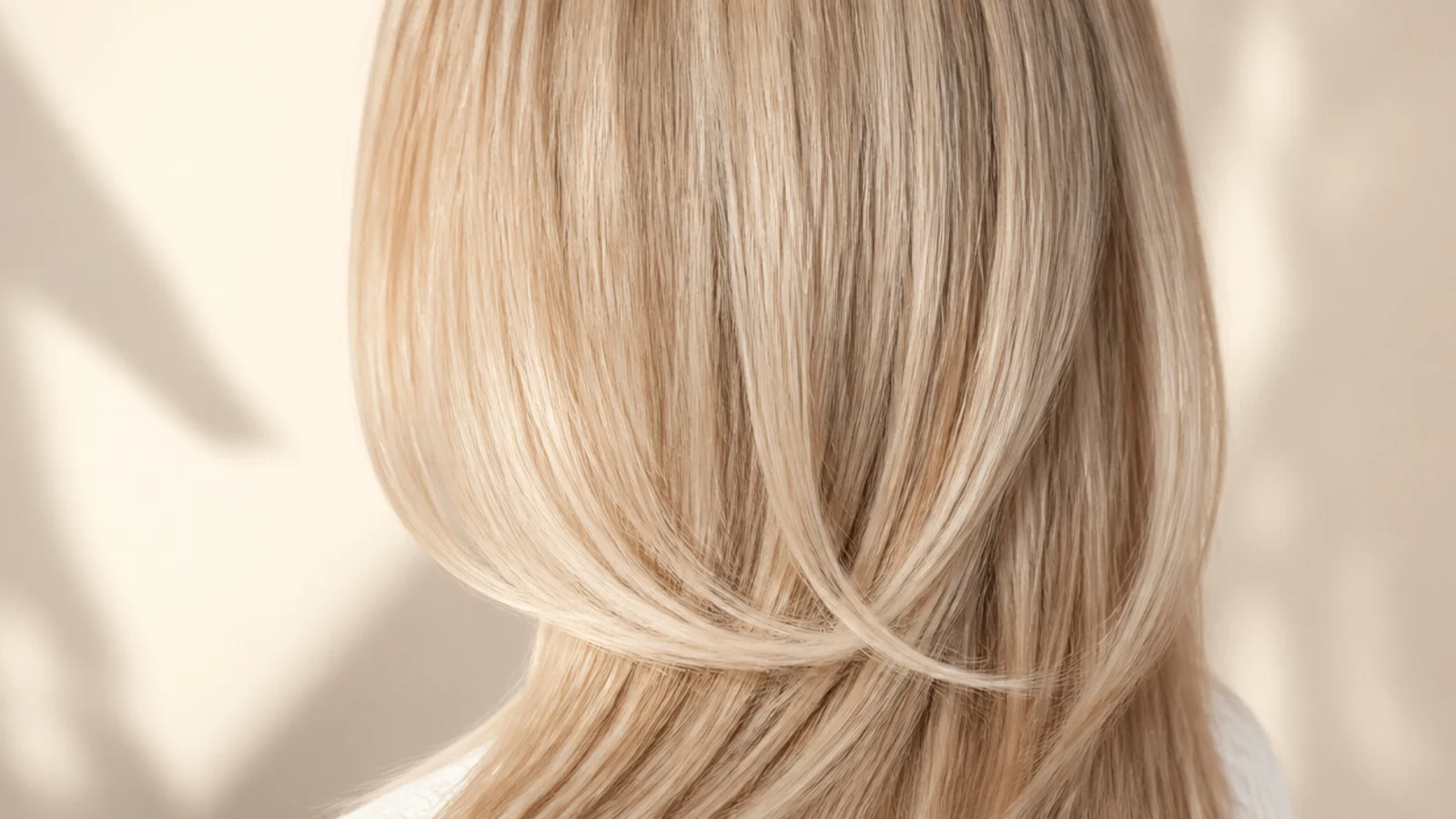
This is the cut, isolated. The shortest layer sits at the jaw, the next graduates to the collarbone, and everything below that stays long, so from the front you see a soft V of shorter pieces around the face and from the back you see one long line. Worn straight, those layers are what create the taper at the ends instead of a blunt shelf. Without them a straight blowout looks like a wig cap. Ask for long internal layers plus jaw-length face framing, kept connected.
Who it suits: Long hair from 20 inches down, medium density; too much for very fine hair.
Tip: Related cutting detail lives in face-framing mid-length haircut.
5. One-Length Straight Hair with a Full Fringe
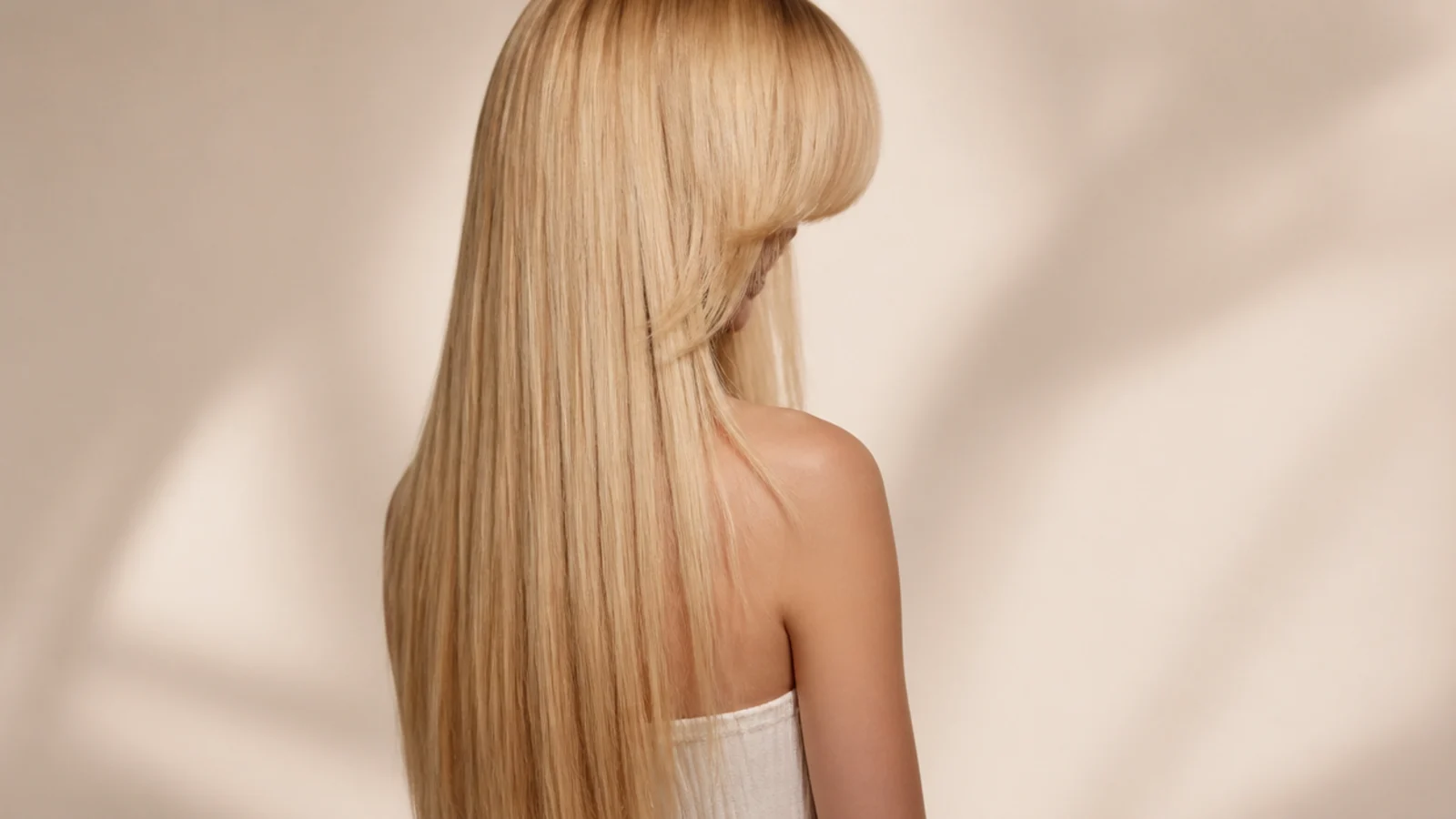
The heavier read: no visible layers through the lengths, a strong blunt perimeter, and a full fringe cut wide enough to reach the outer corner of each eyebrow. Because there is no internal layering, straight hair here looks dense and glossy rather than airy, which makes it the best version for fine hair that needs to look thicker. The trade-off is that it needs regular perimeter trims, because a blunt line shows split ends instantly once it is pressed flat.
Who it suits: Fine to medium hair that reads thin when layered; not for very thick, coarse hair.
Tip: Ask for a blunt perimeter with a soft internal debulk only, no visible layering.
6. Straight Hair with a Bend at the Ends
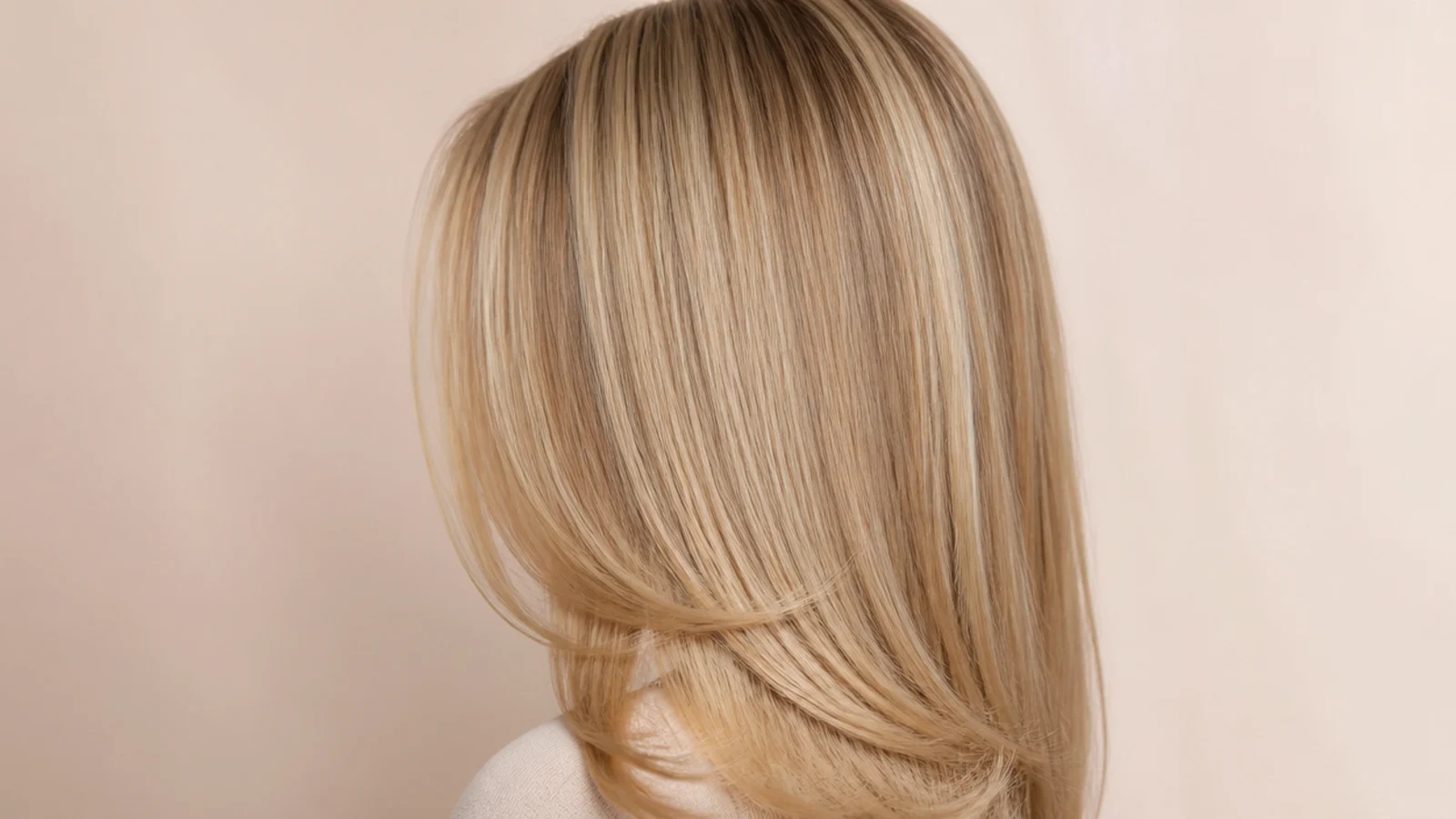
Ninety percent straight, ten percent blowout. The lengths are pressed flat, then the final three inches are rotated a half turn under with a large round brush or a slow flick of the iron, so the ends curve toward the jaw instead of hanging dead. This is the version that reads retro rather than corporate, and it is the closest sleek relative of her bouncy blowout. It also disguises thin, tapered ends better than a pin-straight finish does.
Who it suits: Anyone whose ends are slightly thin, and shoulder-length to long hair.
Tip: Hit the bent ends with a cool shot before you let go, or the curve drops within the hour.
7. Pin-Straight Hair on Fine Hair
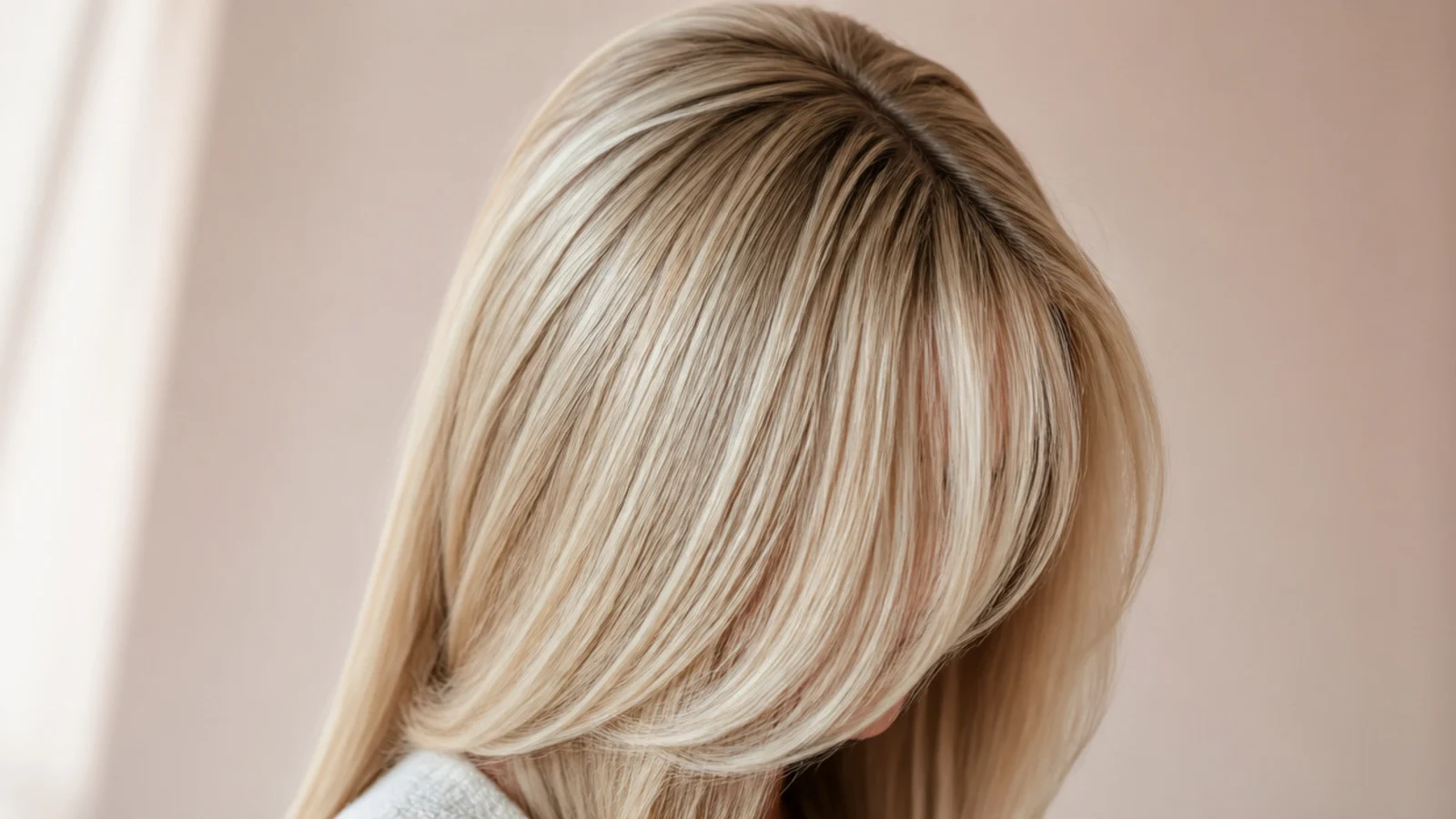
Fine hair straightens in one pass and then collapses at the root, so the whole job is volume at the crown. Blast a root-lift mousse into damp roots, dry the crown upward with your fingers, and only then press the mid-lengths and ends, keeping the iron two inches away from the scalp. Skip oil above the ears entirely. The result is flat, glassy lengths with a lifted top, which is exactly the proportion this look needs to avoid looking helmet-like.
Who it suits: Fine, low-density hair that goes limp by lunchtime.
Tip: More density-specific styling in mid-length haircut for fine hair.
8. Straight Collarbone Lob with Curtain Bangs
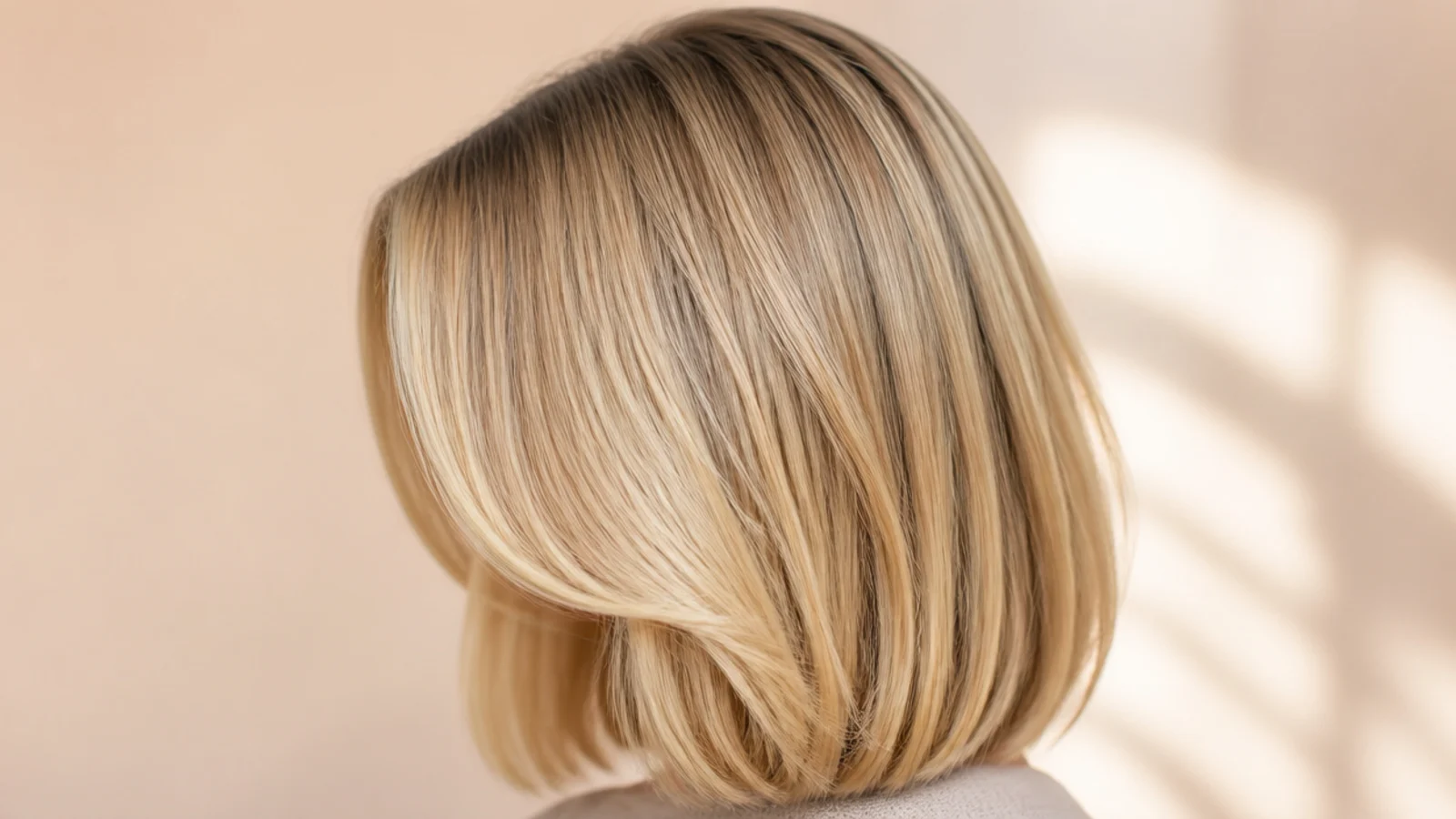
The same formula at 14 to 16 inches. At collarbone length the curtain fringe has to be re-cut shorter, roughly to the cheekbone rather than the lash line, or it swallows the face against the shorter perimeter. Keep the layers minimal: one soft face-framing pass and a light taper at the ends. Straightened, a lob holds its shape all day with far less product than long hair, which makes it the lowest-effort entry point into this look.
Who it suits: Medium to thick hair, and anyone who wants the look without 25 minutes of ironing.
Tip: Cross-check the fringe length against short curtain bangs on a bob.
9. Straight Hair with a Money-Piece Blonde Front
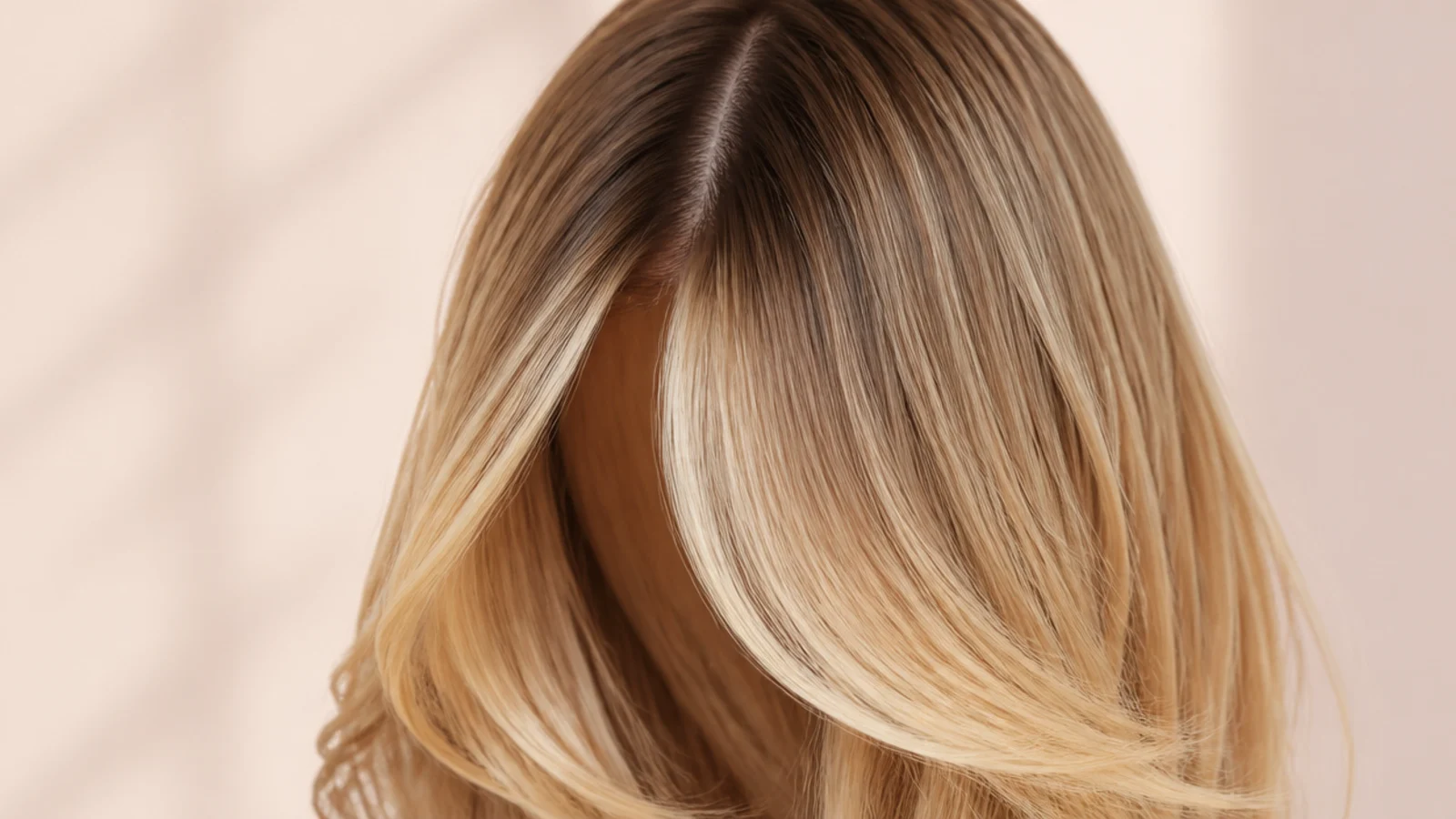
Two brighter panels, roughly one inch wide each, lifted a shade or two beyond the base and sitting right at the part line. On straight hair the money piece is far more visible than on waves, because there is no texture breaking the panel up, so ask for it soft and diffused at the top rather than a hard block. Combined with a jaw-length face-framing layer, the bright piece follows the shortest layer and lights up the cheekbone.
Who it suits: Anyone whose blonde reads flat when straightened; works on brunette bases too.
Tip: Ask for a hand-painted money piece with a soft root melt, not foiled to the scalp.
10. Straight Butterfly Layers on Long Hair
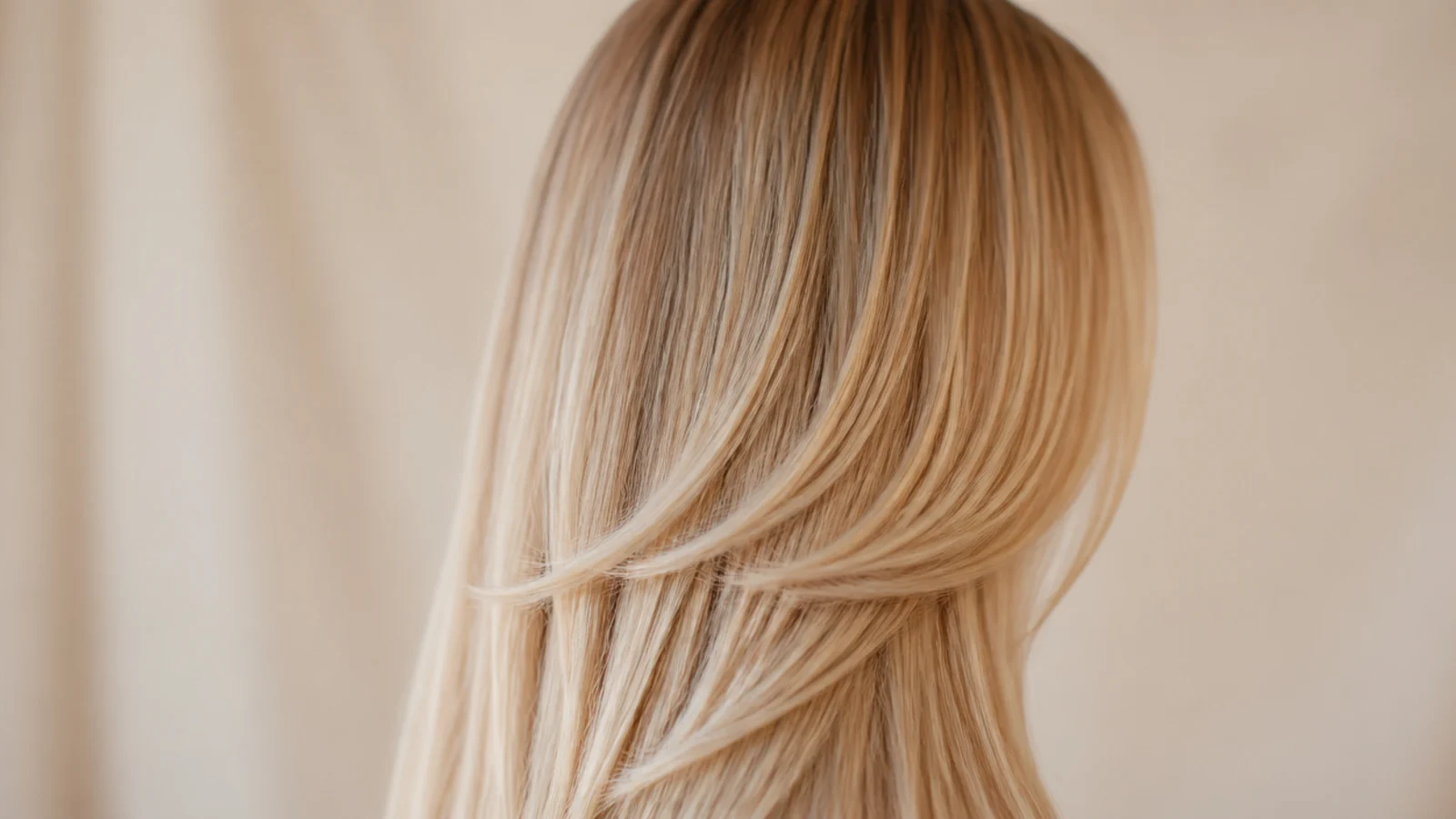
Butterfly layering stacks a short shelf of chin-length pieces over an untouched long length, so from the front it looks like a shag and from the back it looks like long hair. Pressed straight, the two lengths separate visibly, which is the point: you get the illusion of a shorter cut without losing length. It needs medium to thick density, because on fine hair the top shelf just exposes the scalp underneath when it is flat.
Who it suits: Medium to thick hair, 20 inches and longer.
Tip: Straighten the under-layer first, then the top shelf, so the shelf sits over a flat surface.
11. Half-Up Straight Hair with Face-Framing Pieces
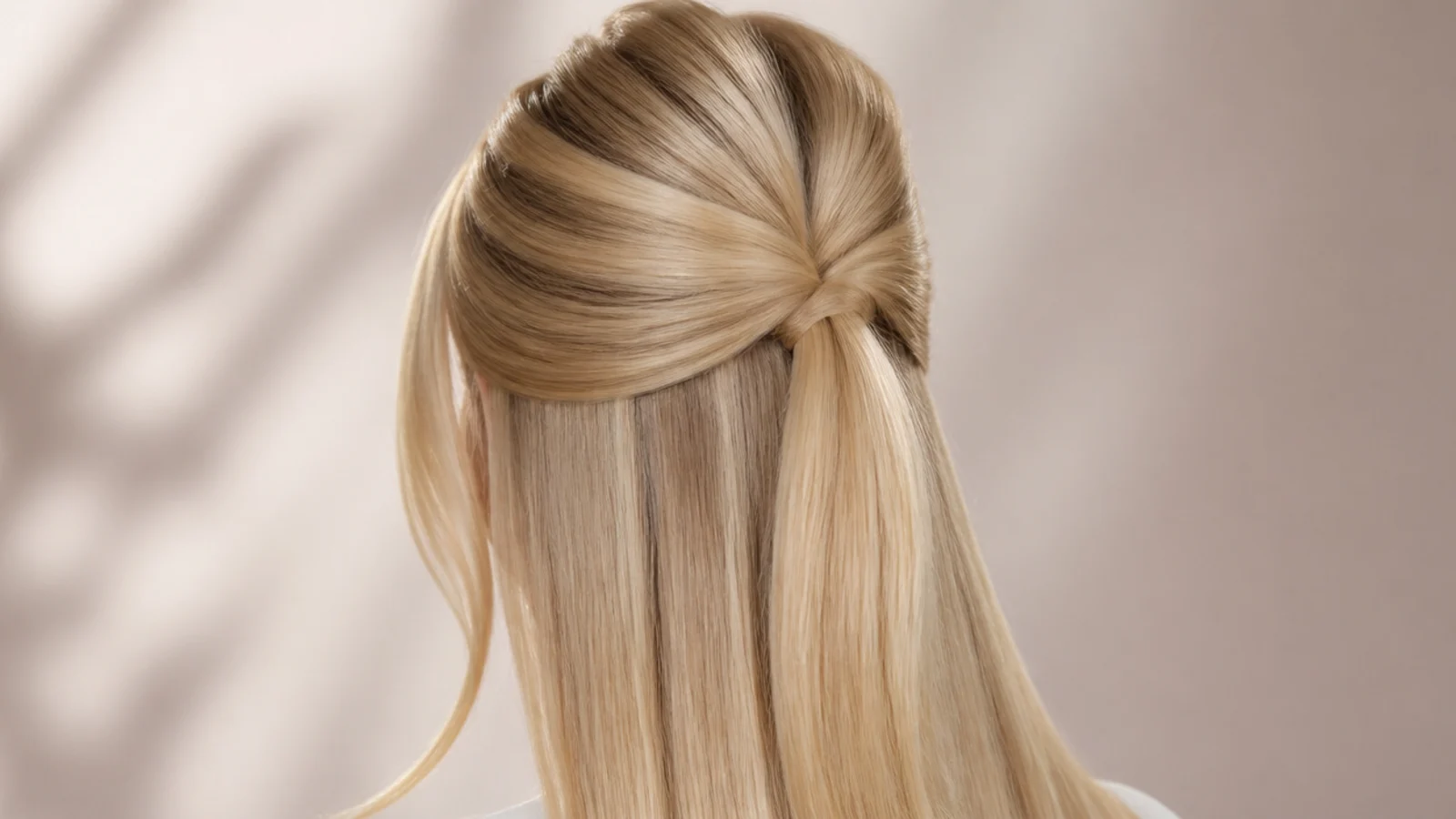
Take the top third from temple to temple, smooth it back with a boar bristle brush, and secure it at the crown with a small claw clip or an elastic wrapped in a hair strand. Leave the curtain fringe and one thin piece on each side loose. Straight hair makes this look deliberate rather than casual, because every strand pulls back cleanly. It also solves the biggest sleek-hair problem, which is fringe that has gone flat by 3pm.
Who it suits: All densities; especially useful on second-day straight hair.
Tip: Backcomb one small section at the crown before clipping so the half-up has a soft lift.
12. Straight Hair with a Shadow Root Blonde
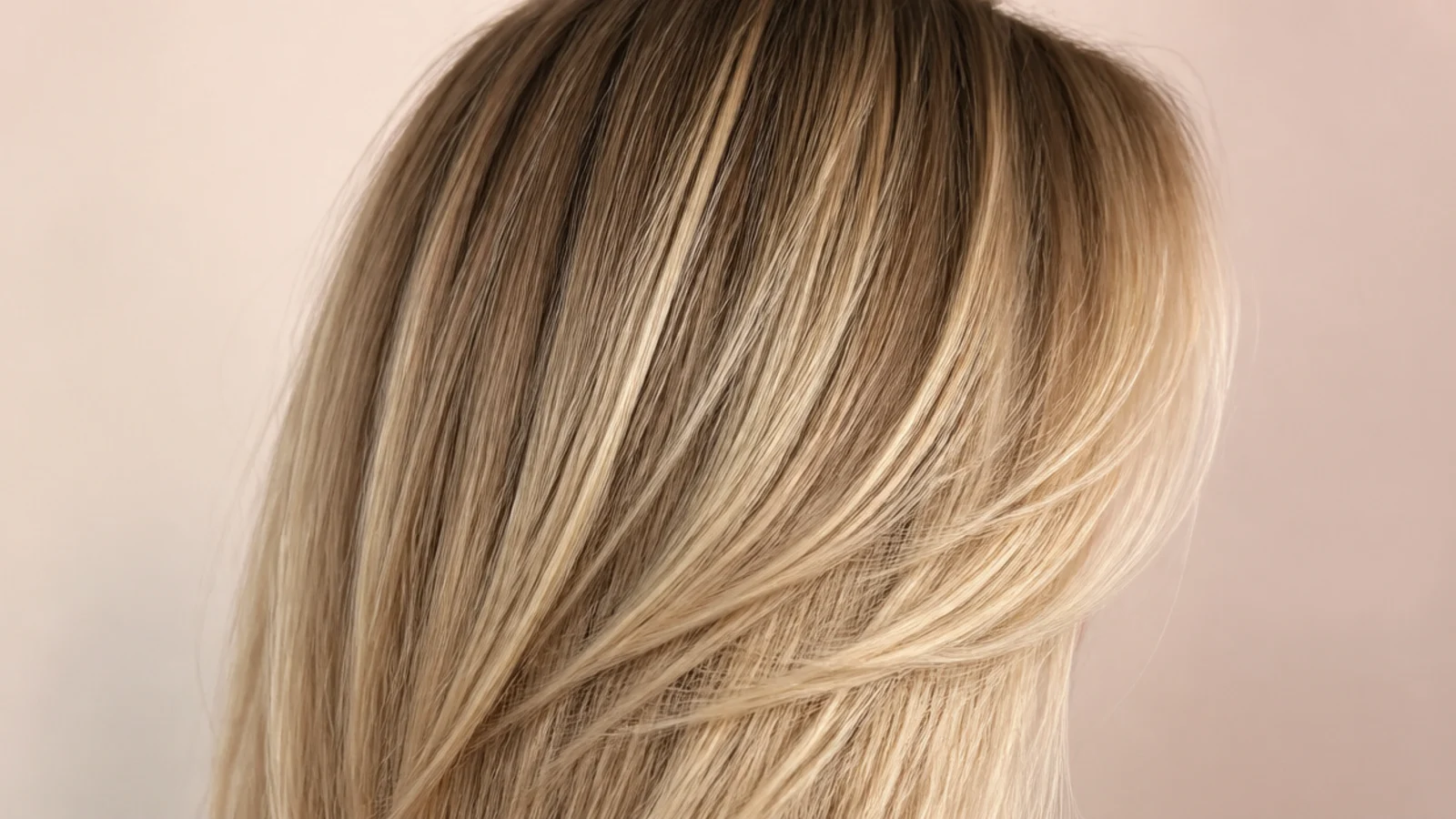
A deliberately deeper root, usually two levels below the base, blended down about two inches so there is no line. On straight hair a shadow root is the difference between expensive and cheap, because a flat cuticle shows a hard regrowth line with zero mercy. It also buys you four to six extra weeks between root appointments. Ask in shade families: soft beige-toned shadow root melting into buttery blonde lengths.
Who it suits: Anyone with natural mid to dark blonde roots who wants fewer salon visits.
Tip: Bring a photo and say shadow root, not lowlights, or you may get chunky panels instead.
13. Sleek Straight Low Ponytail with a Bow
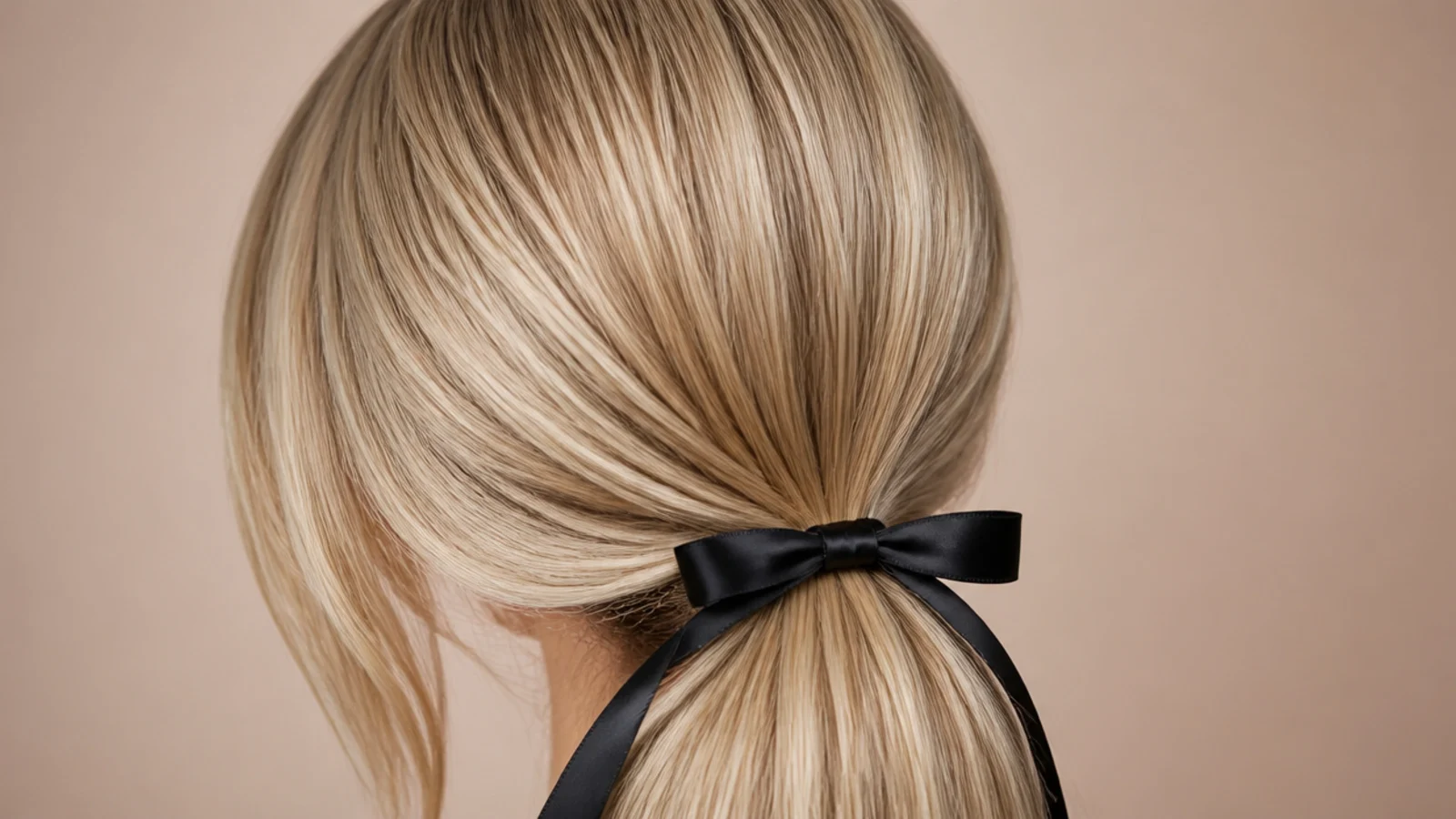
Straight hair gathered at the nape, secured tight, and finished with a satin bow that covers the elastic. The ponytail length has to be ironed after it is tied, not before, or the elastic leaves a kink halfway down. Leave the curtain fringe out and a fine piece in front of each ear. It is the most photographed way to wear sleek straight hair and takes about eight minutes once the hair is already flat.
Who it suits: Any length past the shoulders; hides a grown-out fringe well.
Tip: See the undone counterpart in elegant messy ponytail.
14. Straight Hair with Wispy Bottleneck Bangs
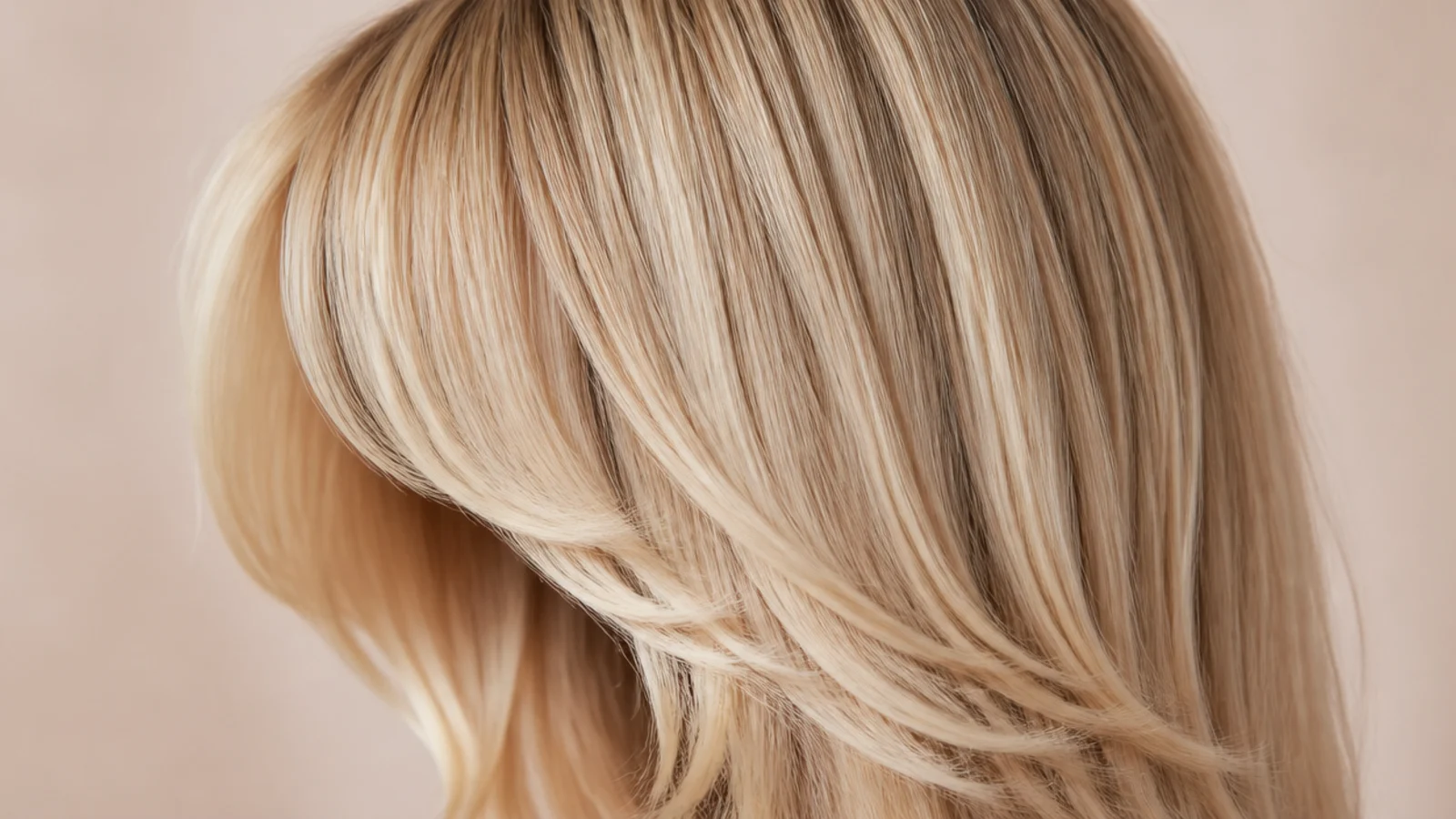
Bottleneck bangs are narrow and slightly shorter in the middle, then flare out and lengthen at the sides, so they read like a softened curtain fringe. On straight hair they beat a heavy blunt fringe because a blunt fringe plus flat lengths tips the whole look into severe. The wispy version keeps some air at the forehead. Cut dry, point-cut, with the center landing just above the brow and the sides reaching the cheekbone.
Who it suits: High foreheads, fine hair, and anyone nervous about committing to a full fringe.
Tip: More variants in wispy short curtain bangs.
15. Straight Hair on Thick, Coarse Hair
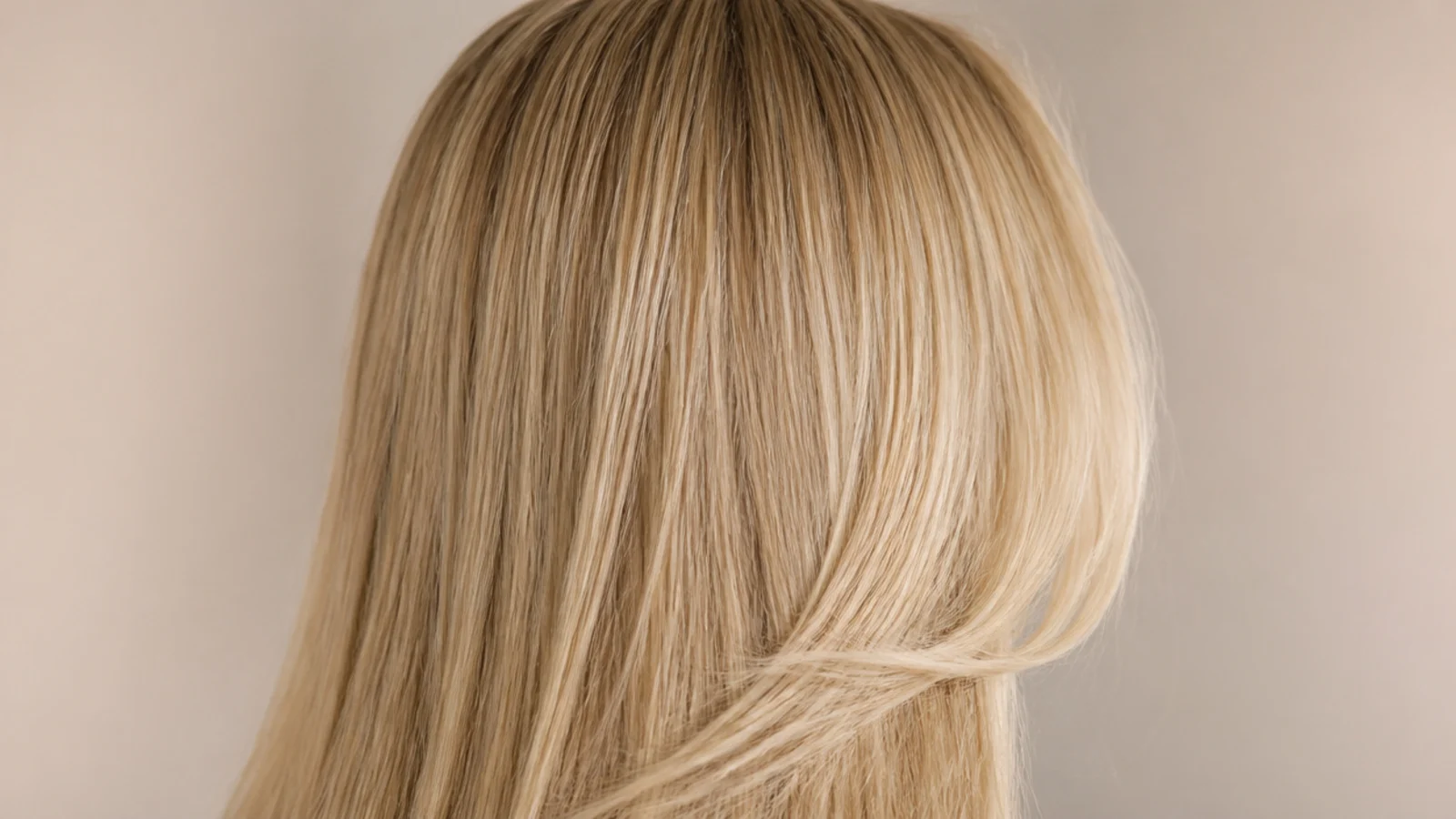
Thick hair goes straight beautifully but goes heavy just as fast, so the fix is internal debulking rather than more heat. Ask for internal layers and a light point-cut taper through the last four inches, which removes weight without creating visible steps. Style in half-inch sections with a smoothing cream, dry fully before the iron touches it, and keep the iron at 340 to 360F on virgin hair. Twenty-five to thirty-five minutes is realistic, not ten.
Who it suits: Thick, coarse, straight to wavy hair that swells rather than lies flat.
Tip: Frizz control is half the job; see how to fix frizzy hair.
16. Straight Hair on Naturally Curly Hair
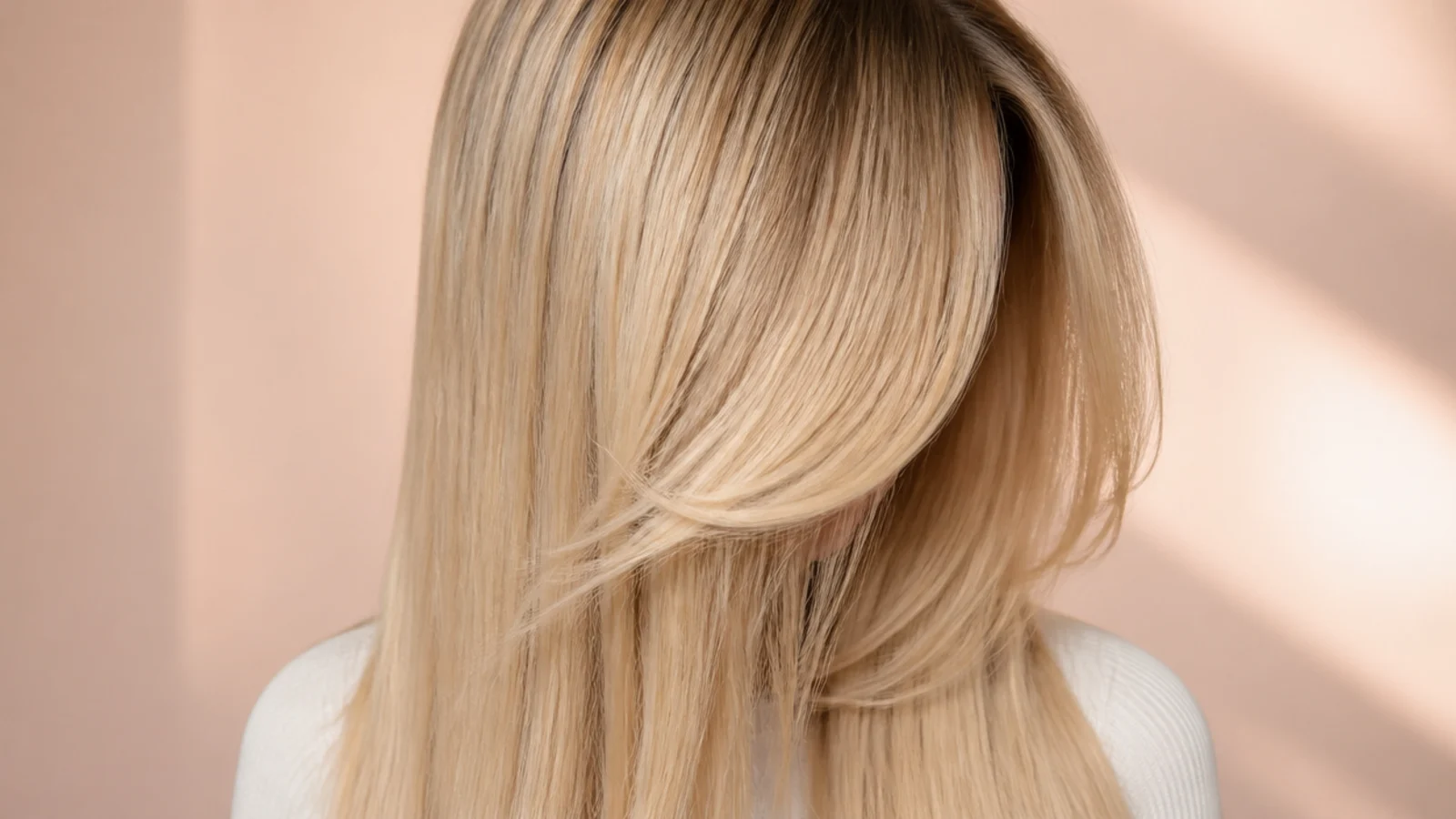
On 2b to 3b texture this is a blow-dry-then-press job, never an iron-on-damp job. Blow dry with tension using a paddle or denman brush until the curl is 90 percent stretched, then take half-inch sections with a ceramic iron at 330 to 360F depending on porosity, one pass each. Chase every pass with a fine-tooth comb so the section stays flat behind the plates. Limit this to once every two to three weeks to protect the curl pattern.
Who it suits: 2b to 3b curls in good condition; be cautious if you are also color-treated.
Tip: The curl-forward version of this cut is in Sabrina Carpenter curly hair.
17. Blunt Straight Cut at the Collarbone
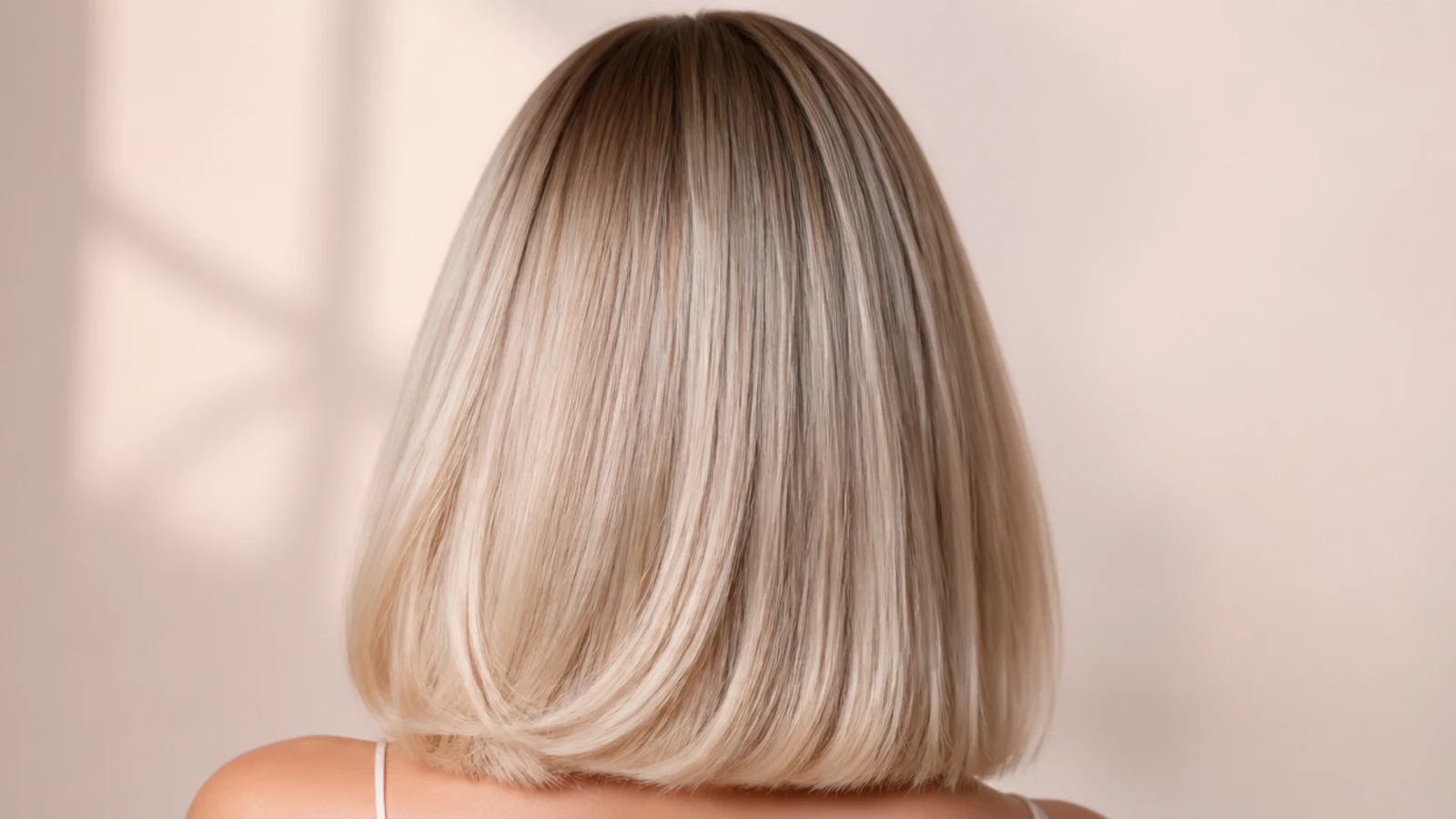
One clean horizontal line at the collarbone, no taper, no face framing except the fringe. It is the sharpest reading of this look and the most modern, because the blunt line plus a soft curtain fringe is a deliberate contrast rather than an accident. It needs a trim every six to eight weeks to stay sharp, and it needs the ends genuinely healthy, since a blunt line makes damage impossible to hide.
Who it suits: Fine to medium hair wanting maximum apparent thickness; long faces especially.
Tip: Ask for a blunt baseline cut with the hair dry, so it sits where you will actually wear it.
18. Cool Beige Blonde Straight Hair
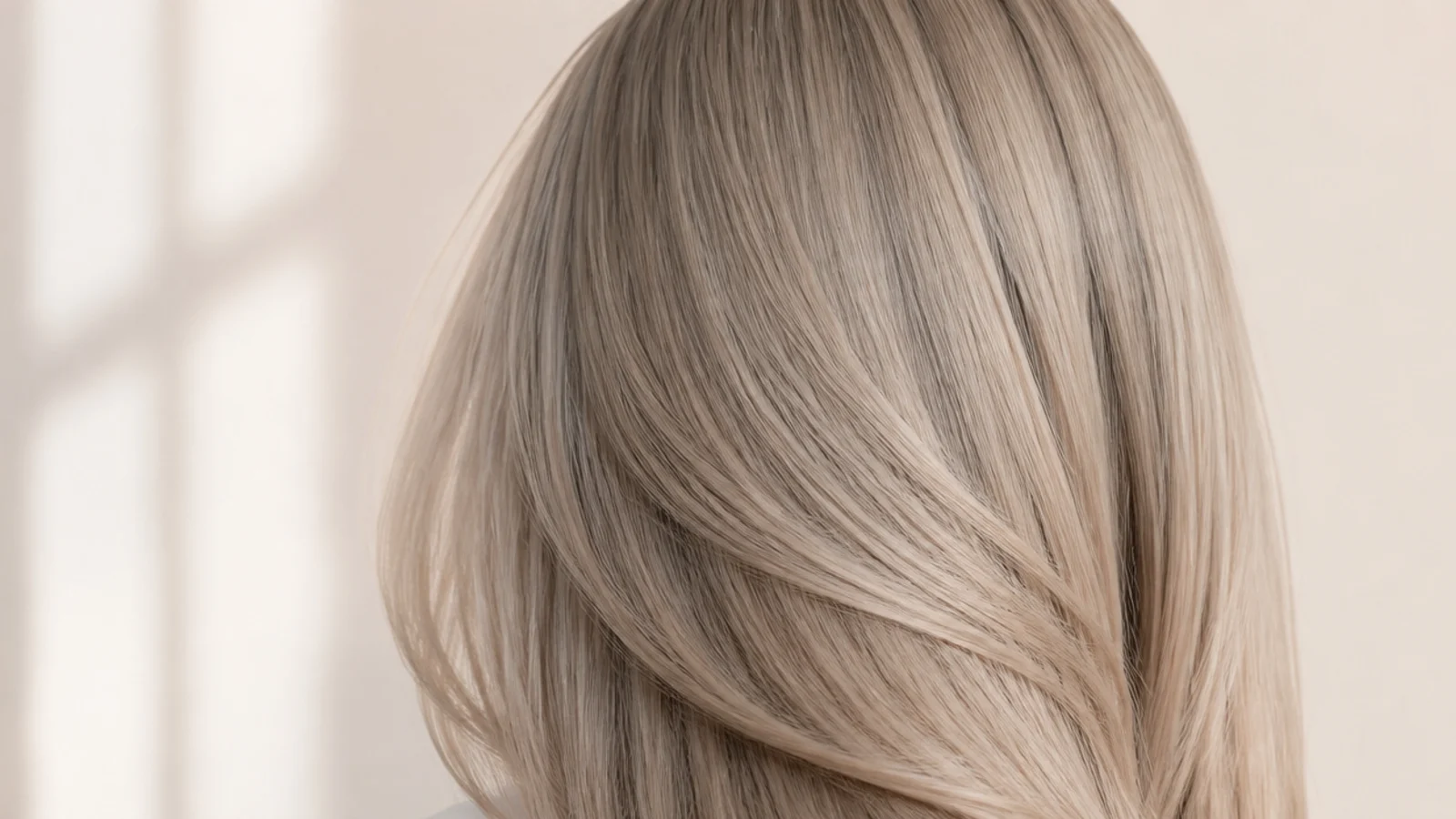
The cooler end of her blonde range: a neutral beige with the yellow pulled out, which on straight hair looks like polished sand rather than gold. It suits cool and neutral skin undertones and it photographs well under indoor light, where warm blonde can go orange. Maintain it with a violet-toned mask once a week, not every wash, since over-toning makes bleached blonde look gray and dull under a flat cuticle.
Who it suits: Cool and neutral undertones; harder to maintain on hair that pulls warm.
Tip: Say cool beige blonde with a neutral root, and bring two photos in natural daylight.
19. Straight Hair on a Brunette Base
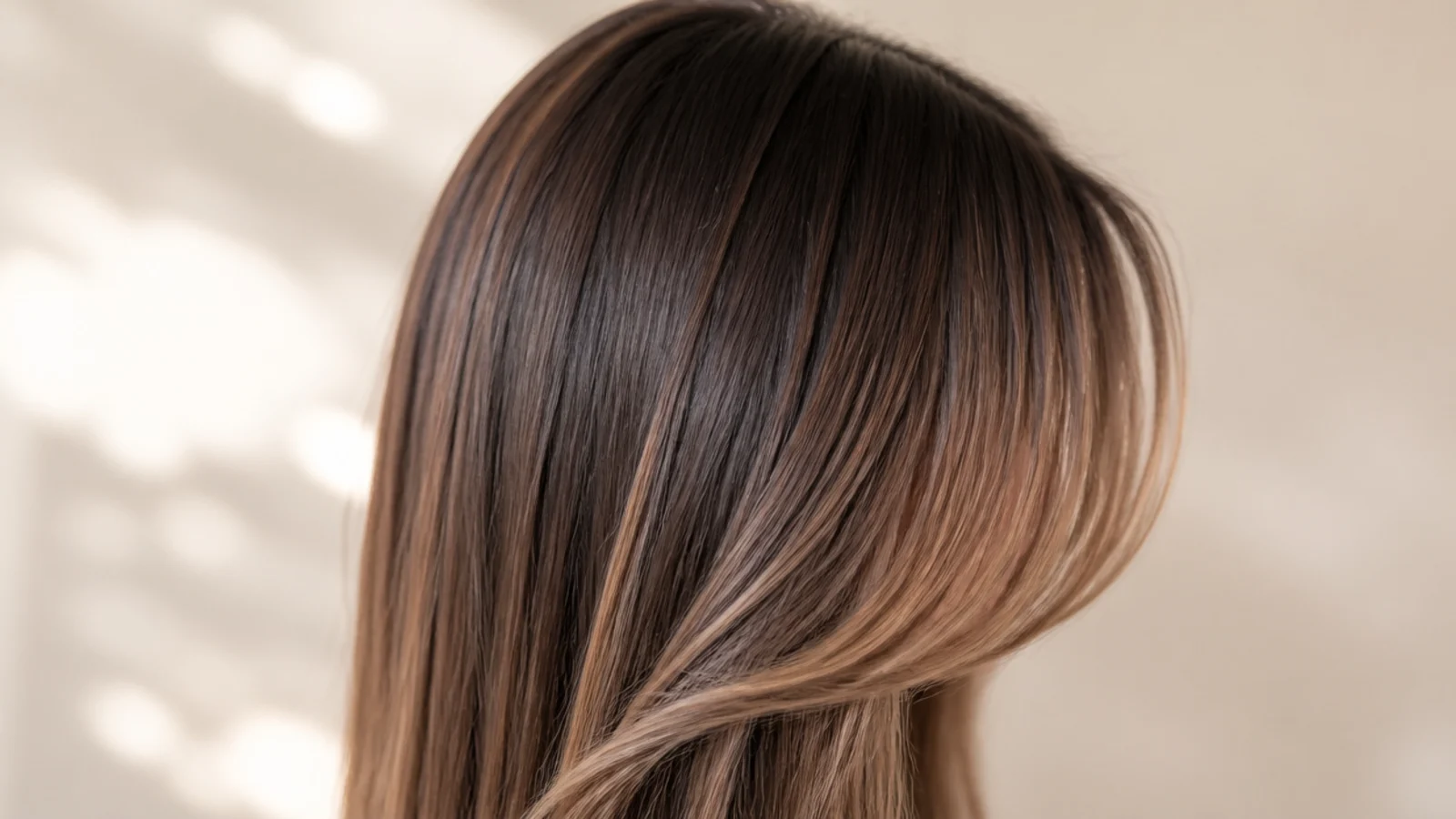
The exact same cut on a brown base, with a couple of bronde pieces at the face so the layers still read. Straightened brunette hair has more visible shine than blonde does, because darker pigment reflects a harder highlight strip down the mid-lengths. Note that her documented dark hair moments were widely reported as wigs rather than dye, so treat brunette here as a shade choice you are making, not a color she committed to.
Who it suits: Natural brunettes and anyone growing out blonde; kindest option for damaged hair.
Tip: The full shade ladder is in Sabrina Carpenter brown hair.
20. Second-Day Straight Hair Refresh
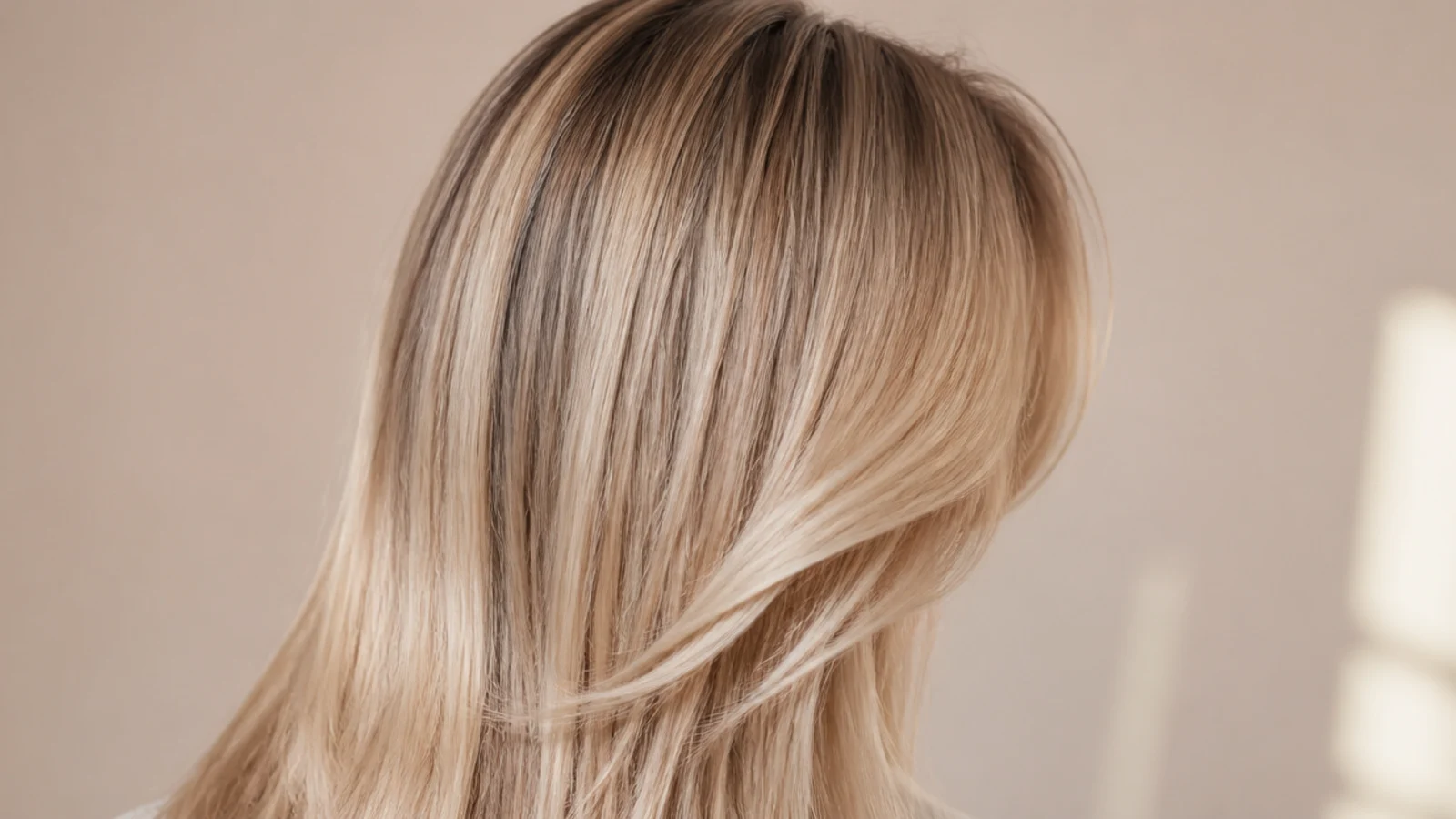
Day two is where sleek hair actually lives or dies. Dry shampoo at the roots only, brushed through with a boar bristle brush, then re-shape the fringe with a round brush and a 20-second blast of the dryer. Do not re-iron the lengths, because a second full pass is what causes the damage people blame on straightening in general. If a kink survives, spot-press only that section rather than starting over.
Who it suits: Anyone straightening more than once a week; essential for bleached hair.
Tip: Sleep with the lengths in a loose silk scrunchie at the nape to stop overnight bends.
The Signature Sleek Straight Look, Broken Down
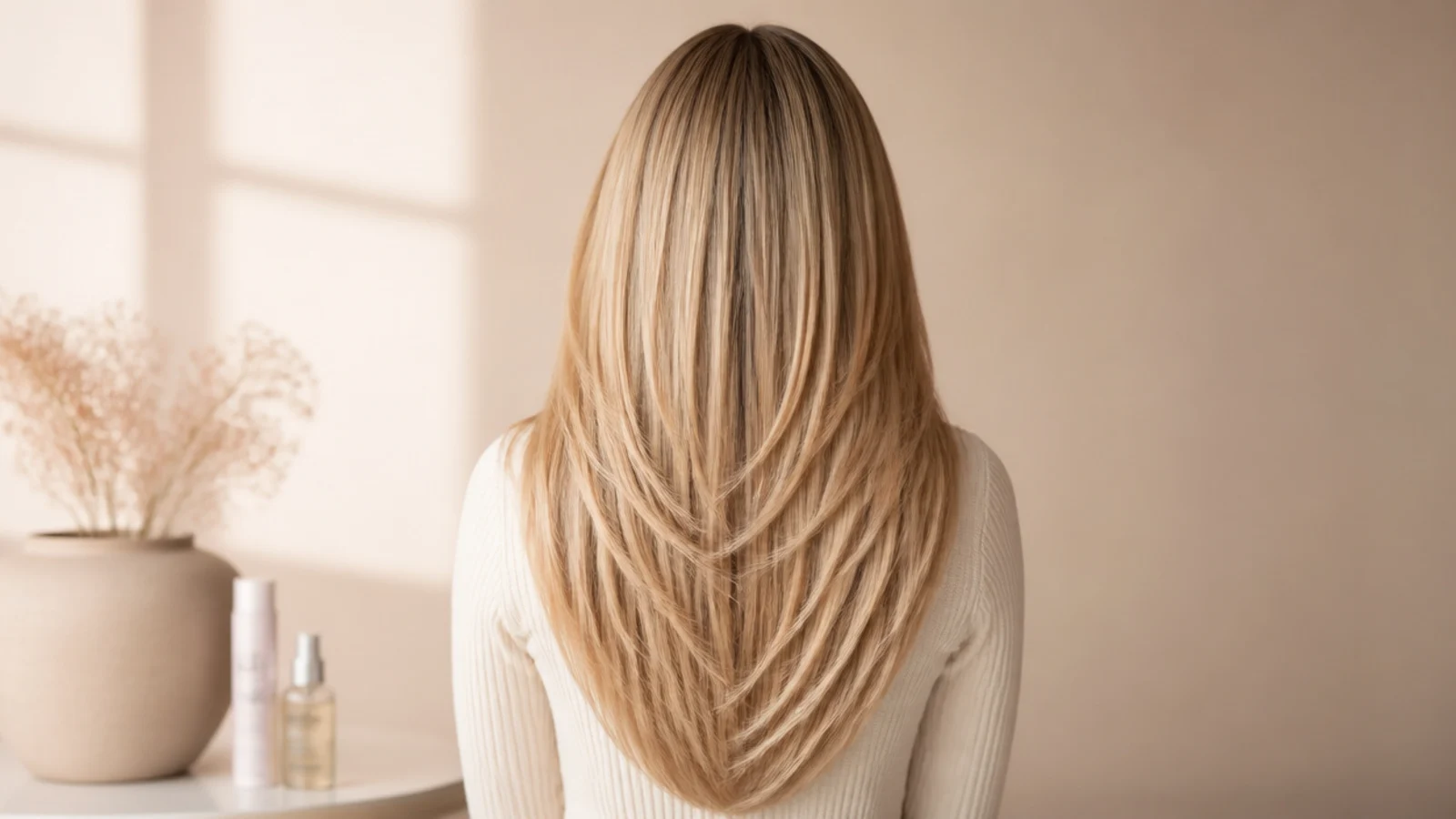
The sleek straight version of this hair is built from four visible parts, and once you can name them you can ask for them. First, length: long, usually well past the collarbone, with a perimeter that tapers rather than sitting as a hard shelf. Second, face-framing layers that begin around the jaw and graduate downward, which is the single detail doing the most work, because when everything is pressed flat those shorter pieces are the only movement left in the shape. Third, the curtain fringe, split at the center, skimming the lashes in the middle and lengthening toward the temples so it merges into the face-framing layers instead of stopping abruptly. Fourth, the finish, which is a smooth cuticle and a real gloss rather than a heavy serum. Miss the layers and you get a flat curtain of hair. Miss the fringe and you lose the entire signature. The rest of the board covers the same cut styled with movement, and the Sabrina Carpenter hair hub is the place to compare the straight, wavy and curly readings side by side before you book.
How to Get the Straight Blowout at Home
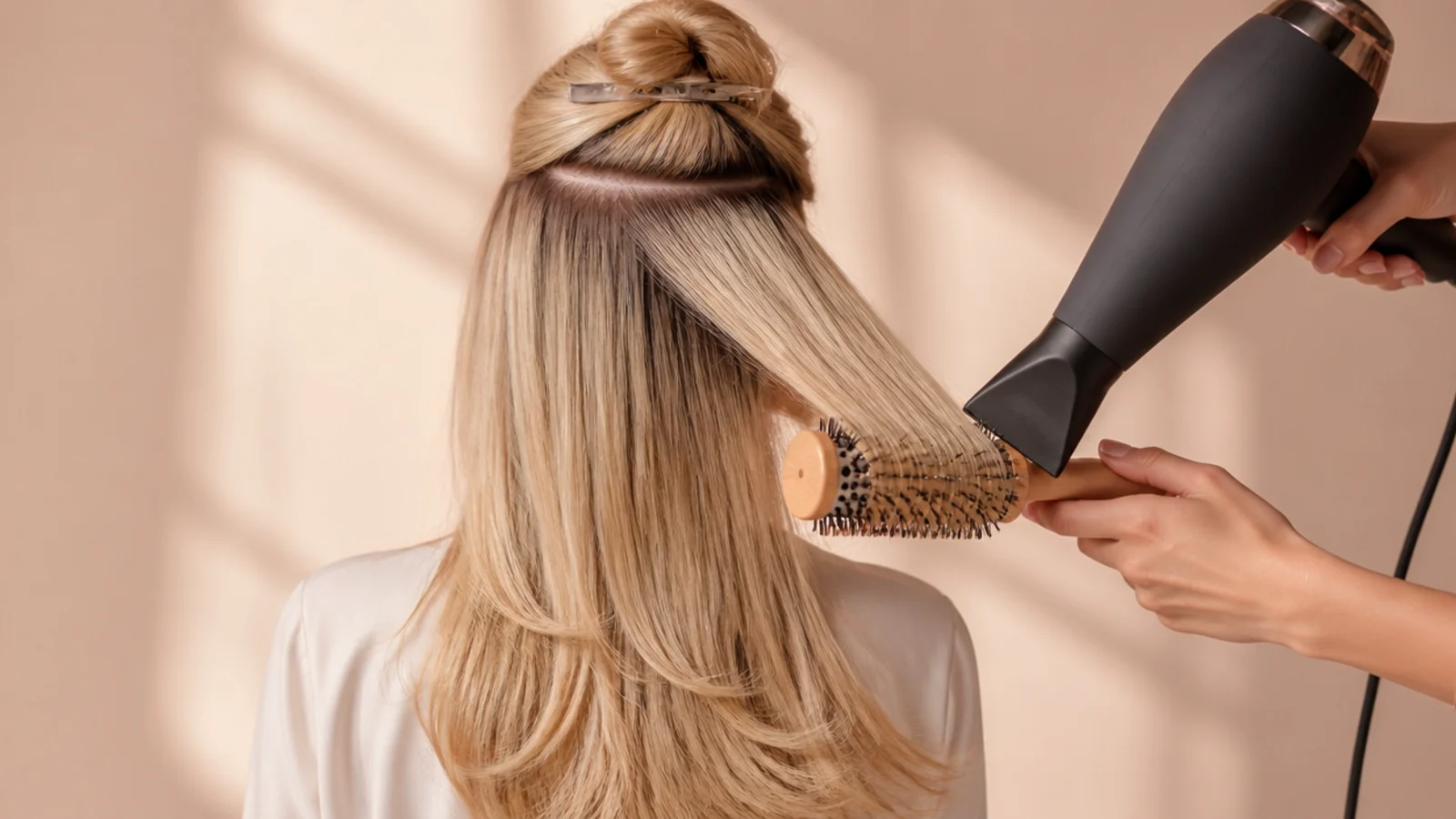
Start on towel-damp hair, not soaking, with a heat protectant through the mid-lengths and ends and a root-lift mousse at the crown only. Rough dry to about 80 percent, which stops the cuticle swelling while you work. Then section: the rule that matters most is that no section should be wider than your round brush, because anything wider slips off the barrel and comes out bent instead of smooth. Use a 2 to 2.5 inch round brush, keep the nozzle pointing down the hair shaft with the airflow following the brush, and take each section in one slow continuous pass rather than several nervous ones. Finish every section with a cool shot before you release the brush, since hair sets its shape as it cools, not as it heats. If you want it flatter than a brush alone gives you, follow with a flat iron in one-inch sections at 300 to 330F on bleached hair or 340 to 360F on virgin hair. Step-by-step timings and tool alternatives are in the Sabrina Carpenter hair tutorial, and straight mid-length haircut styling covers the shorter-length version of the same technique.
Her Hair Colors and How to Ask for Them on Straight Hair
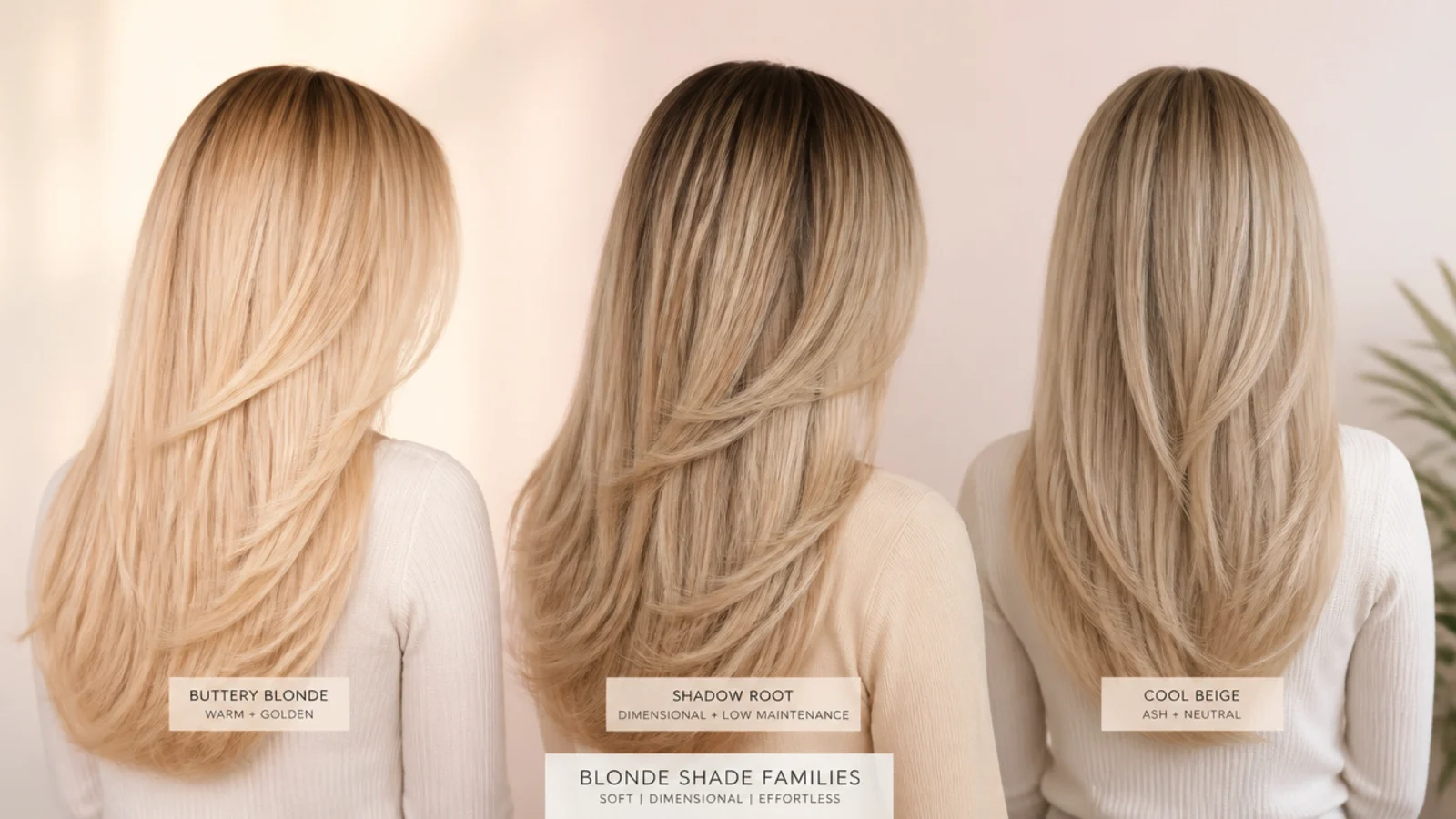
Describe color in families, not brand names, because that is what a colorist can actually work from. The publicly visible range is a warm buttery blonde, a softened or shadowed root, and brighter cool beige pieces around the face. Say it in that order: buttery blonde base, soft shadow root about two levels deeper, cool beige face framing. Straight hair changes the brief in one important way. A flat cuticle shows every line, so hard foil marks, chunky highlights and a sharp regrowth line all become obvious once you iron, where waves would have broken them up. Ask for hand-painted or diffused placement at the top of each piece and an explicit root melt. Bleached blonde also runs porous, which is why straightened blonde can look dull rather than glassy; a demi-permanent gloss every four to six weeks fixes that better than any oil. If you are considering a darker base instead, the Sabrina Carpenter brown hair and Sabrina Carpenter black hair guides cover the shade ladder and the wig context honestly.
Which Straight Look Suits Your Hair Type and Face Shape
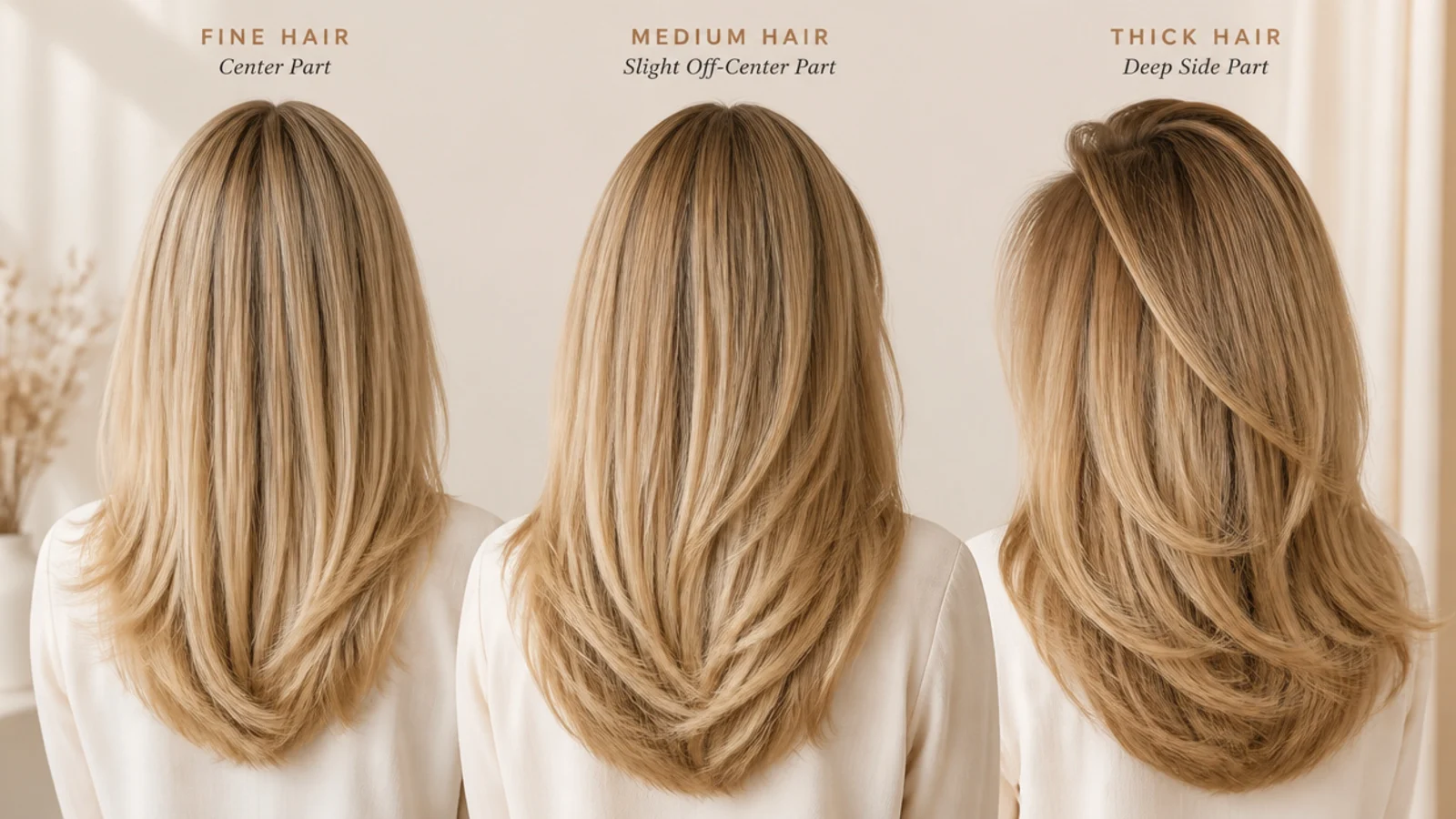
Almost no page in this space gates the look by hair type, and it is the reason so many people copy it and feel let down. Fine, low-density hair should go for the one-length or blunt collarbone versions with minimal internal layering, because heavy layering plus a flat finish exposes the scalp. Medium density is the sweet spot and can take the full long-layered version at 22 inches and up. Thick, coarse hair needs internal debulking and a point-cut taper or the straight finish turns into a heavy triangle. For face shape, a center part with a split curtain fringe flatters oval and heart shapes, while round and square faces do better with the part moved two inches off center so a long diagonal breaks up the width. Long, narrow faces should avoid pin-straight with a center part entirely and take the bend-at-the-ends version instead, which adds width right at the jaw. Density-specific fringe advice sits in short curtain bangs for fine hair.
The Cuts and Layers Behind the Straight Styles
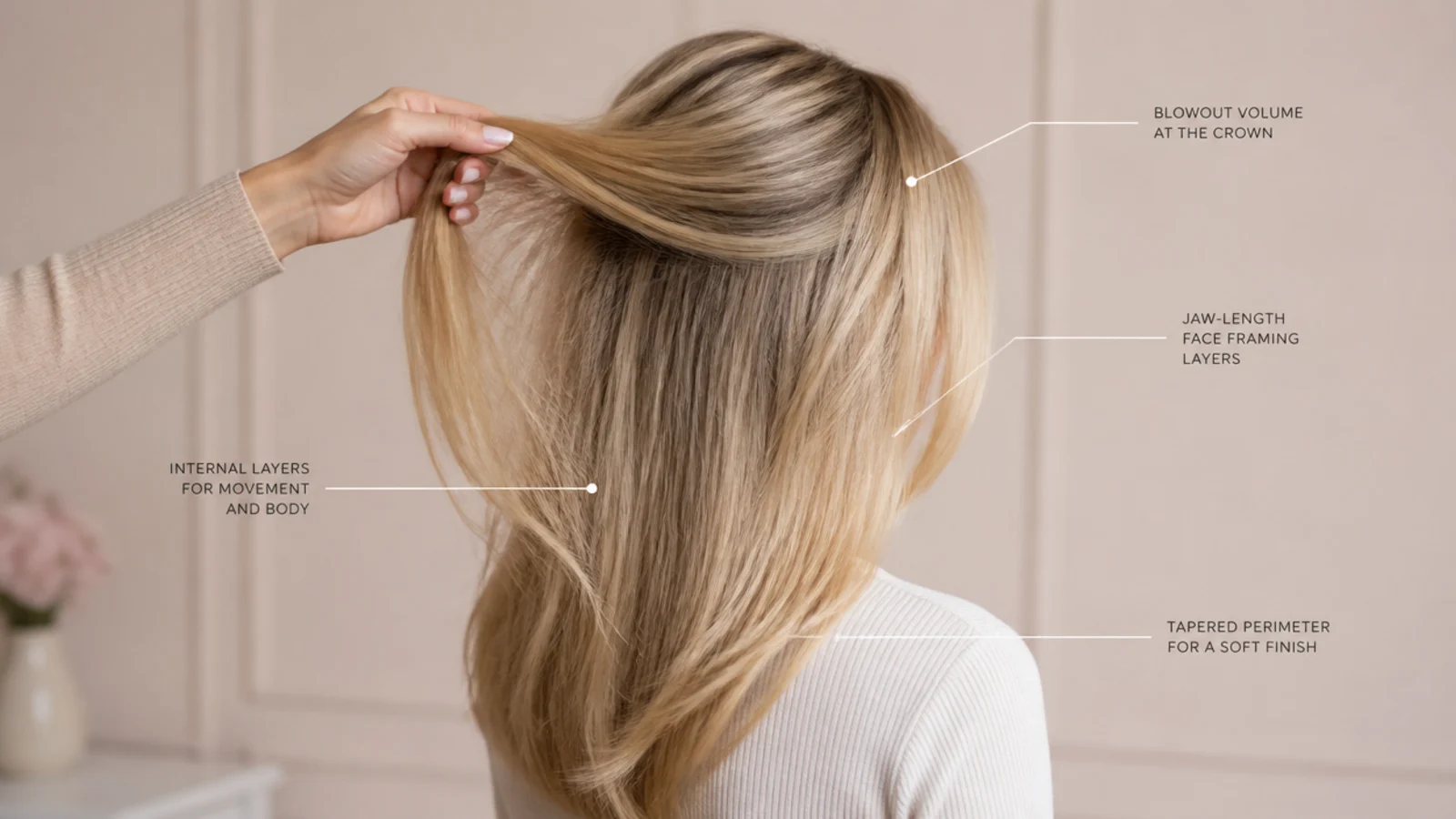
There are really three cuts under all twenty of these looks. The first is long layers with jaw-length face framing, the default, which reads as taper and movement at the front when straightened. The second is one-length or blunt, which has no visible layering and reads as density, best on fine hair and on anyone whose ends look thin when flat. The third is butterfly layering, a chin-length shelf stacked over untouched long lengths, which needs thickness to work because flat hair separates the two lengths visibly. Whichever you pick, the wording matters more than the photo. Ask for the shortest face-framing piece at the jaw, long connected internal layers, and a soft point-cut taper through the last four inches, then say explicitly that you wear it straight, because a stylist cuts differently for a blowout than for a flat iron. Layer placement in detail is covered in mid-length haircut layers, and the full cut breakdown lives in Sabrina Carpenter hair.
Keeping the Curtain Fringe from Going Flat on Straight Hair
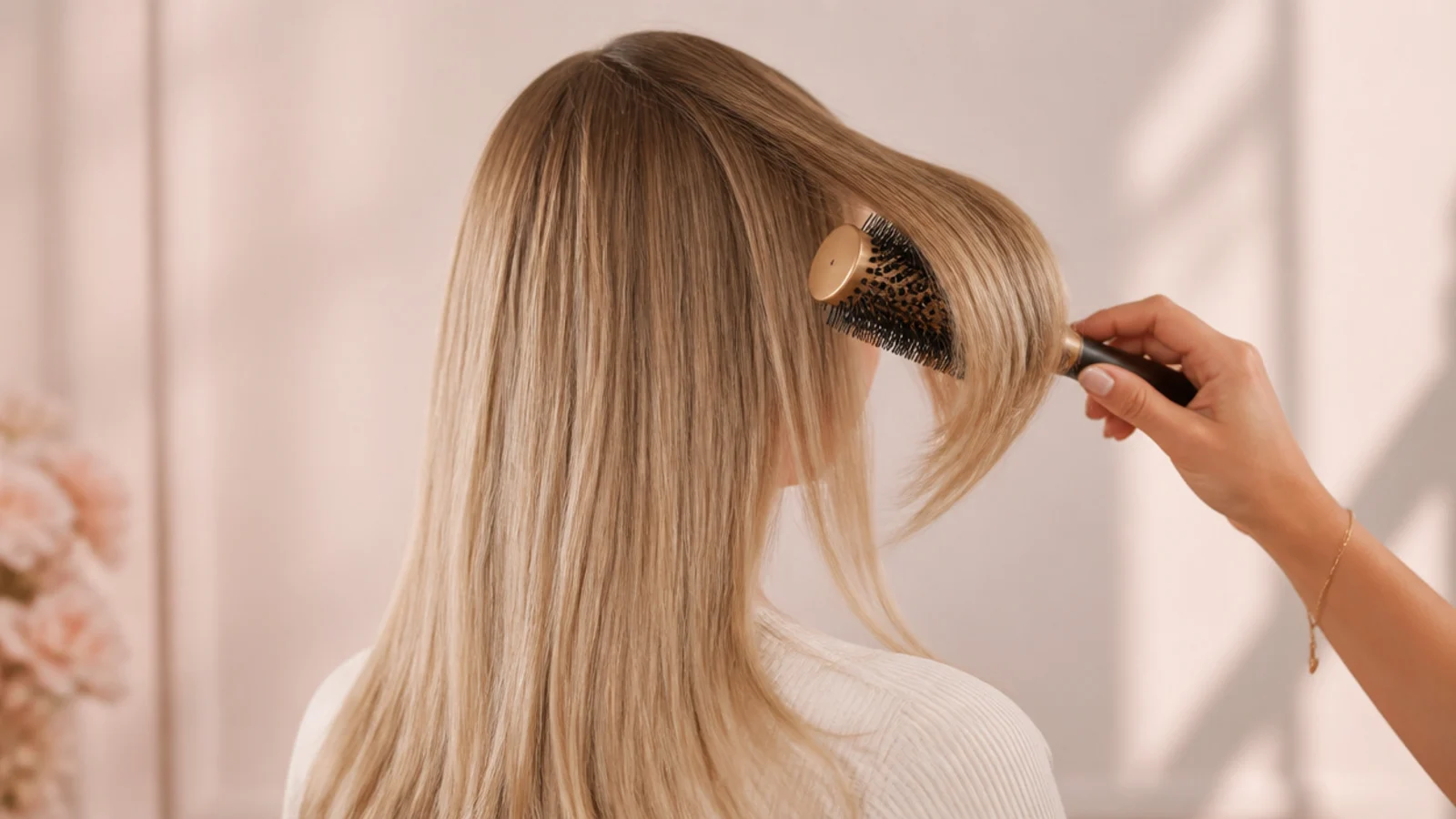
This is the failure point nobody warns you about. A flat iron makes the lengths look expensive and makes the fringe look glued to your forehead, because the fringe is the shortest, finest hair on your head and it has the least weight to fight gravity. The fix is to treat them as two separate jobs. Dry the fringe first, while the rest is still wet, using a small round brush and drying it side to side rather than straight down so the roots never learn to lie flat. Rotate the brush a half turn outward at the ends. Then iron everything else and leave the fringe alone. If it has already dropped, a large Velcro roller left in for five minutes while you finish the lengths restores the bend with no extra heat at all. On oily skin, a whisper of dry shampoo at the fringe roots buys you the whole day. Everything about the fringe itself, from cutting to growing it out, is in Sabrina Carpenter hair bangs and styling short curtain bangs.
Frequently Asked Questions
What is Sabrina Carpenter's haircut called?
There is no single trademarked name, but stylists would describe it as a long layered cut with a curtain fringe. The specifics are what to ask for: long connected internal layers, face-framing pieces starting around the jaw, a tapered perimeter, and a center-split curtain fringe that skims the lashes and lengthens toward the temples.
Does Sabrina Carpenter have naturally straight hair?
Her publicly visible looks include sleek straight, soft wave and voluminous curl, which means the straight version is a styling choice rather than her only texture. Treat the straight looks here as a finish applied to a long layered cut, not as evidence of a natural texture, and style yours accordingly.
Is Sabrina Carpenter naturally blonde?
Her signature blonde is a colored, maintained blonde rather than a single natural shade, with a warmer buttery base, a softened root and brighter cool beige pieces at the face. Ask a colorist for those three elements by shade family rather than asking for one flat blonde, which is what makes copied versions look cheap.
Does Sabrina Carpenter wear a wig?
Her dramatically dark looks were widely reported as wigs rather than permanent color. That matters for anyone copying them, because going near-black over lifted blonde needs a filler and is very difficult to reverse. If you want a dark version of this cut without commitment, a wig, a semi-permanent gloss or clip-in pieces are the honest options.
How do I get Sabrina Carpenter straight hair at home?
Rough dry to 80 percent, section no wider than your round brush, blow dry each section in one slow pass with the nozzle following the brush, and finish with a cool shot. Then flat iron in one-inch sections if you want it flatter. Style the curtain fringe separately with a small round brush so it keeps a bend.
What temperature should I straighten bleached blonde hair at?
Stay in the 300 to 330F range on bleached or highlighted hair and use one slow pass per section rather than three fast ones. Virgin, coarse hair can handle 340 to 360F. The 400F and above settings on most irons exist for professional smoothing services and will scorch lifted blonde into a dull, straw-like texture.
Will straight hair with curtain bangs suit a round face?
Yes, with two adjustments. Move the part about two inches off center so the hair falls in a long diagonal instead of splitting the face symmetrically, and let the fringe sweep to one side and reach the cheekbone rather than sitting short and blunt. Length past the collarbone helps too, since a flat vertical line lengthens a round face.
How do I stop my curtain bangs going flat when I straighten my hair?
Dry the fringe first, before the rest of your hair, using a small round brush and drying side to side so the roots never set flat. Rotate the brush outward at the ends and give it a cool shot. Never run the flat iron through the fringe. A large Velcro roller for five minutes revives it later with no extra heat.
Can I get this look on short hair?
Yes, down to about collarbone length. The one thing that has to change is the fringe: at 14 to 16 inches the curtain fringe should be re-cut to around cheekbone length, because a lash-skimming fringe overwhelms a shorter perimeter. Keep layering minimal at that length and let the blunt baseline do the work.
How often can I straighten my hair without damaging it?
Once or twice a week is a reasonable ceiling for color-treated hair, and every two to three weeks for curly hair you want to keep its pattern. The bigger risk is re-ironing the same hair on day two. Refresh with dry shampoo, a boar bristle brush and a spot-press of any kinked section instead of a full second pass.
Which sabrina carpenter hair look are you saving?
Straight is the most honest way to wear this haircut, because a flat iron hides nothing. Every uneven layer, every brassy band and every blunt line shows up in a smooth cuticle, which is exactly why the looks that work are the ones with real structure underneath: jaw-length face-framing pieces, a curtain fringe cut with a little weight at the ends, and a shade family with a softened root rather than one flat block of blonde. Keep the iron at 300 to 330F if you are bleached, do the fringe with a round brush instead of the iron, and finish with a gloss rather than more heat. Save the two or three looks that suit your density and take them to your stylist, then browse the rest of the Sabrina Carpenter hair board for the wavy and curly versions of the same cut.