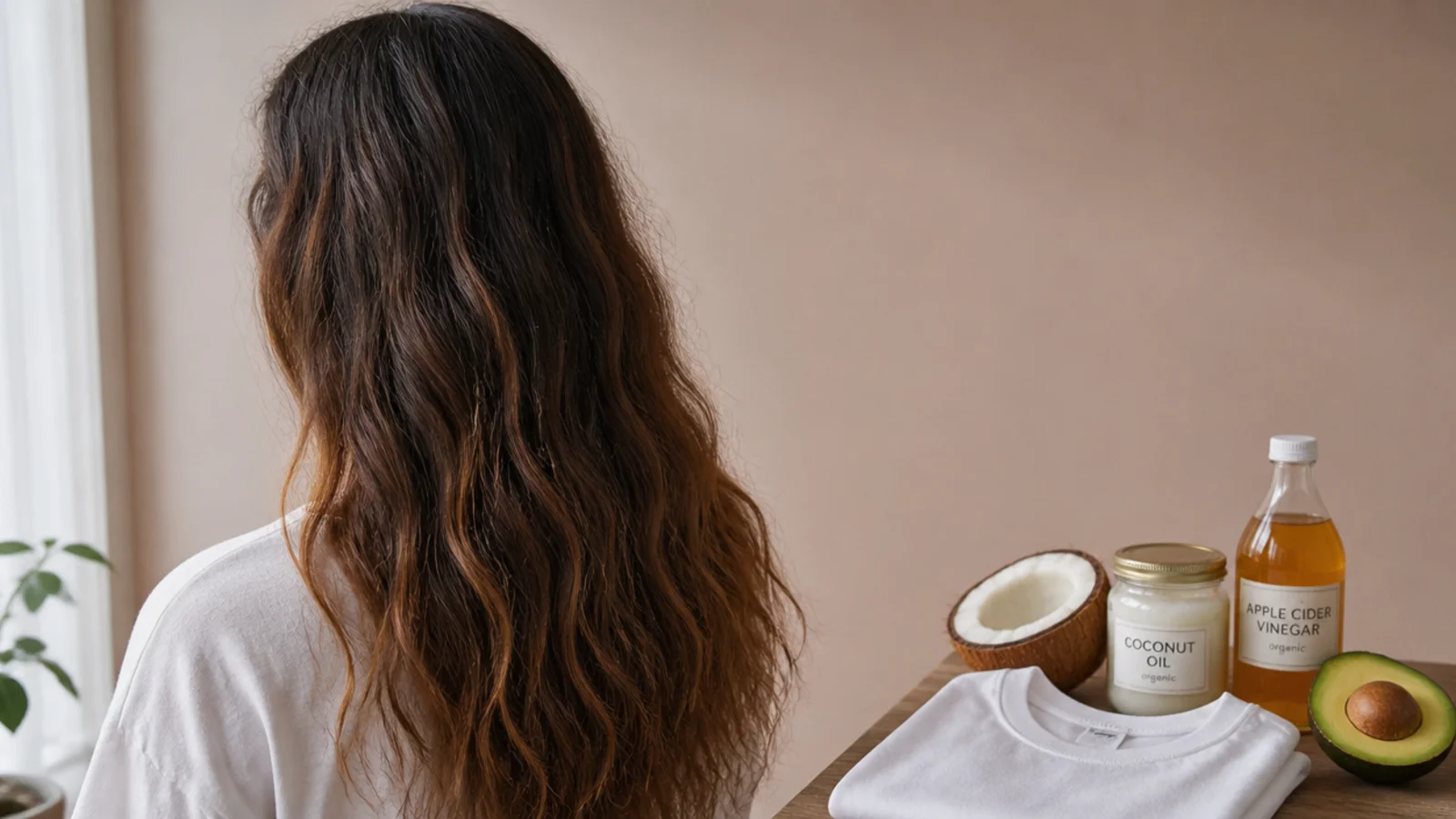
Quick Comparison
| Kitchen Remedies | Bottled Remedies | |
|---|---|---|
| What they are | ACV rinses, oils, egg, avocado, honey, rice water, flaxseed gel | Leave-in conditioner, curl cream, gel, serum, silk accessories |
| Cost per use | About 20 cents to 2 dollars from ingredients you already own | About 50 cents to 2 dollars per wash from a 9 to 30 dollar bottle |
| Prep plus leave-on time | 5 to 15 minutes prep, 15 to 30 minutes on the hair | Zero prep, 60 to 90 seconds to apply on wash day |
| Mess level | High; drips, blocks drains, needs an old towel and a shower cap | Low; applied at the sink or in the shower with no cleanup |
| Smell | Noticeable; vinegar, egg and mayonnaise can linger through day 2 | Formulated to fade, usually gone once the hair dries |
| What it fixes best | Dryness at the root of frizz plus ends-only and in-the-curl frizz | Surface frizz, halo flyaways and humidity swelling in real time |
| Speed of results | Cumulative; expect a visible change after 3 to 4 weekly uses | Same day; you see the difference as the hair dries |
| Where it backfires | Heavy oils on low porosity hair, protein overload from egg or rice water | Too much cream or gel flattens fine hair and kills wave movement |
| Best use | Once weekly deep hydration slot, ideally under a warm towel | Every wash day, layered leave-in then cream then gel |
1. Apple Cider Vinegar Rinse for Surface Frizz
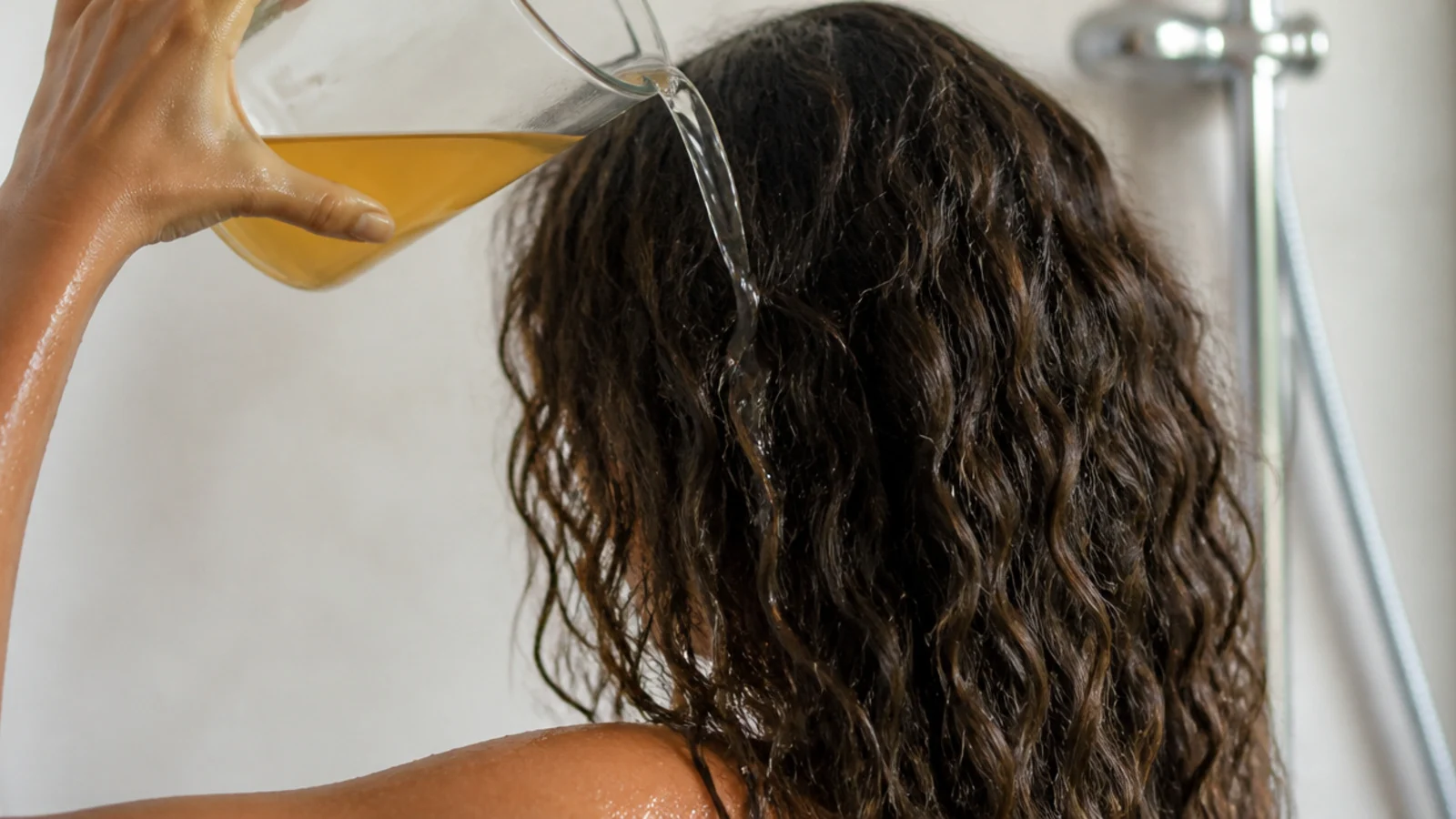
Mix one third of a cup of raw apple cider vinegar into one quart of warm water, pour it slowly over the lengths after conditioning, leave it 2 minutes and rinse cool. The acidity drops the hair pH back toward 4.5, which physically pulls lifted cuticle scales flat and strips the mineral film that hard water leaves behind. Cost is about 20 cents a rinse. Results show on the same day as shine, and after 3 or 4 uses as less surface fuzz. The smell is real but gone once dry, and it pairs well with the styling in frizzy hair hairstyles.
Who it suits: Hard water areas, dull surface frizz, product buildup on all hair types.
Tip: Cap it at once every 2 to 4 washes; weekly acid rinsing dries color-treated hair out.
2. Coconut Oil Pre-Wash Mask for High Porosity Hair
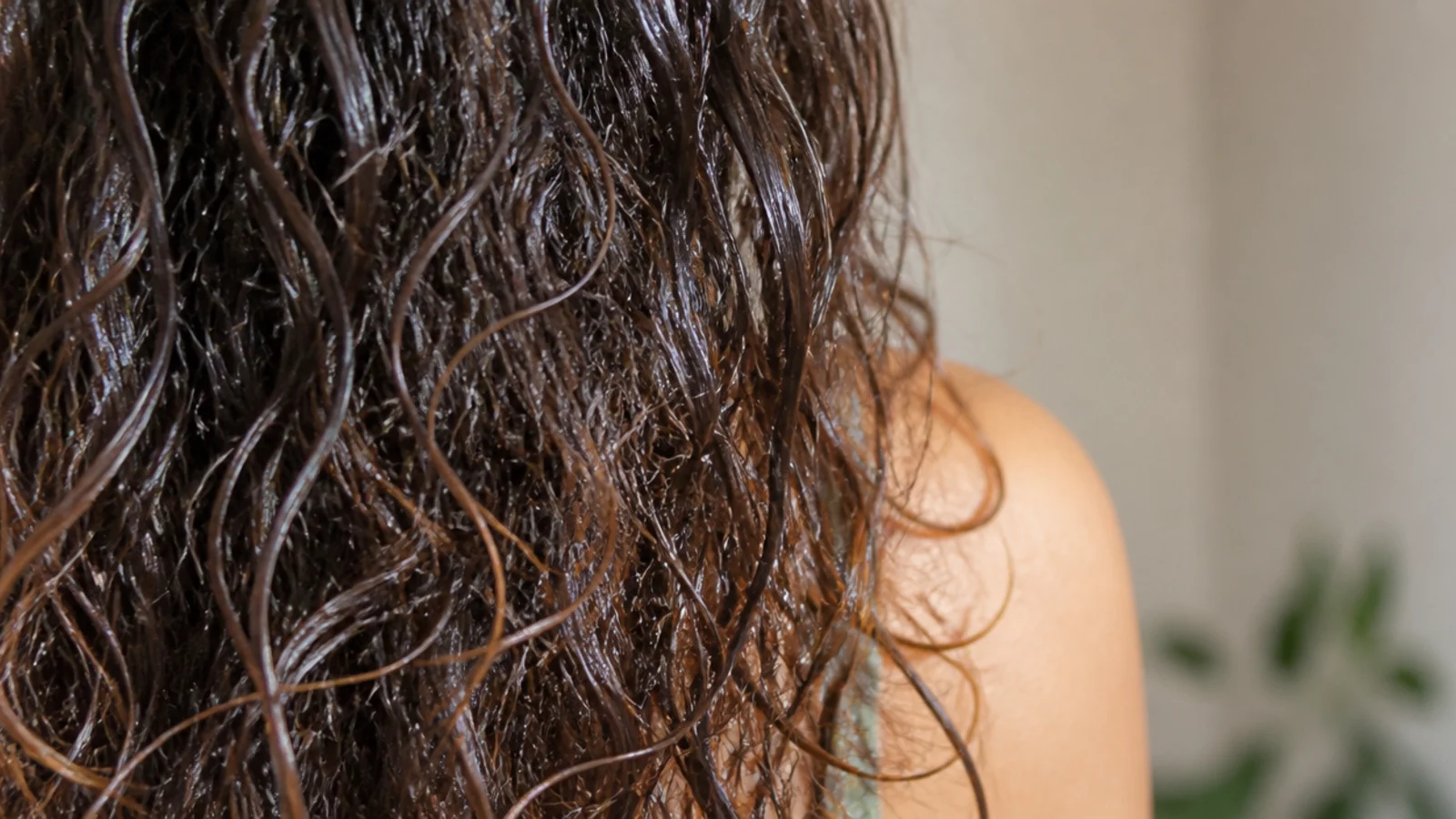
Warm 1 to 2 tablespoons of virgin coconut oil in your palms and work it through dry mid-lengths and ends 15 to 30 minutes before you shampoo, never the scalp. Coconut oil has a small enough molecule to actually enter the cortex, so it reduces the swelling that happens during washing, which is where a lot of frizz is born. Then shampoo twice. Cost is roughly 30 cents. On high porosity, coarse or color-damaged hair it is the single best kitchen remedy here, and it carries curly textures well in frizzy curly hair looks.
Who it suits: High porosity, coarse, thick or color-treated hair with dry ends.
Tip: Skip it entirely on low porosity hair, where it never absorbs and reads greasy for two days.
3. Argan Oil Finishing Drops for Flyaways
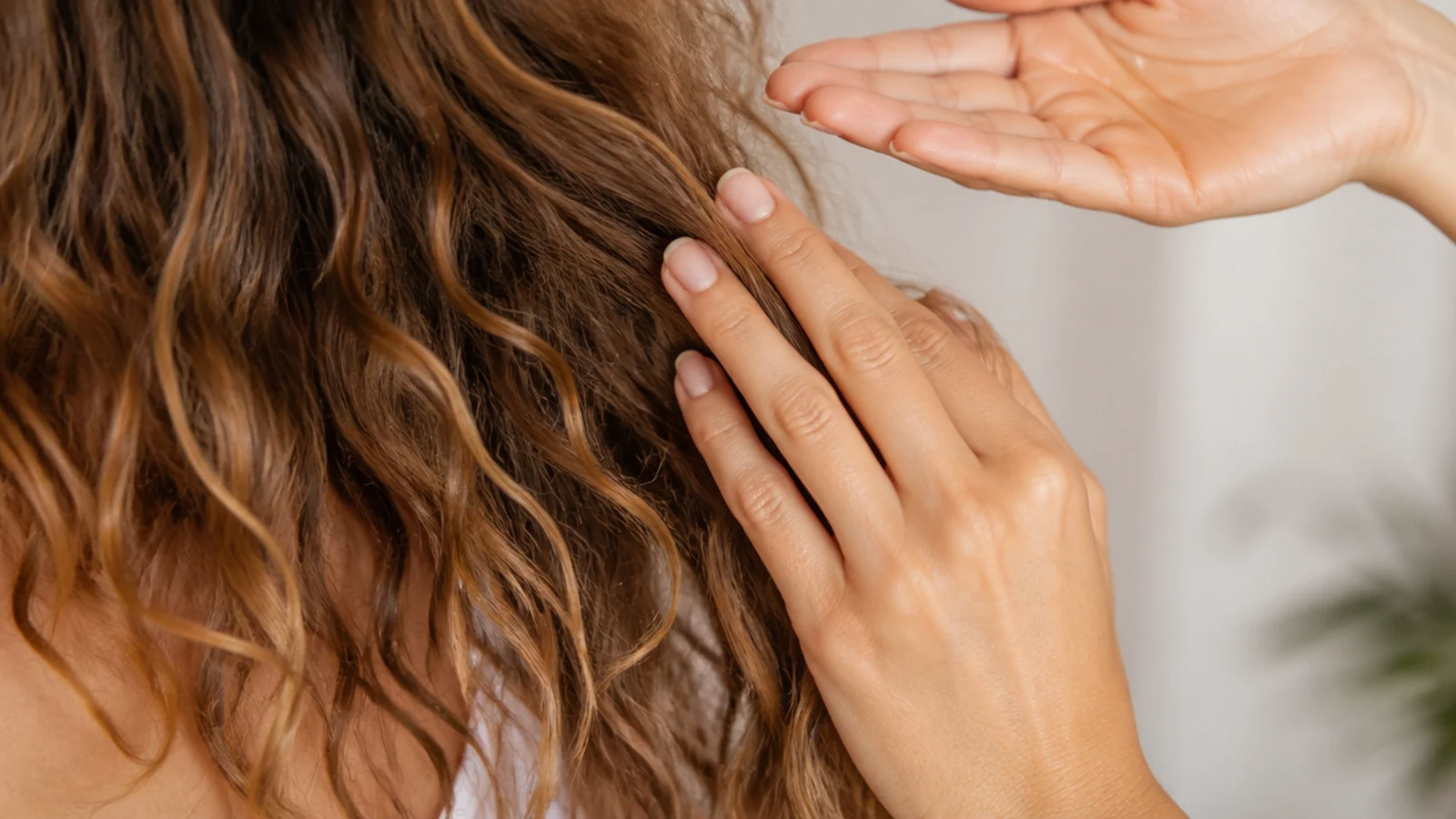
Two to four drops of pure argan oil, warmed between the palms, then skimmed over the surface with flat hands, never raked through. Argan sits mostly on the outside, so it is a sealer rather than a treatment, and that is exactly what surface frizz and halo flyaways need. Use it on damp hair before drying for smoothing, or on fully dry hair as a finish. A 30 dollar bottle lasts around a year at this dose, so cost per use is a few cents. Results are instant and last the day, which is why it finishes the sleek looks in hairstyles for frizzy hair.
Who it suits: Surface frizz and flyaways on straight, wavy and fine hair.
Tip: Fine hair should use 2 drops on the bottom half only, or the roots go flat and stringy by noon.
4. Avocado and Coconut Oil Deep Mask
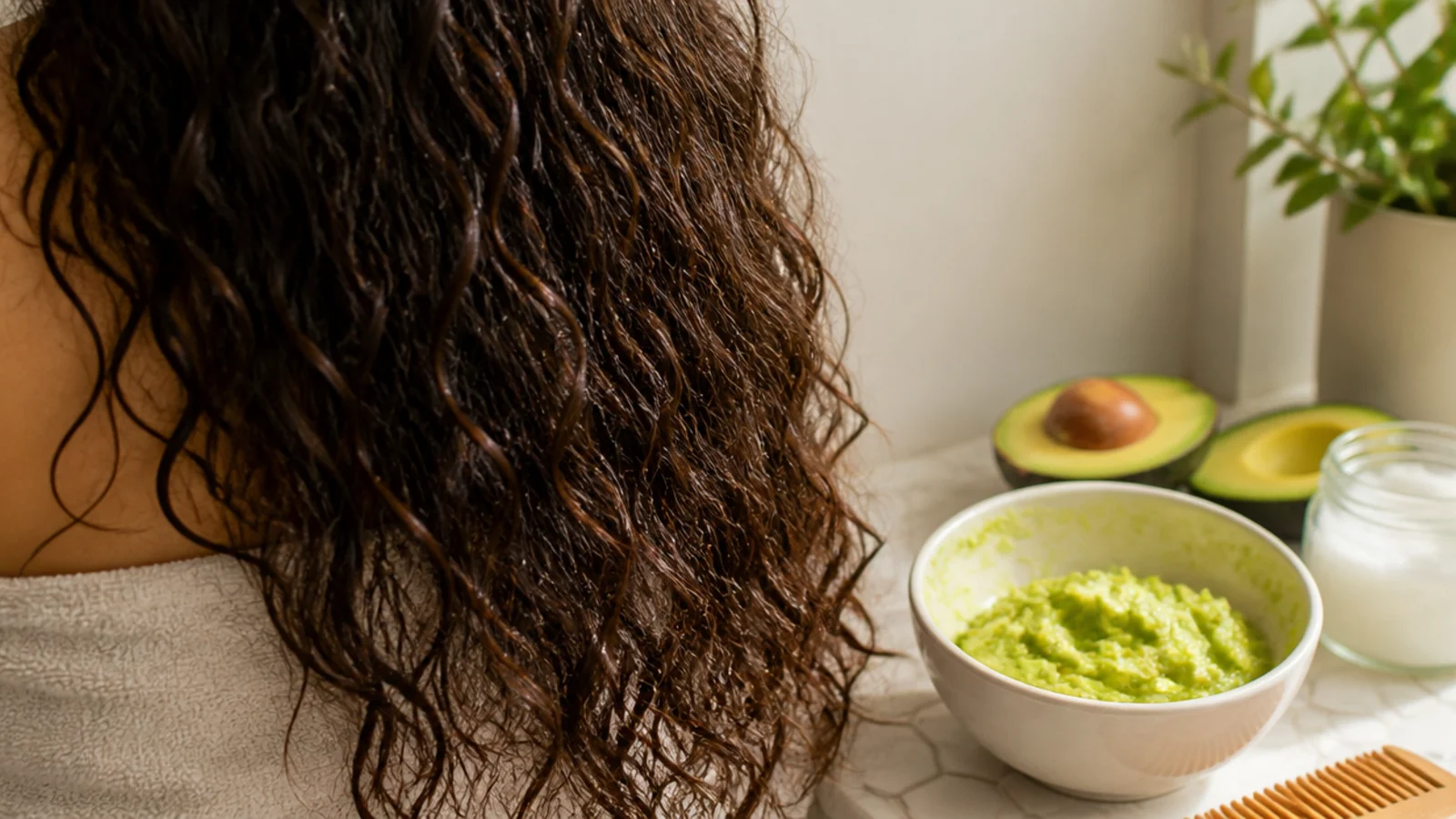
Blend one ripe medium avocado with 2 to 4 tablespoons of coconut oil until completely smooth, apply to damp hair from mid-length down, cover with a shower cap and leave 20 to 30 minutes. Avocado carries monounsaturated fats and vitamin E that soften coarse hair, and the fat content makes this the richest mask on this list. Cost lands near 2 dollars and it is the messiest entry here. Expect softer, weightier hair for about 3 washes.
Who it suits: Very dry, coarse or high porosity hair that feels like straw.
Tip: Blend it, do not fork-mash it; avocado lumps take three rinses to get out of curly hair.
5. Whipped Egg Protein Mask, Rinsed Cool
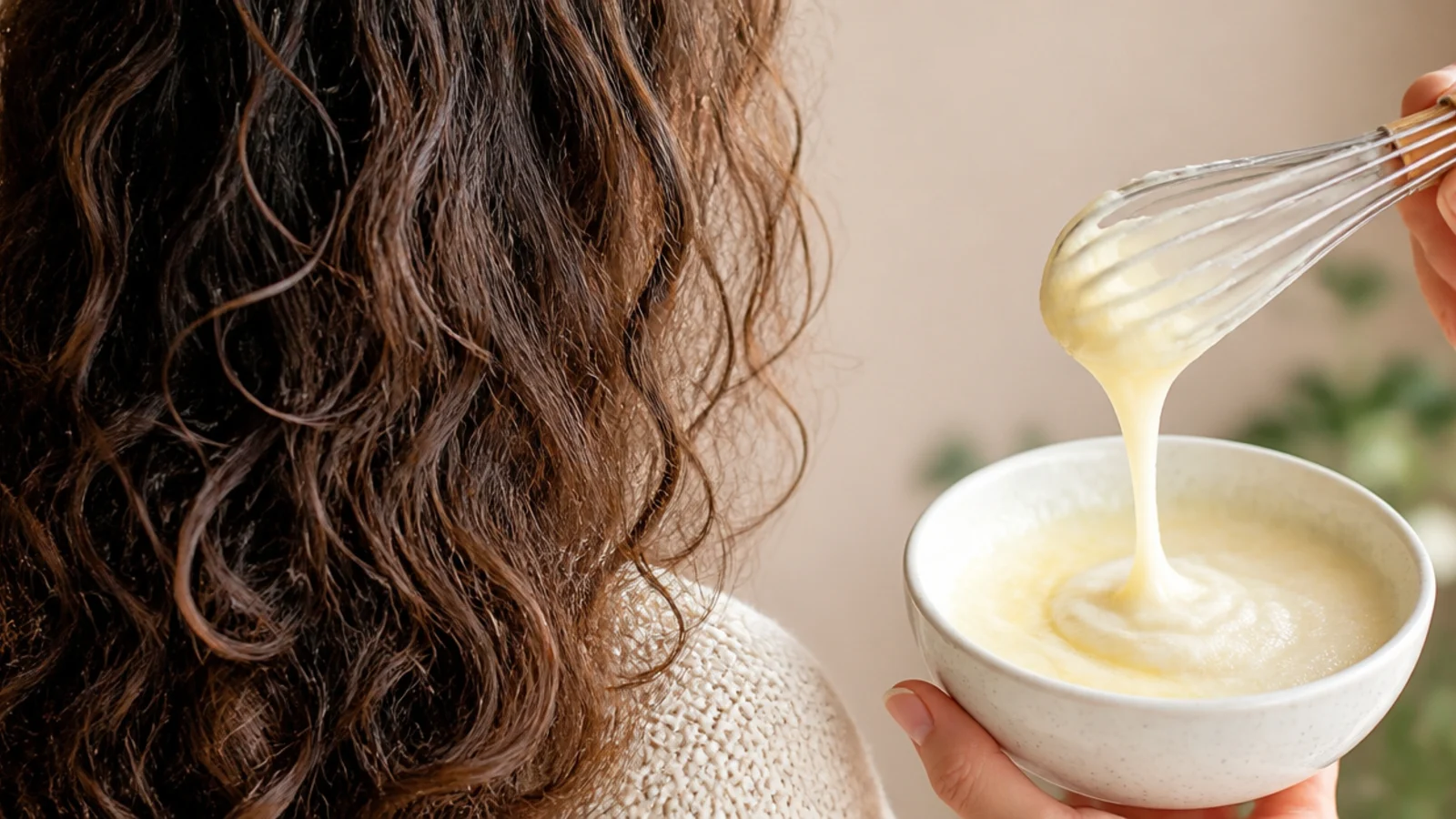
Whip 2 eggs until frothy, apply to damp lengths, leave 15 minutes and rinse in cool water only. Egg proteins are small enough to temporarily fill gaps in a damaged cuticle, which reduces the roughness that causes in-the-curl frizz. The cool rinse is not optional advice, it is physics: warm water cooks egg protein into your hair and you will be picking it out. Cost is under a dollar. Results show as firmer, less mushy hair immediately.
Who it suits: High porosity, heat-damaged or bleached hair that stretches and snaps.
Tip: Once a month maximum; too much protein turns frizzy hair brittle and straw-like.
6. Rice Water Rinse for Limp Frizzy Hair
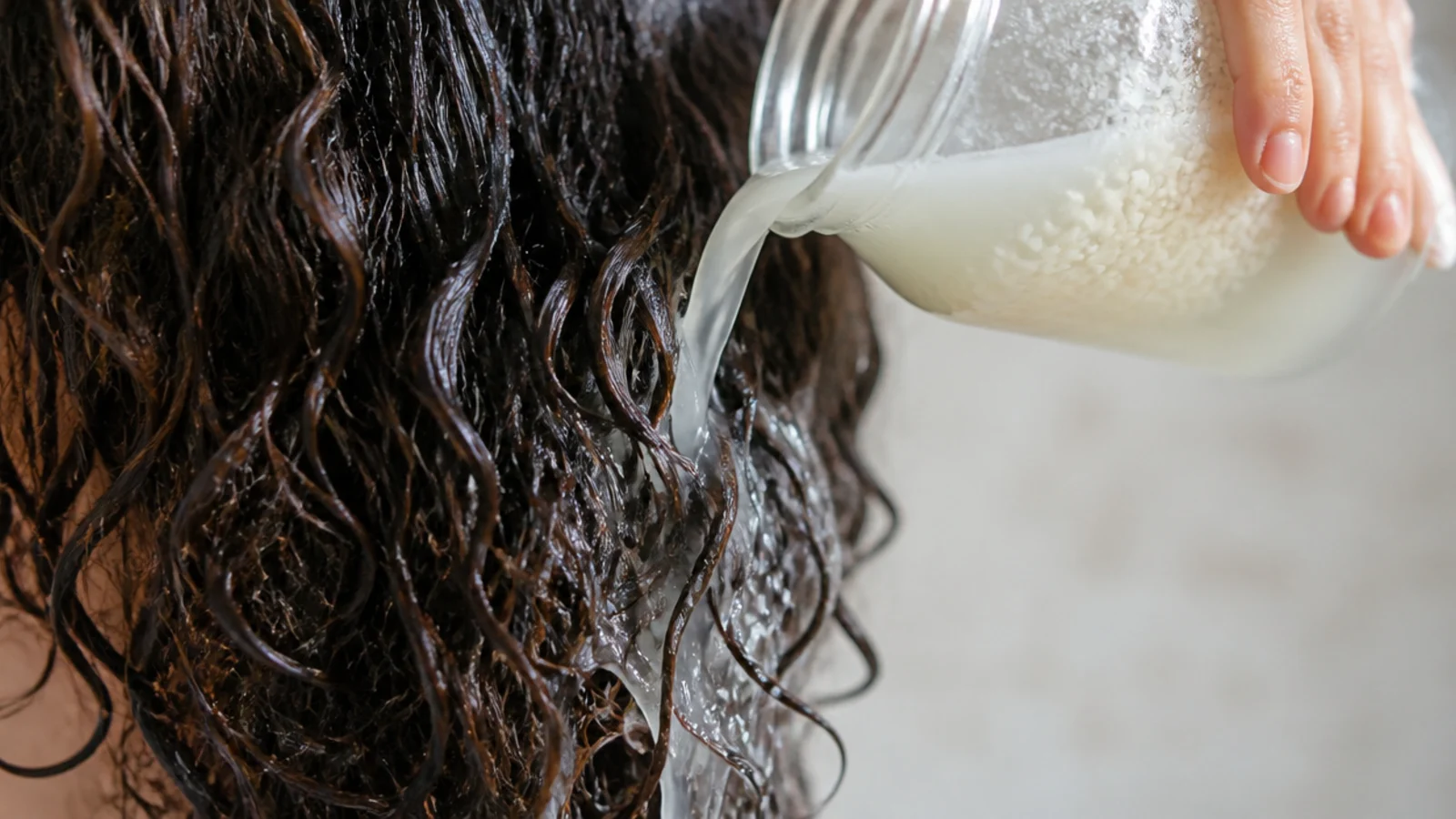
Soak half a cup of uncooked rice in 2 cups of water for 30 minutes, strain, and pour over clean hair for 5 minutes before rinsing. The starch coats the strand and leaves a smoothing film that also adds slip and a little body, which is why it suits frizz that comes with limpness. Ferment it 24 hours at room temperature for a stronger effect and a sour smell. Cost is under 10 cents. Expect stiffer, more defined hair on the same day.
Who it suits: Fine to medium hair with frizz plus flatness, and high porosity textures.
Tip: Stop if hair starts feeling crunchy or straw-like; that is protein overload, not progress.
7. Flaxseed Gel for In-the-Curl Frizz
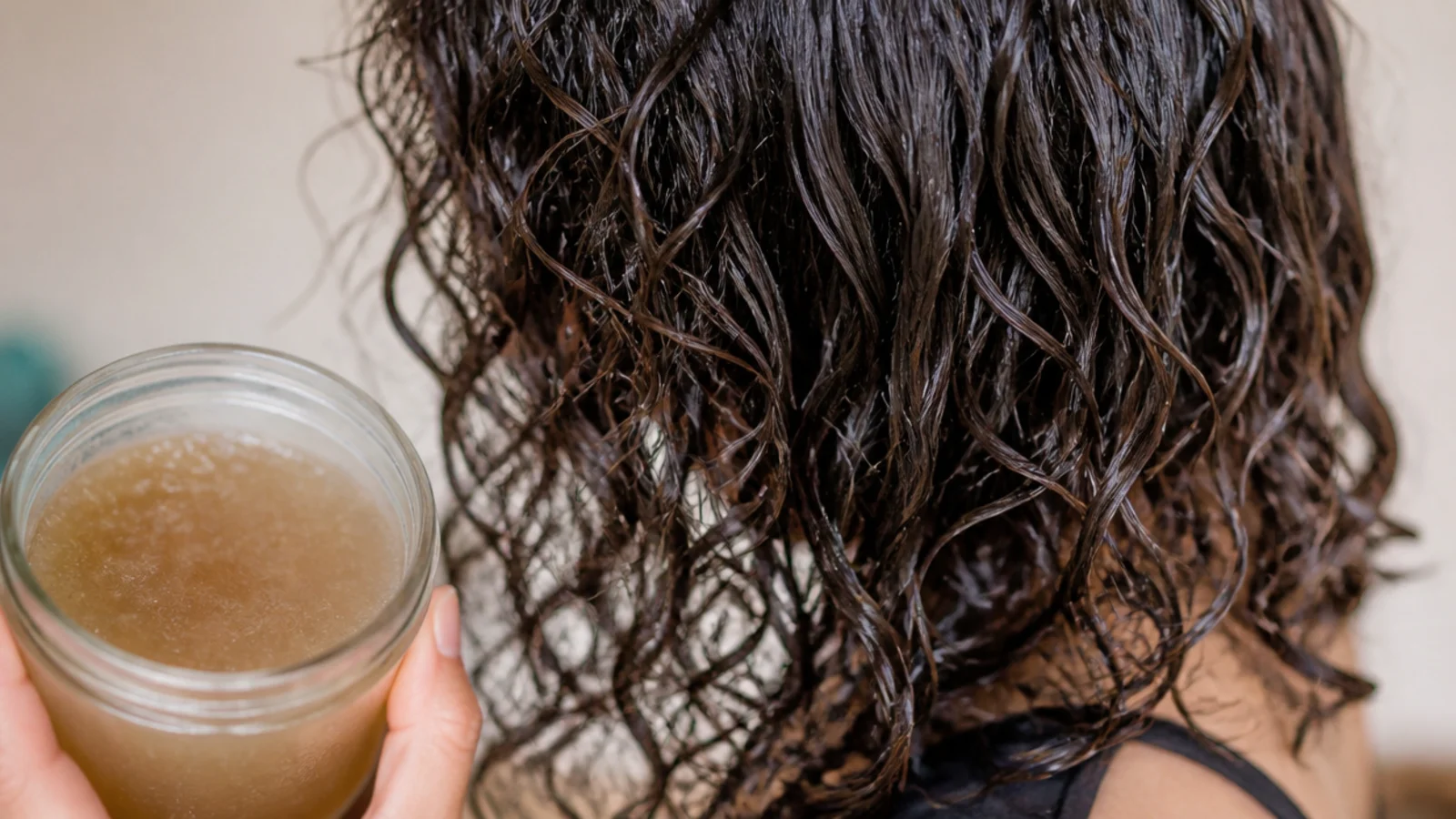
Simmer a quarter cup of whole flaxseeds in 2 cups of water for 7 to 10 minutes until it strings off the spoon, strain hot through a stocking or fine sieve, then cool. You get a clear, light gel that forms a soft cast around the curl clump and holds it through drying. It is the closest kitchen substitute for a bottled styling gel and it does not flake. Costs under 50 cents a batch and keeps 2 weeks refrigerated. Apply to soaking wet hair, then style as in frizzy wavy hair.
Who it suits: Wavy and curly hair losing curl clumps to fuzz, all porosities.
Tip: Scrunch out the crunch once fully dry, or the cast reads stiff instead of soft.
8. Raw Honey Mask for Mild-Weather Frizz
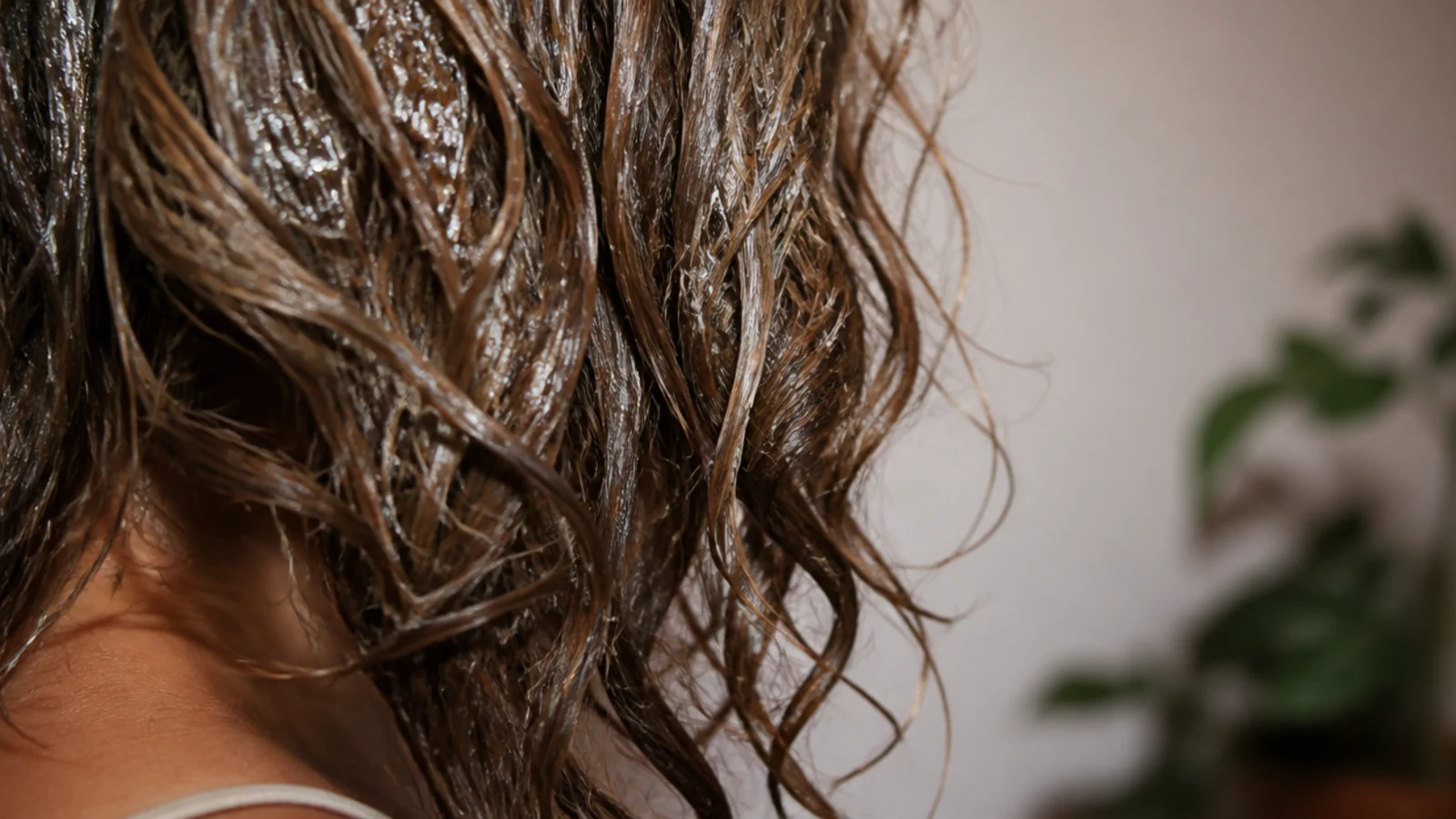
Stir 2 tablespoons of raw honey into an equal amount of conditioner so it spreads, apply to damp lengths, leave 20 minutes and rinse cool. Honey is a humectant that draws water into the strand and holds it there, so it treats the dryness underneath frizz rather than the surface. Cost is around 60 cents. It is genuinely excellent between roughly 40F and 60F dew point and actively counterproductive above 65F, when it pulls in humid air.
Who it suits: Dry hair in mild or moderate weather, low to medium porosity.
Tip: Never apply neat honey to dry hair; without conditioner it will not spread and sets sticky.
9. Banana and Yogurt Mask for Coarse Hair
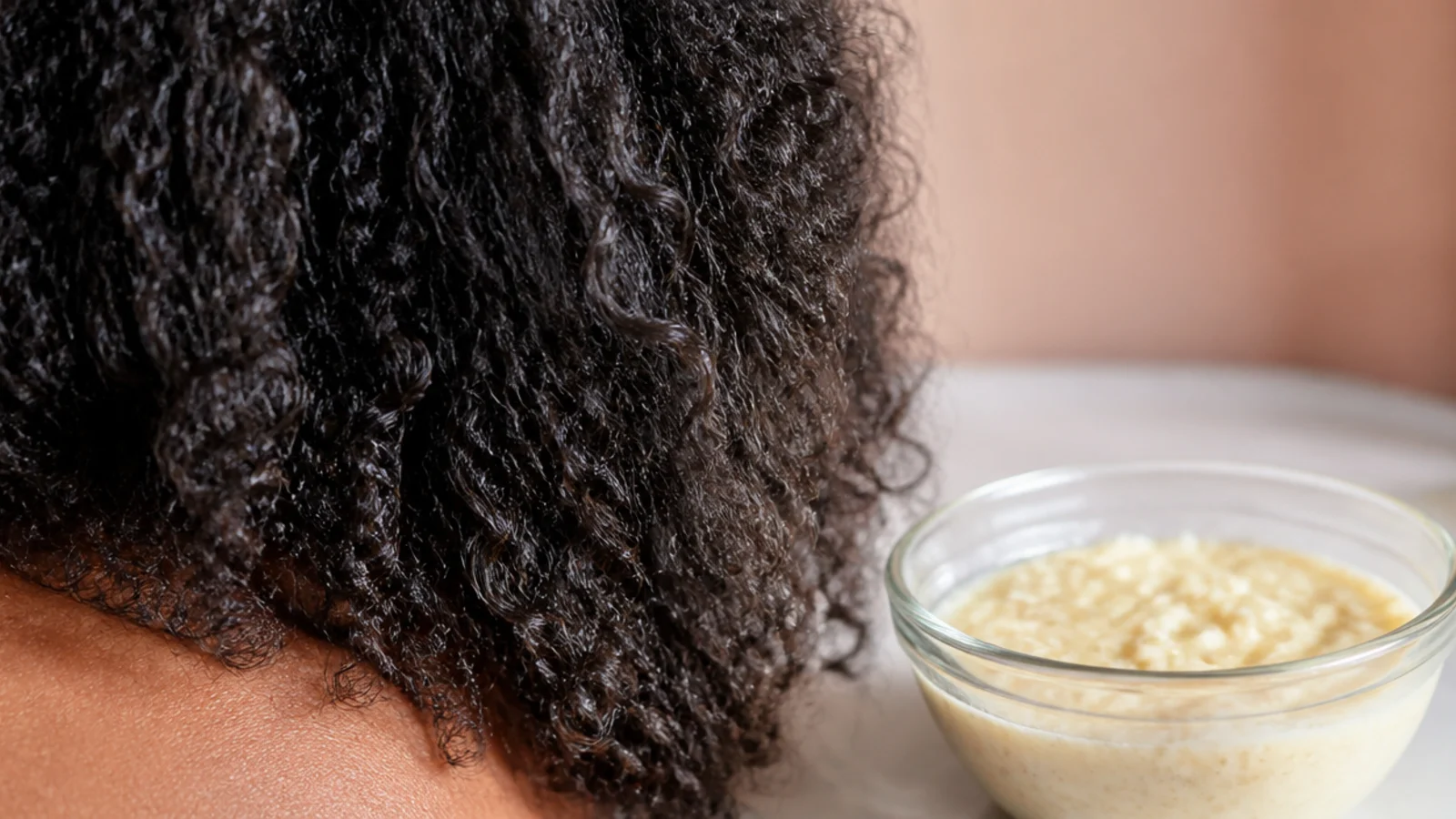
Blend one very ripe banana with 3 tablespoons of plain full-fat yogurt until liquid-smooth, apply to damp hair, leave 20 minutes, rinse thoroughly with cool water. The potassium and natural oils soften, while the lactic acid in yogurt gives a mild smoothing acidity similar to a diluted vinegar rinse. Cost is around a dollar. It is gentler than the egg mask and better for anyone who is protein-sensitive, including the curl patterns covered in curly mid length haircuts.
Who it suits: Coarse, dry or medium porosity hair that reacts badly to protein.
Tip: Strain the blend through a sieve; a single banana string in curly hair takes forever to find.
10. Aloe Vera Gel Leave-In for Halo Frizz
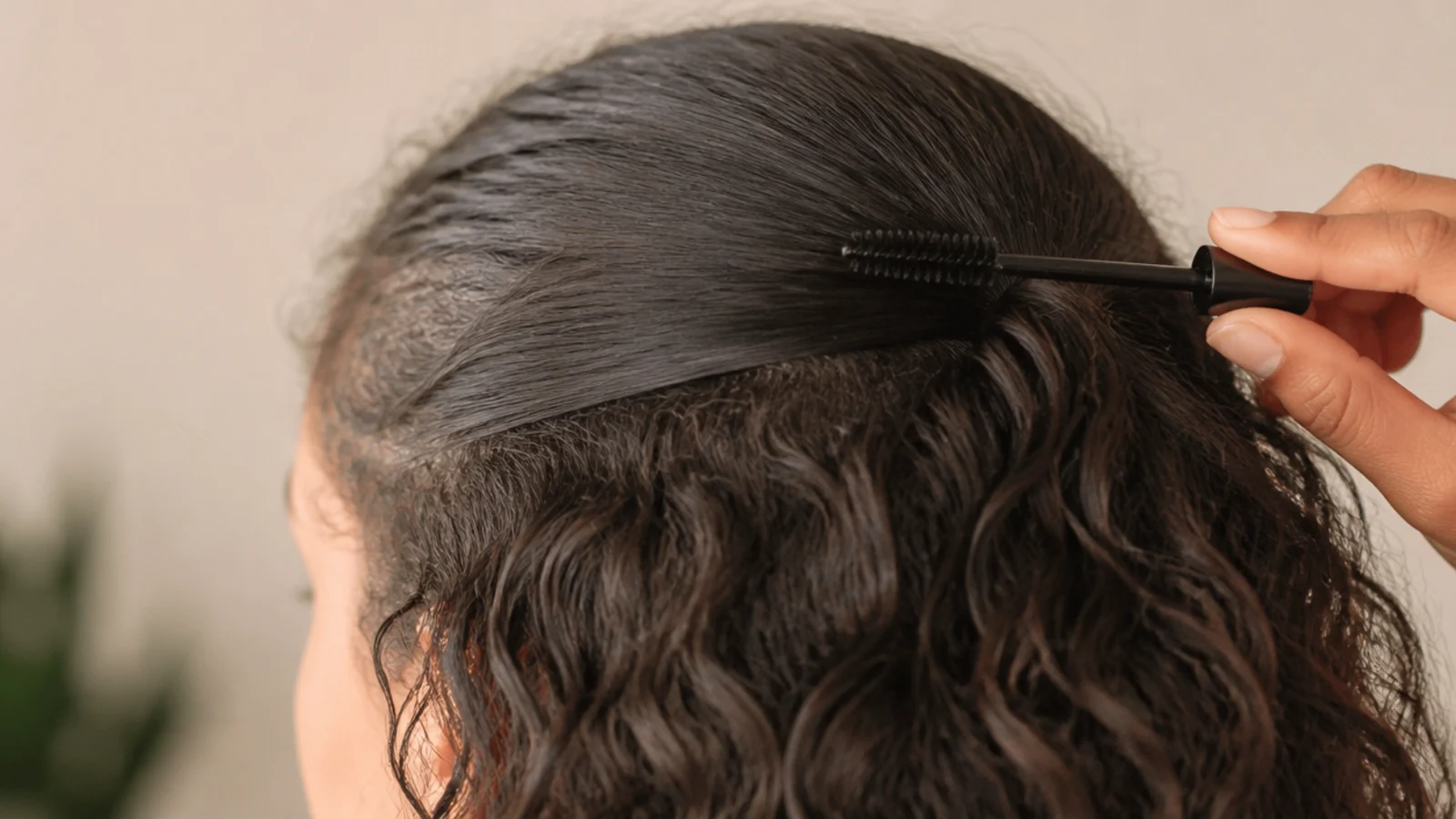
Pure aloe vera gel, either scraped from a leaf or bought at 8 to 12 dollars a bottle, diluted half and half with water in a spray bottle. Mist the crown and smooth with a clean mascara wand or a soft boar bristle brush. Aloe is light enough not to grease the roots, which is what disqualifies oil from the halo frizz job, and its polysaccharides lay short flyaways flat for several hours. Cost is pennies a use, and it is the remedy that keeps a fringe sitting flat in wavy short curtain bangs.
Who it suits: Crown and halo frizz, fine hair, oily scalps, all curl patterns.
Tip: Buy aloe with no added alcohol; the drugstore green gels with alcohol will dry frizz worse.
11. Mayonnaise Mask for Very Damaged Ends
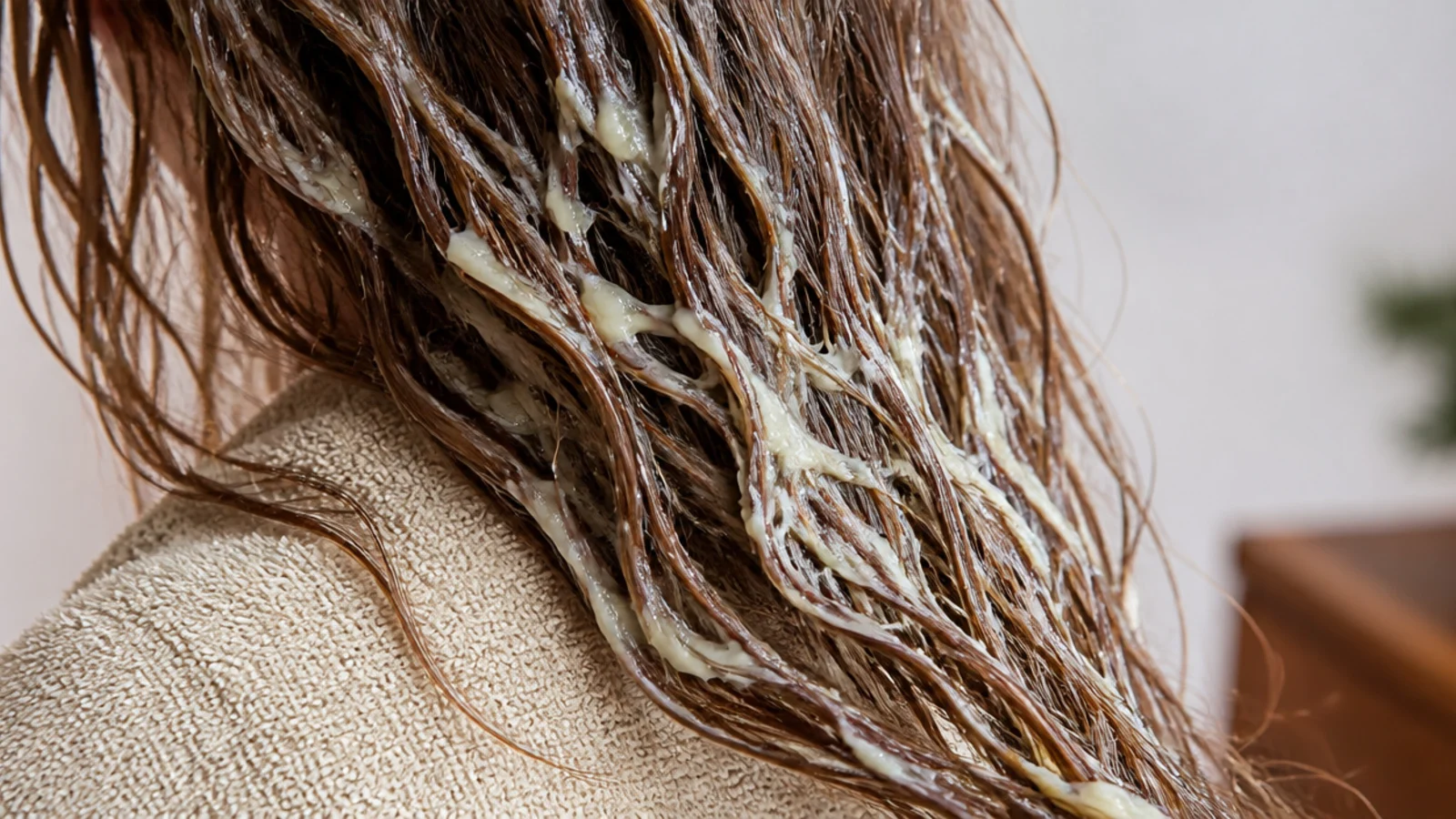
Half a cup of full-fat mayonnaise on damp mid-lengths and ends, shower cap on, 20 to 30 minutes, then shampoo out twice. It is essentially egg plus oil plus vinegar in one emulsified package, which is why it hits protein, fat and acidity simultaneously. It is the single most effective kitchen mask for badly damaged frizz and also the worst smelling, with a faint odor that can survive to day 2 on thick hair. Cost is roughly 80 cents.
Who it suits: Bleached, heat-damaged, high porosity hair with straw-like ends.
Tip: Add a drop of lavender or peppermint oil to the mix, and shampoo twice, not once.
12. Cool Green Tea Rinse for Fine Frizzy Hair
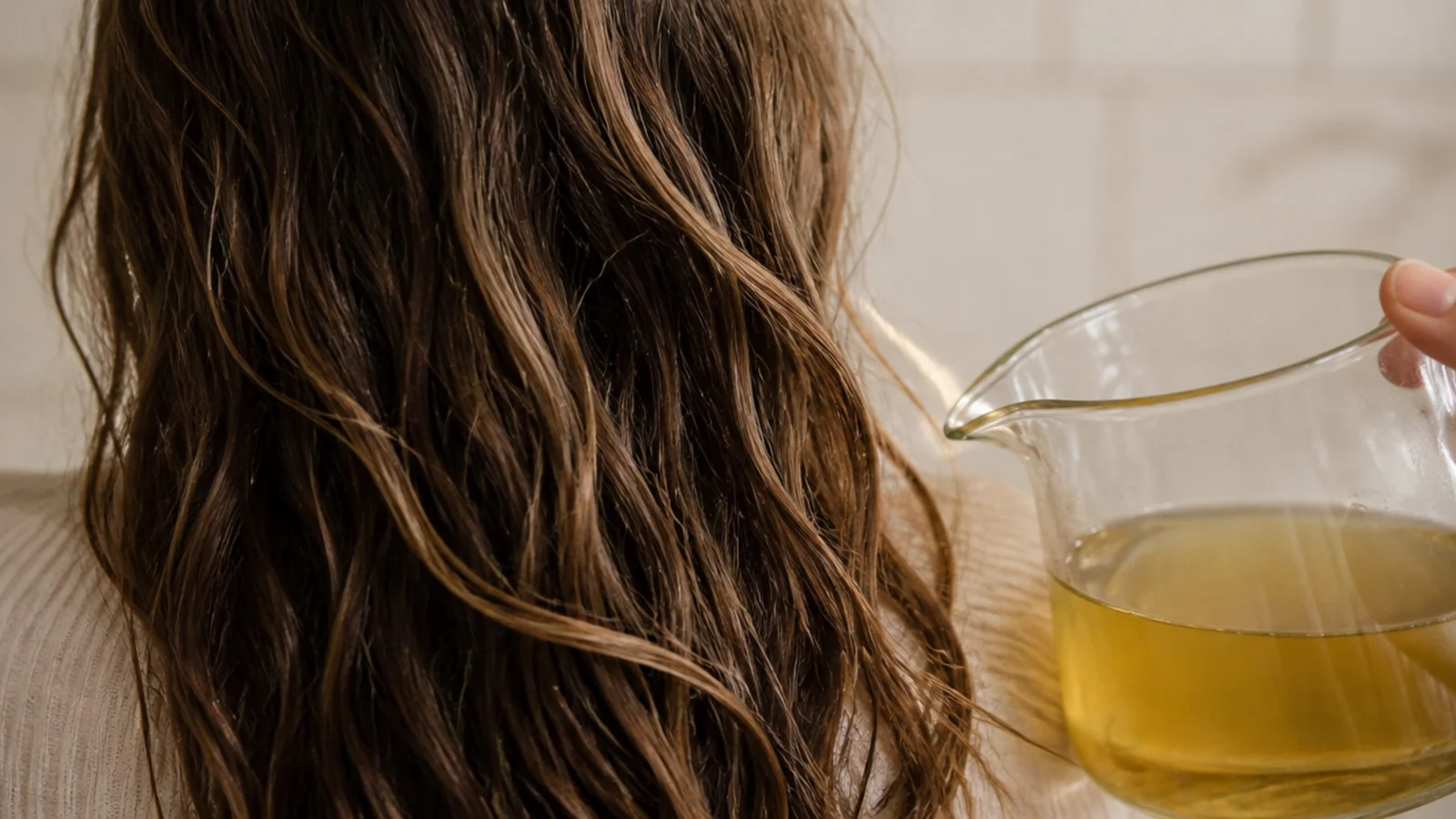
Brew 2 green tea bags in 2 cups of water, cool completely, then pour over clean hair as a final rinse and leave in. The antioxidants and light tannins give a very mild smoothing and scalp-soothing effect without any weight at all, which makes it the one remedy fine hair can use every wash. Cost is around 20 cents. Be honest about expectations: this is a gentle finisher, not a treatment, and it will not fix real dryness on the fine textures in mid length haircuts for fine hair.
Who it suits: Fine, thin or oily-scalp hair that every oil and mask weighs down.
Tip: Use it fully cold; a warm rinse leaves the cuticle open and cancels the point.
13. Beer Rinse for Frizz With No Body
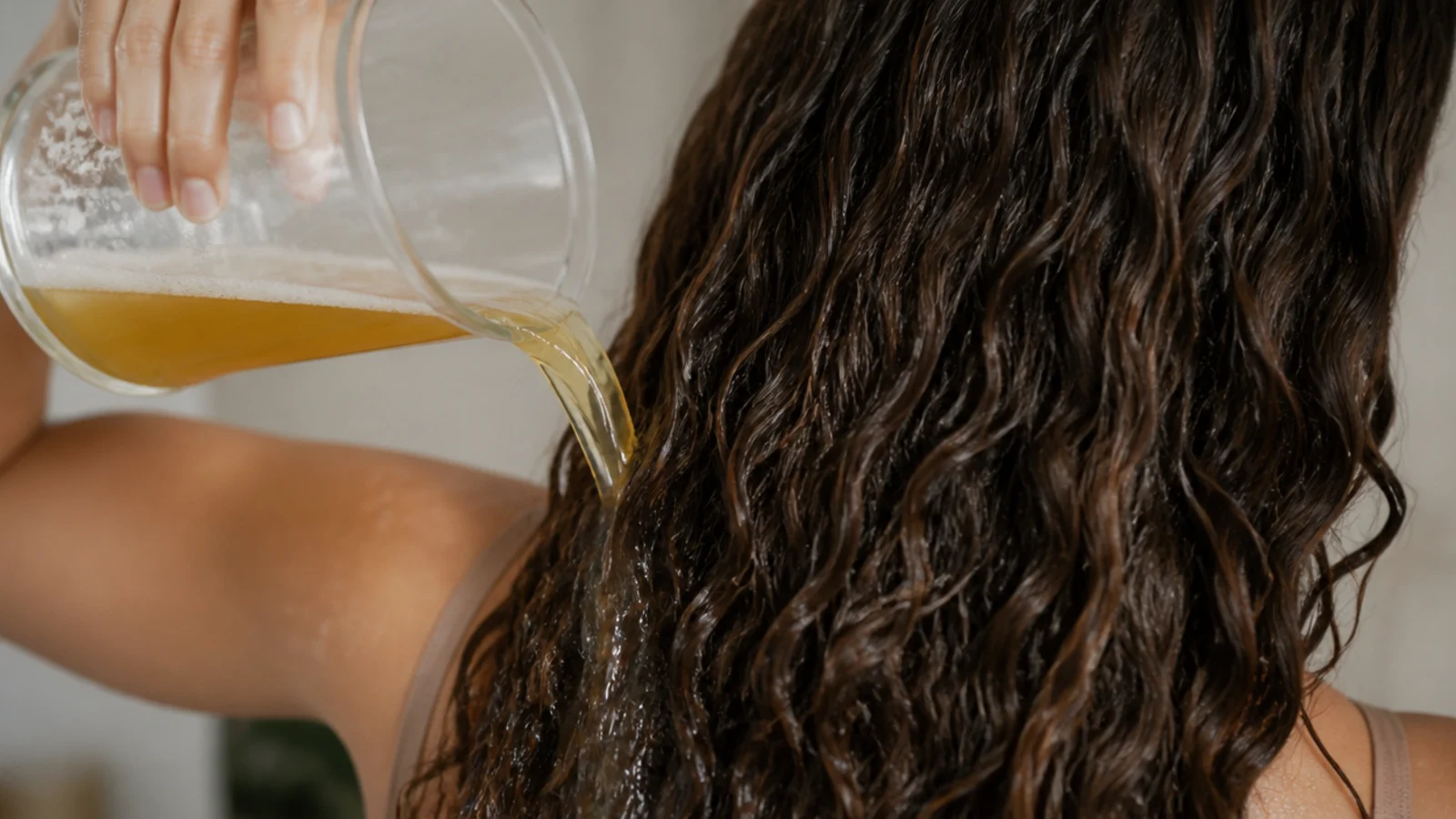
Half a cup of flat beer, left open an hour to lose the carbonation, poured over clean hair for 2 minutes then rinsed with cool water. The malt and hops proteins deposit a light film that adds body and a bit of shine, and the mild acidity flattens the cuticle. Cost is around a dollar. It is the most overrated remedy on this list: real but small results, and the smell needs a proper rinse to clear. Include it only if you have flat beer going spare.
Who it suits: Fine, limp hair with surface frizz and no volume.
Tip: Rinse thoroughly and follow with conditioner on the ends, since the alcohol residue is drying.
14. Diluted Glycerin Spray for 40F to 60F Dew Points
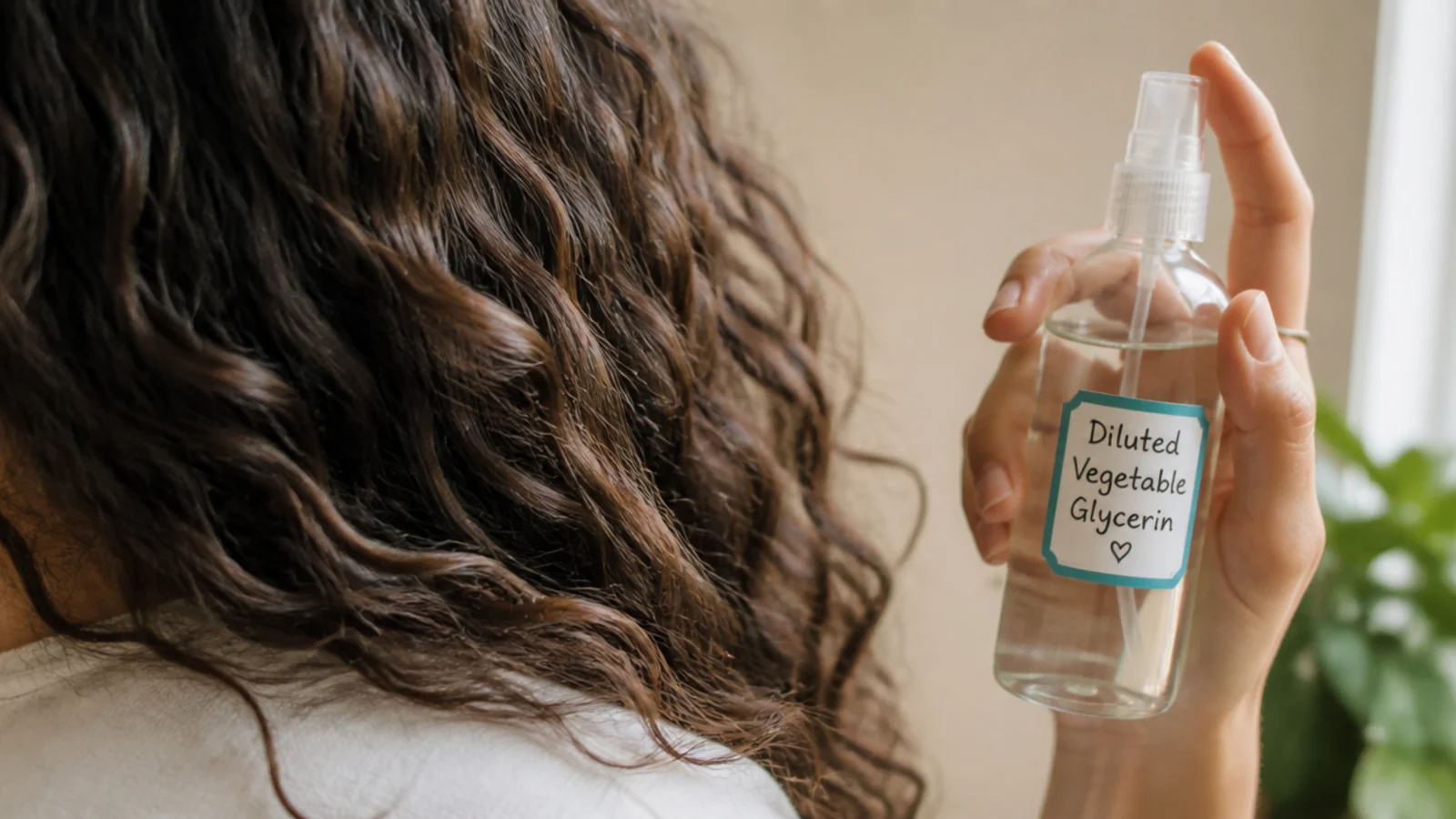
One part vegetable glycerin to ten parts water in a spray bottle, misted lightly over damp hair before your leave-in. Glycerin is the strongest humectant in this list, which makes it either the best or the worst remedy here depending entirely on the weather. In the 40F to 60F dew point band it keeps hair soft and flexible all day. Above 65F it drags humidity in and your hair expands. A 6 dollar bottle of glycerin lasts a year.
Who it suits: Dry, low to medium porosity hair in mild or dry climates.
Tip: Check the dew point in your weather app, not the humidity percentage, before you reach for it.
15. 30-Second Cold Water Final Rinse
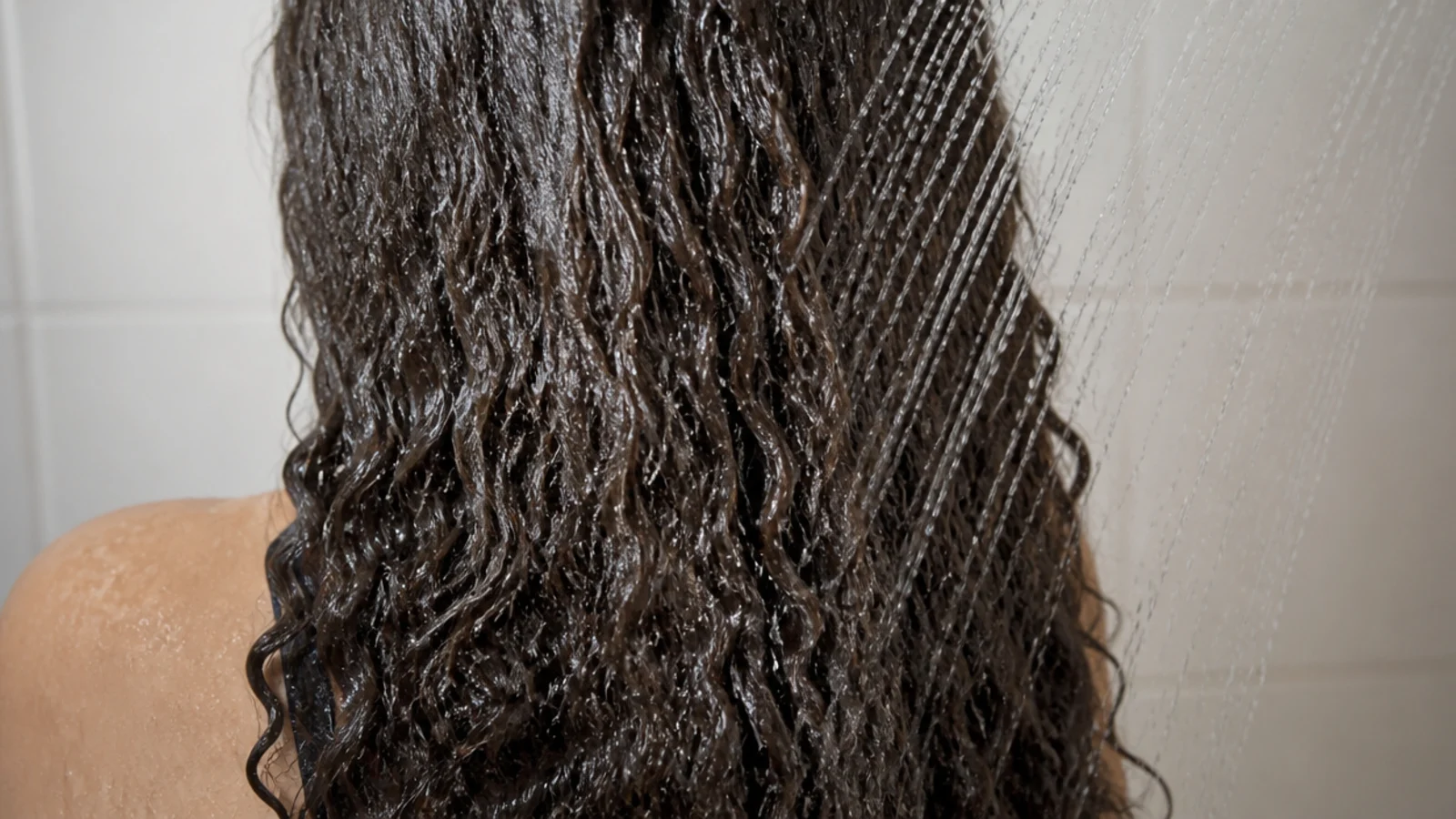
The last 30 seconds of every shower, water as cold as you can stand, directed down the length from root to tip. Cold contracts the cuticle scales so they lie flat before the hair ever meets air, and hair that dries with a flat cuticle reflects light and absorbs far less humidity. It costs nothing, takes half a minute, and it is measurably the highest return-per-effort remedy on this entire page. Every wash, no exceptions, no equipment, and it holds up under the wavy mid length haircut shape too.
Who it suits: Every hair type, every porosity, every frizz type.
Tip: Lean forward so the water runs with the cuticle direction rather than up under the scales.
16. Cotton T-Shirt Plopping Instead of a Terry Towel
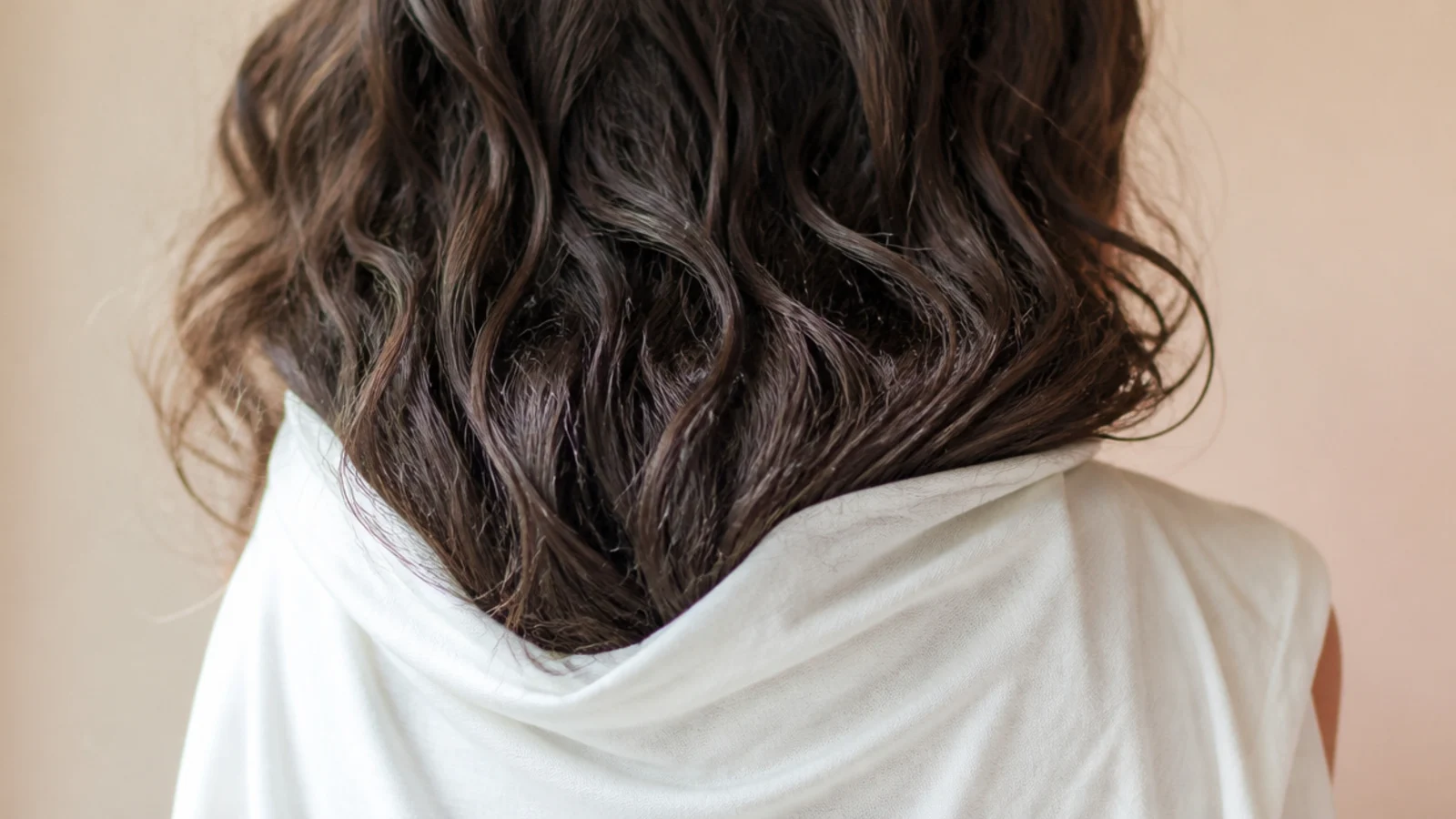
Swap the terry towel for an old cotton t-shirt or a microfiber towel. Terry loops physically catch the cuticle and lever it open, which is why hair rubbed dry frizzes even when the routine was perfect. Lay the shirt flat, flip your head into it, wrap and tie at the nape for 10 to 20 minutes. Squeeze, never rub. It costs nothing if you own a t-shirt, or 12 to 20 dollars for a microfiber wrap, and it is the second-highest value change here.
Who it suits: Wavy, curly and coily hair especially, but genuinely everyone.
Tip: Plop no longer than 20 minutes; longer and the roots dry flat and the curl loses its lift.
17. Silk Pillowcase or a Loose Overnight Braid
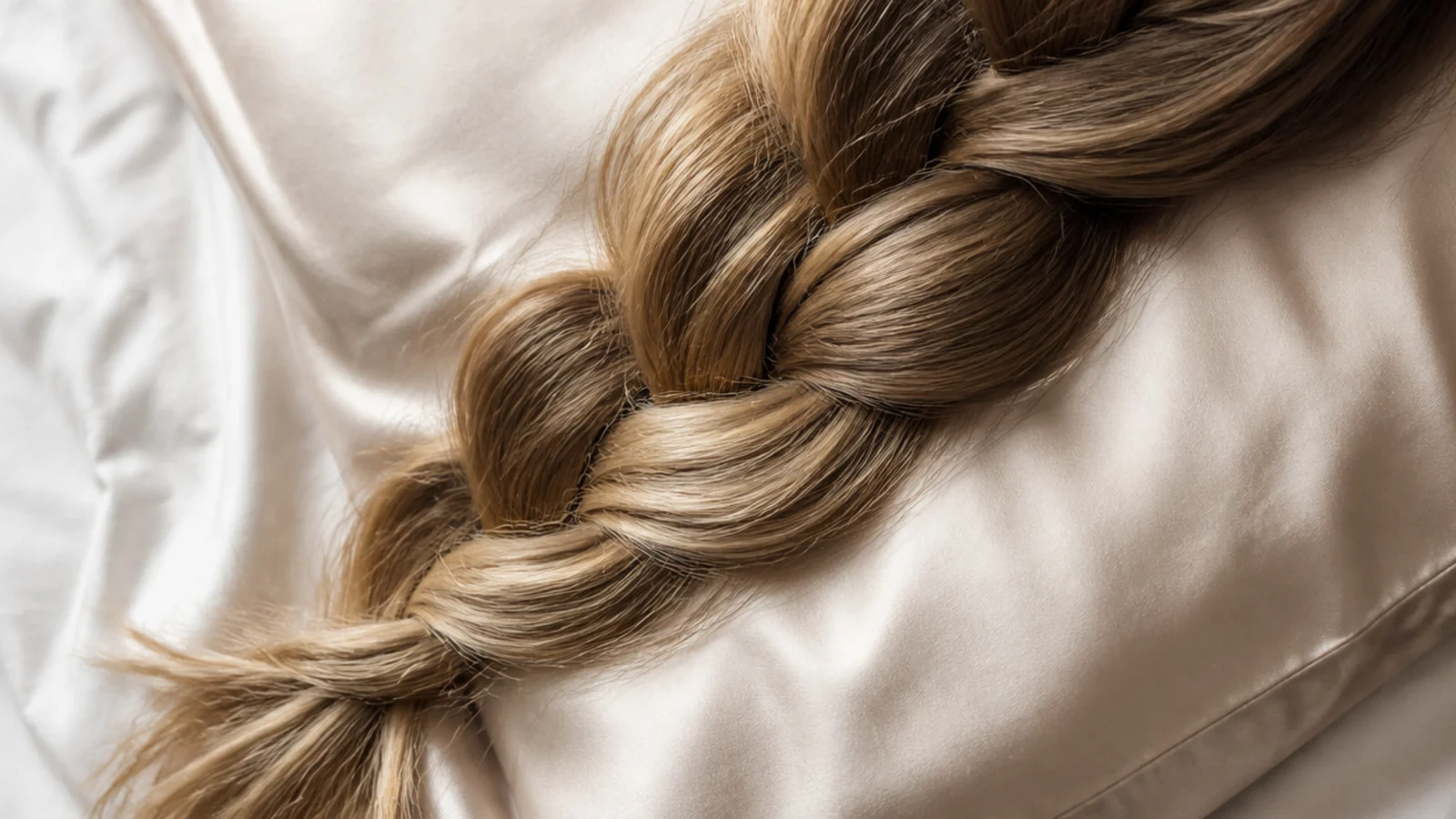
Cotton bedding pulls moisture out of hair and drags the cuticle open across seven or eight hours of friction, which is where day-2 frizz mostly comes from. A satin or silk pillowcase at 15 to 30 dollars removes both problems at once and needs zero effort. If you would rather not buy anything, a loose braid at the nape or a pineapple gathered high on the head does most of the same job for free. Results appear the very first morning, and a loose braid doubles as the base for easy mermaid braids.
Who it suits: Anyone who wakes up frizzier than they went to bed, all hair types.
Tip: Tie with a silk scrunchie or a spiral coil, never a tight elastic, which creases and snaps.
18. Leave-In, Cream, Gel Layering on Soaking Wet Hair
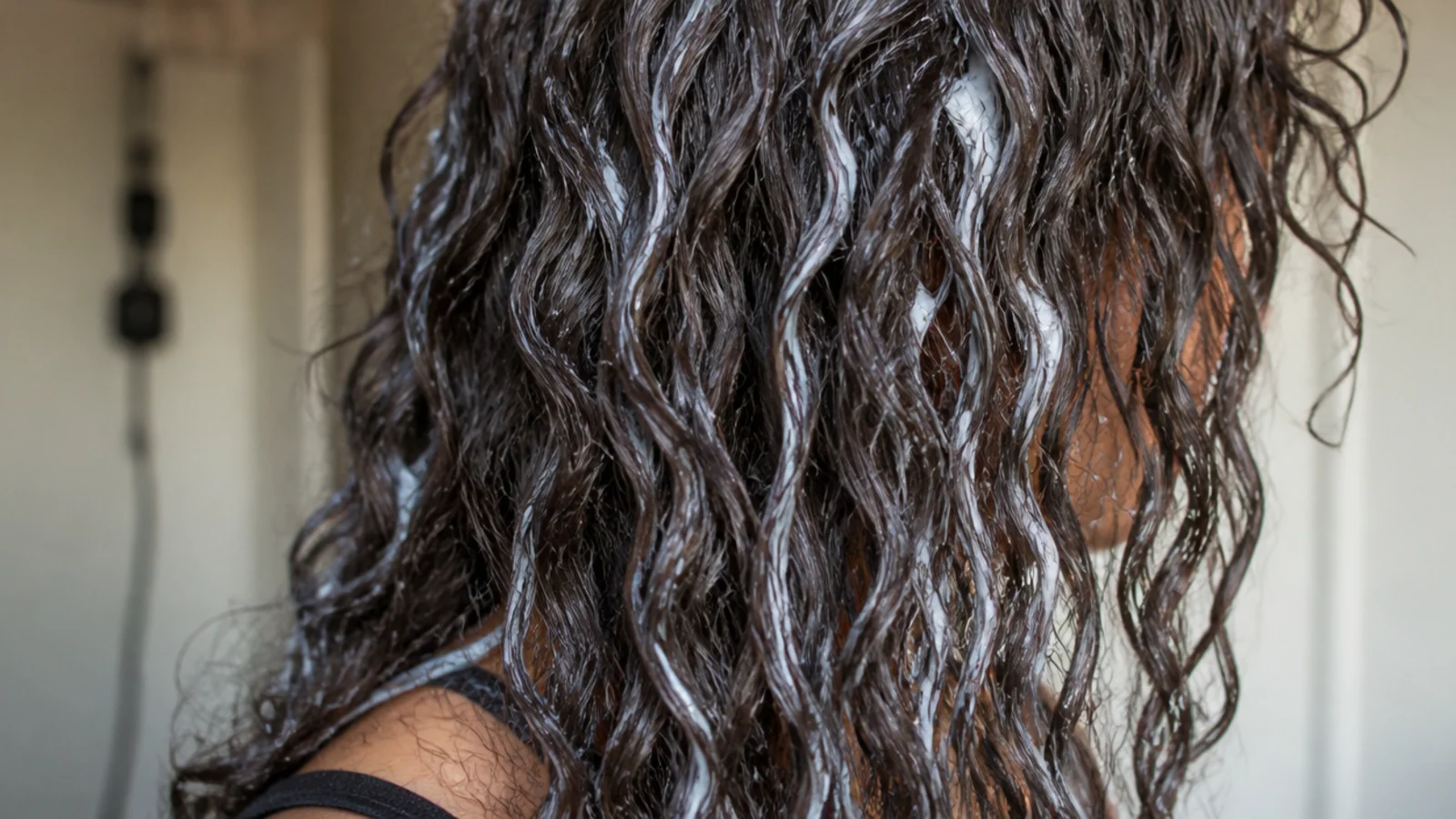
Three products in one fixed order while the hair is still dripping, not damp. Leave-in hydrates, cream defines and adds slip, gel seals the whole thing under a cast. Water is what distributes each layer evenly, so applying to damp hair gives you patches and flyaways between them. Wait about a minute between layers. Total spend runs 25 to 60 dollars for three bottles that last months. This is the backbone every other remedy here hangs off, including the aesthetic looks in frizzy curly hair aesthetic.
Who it suits: Wavy, curly and coily hair, and any texture with humidity swelling.
Tip: Shoulder-length hair needs roughly a quarter-sized amount of each, doubled for waist length.
19. Wide-Tooth Comb Detangling in the Shower
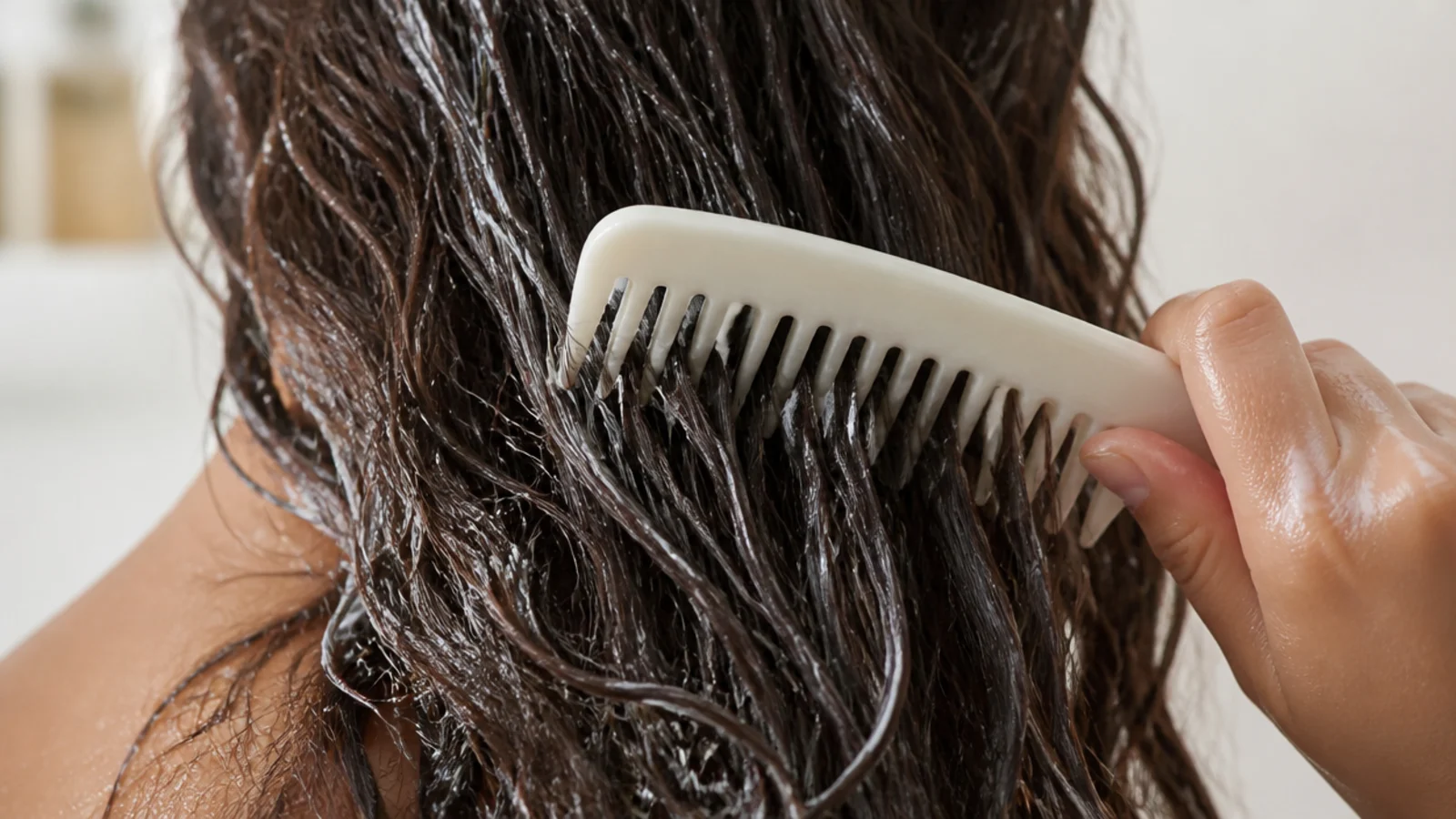
Detangle only while the hair is fully coated in conditioner and still in the shower, using a wide-tooth comb and working in 2-inch sections from the ends up toward the roots. Conditioner provides the slip that stops the comb tearing through knots, and every tear becomes a broken short strand that later stands up as halo frizz. Brushing frizzy hair dry is the fastest way to triple it. A good wide-tooth comb costs 6 to 15 dollars and lasts years, and it is step one for the textures in natural hair graduation styles.
Who it suits: All textures, and non-negotiable for curly, coily and long hair.
Tip: If the comb catches, add more conditioner rather than pulling harder, then keep working upward.
20. Shea Butter Seal on the Last 2 Inches
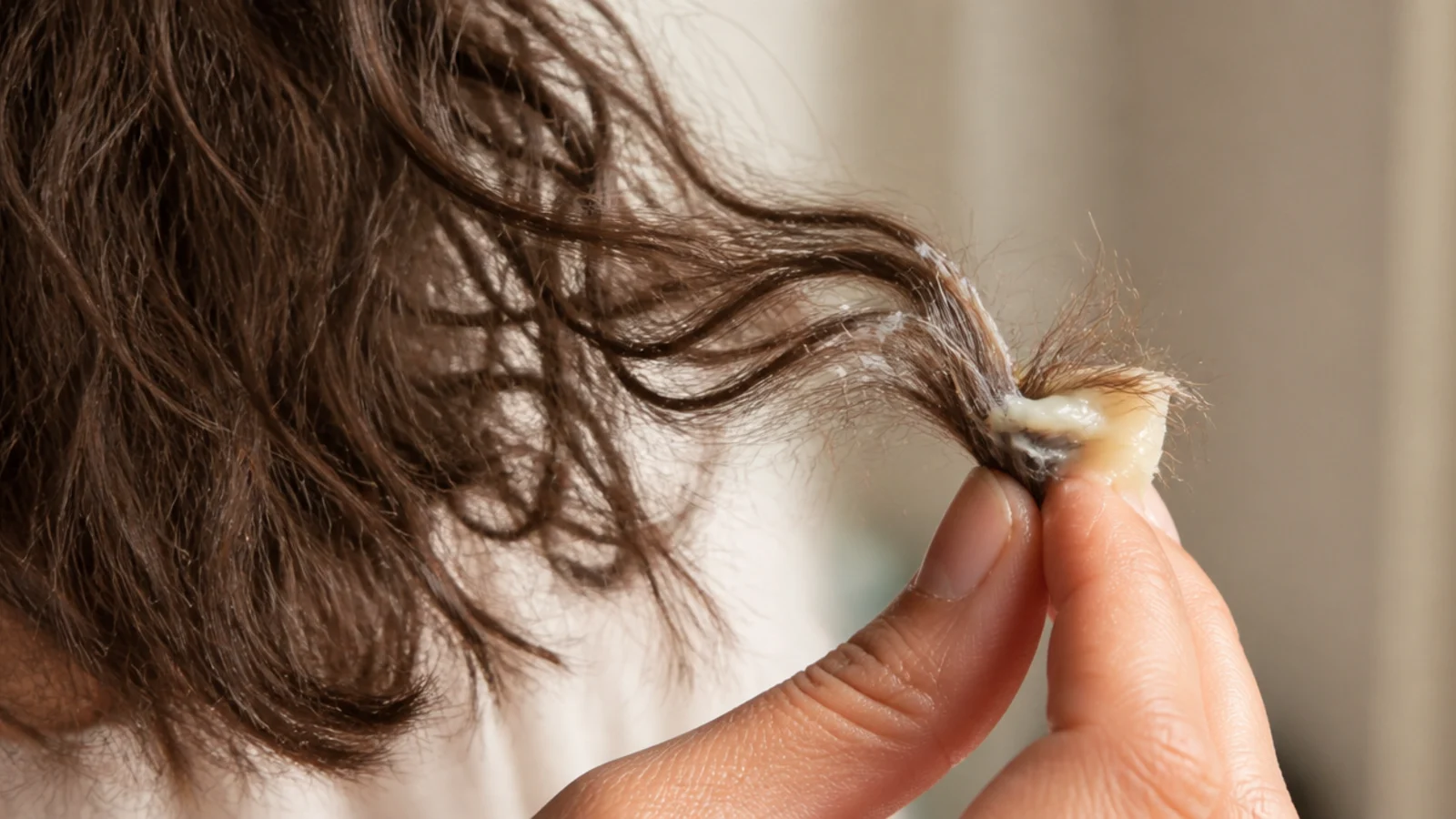
A pea-sized amount of raw shea butter melted between the palms and pressed onto the last 2 inches only, on damp hair after your leave-in. Ends are the oldest, most damaged part of the strand and the first place frizz shows, so a heavier occlusive there stops water loss without weighing down the mid-lengths. A 10 dollar tub lasts most of a year. Pair it with a trim every 10 to 12 weeks, because sealing does not repair a split; the cut logic sits in frizzy hair care.
Who it suits: Ends-only frizz on coarse, high porosity, long or color-treated hair.
Tip: Emulsify it fully until clear in your palms, or it lands as white flecks on dark hair.
Why Hair Frizzes: The Moisture Mechanism Every Remedy Targets
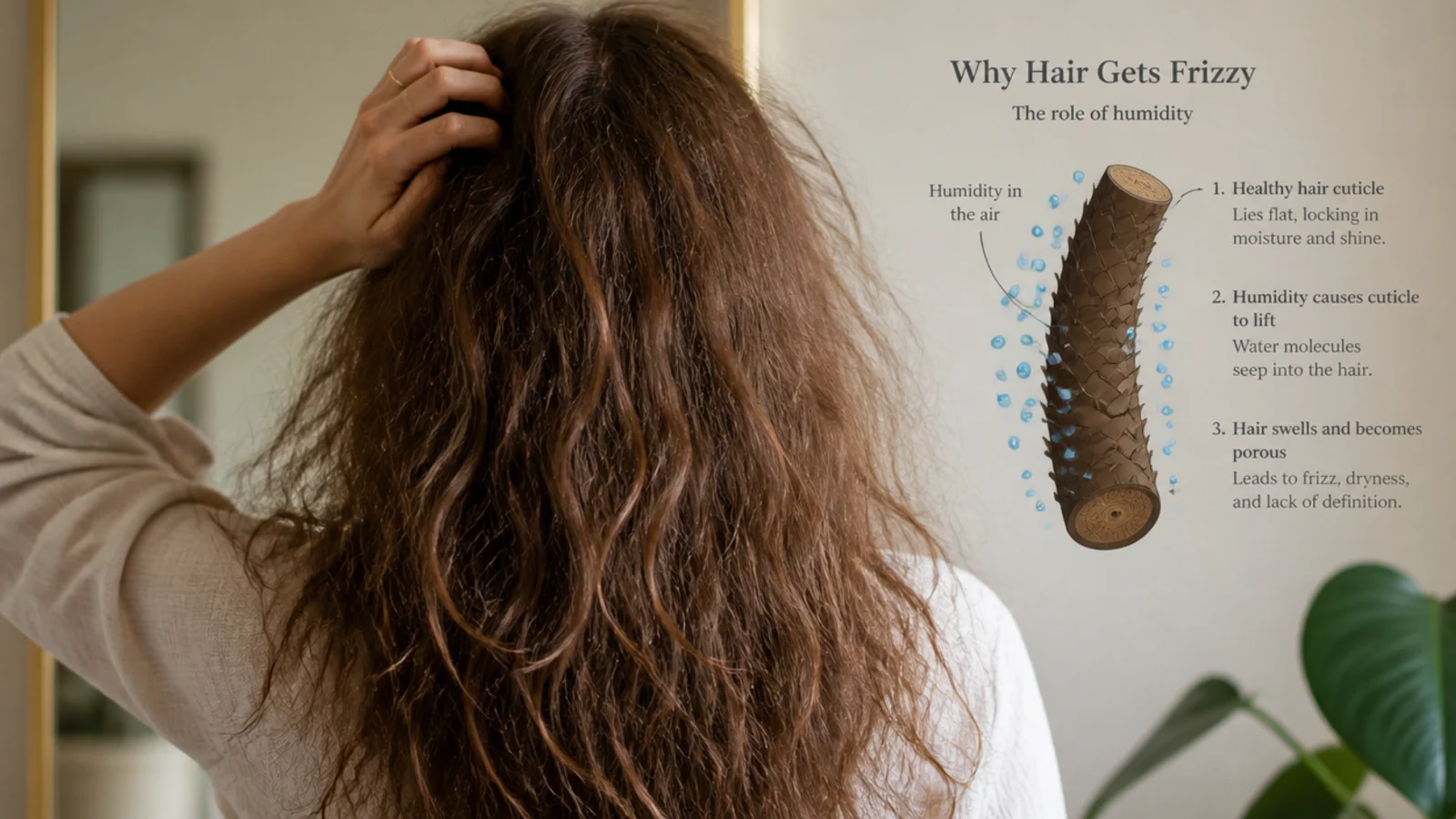
Every strand is wrapped in overlapping cuticle scales, like roof tiles. When the inside of the hair is properly hydrated, those tiles lie flat and the surface reflects light in one direction, which is what shine actually is. When the inside is dry, the tiles lift, and lifted tiles do two things at once: they scatter light so hair looks dull, and they let water vapor from the air move into the cortex. The strand swells unevenly along its length, buckles, and pushes away from its neighbors. That is frizz. It is not the hair misbehaving, it is the hair correcting a moisture deficit using the only water available, which happens to be humid air. This is why fighting frizz never works and why anti-humidity products that only coat the outside give you one good day and no progress. Any remedy on this page is doing one of two jobs, and the good routines do both in order: put water and humectants inside the strand, then lay a sealing layer over the top so the cuticle stays flat and the air cannot get in. The full mechanism, plus what makes it worse day to day, is unpacked in the frizzy hair guide.
Which Frizz Do You Have, and Which Remedy Fixes It
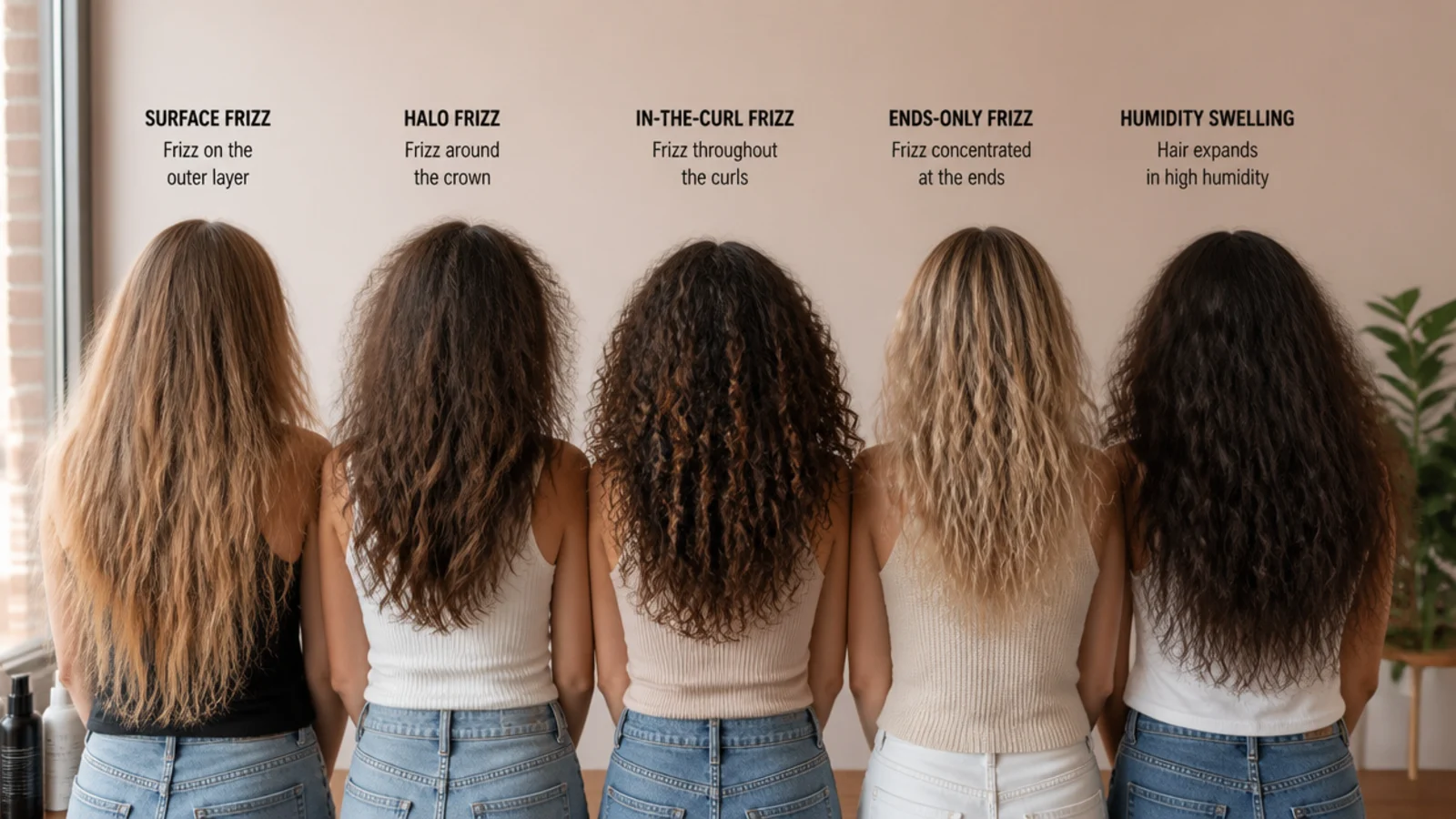
Frizzy hair is not one condition, which is why generic advice contradicts itself. There are five patterns and each takes a different remedy. Surface frizz is a fine fuzz sitting over otherwise smooth lengths, and it responds to sealing, so argan oil drops, a cool final rinse and a silk pillowcase. Halo or crown frizz is a ring of short flyaways standing up around the part, usually new growth or breakage, and it needs a light aloe or gel smoothed with a clean mascara wand rather than more oil, which just makes the crown greasy. In-the-curl frizz is a curl or wave that has lost its clump and separated into fuzz, and the fix is cast-forming gel on soaking wet hair, covered in frizzy wavy hair styling. Ends-only frizz means mechanical damage and split ends, so shea butter on the last 2 inches and a trim every 10 to 12 weeks. Humidity swelling is the whole head expanding on a wet day, and it is the only type where a film-forming gel or serum matters more than any mask. Diagnose first, then pick two remedies from the list below, not eight.
Porosity: The 3-Minute Test That Decides If a Remedy Works
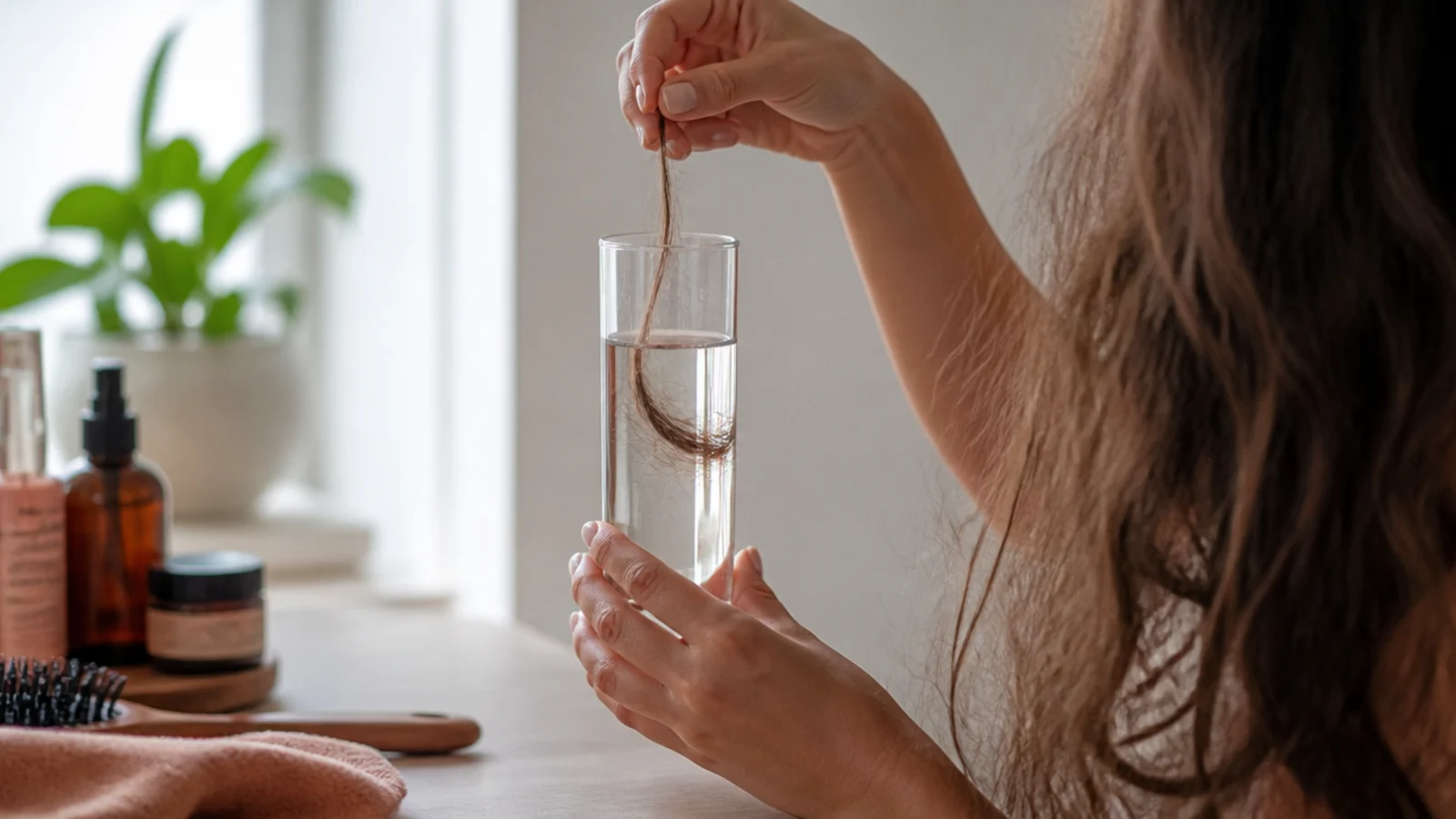
Porosity is how easily the cuticle lets water in and out, and it decides whether coconut oil is your best remedy or your worst. Test it two ways. Drop a clean shed strand into a glass of room temperature water and leave it 3 minutes: floating means low porosity, sinking slowly to the middle means medium, sinking to the bottom means high. Then check the spray test, which is more reliable. Mist a dry section with water and watch. Beads sitting on top for 20 seconds is low porosity, an instant soak is high. Low porosity hair has tightly sealed cuticles, so heavy butters and coconut oil sit on the surface and read greasy within hours. It wants lightweight liquids, humectants and heat, meaning a warm towel or a shower cap over a mask for 20 minutes so the scales open enough to let anything in. High porosity hair has gaps in the cuticle from color, heat or coarse texture. It absorbs everything fast and loses it just as fast, so it wants protein to patch and a heavier seal on top, layered leave-in then cream then gel. Same frizz, opposite remedies, and this one variable explains most of the contradictory advice online.
The Wash-Day Routine These Frizzy Hair Remedies Slot Into
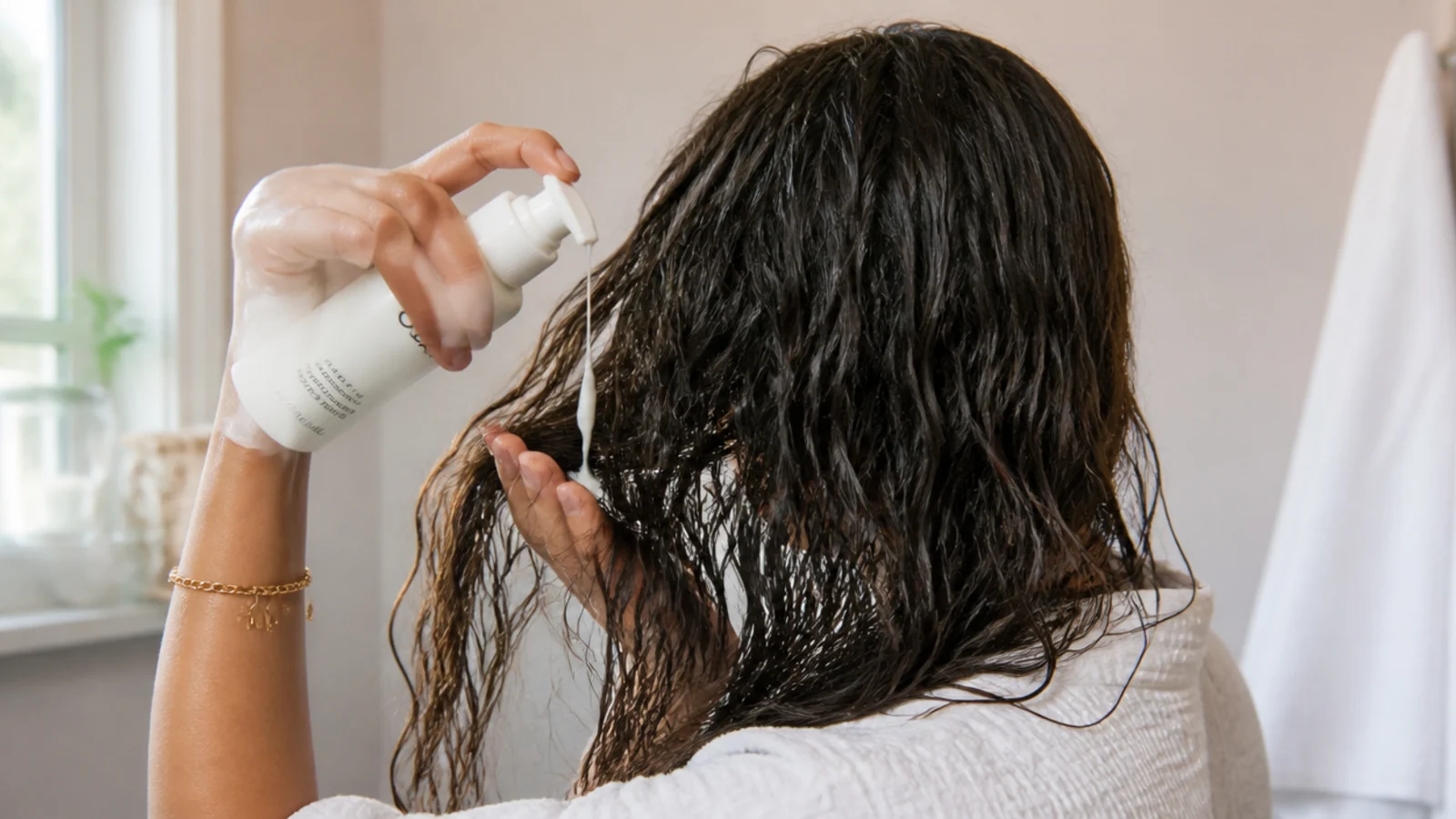
A remedy applied in the wrong order does almost nothing, so here is the sequence to slot them into. Wash 2 to 3 times a week in lukewarm water with a sulfate-free shampoo, scrubbing only the scalp and letting the runoff clean the lengths. Condition mid-lengths and ends, then detangle in the shower with a wide-tooth comb while the conditioner is still on, working from the ends upward. Finish with 30 seconds of the coolest water you can stand. Now the part everyone gets wrong: apply your stylers to soaking wet hair, not damp. The water is what carries the product evenly through every strand, and hair that has already dried to damp will take the same cream in patches. Layer in this order with a minute between each: leave-in to hydrate, cream to define, gel to seal. Squeeze out excess with a microfiber towel or a cotton t-shirt, never terry cloth, which snags the cuticle open. Then leave it alone. Every touch while drying is a fresh frizz trigger. Curly textures get the diffuser detail in frizzy curly hair styling, and daily finishing lives in mid length styling.
Humidity, Dew Point and When Honey or Glycerin Backfires
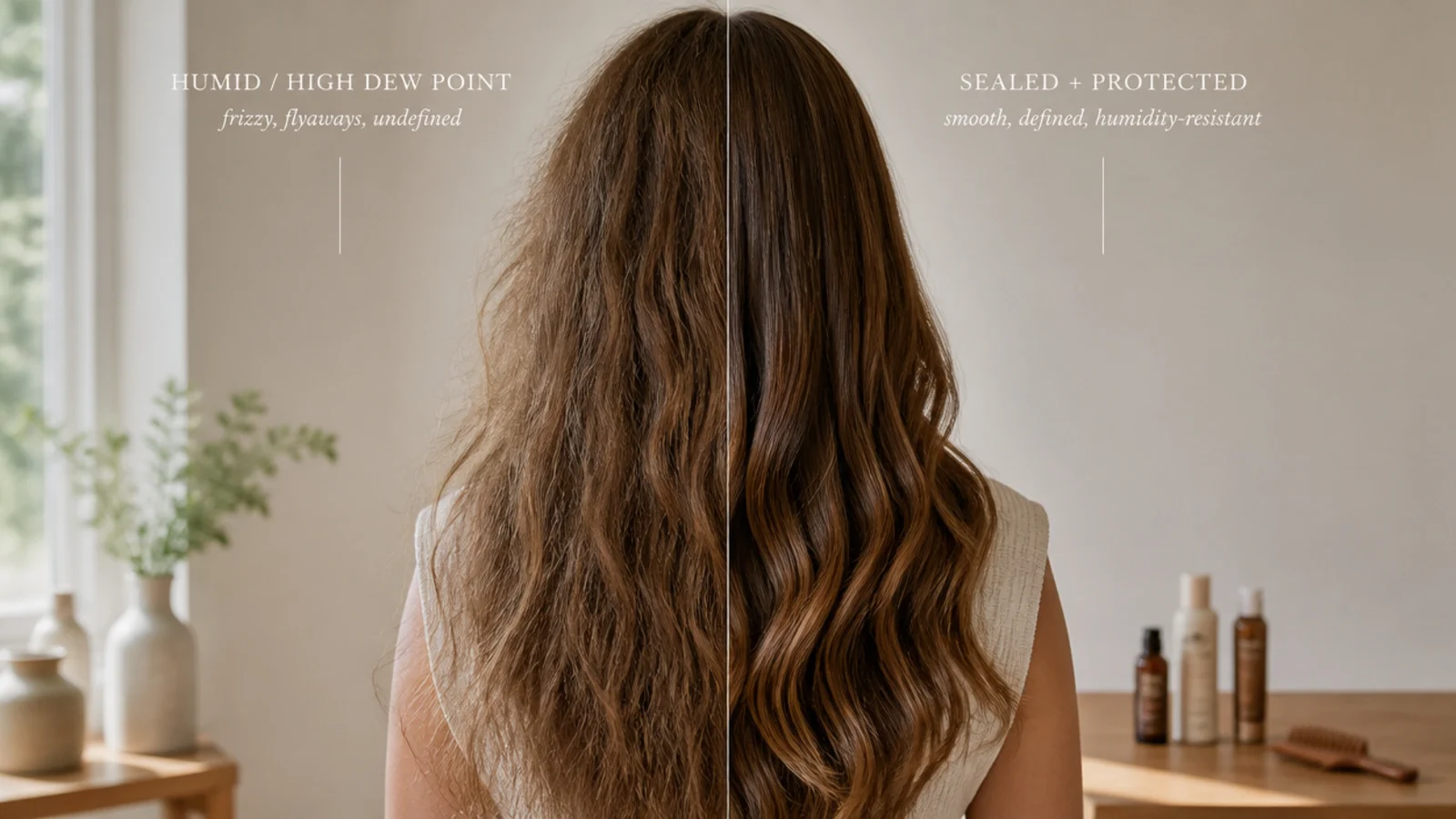
Humectants such as honey, glycerin and aloe pull water toward the hair, which is exactly what you want on a mild day and exactly what ruins it on a muggy one. The number that predicts this is dew point, not the humidity percentage, and your weather app shows it. Below about 35F the air holds so little water that a humectant pulls moisture out of your hair instead of into it, leaving it brittle, so lean on oils, creams and butters and skip the honey mask. Between roughly 40F and 60F is the sweet spot where humectants behave, and this is when a honey or glycerin remedy performs best. Above about 65F there is more water in the air than in your hair, the humectant hands it straight to the cuticle and the strand swells, so switch to a film-forming gel or a silicone serum and put the honey away until autumn. This single rule explains why a remedy that worked beautifully in March turns your hair into a cloud in July, and why nobody can agree on whether glycerin is good or bad. It is both, on different days.
Cuts, Sleep and Daily Habits That Stop Frizz Returning
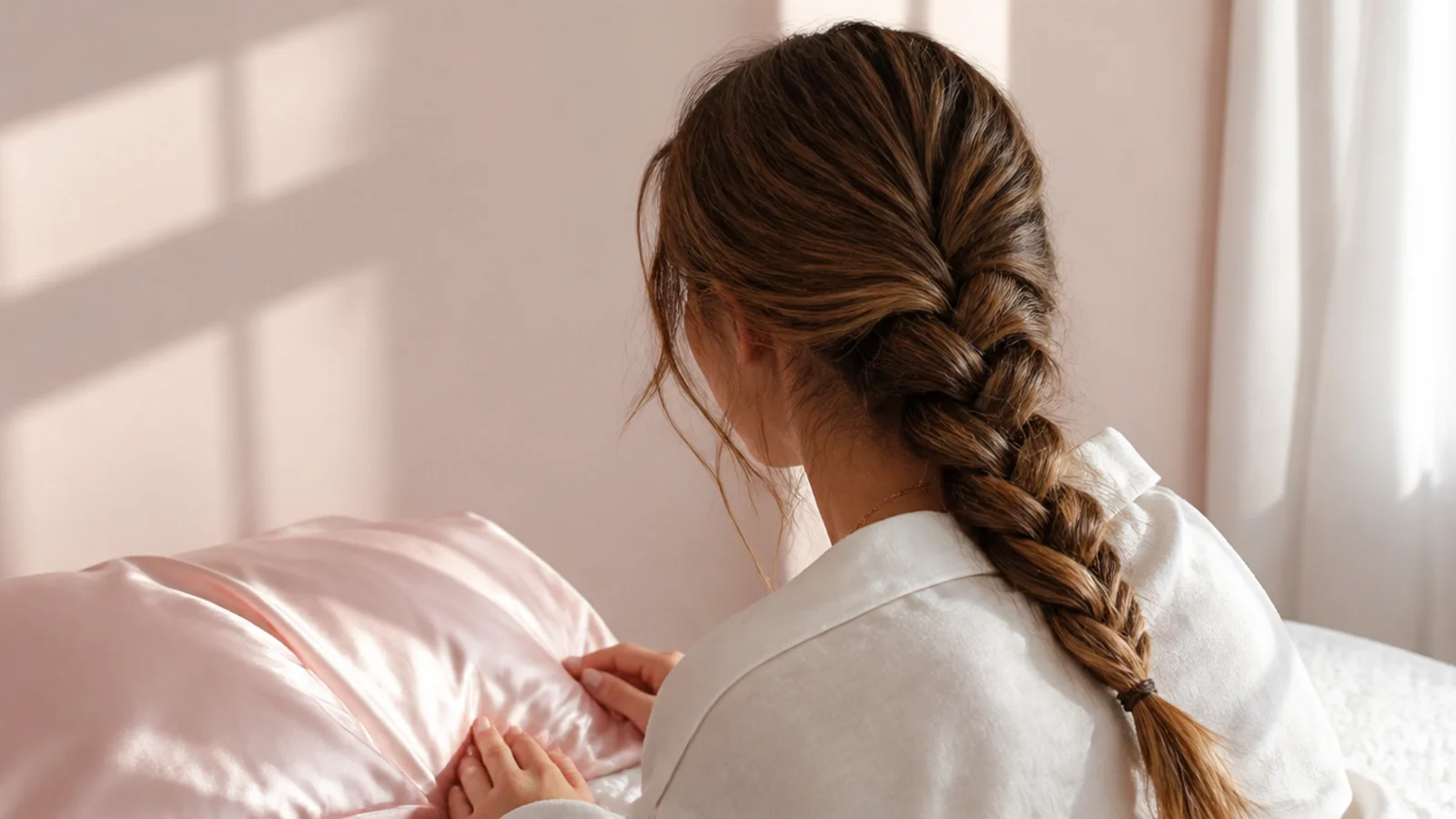
No remedy survives bad habits. Start with the cut, because shape decides how frizz reads. Blunt, heavy ends on frizz-prone hair build a triangle and every stray strand shows against a hard perimeter, while soft internal layers remove bulk from inside without creating new short pieces on the surface. Ask for internal or invisible layers to remove weight, and say explicitly no thinning shears, since thinning shears leave blunt stubs that grow out as halo frizz. The vocabulary for that request is in mid length haircut layers, and fine-haired versions in mid length for fine hair. Then sleep. Cotton pillowcases wick moisture out and drag the cuticle open across seven or eight hours, which is why day-2 frizz appears without any weather to blame. A satin or silk pillowcase runs 15 to 30 dollars and is the highest-value purchase on this whole page. A loose braid or a pineapple on top of the head does the same job for free. Trim every 10 to 12 weeks, brush only when wet and coated in conditioner, and keep hot tools under 350F.
Frequently Asked Questions
Does frizzy hair mean damaged hair?
Not necessarily. Frizz means the cuticle is lifted and the hair is drinking moisture from the air, which happens on perfectly healthy hair in humid weather and on naturally coarse or curly textures. Damage makes it worse and more permanent, but plenty of frizz is a hydration and porosity issue, not a damage one. Check your ends for splits to tell the difference.
Can straight hair be frizzy?
Yes, and it is common. Straight hair frizzes as surface fuzz and halo flyaways rather than in-the-curl separation, and the causes are the same: a lifted cuticle, dryness, hard water and friction from towels and pillowcases. The remedies that suit it best are the sealing ones, so a cool final rinse, an acidic rinse, two drops of argan oil and a silk pillowcase, not heavy masks.
Can low porosity hair be frizzy?
Absolutely, and it is the most misdiagnosed frizz there is. Low porosity cuticles are tightly sealed, so moisture struggles to get in, and hair that never hydrates properly stays frizz-prone even while products sit greasy on the surface. The fix is heat and lighter products: apply a mask under a shower cap with a warm towel for 20 minutes, and skip coconut oil and heavy butters entirely.
Why is my hair so frizzy all of a sudden?
Look at four things in order. The weather, because a dew point above 65F frizzes hair that behaved fine last week. Your water, since new mineral buildup roughens the cuticle. Recent color, bleach or heat, which raises porosity. And your ends, because splits from a missed trim spread upward. Sudden frizz almost always has a specific trigger rather than a general decline.
Can frizzy hair be caused by a vitamin deficiency?
It can contribute. Iron, vitamin D, biotin and omega-3 deficiencies are linked with dry, brittle, poor-quality hair growth, which frizzes more readily than healthy hair does. That said, deficiency shows up over months in new growth, not overnight in your existing lengths, so treat it as a long-term factor to check with a doctor rather than an explanation for today's frizz.
How often should I use a home remedy for frizzy hair?
Masks such as avocado, banana or mayonnaise once a week, protein remedies such as egg or rice water once or twice a month at most, and acidic rinses every 2 to 4 washes. The daily-habit remedies are different: cool rinses, cotton t-shirt drying, silk pillowcases and product layering should happen every single wash day, because those are the ones doing the real work.
How do I get rid of frizzy hair permanently?
You cannot permanently remove frizz without chemically altering the hair, and keratin or smoothing treatments last 3 to 5 months and need repeating. What you can do permanently is remove the causes: keep the hair hydrated, seal it on wash day, sleep on silk, cut the damaged ends off every 10 to 12 weeks and stop brushing it dry. Managed frizz stays managed.
Do apple cider vinegar rinses actually work on frizzy hair?
Yes, within limits. Diluted ACV lowers the hair pH so the cuticle scales close flatter, and it dissolves the mineral and product film that makes hair feel rough, so you get real shine and less surface fuzz. What it will not do is hydrate dry hair, so it works best paired with a mask. Always dilute, roughly one third of a cup per quart of water.
Which frizzy hair look are you saving?
Across all 20 of these frizzy hair remedies, the pattern is uncomfortable for anyone hoping for a miracle jar: the cheapest, dullest fixes win. A 30-second cool rinse, a cotton t-shirt instead of a terry towel, a silk pillowcase and stylers layered onto soaking wet hair beat almost every mask in the list, and they cost under 20 dollars combined. The masks still matter, but they are weekly hydration, not daily frizz control, and they only pay off when they match your porosity. Test yours, pick two remedies rather than eight, and give them three wash days before you judge. Then browse the rest of the frizzy hair board for styling that works with the texture you have.