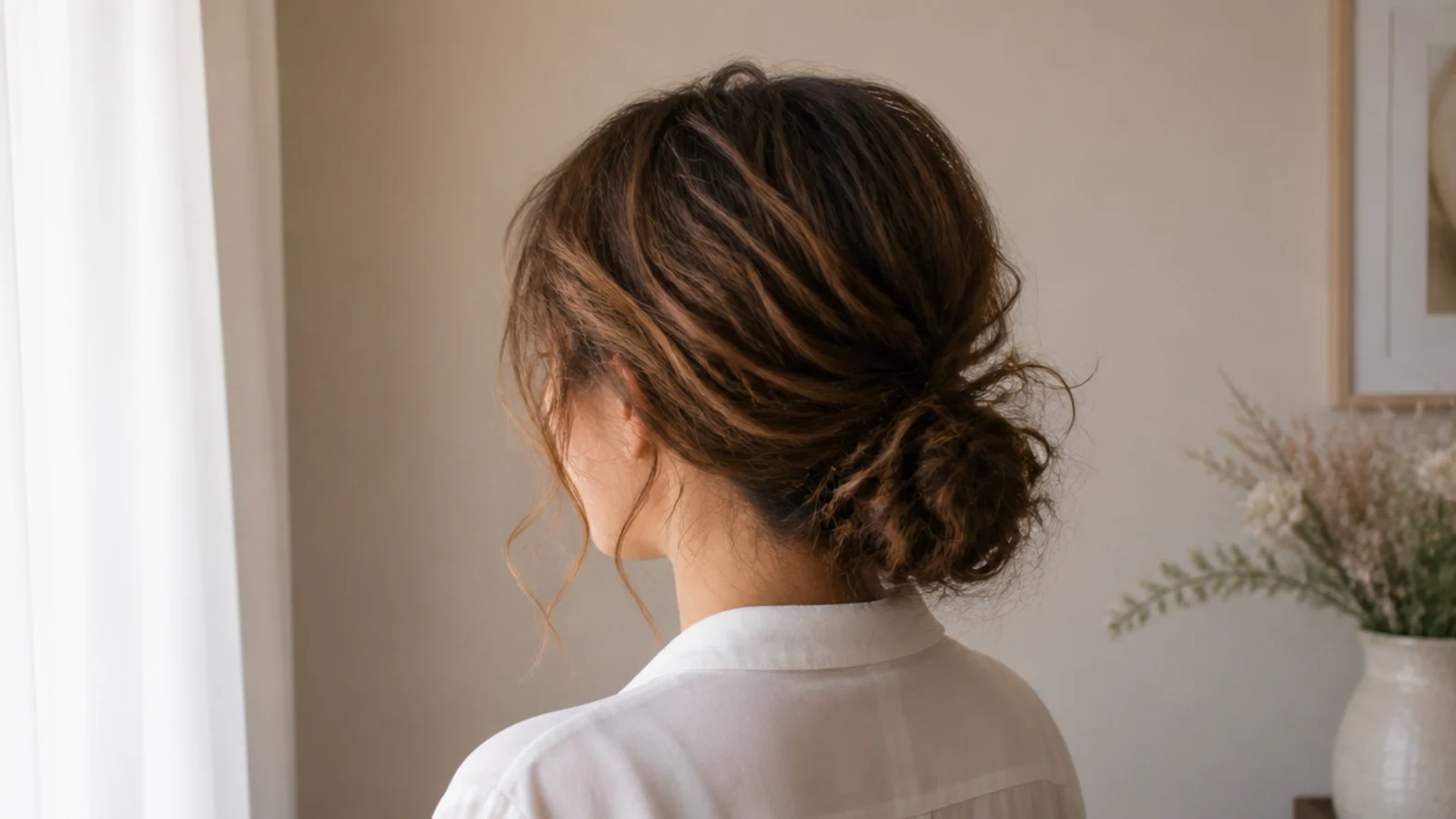
Quick Comparison
| Styles That Compress the Puff | Styles That Redistribute the Puff | |
|---|---|---|
| Examples in this list | French twist, low nape chignon, stacked buns | Shag layers, low side braid, overnight braid waves |
| What they do to volume | Contain the mass in one column or coil | Spread the mass downward and outward evenly |
| Best puff location | All-over swelling and crown puff | Mid-length triangle puff and flared ends |
| Typical time | 3 to 7 minutes once the length is gathered | 5 to 12 minutes, or a one-time salon cut |
| Hold at a 70 degree dew point | 8 to 10 hours with almost no reshaping | 5 to 8 hours, expect one mid-day refresh |
| Scalp tension risk | Moderate; low placement keeps it manageable | Low; nothing pulls against the hairline |
| Product needed | Leave-in plus a pea of cream on the hands | Leave-in, cream and gel on soaking wet hair |
| Works on day three hair | Yes, grip is better than on wash day | Yes, but waves need a water mist first |
| Common failure mode | Seam gaps or the coil sags by late afternoon | Ends flare again once the gel cast is broken |
1. Half-Up Claw Clip Twist for Triangle-Shaped Puff
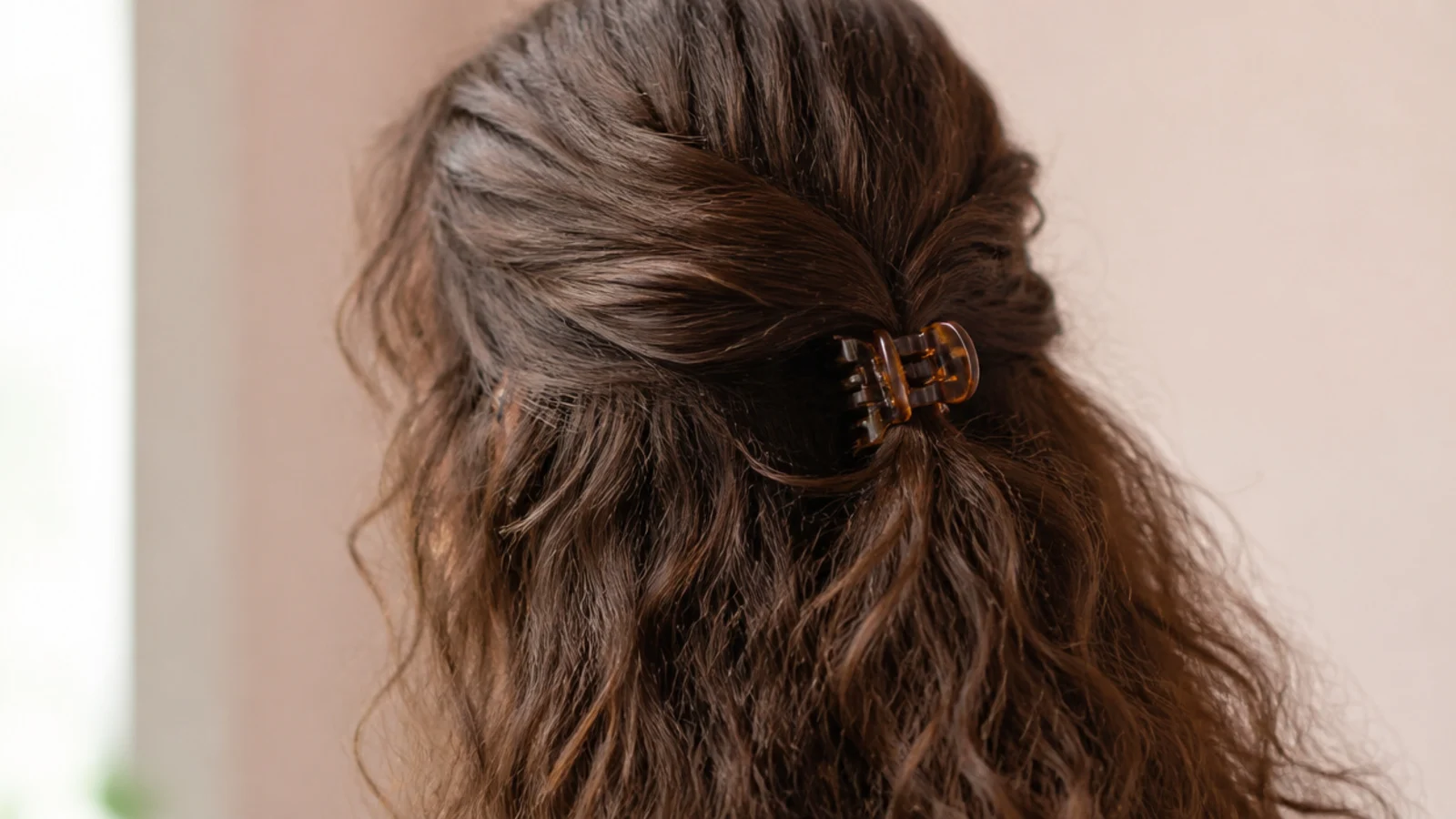
Ninety seconds, works from a chin bob upward. Gather the top third of your hair, twist it back once, and clamp a 3.5 inch matte claw clip vertically so the teeth sit just above the widest point of the triangle. Removing that top section is what narrows the silhouette: the width was largely surface hair sitting on top of the rest. Leave two curved pieces at the temples so the front reads soft. It slips on freshly washed slippery hair, so it is best on day two. Full variations live in frizzy hair hairstyles.
Who it suits: Mid-length triangle puff, wavy 2B to 2C, second-day hair.
Tip: Clip vertically, not horizontally; horizontal teeth create a shelf that puffs above the clip.
2. Low Nape Chignon for All-Over Puffy Hair
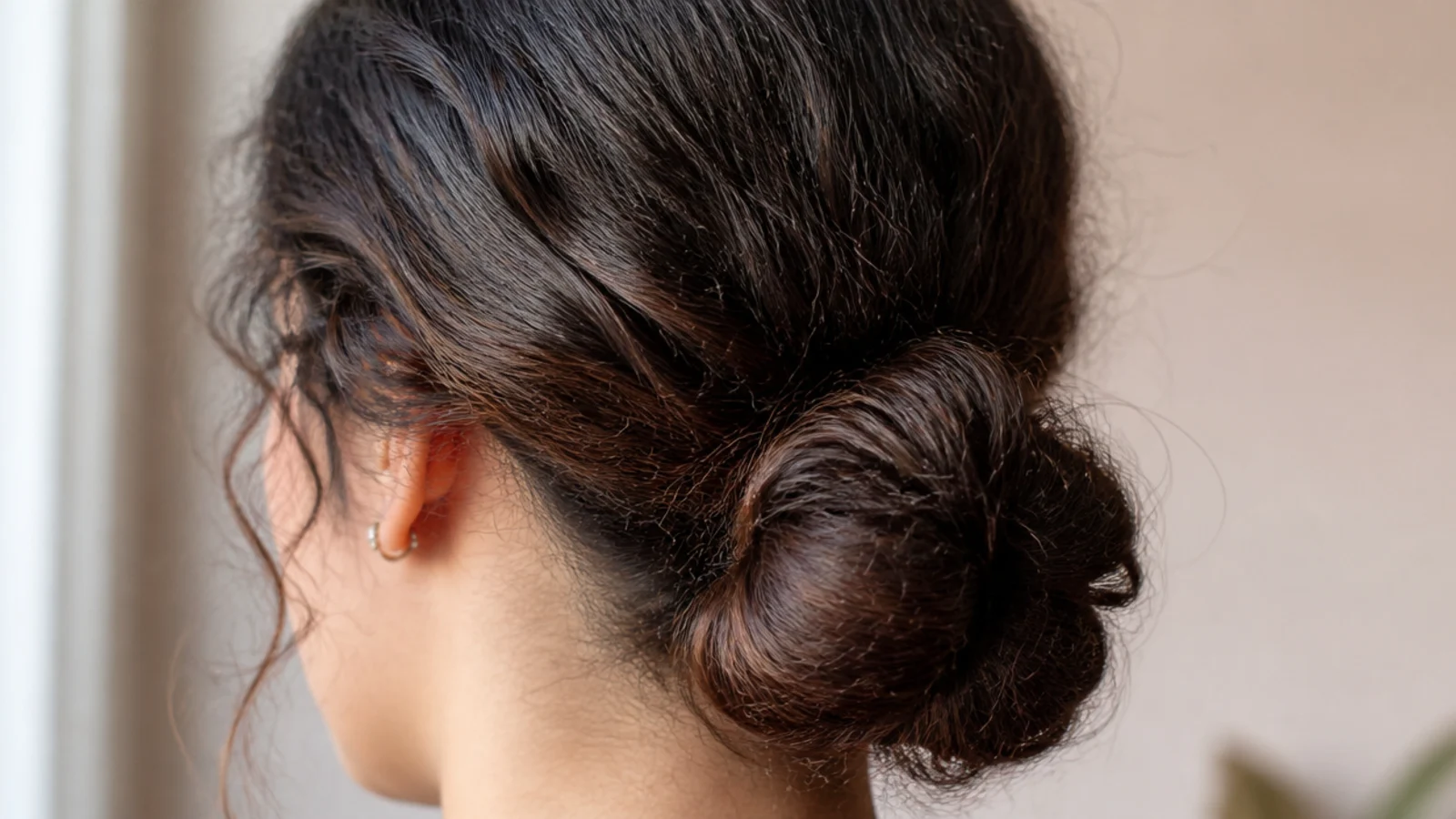
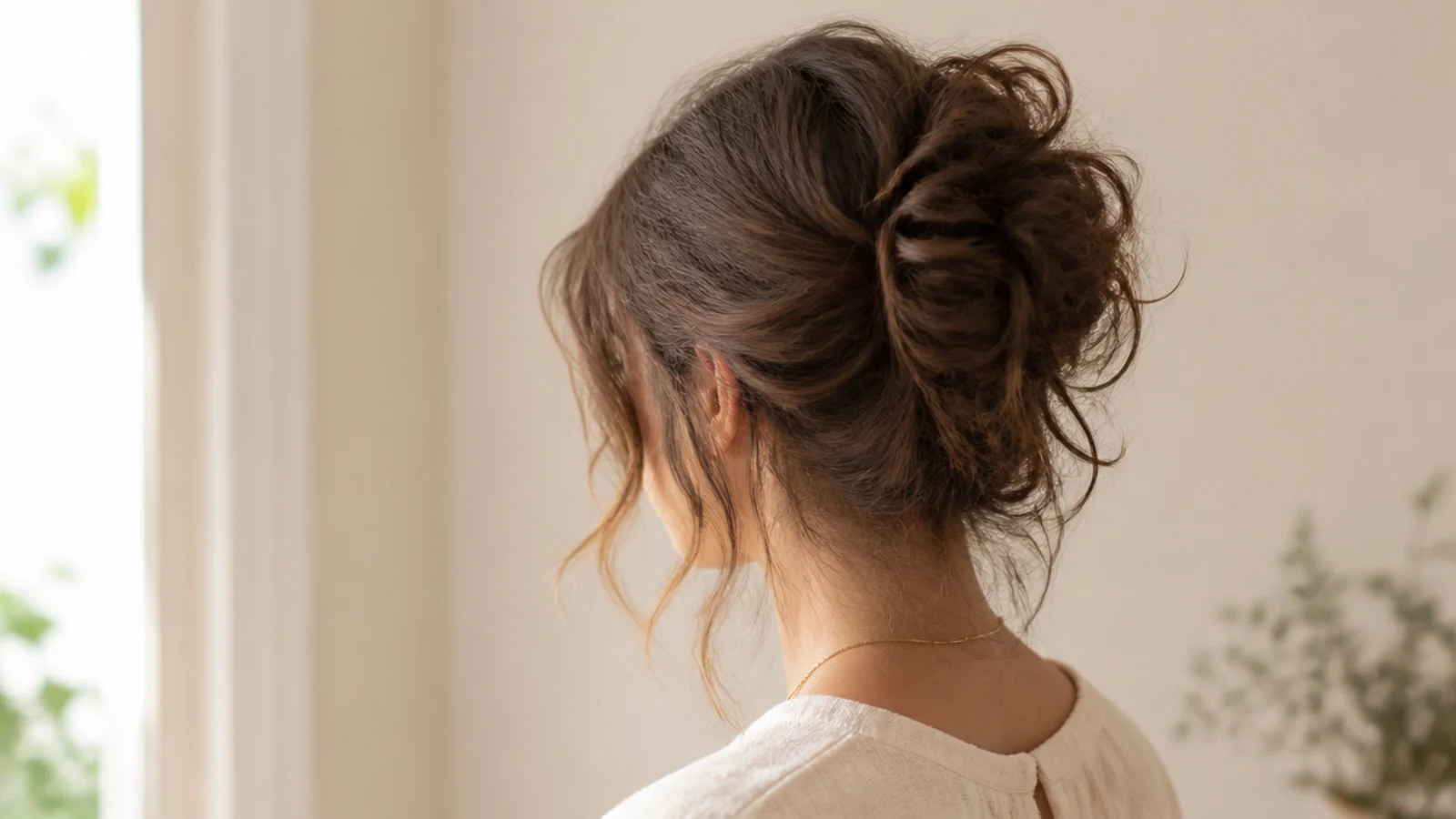
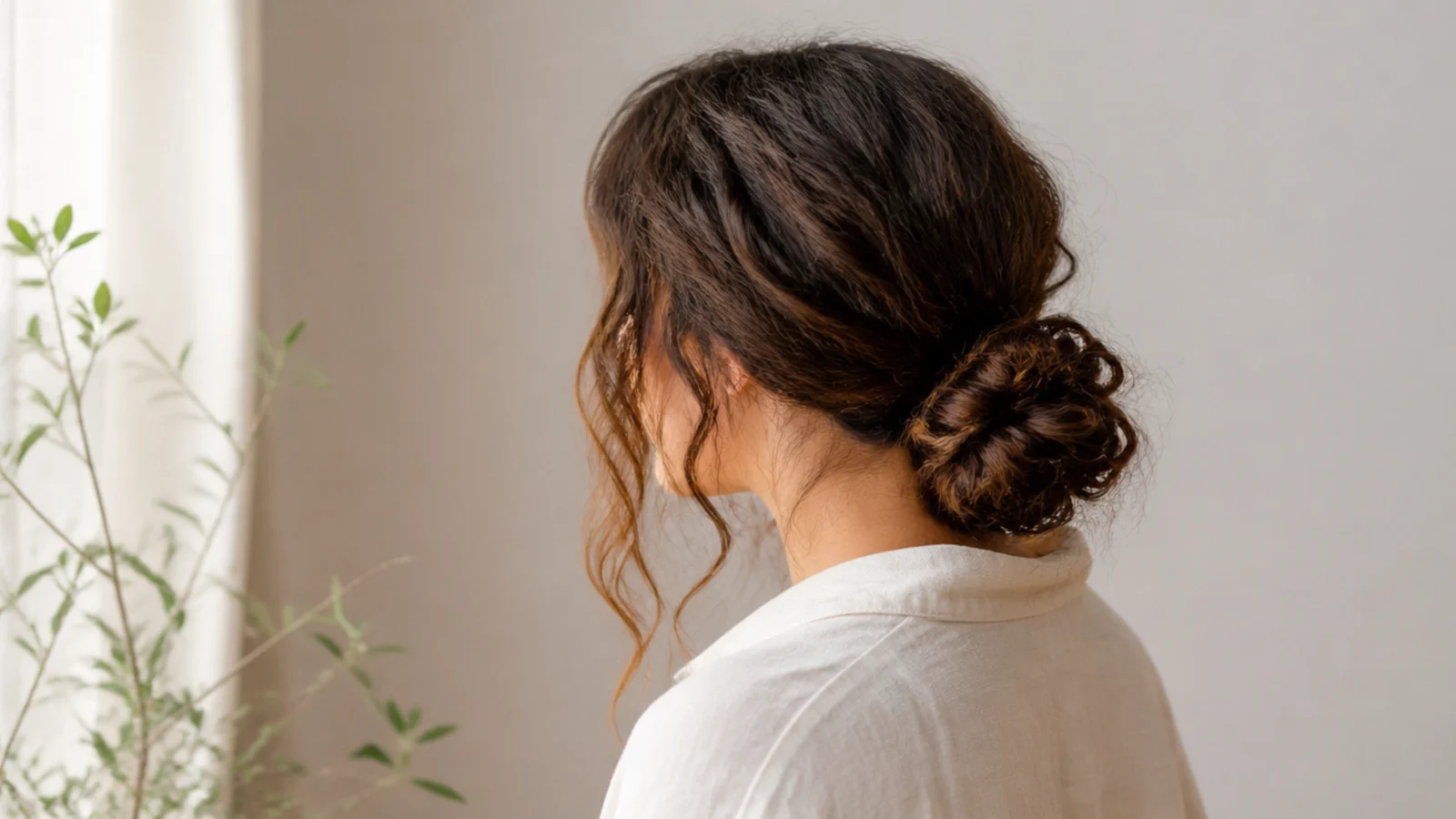
Four minutes, needs shoulder length. Rake hair back with damp hands, twist the length into a rope, coil it low at the nape and pin with four U-pins pushed upward into the coil rather than through it. Low placement is the point: a bun at the nape carries the entire mass below the crown, where puff is most visible in profile. Keep the sides gathered rather than slicked, because pulling them flat only lifts them again in an hour. It holds eight hours and survives a humid commute better than any ponytail.
Who it suits: All-over swelling, dense hair, long humid workdays.
Tip: Mist your hands, not your hair, before smoothing; wet hair swells and undoes the effect.
3. Double Stacked Buns to Disguise Crown Puff
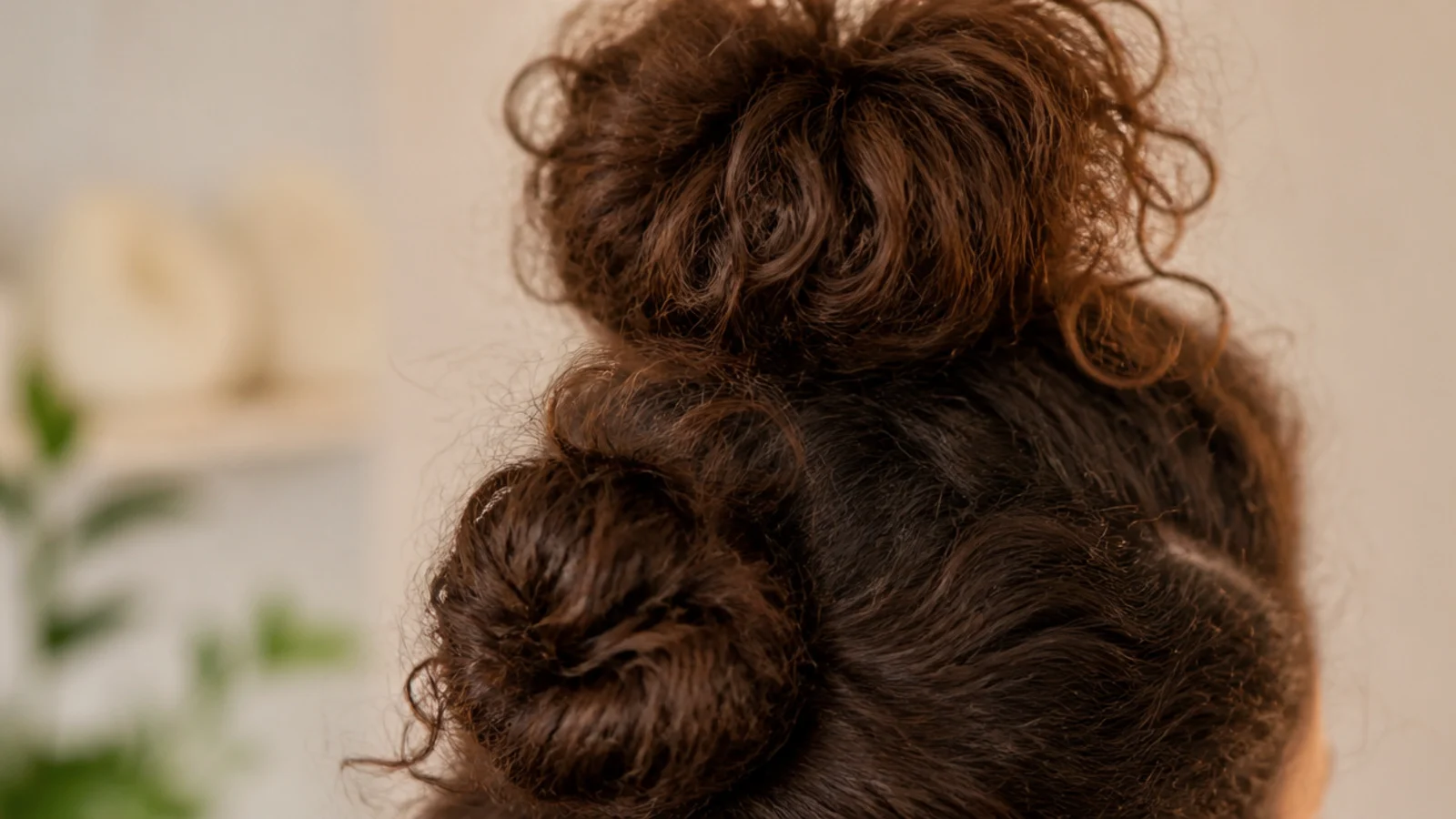
Six minutes, needs collarbone length. Split hair horizontally at the ear line, knot the top section into a small bun that sits directly over the crown, then knot the bottom section into a second bun beneath it. Two smaller buns read as deliberate structure where one large bun on puffy hair reads as bulk. Crucially, the upper bun sits on top of the exact zone where halo frizz stands up, hiding it instead of fighting it. Use spiral coils rather than elastics so you do not get a snapped dent. This is the classic puffy-hair answer the SERP keeps recommending without explaining.
Who it suits: Crown and halo puff, thick hair, anyone who hates a single heavy bun.
Tip: Make the lower bun slightly larger than the upper one or the shape reads top-heavy.
4. Deep Side Part with a Two-Inch Twist Back
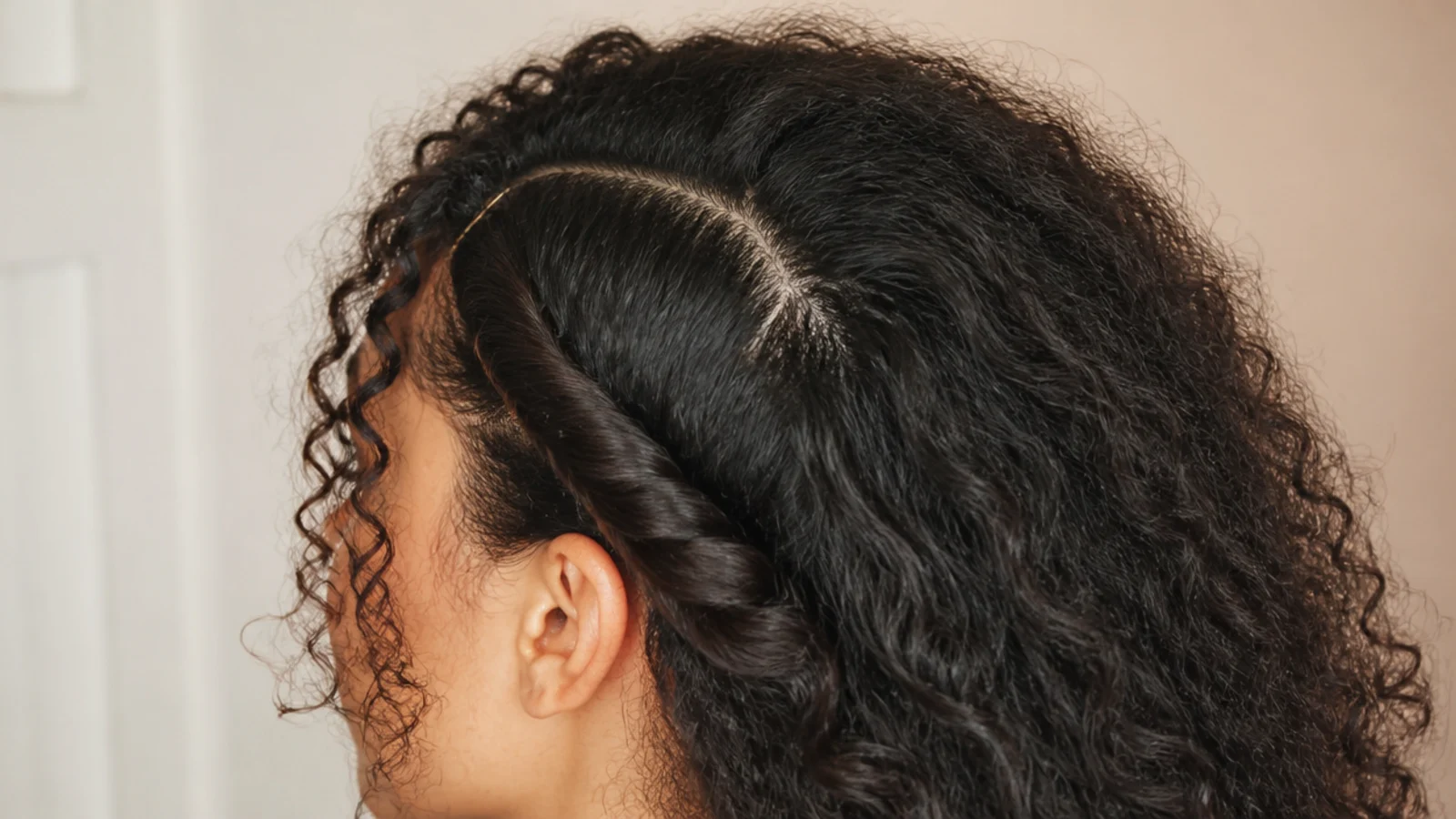
Two minutes, works at any length past the chin. Comb a deep part about two inches off center on your stronger side, take the heavier front panel, twist it back on itself twice and pin it behind the ear with two bobby pins crossed in an X. A deep part sends the mass sideways instead of upward, which flattens crown puff optically without any product. The twist stops the front panel from creeping forward and expanding by lunch. It works beautifully on grown-out fringe; see grown out short curtain bangs.
Who it suits: Crown puff, fine-but-dense hair, anyone growing out bangs.
Tip: Part along your natural cowlick line or the part will lift and separate within an hour.
5. Three-Minute High Ponytail with a Wrapped Base
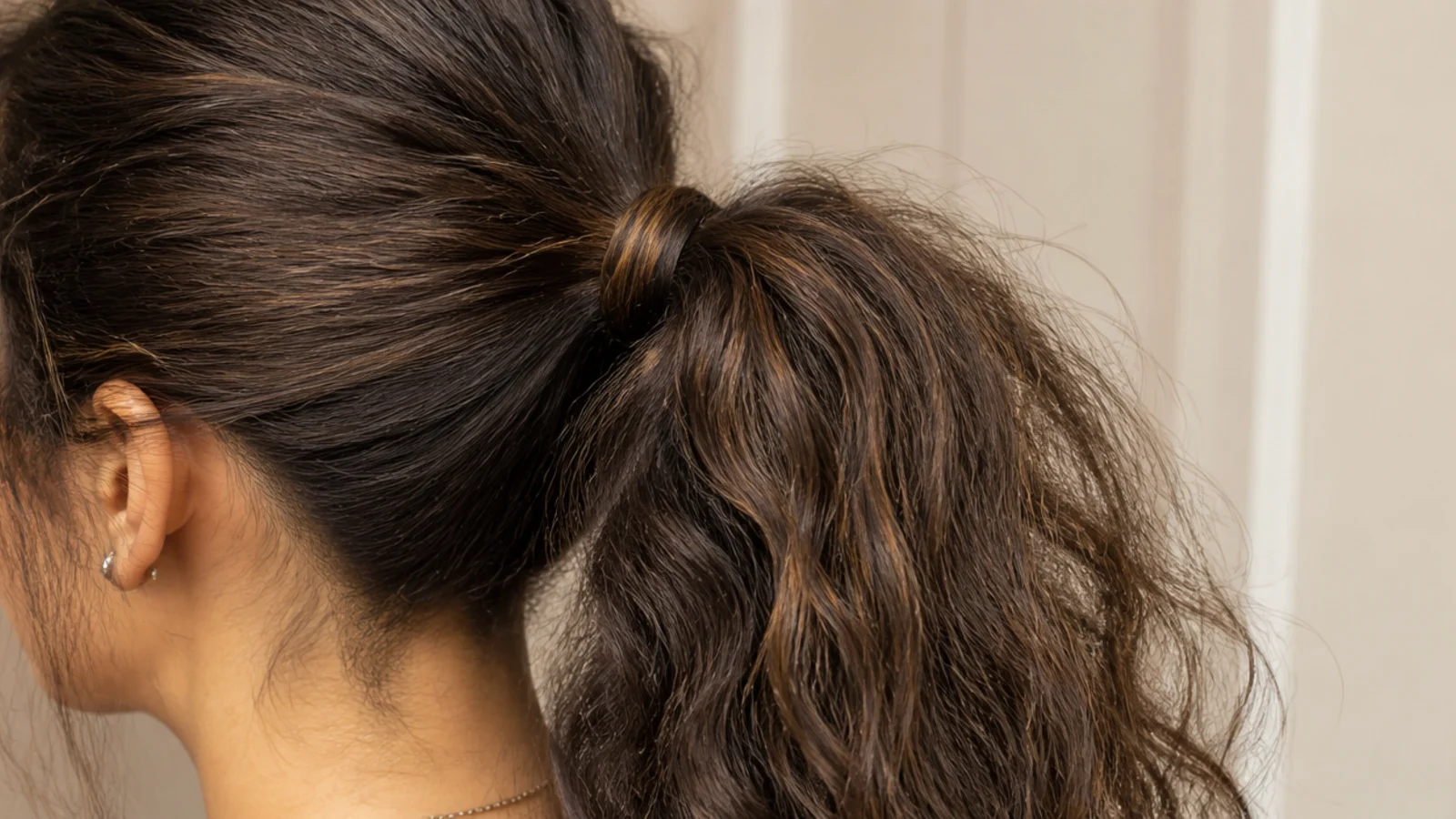
Three minutes, needs shoulder length. Tip your head forward, gather at the crown, secure with a fabric-covered elastic and wrap a half inch strand around the base to hide it. Worn occasionally this is the fastest way to convert all-over puff into deliberate height. Worn daily it is a trap: sustained scalp tension breaks short hairs along the part and grows the halo you are trying to hide, which is why the styles above exist. Keep it loose enough to slide a finger under the elastic, and alternate with low styles through the week.
Who it suits: All-over puff, occasional wear, gym days and hot afternoons.
Tip: Never brush the length once it is up; finger-rake, or you triple the visible haze.
6. Silk Scarf Headband over Puffy Roots
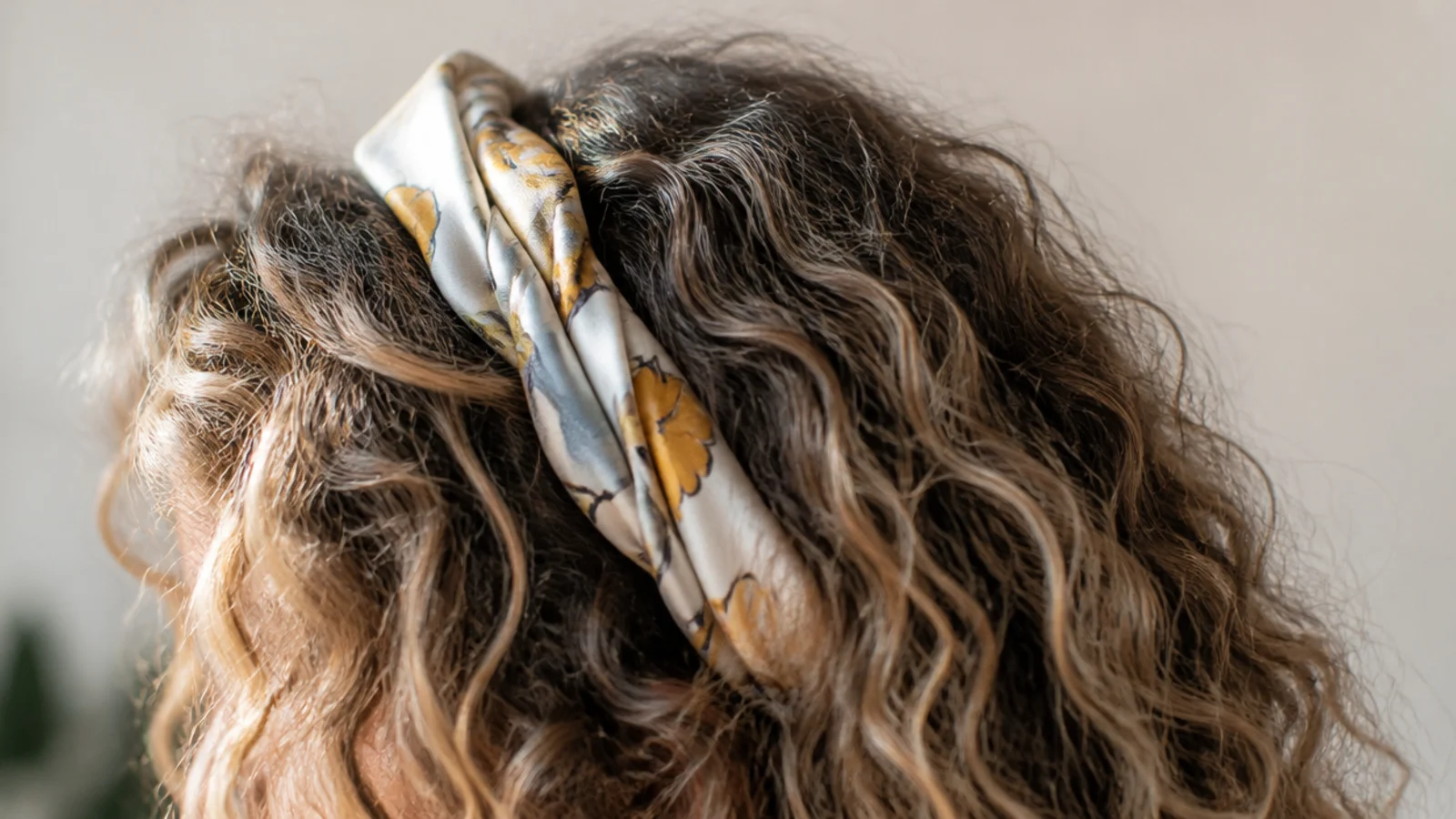
Ninety seconds, any length. Fold a 27 inch silk square into a two inch band, lay it about an inch behind the hairline and knot it underneath at the nape. Silk is the functional choice over cotton because it does not abrade the cuticle at the exact spot where halo frizz starts. The band covers the standing regrowth zone completely and leaves the length free to be as textured as it wants. It is the single best rescue on day three, and it pairs well with the loose looks in frizzy curly hair aesthetic.
Who it suits: Crown and halo puff, third-day hair, no-product days.
Tip: Position the band an inch back from the hairline; on the hairline it pushes the front upward.
7. French Twist for Day Three Puffy Frizzy Hair
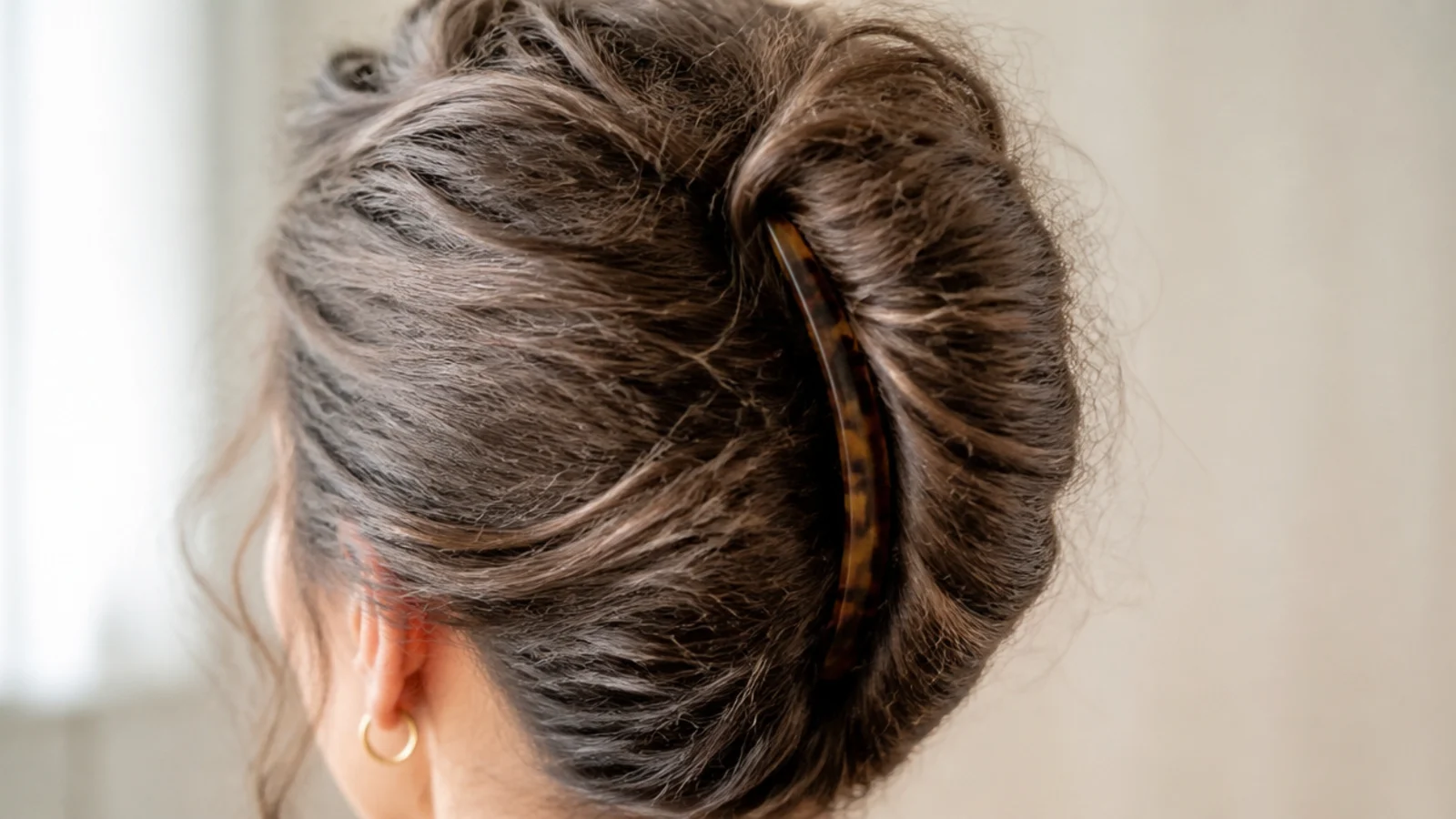
Seven minutes, needs shoulder length minimum. Sweep everything to one side, fold the length upward against the back of the head into a vertical roll and pin down the seam with eight to ten bobby pins opened against the twist. It is the highest-compression style here: the roll physically contains the whole mass in one column, and it holds ten hours at a 70 degree dew point. It grips far better on day three hair with natural texture than on freshly washed hair, so this is a wash-day-plus-two style, not a wash-day style.
Who it suits: All-over swelling, dense or coarse hair, events and long days.
Tip: Pin into the roll horizontally, not vertically down it, or the seam gaps open by midday.
8. Dutch Braid Crown to Flatten a Puffy Halo
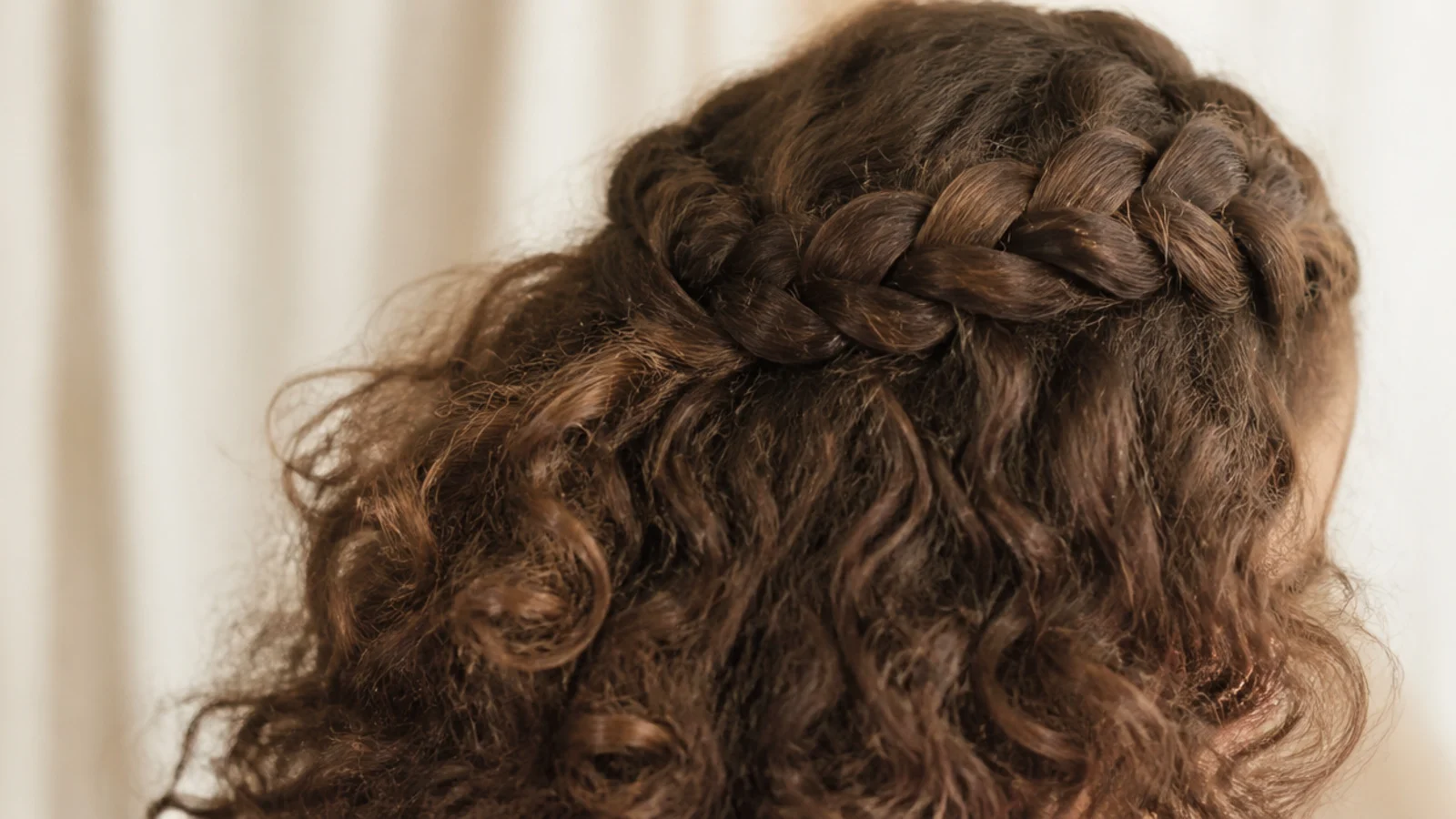
Eight minutes, needs collarbone length. Take a two inch section along the hairline and Dutch braid it across the head from one temple to the other, crossing strands under so the braid sits raised on the surface. The braid runs directly over the halo zone and traps every short standing hair inside it, then pins behind the opposite ear. The length underneath can stay loose and textured. Braid on slightly damp hair with leave-in through it, not dry, so the strands do not shear. Braid technique translates from braided graduation hairstyles.
Who it suits: Crown and halo puff, wavy to curly texture, humid days.
Tip: Keep the braid gentle at the hairline; tension there causes the exact breakage that made the halo.
9. Loose Low Braid Started at the Ear
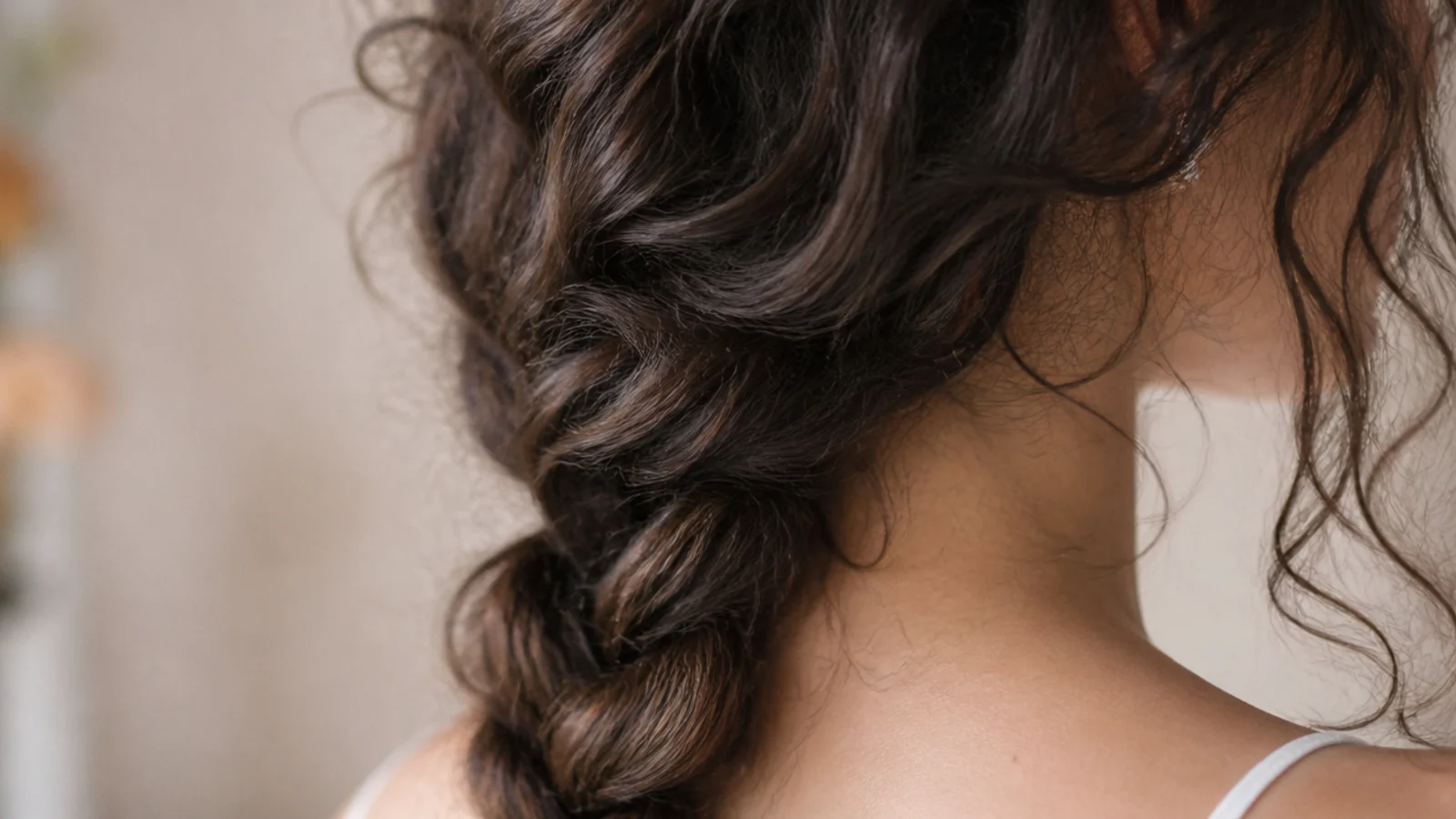
Five minutes, needs collarbone length. Pull two curved pieces at the temples first, then start a simple three-strand braid below one ear and work it over the shoulder. Starting low leaves the crown untouched, so nothing pulls on the scalp, while the weave holds the mid-lengths against each other for eight hours. That is the trade this style makes: it redistributes puff downward rather than compressing it. Tie off with a spiral coil and leave the last two inches loose so the ends flare and disguise dry-looking tips.
Who it suits: Triangle puff, all-over swelling, sensitive scalps.
Tip: Pull the face-framing pieces out before you braid; doing it after loosens the whole braid.
10. Side Fishtail Braid for Long Puffy Frizzy Hair
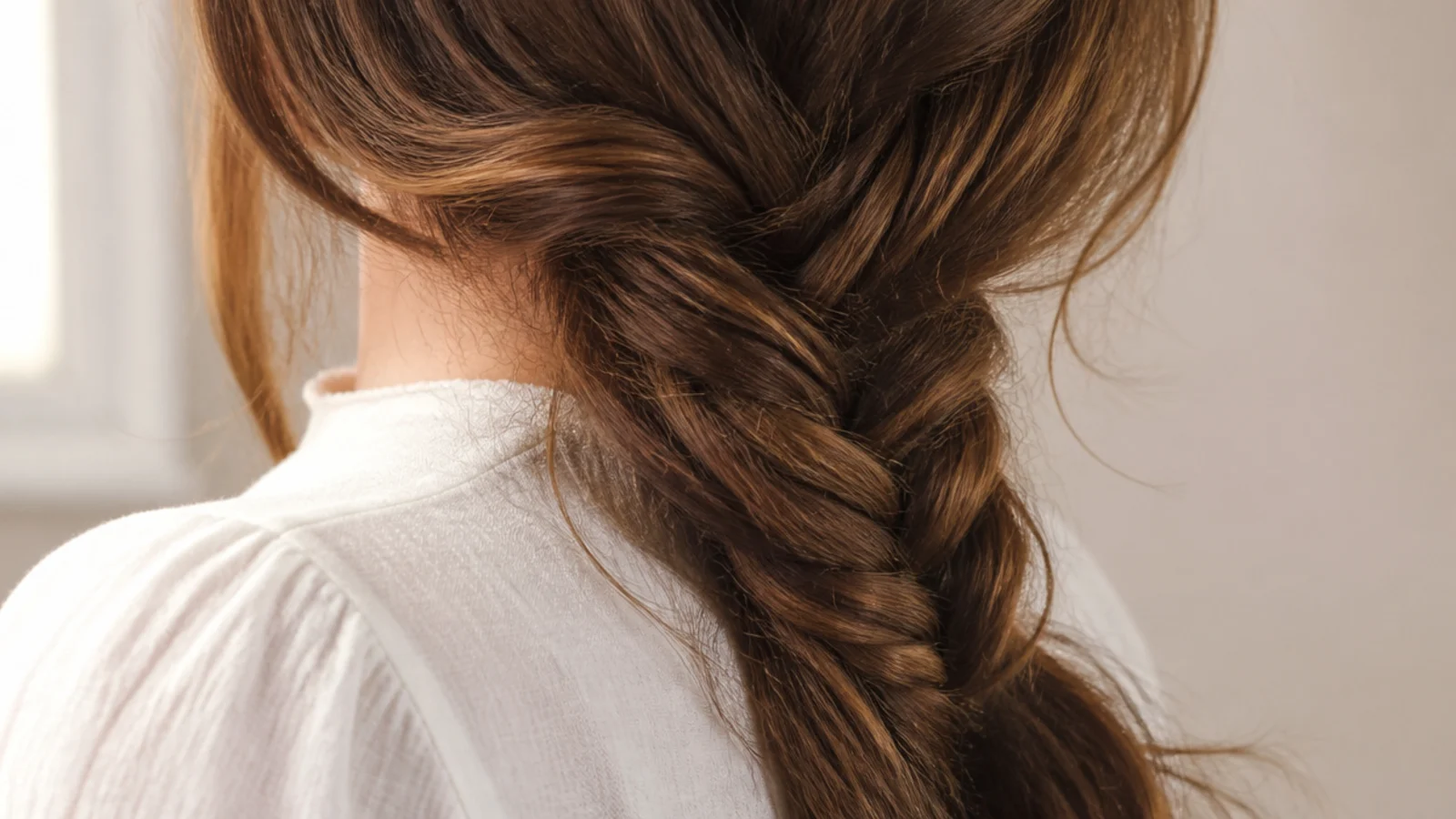
Twelve minutes, needs bra-strap length. Split hair in two at one shoulder and cross half inch pieces from the outside of each half to the inside of the other, repeating down the length. The fine weave is the tightest containment of any braid here, which is why it suits high-porosity hair that swells the most. It also fuzzes fastest, because a fishtail exposes more strand surface: coat hands with a pea of cream before you start and it stays clean into the evening. More long-hair braiding is in long mermaid braids.
Who it suits: Long, dense, high-porosity puffy frizzy hair.
Tip: Braid it slightly loose; a tight fishtail on swelling hair pops strands out within two hours.
11. Rolled Bun with a Fold-Over Tuck
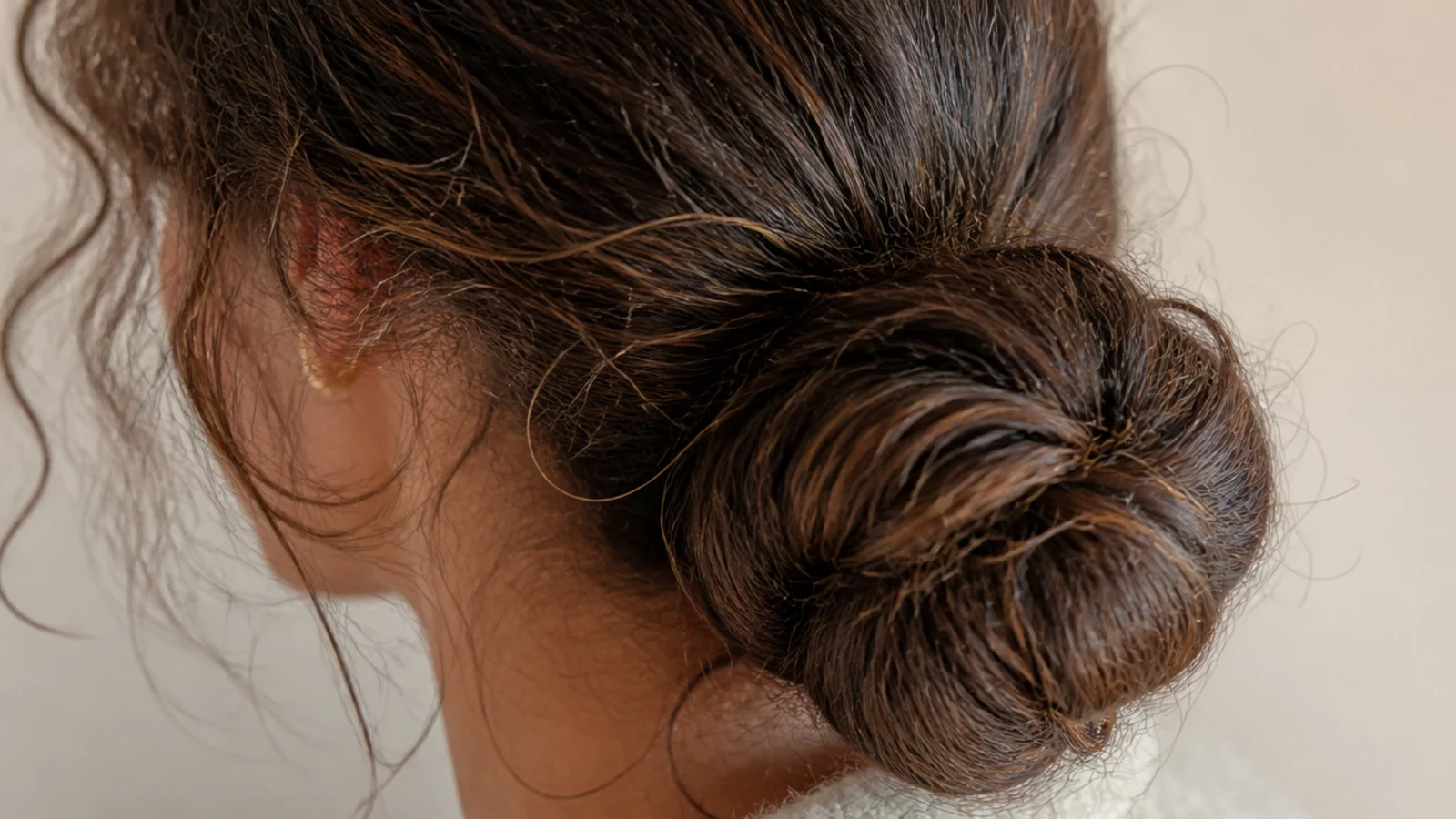
Three minutes, needs shoulder length. Make a loose low ponytail, split the hair above the elastic into a gap, then fold the tail up and tuck it down through that gap so the ends disappear inside. Push the elastic upward to tighten. It hides every dry, flared end, which is what makes puffy hair look widest at the bottom, and it puts zero tension on the crown. Add a second tuck for extra length. It is the most forgiving style here for hair that is between lengths and awkward.
Who it suits: Triangle puff, ends-only frizz, mid-length growing-out phases.
Tip: Loosen the elastic one turn before tucking; a tight base leaves a hard ridge across the back.
12. Wet-Set Overnight Braid Waves for Puffy Frizzy Hair
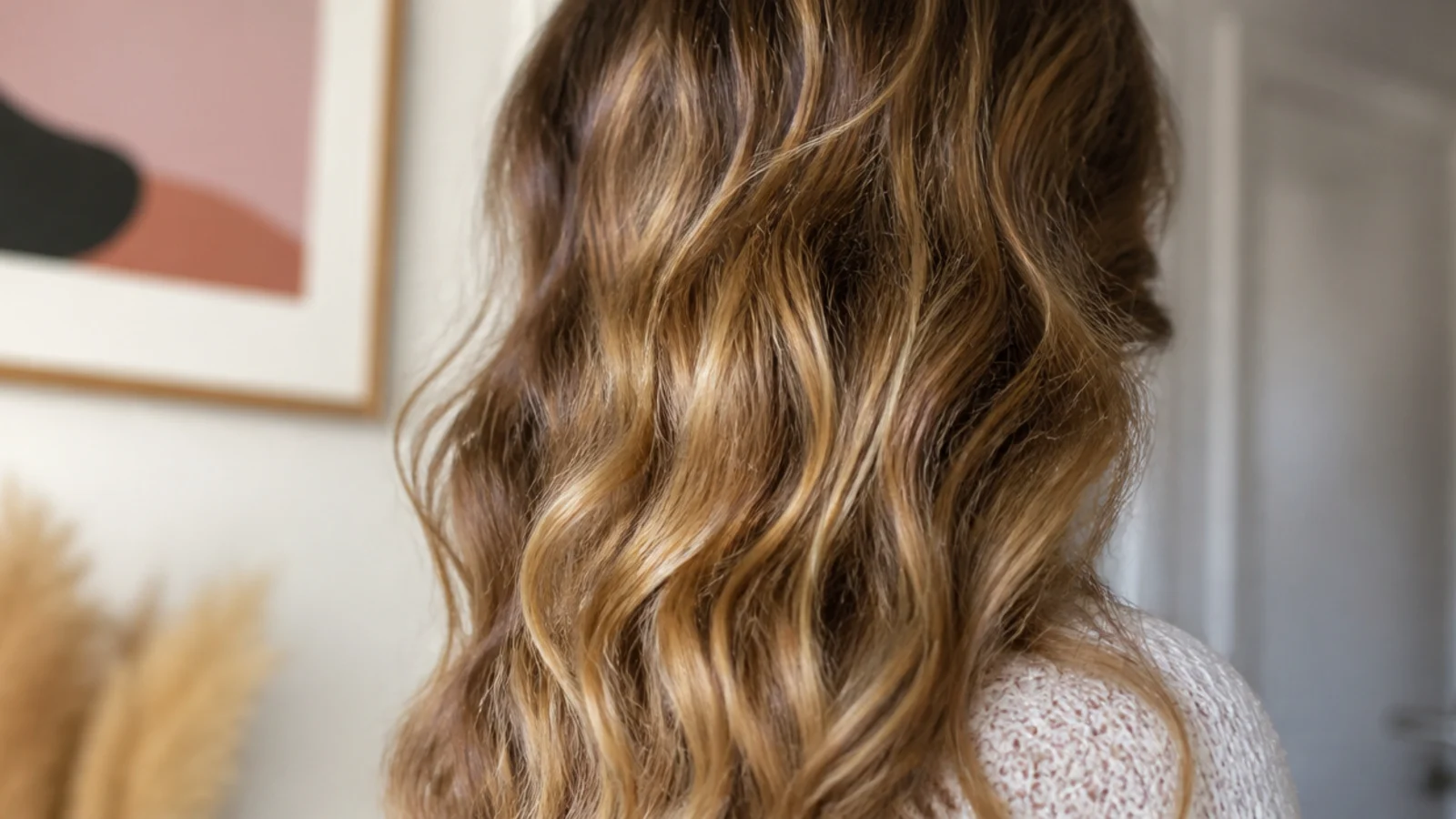
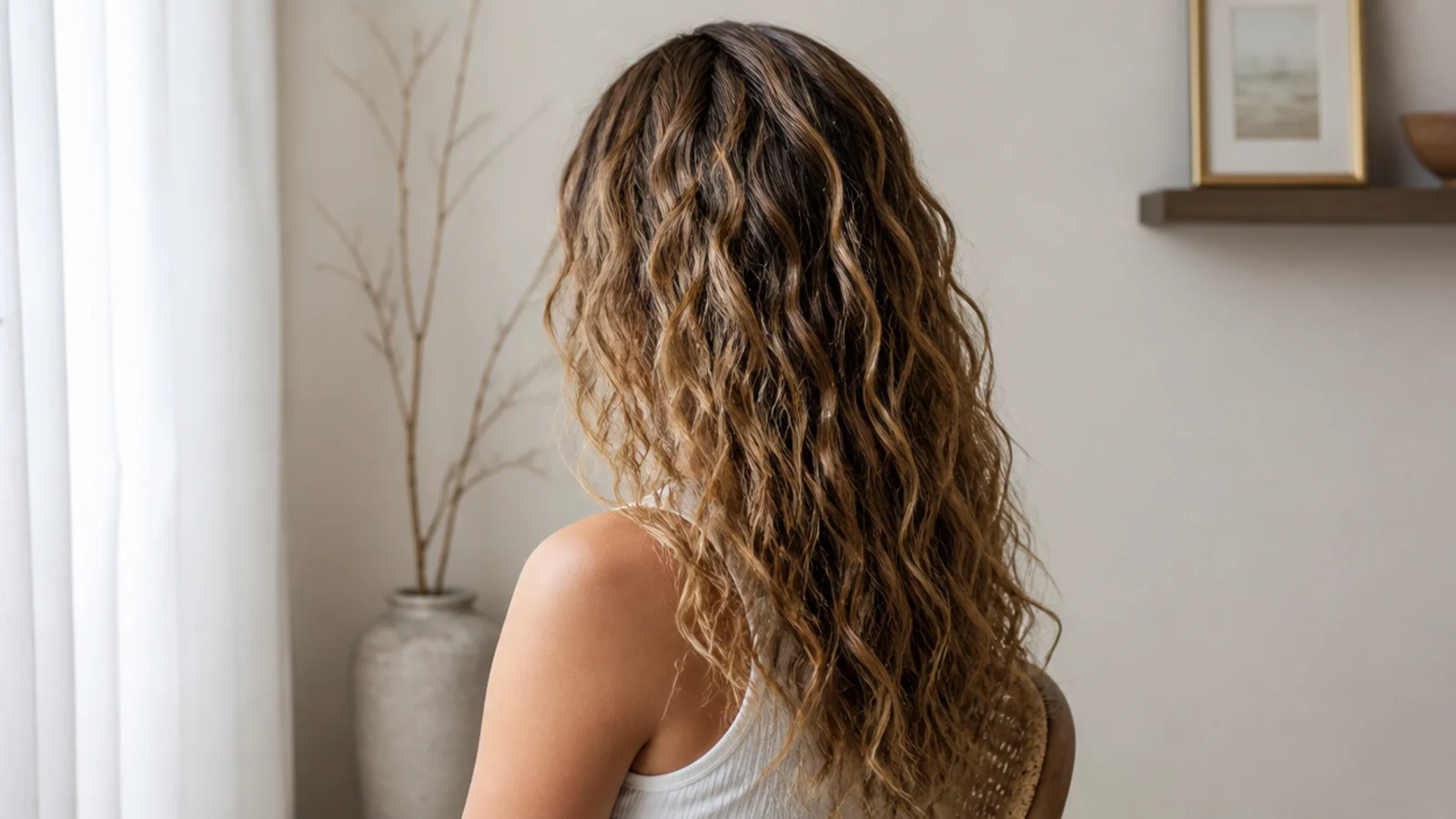
Eight minutes at night, needs shoulder length. On soaking wet hair, apply leave-in then cream, split into two sections and braid each loosely to the ends. Sleep on silk or satin and unravel in the morning. Setting the hair while it dries in place is what converts undirected puff into a defined S-wave, because dried-in shape is where definition comes from. Do not braid tightly and do not braid damp: damp hair sets a crimped kink instead of a wave. See frizzy wavy hair for the wave-type detail.
Who it suits: All-over puff, 2B to 3A texture, anyone who hates heat styling.
Tip: Unravel the braids with oiled fingertips, then shake at the roots only; never comb them out.
13. Blunt Chin-Length Bob to Weigh Down Puffy Hair
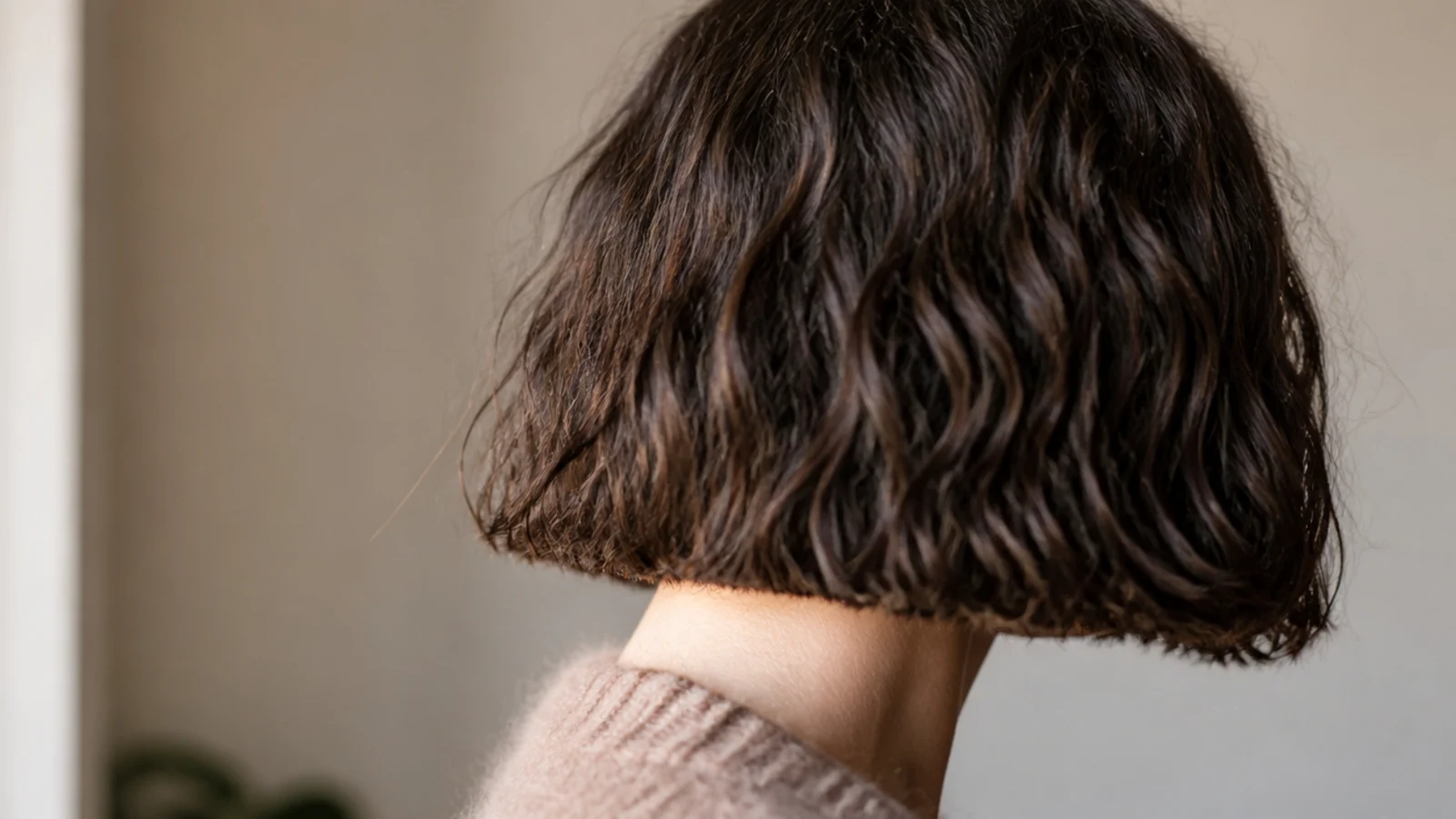
A cut, not a style, and the one shape the SERP consistently recommends for puffy hair. A blunt perimeter at the chin or the collarbone leaves enough weight in the ends to hold the mid-lengths down instead of letting them flare. The catch nobody mentions: blunt heavy ends also make every escaping hair visible against the hard line, so this works when your puff is bulk-driven and backfires when your frizz is surface-driven. Ask for a blunt line with soft internal debulking behind it, never thinning shears near the ends.
Who it suits: Dense bulk-driven puff with smooth-ish surface, not fine halo frizz.
Tip: Ask your stylist to cut it dry after air-drying so the true shrink-up length is visible.
14. Shoulder-Length Shag with Internal Layers
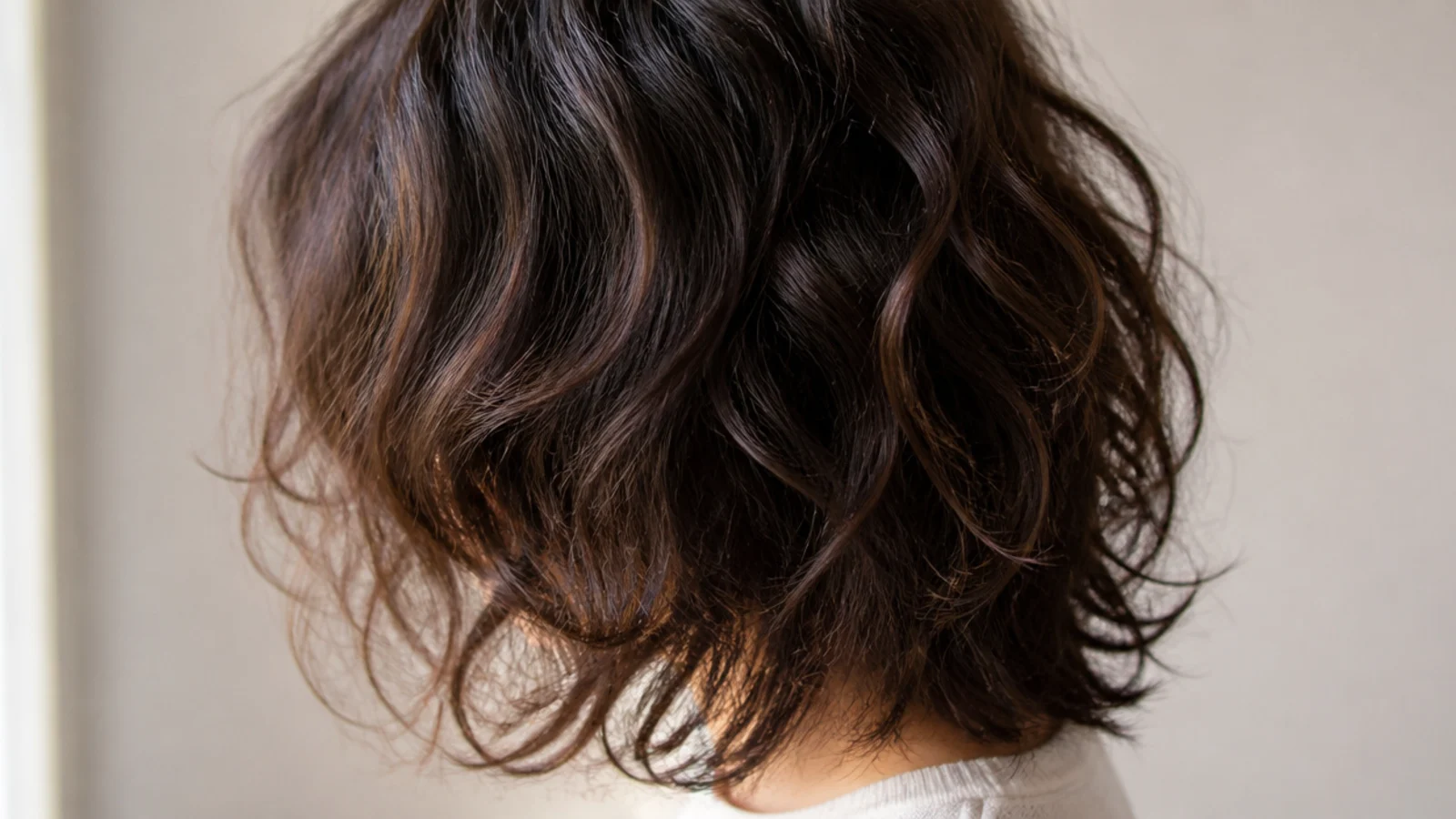
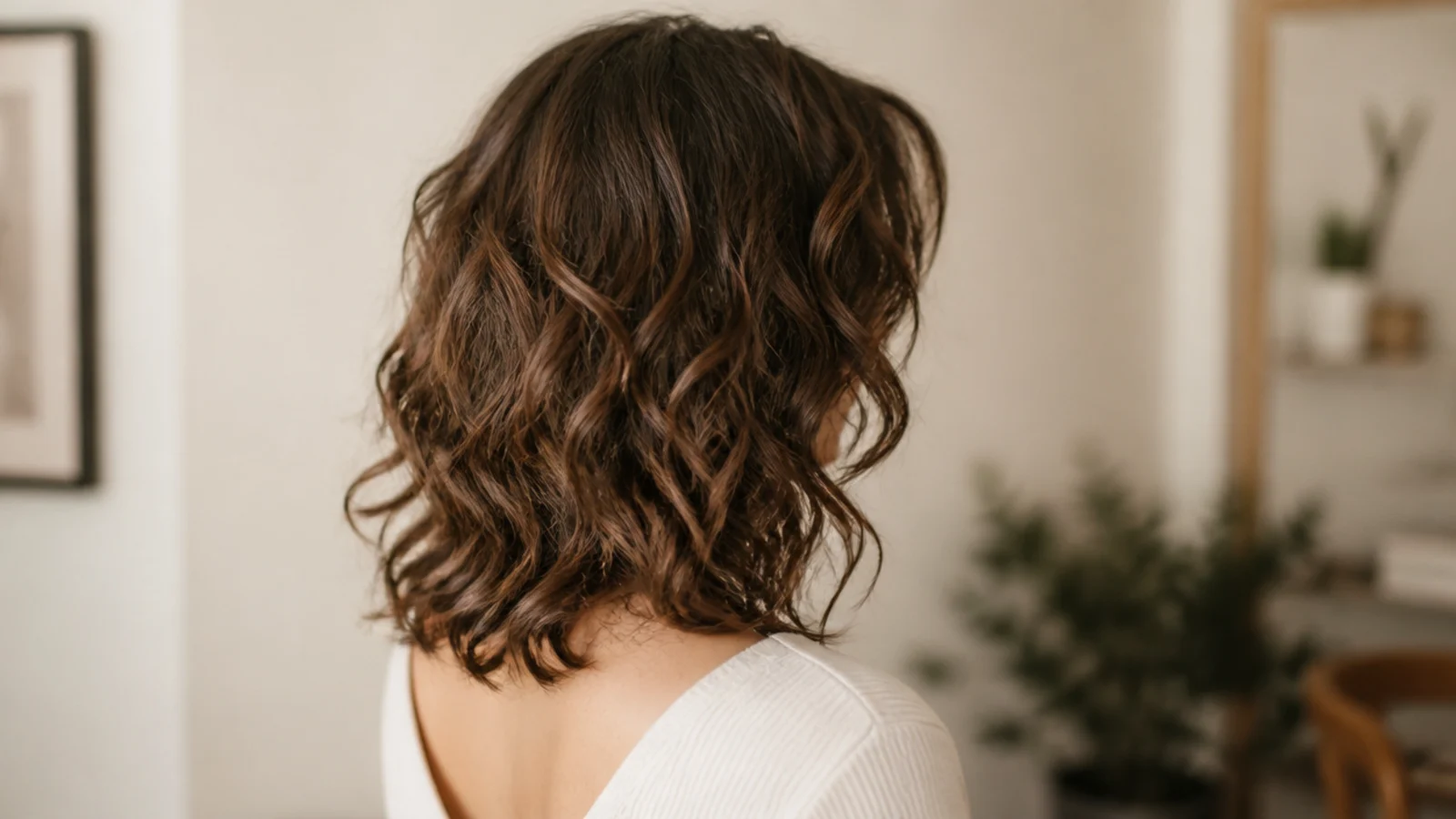
The redistribution cut. A shag places choppy layers throughout the interior so volume is spread from crown to ends rather than piling into a triangle at the jaw. That is the mechanical difference between a shag and a blunt bob on puffy hair: one moves the bulk, the other anchors it. Ask for internal debulking and long face-framing pieces, and specifically ask for no thinning shears at the crown, since the blunt short stubs they leave become halo frizz within weeks. Related shapes are in shaggy mid length haircut.
Who it suits: Triangle puff, thick hair, anyone who air-dries most days.
Tip: Bring a photo of the cut air-dried, not blow-dried, or you will be shown a smoothed version.
15. Curtain-Bang Blowout on Puffy Mid-Lengths
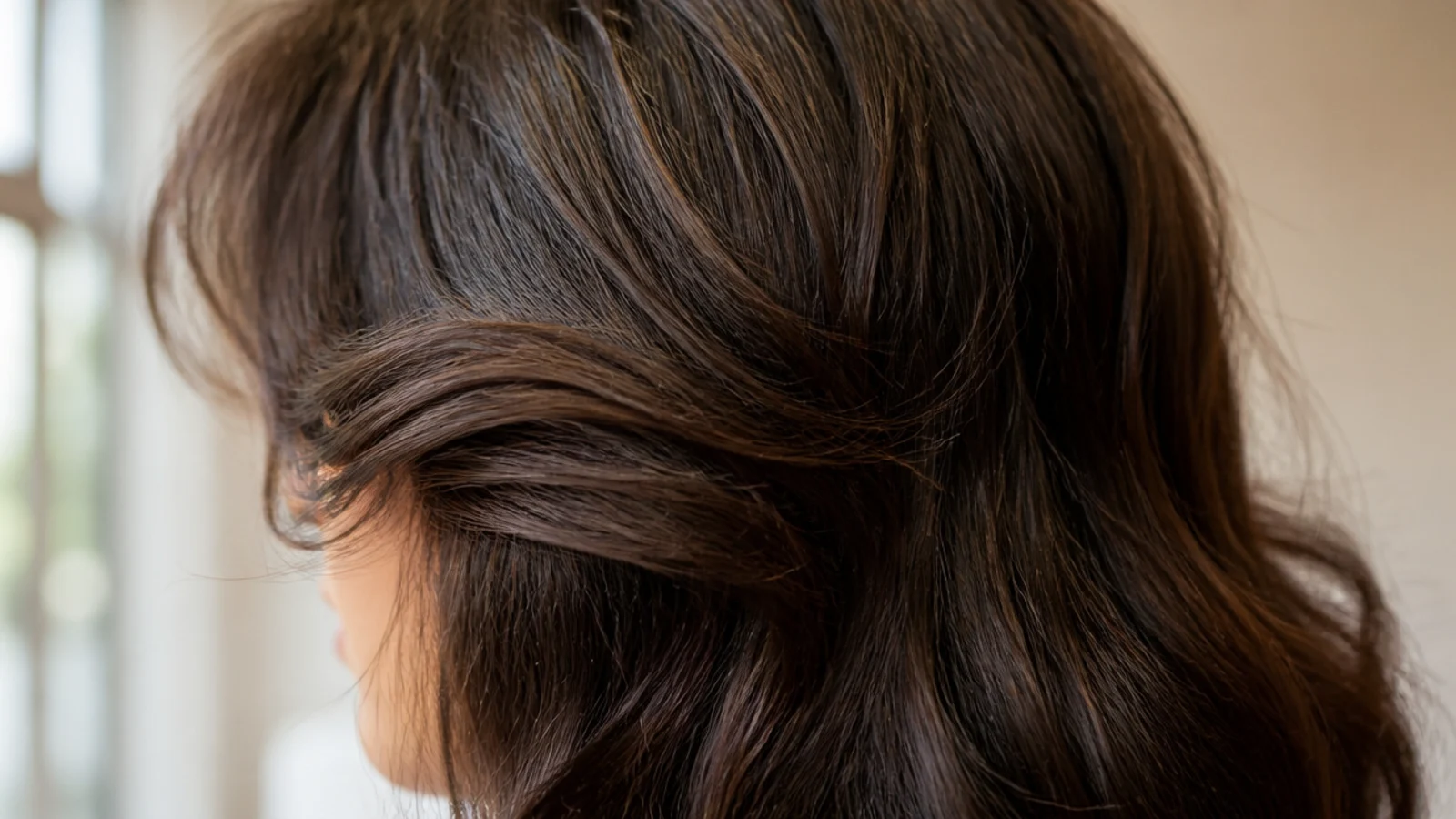
Fifteen minutes, needs collarbone length. Rough-dry to 80 percent with a heat protectant, then use a nozzle and a round brush on just the front two sections, aiming airflow down the shaft so the cuticle lies flat. Curving the curtain pieces away from the face gives a smooth frame that makes the textured hair behind read intentional rather than puffy. Only smooth the front: fully blowing out puffy hair usually creates more volume, not less, because the brush lifts the roots. Styling detail lives in short curtain bangs styling.
Who it suits: Crown puff with a smooth-able front, event days, cool dry weather.
Tip: Finish the front with 10 seconds of cool shot to set the cuticle before you let go of the brush.
Where Is Your Puff? Crown, Triangle or All-Over
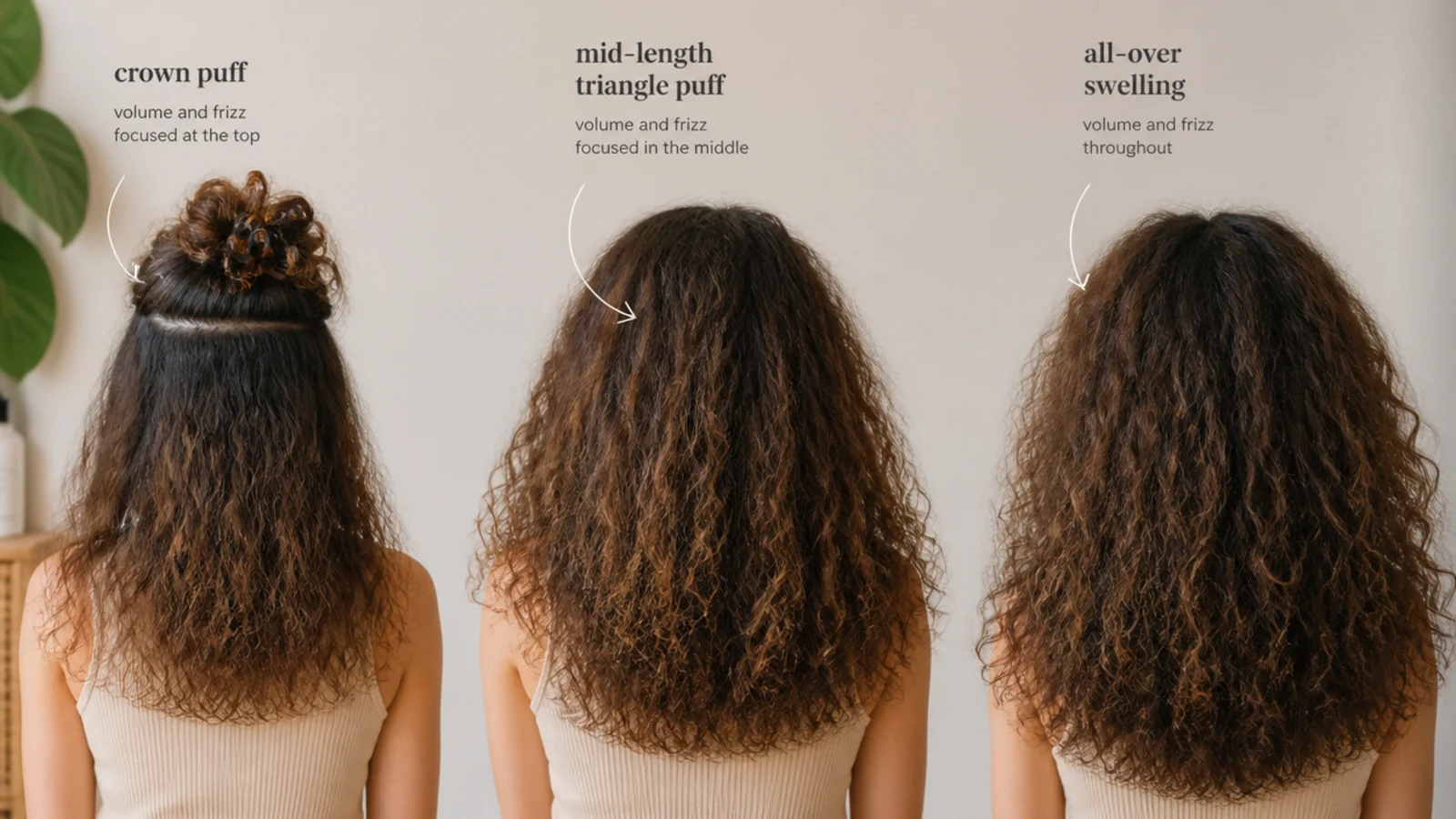
Almost every article about puffy hair skips the question that decides everything: where does the volume actually sit? Look at yourself in profile in a mirror at the end of a normal day. If the width is at the top of the head and short hairs stand up along the part, that is crown or halo puff, and it is usually regrowth and breakage rather than swelling. Cover it with a braid, a scarf or a clipped twist; do not try to press it flat, because tension is what created it. If your hair is narrow at the temples and widens to its broadest point at the jaw or shoulder, that is triangle puff, and it is a cut problem first. Internal layers and weight at the ends fix it. If everything expands together on humid days and settles on dry ones, that is all-over swelling, which is a sealing problem and responds to product and compression styles rather than scissors. Many people have two at once, and the styles above are tagged so you can match them.
Why Puffy Frizzy Hair Frizzes: The Moisture Mechanism
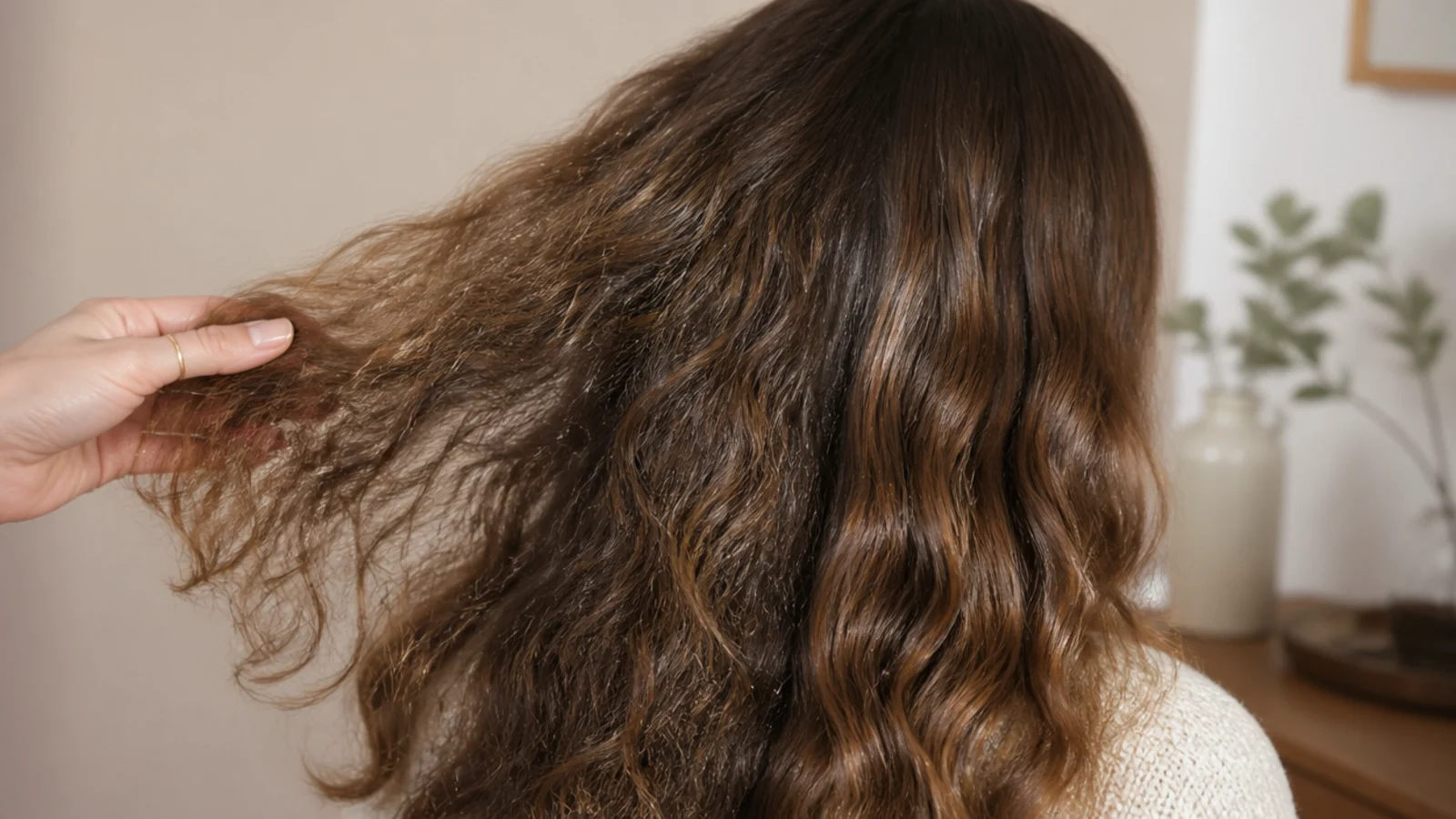
Each strand is wrapped in overlapping cuticle scales, like shingles on a roof. When hair is hydrated and those scales lie flat, strands sit against each other and light bounces off in one direction. When hair is dehydrated, the scales lift, and a lifted cuticle behaves like a sponge: it pulls moisture straight out of the surrounding air. The strand swells unevenly along its length and buckles away from its neighbors, which is what you see as both frizz and puff. That is why blow-drying harder and brushing more make it worse; both roughen the cuticle further. The instruction that follows from the mechanism is simple and it is the opposite of fighting it: hydrate the inside so the strand is not thirsty, then seal the outside so ambient moisture cannot get in. Everything else, from the towel you use to the pillowcase you sleep on, is a variation on protecting that seal. The full causes breakdown is in frizzy hair.
The Wash-Day Routine That Makes These Styles Hold
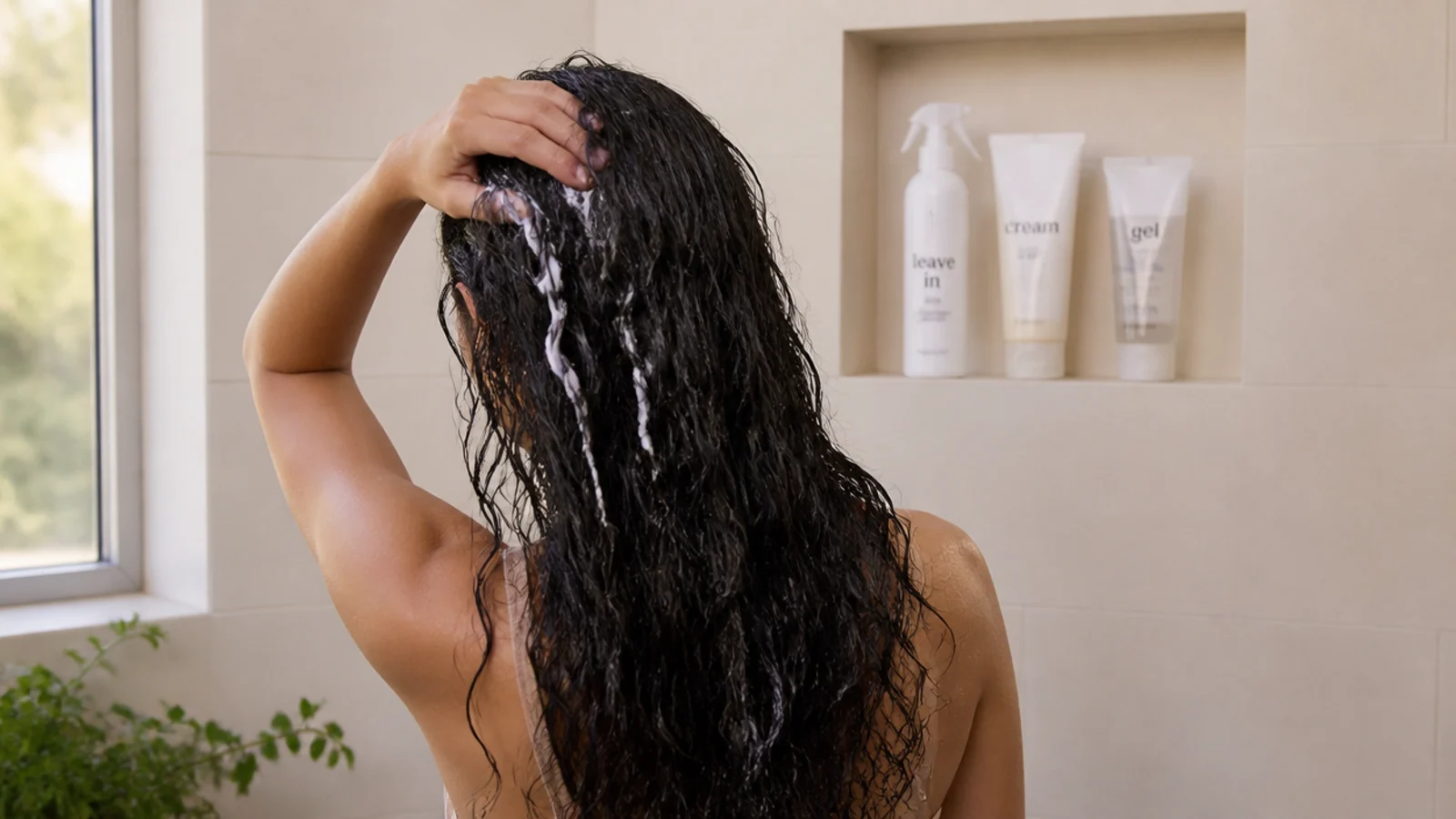
None of the 15 styles hold on badly prepped hair. Wash two to three times a week with a sulfate-free cleanser, focusing the shampoo on the scalp and letting the runoff clean the lengths. Condition the mid-lengths and ends every wash and detangle in the shower with a wide-tooth comb while the conditioner is still in, because that is the only moment strands are slippery enough to separate without tearing. Rinse cool. Then the single most important instruction on this page: apply your stylers to soaking wet hair, not damp hair. Water is the distribution vehicle, and product spread through a full head of water coats every strand evenly instead of sitting in patches. Squeeze out excess with a microfiber towel or a cotton t-shirt, never terry, which snags the cuticle and manufactures the halo. Deep condition once a week; the options are compared in hair mask for frizzy hair.
Leave-In, Cream, Gel: What Each Product Does to Puff
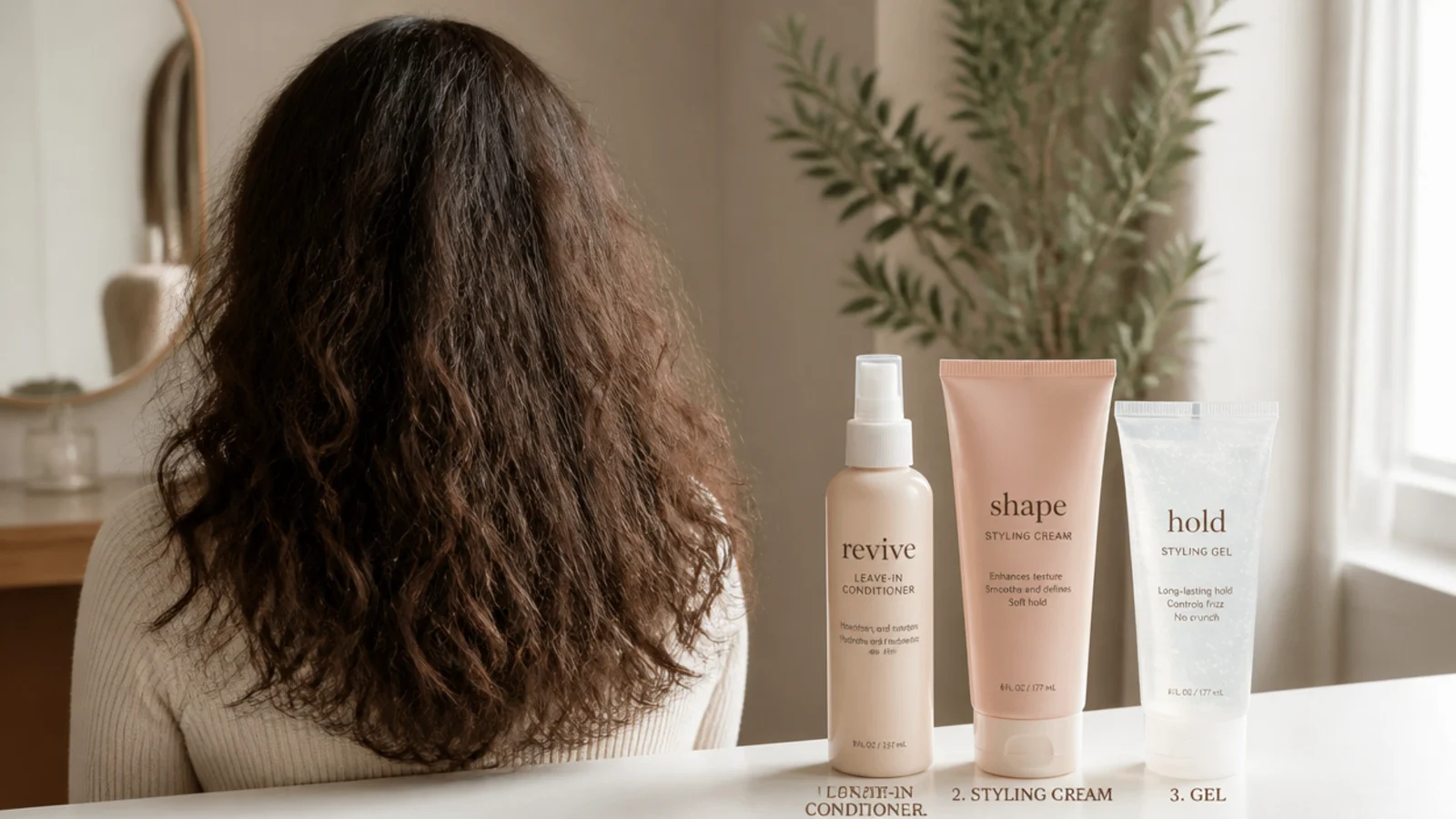
Layer in that order, and understand what each one is for. Leave-in hydrates: it is water-based and it fills the strand so it stops drinking from the air. Use roughly a quarter-size amount for shoulder length and a half-dollar for waist length. Styling cream defines and weighs: it adds slip and a little weight so strands clump together instead of separating into a haze, which is exactly what shrinks a triangle. It goes on second while the leave-in is still wet. Gel seals: it forms a hard cast over everything underneath, and that cast is what holds a style for ten hours instead of four. It goes on last and it must go on wet or it flakes. When the hair is fully dry, scrunch the cast out with one drop of lightweight oil and the hold stays while the crunch vanishes. Skipping gel is the number one reason hair that looked contained at 8am has puffed by lunch. Curl-specific layering is in frizzy curly hair.
Cuts and Layers That Hide Puff vs Cuts That Cause It
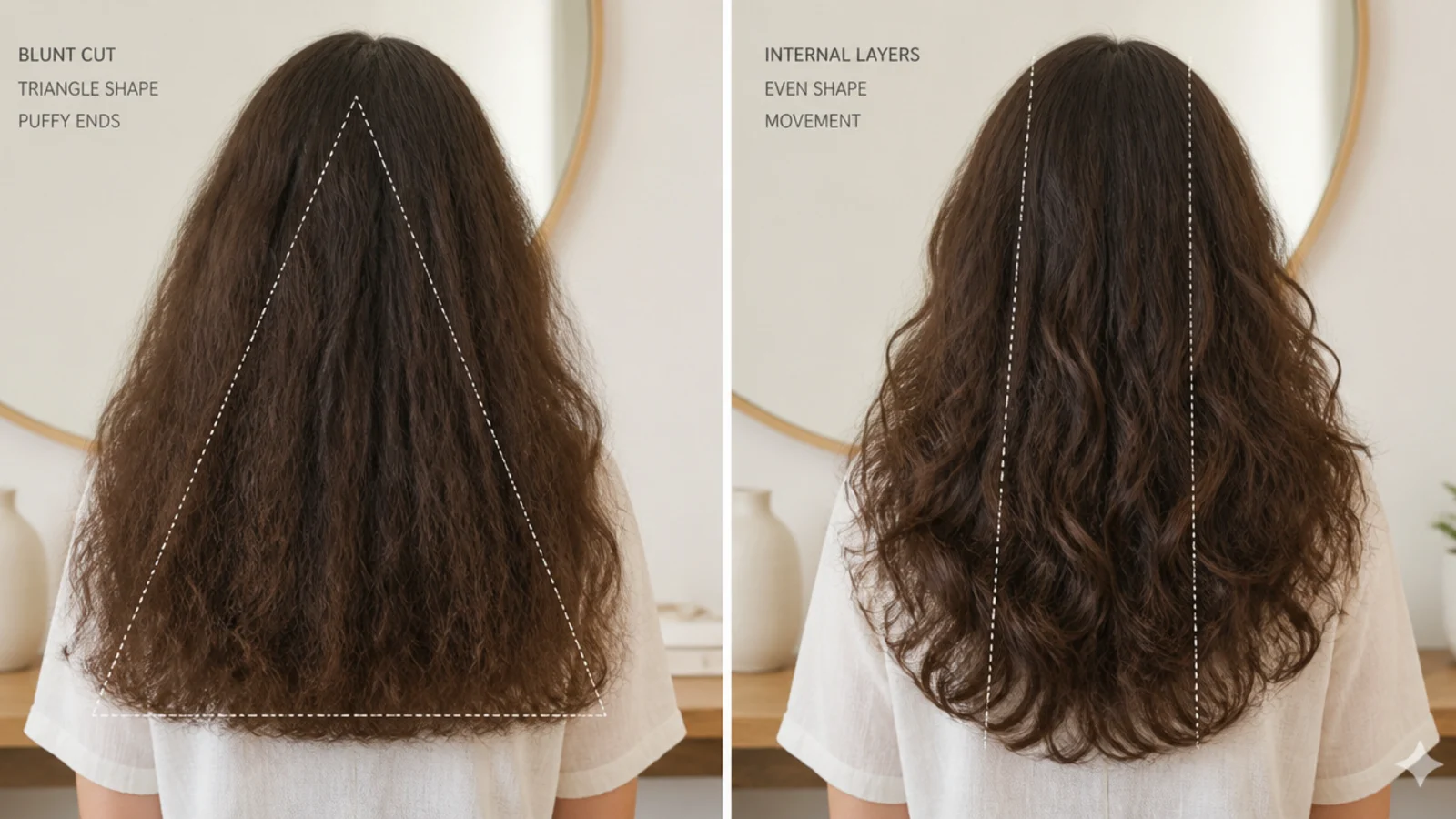
The cut decides how much work the styles have to do. Blunt heavy ends look sleek in the salon chair and then read frizzier in daily life, because a hard perimeter makes every escaping hair obvious against it, and the mass below drags the mid-lengths outward into a triangle. Internal layers do the opposite: they remove bulk from inside the shape without shortening the outline, so volume redistributes instead of stacking. Ask for internal debulking or invisible layering, and specifically ask your stylist not to use thinning shears near the crown, because the blunt short pieces they leave behind stand straight up and become halo frizz within a few weeks. Long face-framing layers give braids and half-ups something soft to fall against. A shoulder-length shape with soft internal layers is the most style-friendly cut here; mid length haircut layers covers what to ask for and mid length haircut styling covers the daily work.
Humidity, Sleep and the Tension Habit That Grows Your Puff
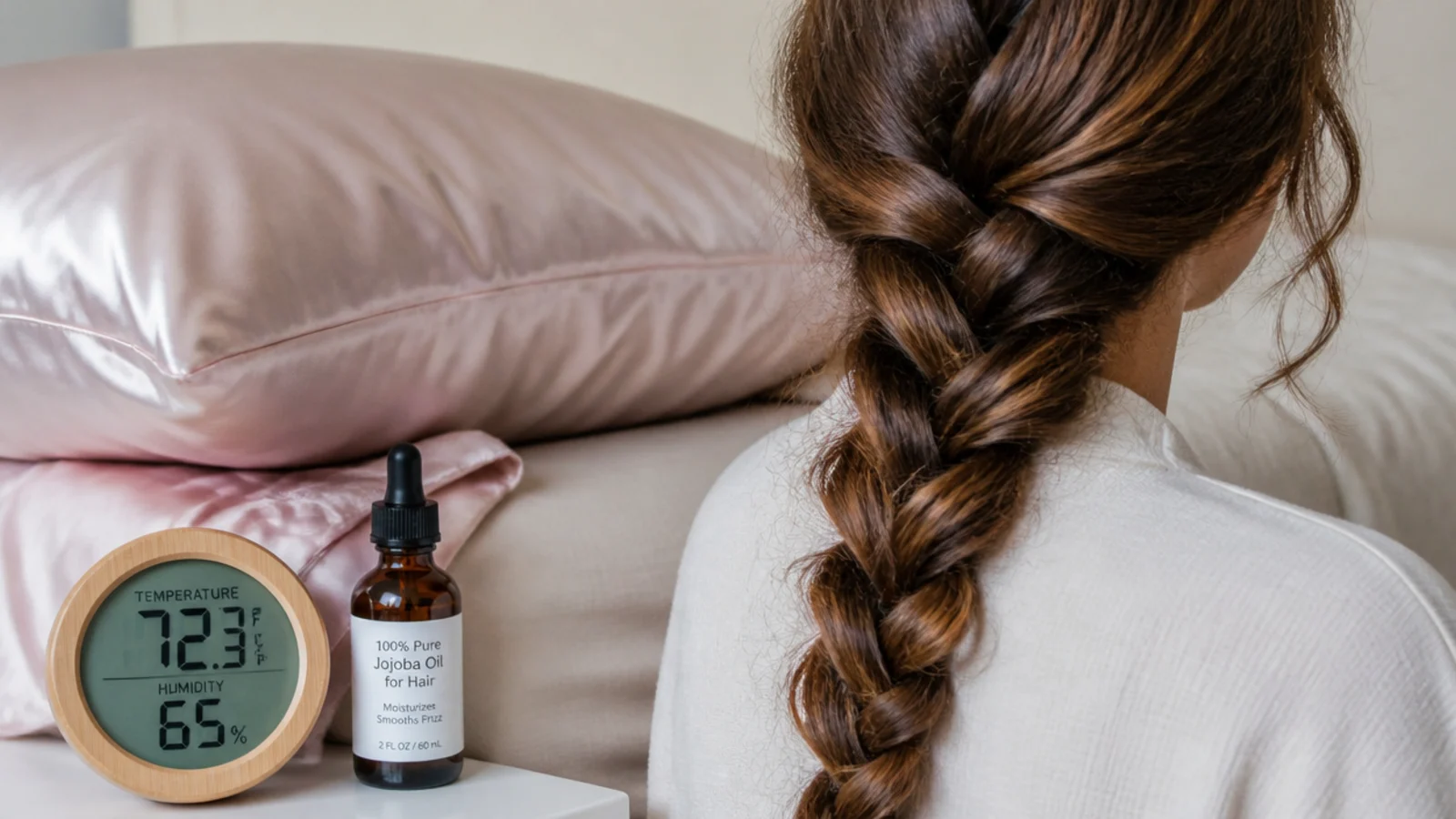
Humidity is not the same as heat. The number that predicts your hair day is dew point, the temperature at which air is saturated. Below about 40 degrees Fahrenheit the air is dry and pulling water out of your hair, so lead with cream and a drop of oil and go light on humectants. Between 40 and 60 is the comfortable middle where most routines behave. Above 60 the air is pushing water into the strand, so cut back on glycerin-heavy leave-ins, seal harder with gel, and pick a compressing style from the table above. At night, sleep on silk or satin, or in one loose braid, because eight hours of friction against cotton undoes a full styling session. And the habit almost nobody warns about: tight slick ponytails and scraped-back buns worn daily put sustained tension on the hairline, which breaks short hairs along the part and steadily grows the crown halo you are styling around. Alternate low, loose placements through the week. More daily habits are covered in hairstyles for frizzy hair.
Frequently Asked Questions
What hairstyle is best for puffy frizzy hair?
It depends where the puff sits. For all-over swelling on a humid day, the French twist or a low nape chignon compresses the whole mass and holds eight to ten hours. For crown or halo puff, cover the zone with a Dutch braid crown, a silk scarf headband or a claw clip twist. For a mid-length triangle, take the top third up so the widest point loses its surface layer, and get internal layers cut.
How do I make my puffy hair less puffy?
Hydrate and seal rather than smooth. Apply leave-in, then cream, then gel to soaking wet hair, dry without touching it, and scrunch the cast out with one drop of oil once fully dry. Then add weight or containment: internal layers to remove bulk, or a low contained style. Stop brushing dry hair and stop blow-drying it flat, since both lift the cuticle and add volume back.
Why is my hair so puffy and frizzy?
Because the cuticle is lifted and dry hair pulls moisture out of the air, swelling unevenly and pushing strands apart. Three things usually drive it: dehydration from hot water, sulfates or heat, mechanical roughening from dry brushing and terry towels, and a cut with heavy blunt ends that flares. Humidity is the trigger, but a sealed, hydrated strand barely reacts to it.
Will a shorter haircut make my puffy frizzy hair worse?
Sometimes. Cutting length removes weight, and weight is one of the few things holding puffy hair down, so a short layered cut on dense hair can expand outward. A blunt chin-length bob usually behaves because the perimeter is heavy. The safe route is to keep the outline and remove bulk from inside with internal debulking, and to avoid thinning shears near the crown entirely.
How do I stop my bun or ponytail from puffing up by lunchtime?
Two changes. First, style over hair that already carries a gel cast, since the cast is what keeps the cuticle down all afternoon. Second, stop tightening it. Hair puffs out of a style because swelling strands are pushing outward, and pulling tighter only stresses the hairline and worsens crown frizz. Re-pin lower and looser, or convert it into a claw clip twist or a rolled tuck.
Why does my hair go triangle-shaped at the bottom?
That is bulk with nowhere to go. The mid-lengths and ends carry the most density, and when the cut has no internal layering, that density spreads sideways at the widest point instead of falling. Blunt ends make it more obvious. Ask for internal debulking through the interior, long face-framing layers, and a soft rather than razor-sharp perimeter, and use a cream to encourage the ends to clump.
Can straight hair be puffy and frizzy?
Yes, and it is common on coarse, dense straight hair. Straight strands with a raised cuticle absorb ambient moisture exactly like wavy hair does; they just show it as a standing halo and widening bulk rather than broken curl clumps. The fix is the same: leave-in on soaking wet hair, a light cream or serum to seal, a microfiber towel instead of terry, and no dry brushing.
Does puffy frizzy hair mean my hair is damaged?
Not necessarily. Puff and frizz are moisture and cuticle-position issues, and healthy coarse or curly hair puffs simply because it is dry or the air is humid. Damage is a separate diagnosis: split ends, mushy stretchiness when wet and mid-shaft breakage. Frizz confined to the ends is usually wear, and a trim fixes it. All-over expansion is nearly always dehydration plus a lifted cuticle.
How often should I wash puffy frizzy hair?
Two to three times a week suits most people. Daily washing strips the natural oils keeping the cuticle flat, while washing very rarely leaves buildup that blocks product from absorbing. Use lukewarm rather than hot water, condition mid-lengths and ends every wash, rinse cool, and refresh between washes with a water mist and a little leave-in instead of a full wash and restyle.
Which frizzy hair look are you saving?
If you take one thing from these 15 hairstyles for puffy frizzy hair, make it the diagnosis. Crown puff is short regrowth standing up, so cover it with a braid, a scarf or a clipped twist rather than trying to smooth it flat. Triangle puff is a cut problem before it is a styling problem, so ask for internal debulking and add weight at the ends. All-over swelling is a seal problem, so put gel on soaking wet hair and let the cast dry hard before you scrunch it out. Then pick a compressing style for humid days and a redistributing one for dry ones. Save the looks that match your length, and browse the rest of the frizzy hair board for the routine underneath them.