Quick Comparison
| Traction Alopecia | Frontal Fibrosing Alopecia | |
|---|---|---|
| What causes it | Repeated mechanical pulling from tight styles, braids, weaves and extensions | An inflammatory, scarring condition; the cause is not fully understood |
| Typical age | Any age, including children in tight styles | Most often postmenopausal women, though not exclusively |
| Where it shows | Hairline, temples and edges; wherever the tension sits | A band of recession across the front hairline, often with eyebrow loss |
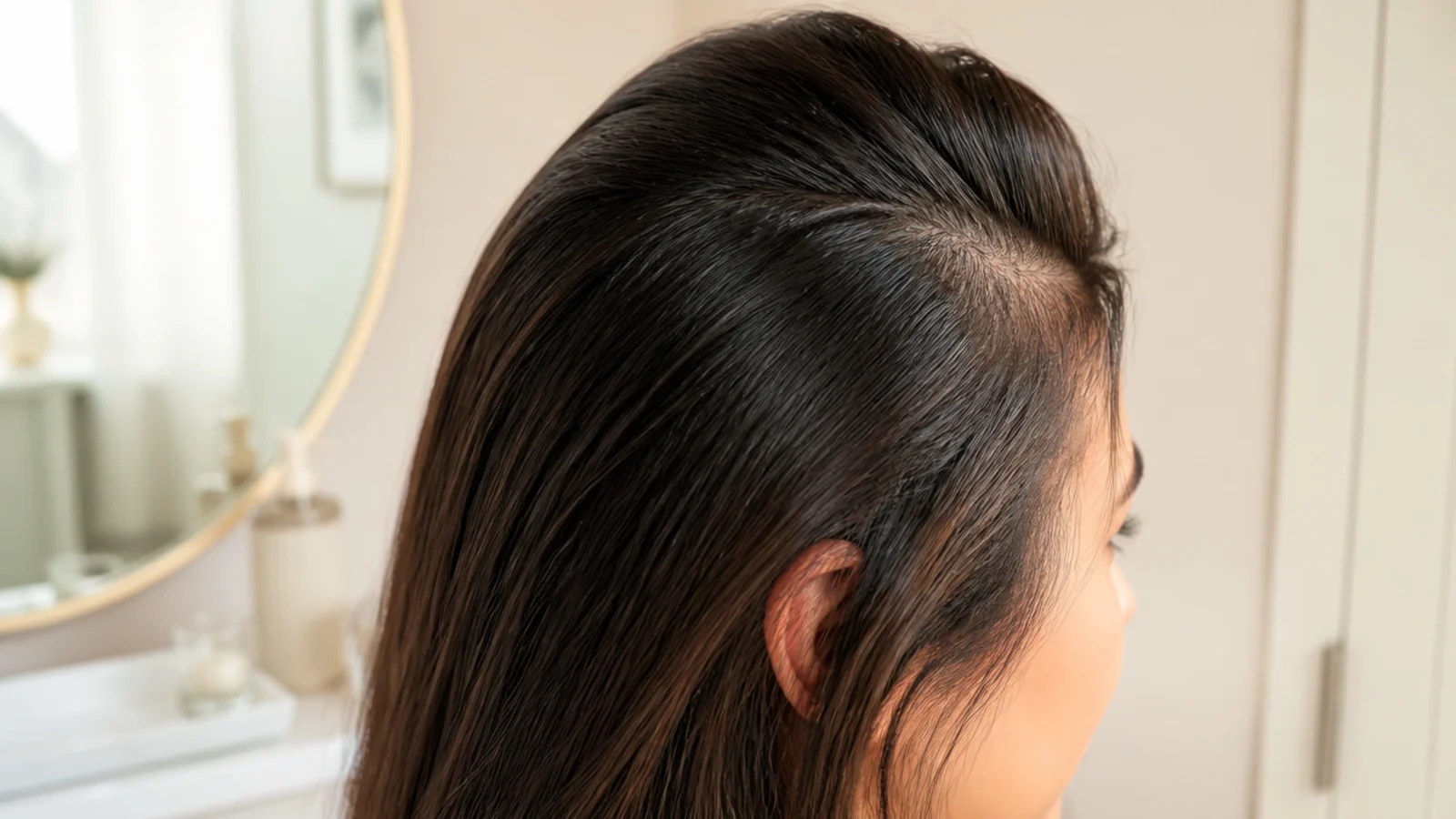
| How the skin looks | Normal skin texture, visible follicle openings, sometimes small bumps | Smooth, shiny, pale skin where follicle openings have disappeared |
| Early warning sign | Scalp soreness, tingling or bumps after styling | Eyebrow thinning that starts before or alongside the hairline change |
| Does it come back | Yes, if caught before scarring; the follicle is still alive | Scarred follicles do not regrow; treatment aims to stop progression |
| First thing to do | Remove all tension immediately and give it months | See a dermatologist promptly; time matters here |
| Do oils help | Marginally; removing the pulling does the real work | No; this needs prescription medical management |
| Who to see | A trichologist or dermatologist if it does not improve in six months | A dermatologist, ideally one who specializes in hair loss |
1. Stop Wearing Tight Slicked-Back Ponytails and Buns
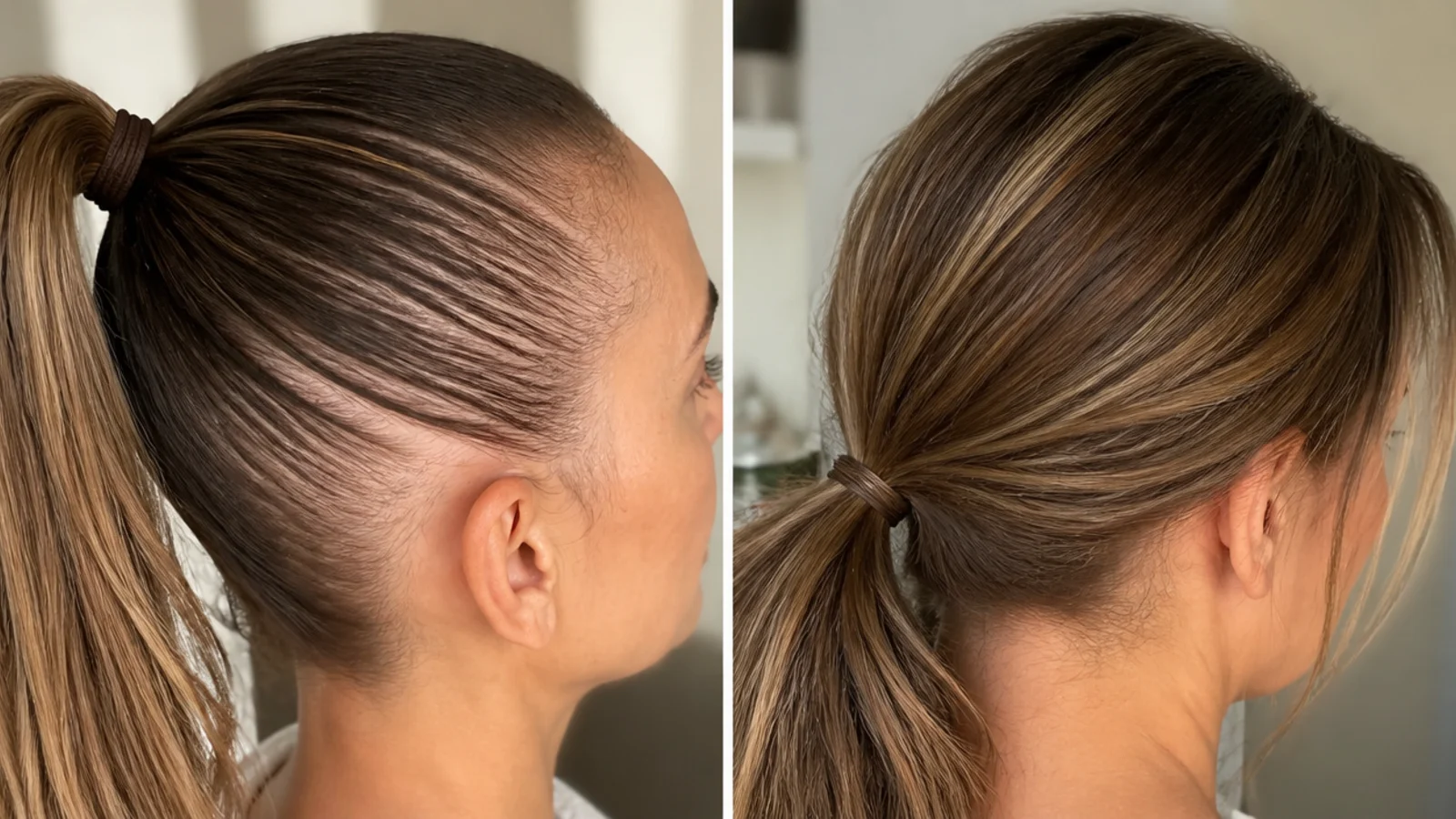
This is the single highest-impact change on the list. A slicked-back ponytail or a tight top bun puts constant traction on the shortest, finest hairs at the front, and those are the ones with the smallest follicles and the least anchorage. If your scalp aches, tingles or feels tender an hour after styling, the style is too tight. Drop to a low ponytail at the nape, leave the front two inches unbrushed and unslicked, and rotate the parting position every few days so the same follicles are not loaded daily. A high messy ponytail done loosely is far kinder than a slick one.
Who it suits: Anyone who wears a slick bun or ponytail more than three days a week.
Tip: If you can see the skin lift at your temples when you turn your head, take it down and redo it looser.
2. Switch Edge Control to a Light-Hold, Alcohol-Free Gel
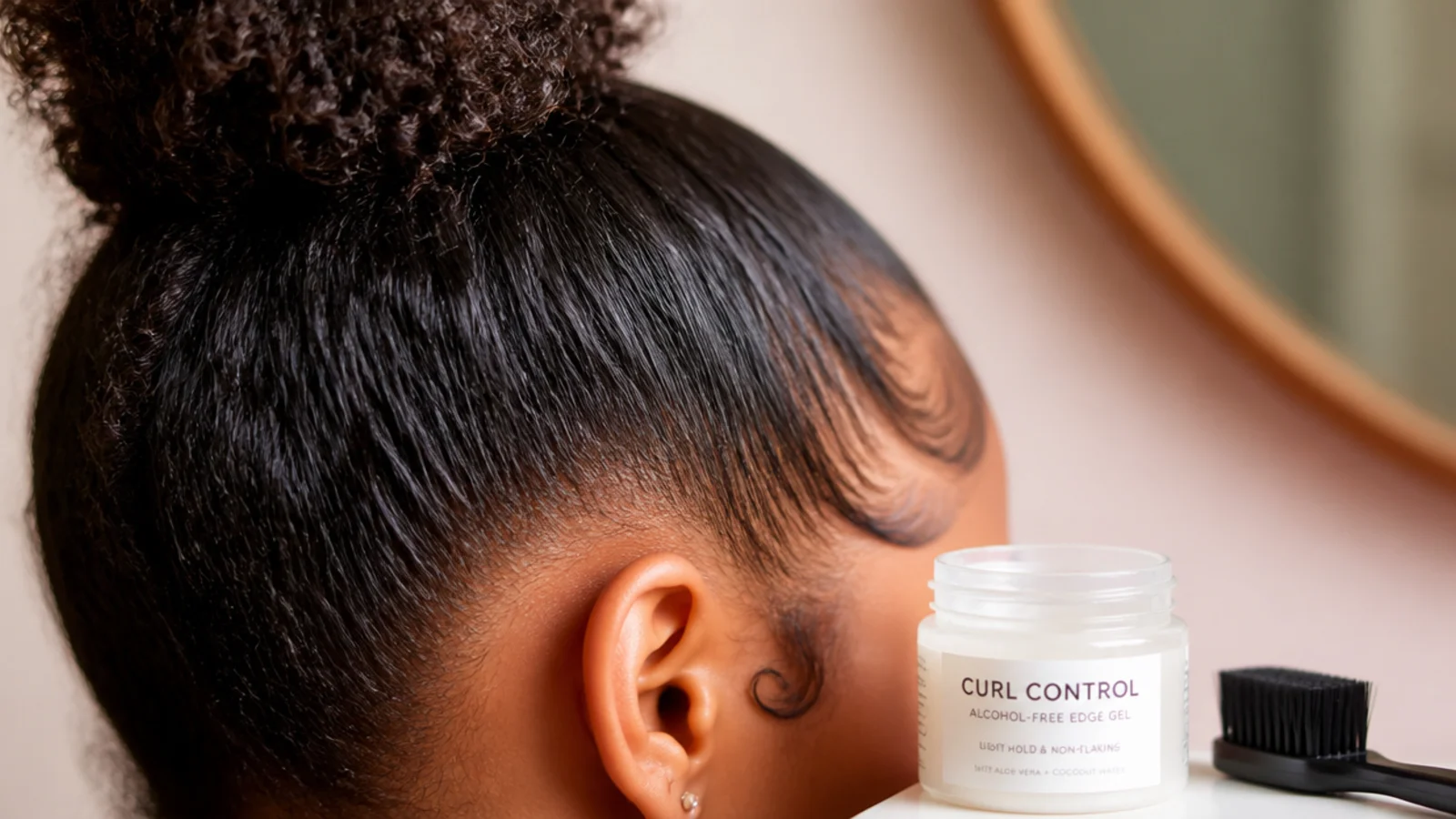
Most damage from edge control is not the product, it is the force used to apply it and the fact that it is rarely washed out. Choose a water-based, alcohol-free formula in the 8 to 15 dollar drugstore band rather than a hard-hold pomade that sets like cement and needs scrubbing to remove. Apply with a fingertip, not pressure, and only on days you actually need it. Laying edges every single morning on the same eighth of an inch of hair is a slow tension habit dressed up as grooming. The same restraint applies to the routines in natural hair growth tips.
Who it suits: Anyone laying edges regularly, especially on coily and relaxed hair.
Tip: Skip edge control three days a week and let the front hairs sit naturally.
3. Massage the Hairline for Four Minutes a Day
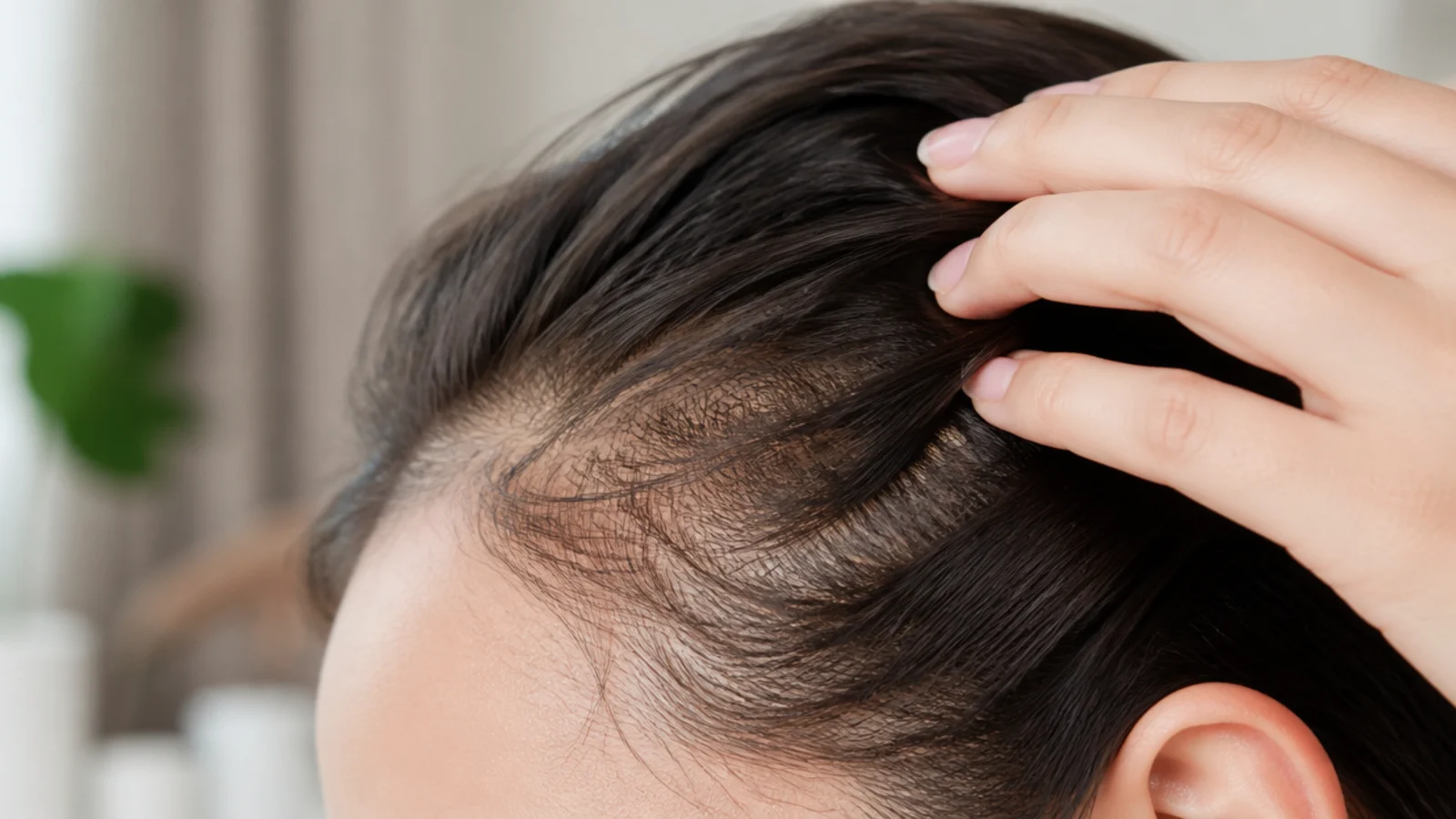
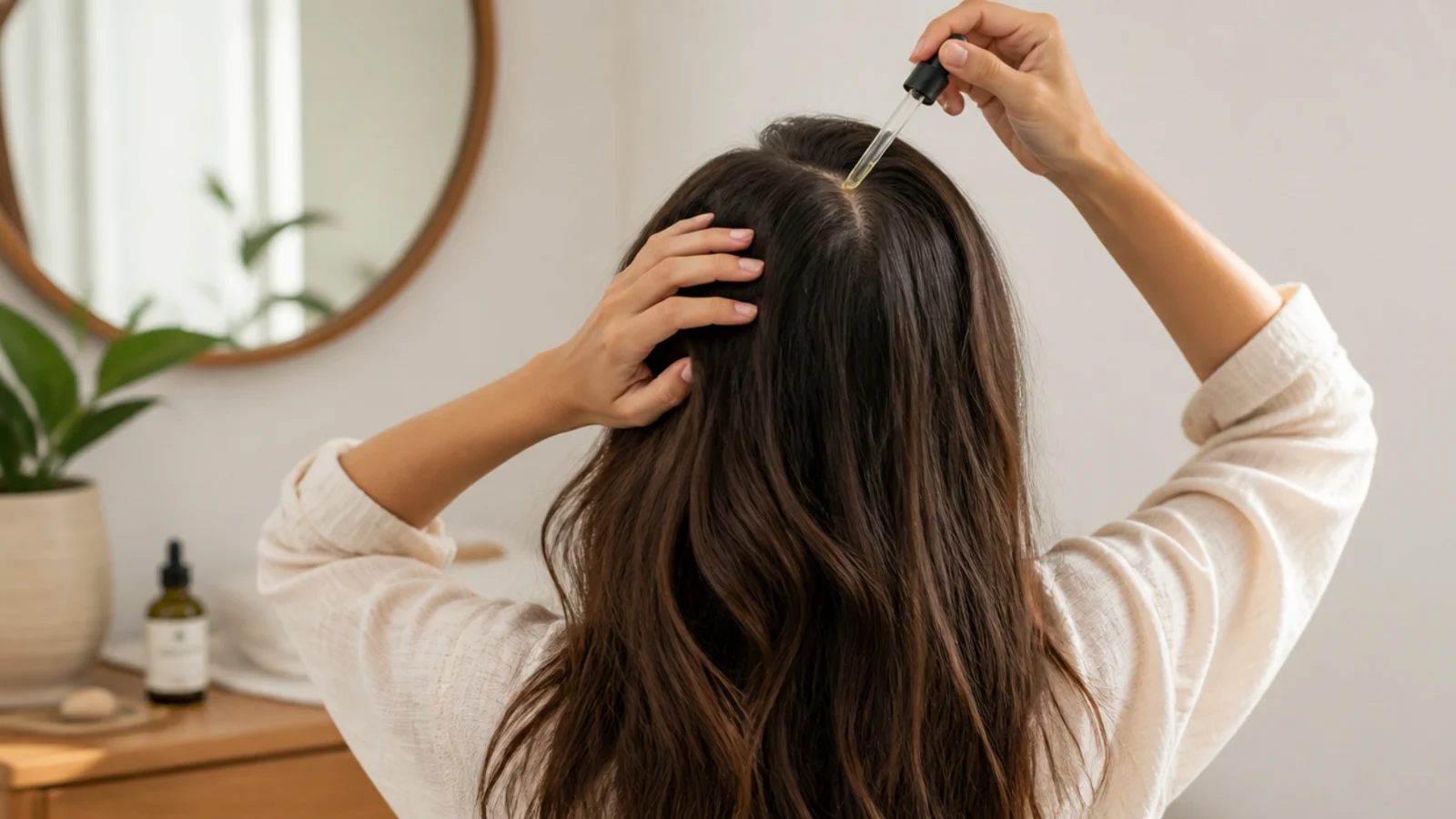
Use the pads of three fingers, no nails, and work in small circles from the center of the forehead out to each temple for about four minutes. Move the scalp over the skull rather than sliding fingers across the hair. Scalp massage is one of the few no-cost habits with a plausible mechanism behind it: it increases local blood flow and mechanically stimulates the dermal papilla. It will not override genetics and it is not a treatment for hair loss, but it costs nothing, it feels good, and it doubles as a nightly reminder to check how your hairline actually looks. It appears on nearly every list in tips for hair growth for good reason.
Who it suits: Everyone; it is the cheapest item on this list.
Tip: Do it on dry hair before bed so you are not tugging wet, swollen strands.
4. Try Rosemary Oil Diluted at 2 Percent on the Hairline
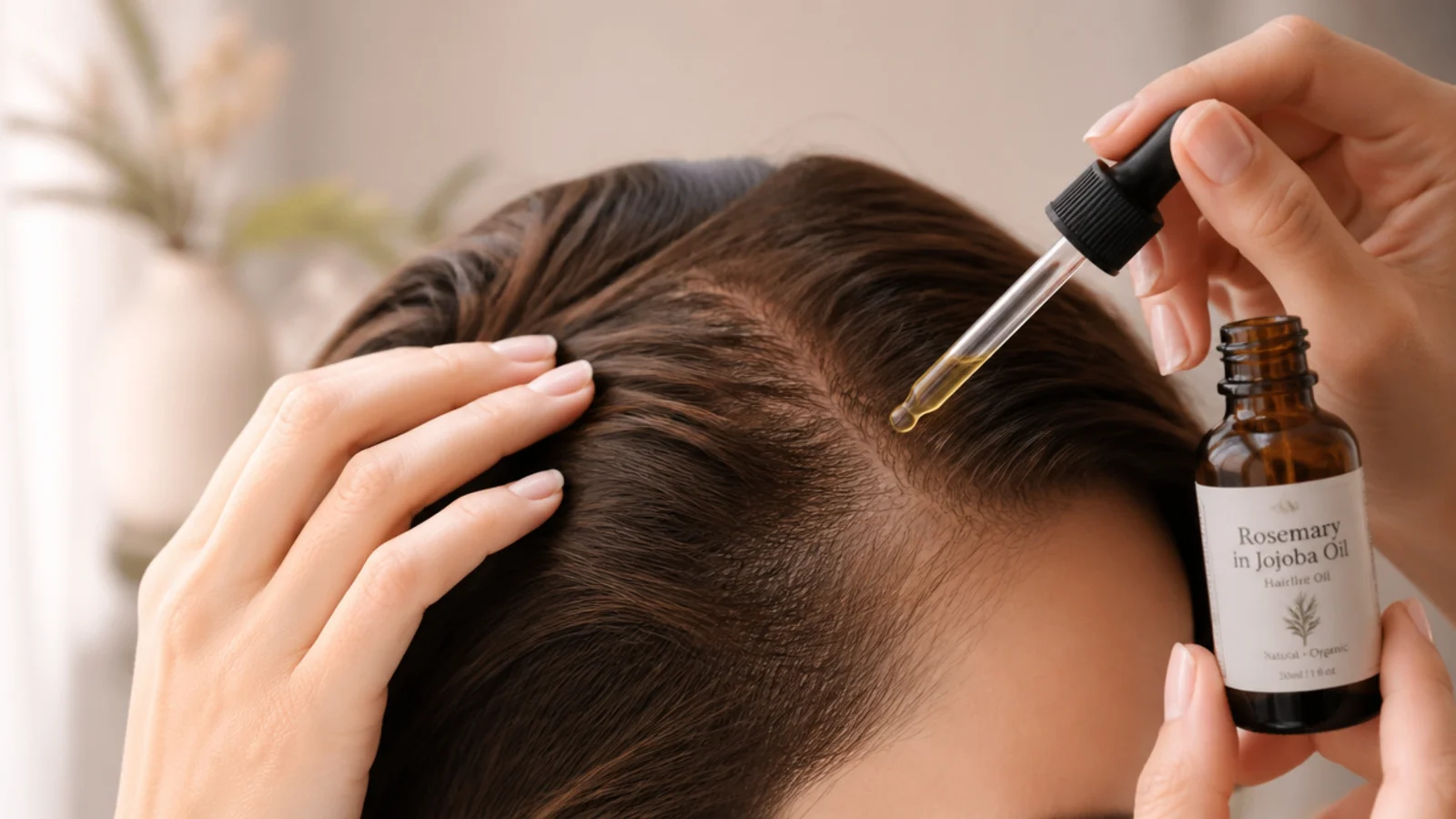
Rosemary essential oil has more research behind it than any other kitchen remedy for hair, including a small trial comparing it against minoxidil. That is a modest evidence base, not proof. Dilute properly: about 12 drops of rosemary essential oil per 30ml of jojoba or grapeseed carrier, which lands near 2 percent. Apply a few drops along the hairline three nights a week, massage in, and wash out on wash day. Undiluted essential oil on the forehead causes contact dermatitis, and an irritated scalp sheds more hair, not less. More on home remedies and their limits in hair growth tips faster at home.
Who it suits: People wanting a natural option with at least some evidence behind it.
Tip: Patch test behind the ear for 24 hours before you put anything new on your hairline.
5. Ask a Doctor About 5 Percent Minoxidil Foam for the Front
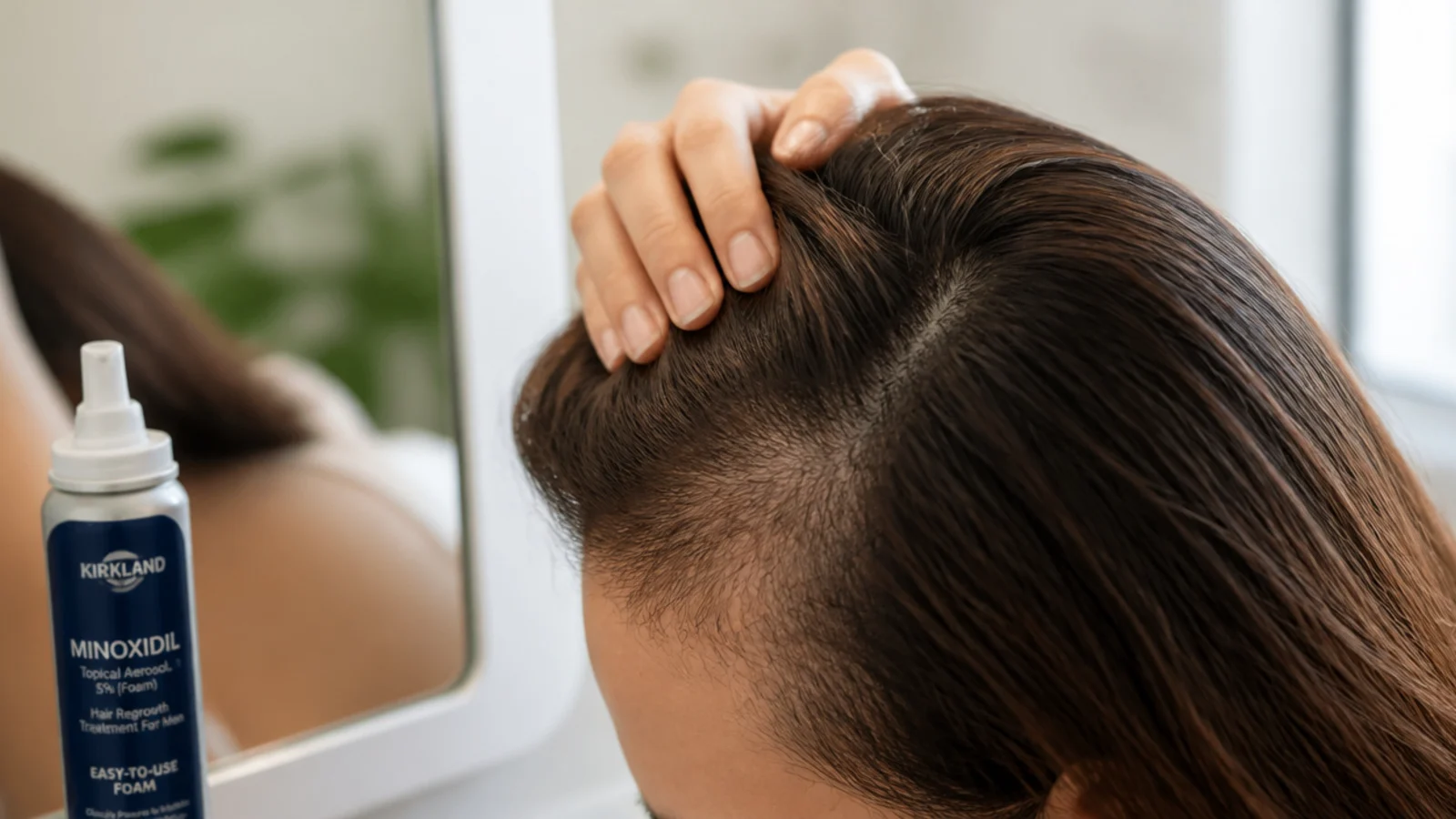
Minoxidil is the only over-the-counter product with strong, repeated evidence for hairline density, and it is what the real question behind most forehead searches is actually asking about. It is a daily, indefinite commitment: stop using it and any gain reverts. It also causes a shedding phase in the first weeks that frightens people into quitting, and it is not appropriate for every cause of hairline loss. Because of all that, this is a conversation with a doctor or dermatologist, not a self-prescription based on a listicle.
Who it suits: Recession that has continued for months despite removing all tension.
Tip: Ask specifically whether your pattern is scarring or non-scarring before starting anything.
6. Take Braids and Weaves Down at 6 to 8 Weeks, Not 12
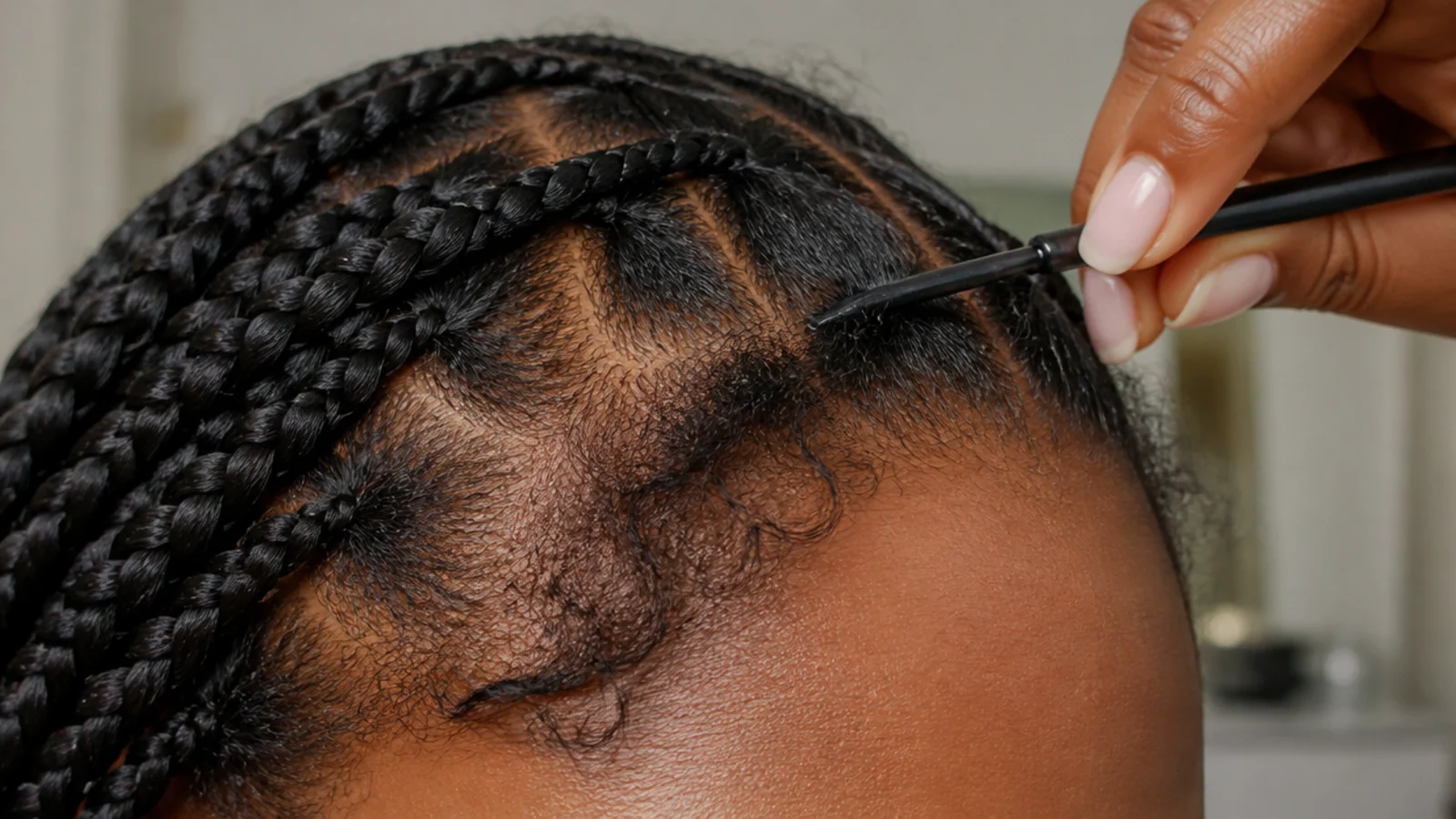
Protective styles genuinely protect hair, but only inside a window. Past about eight weeks the new growth at the root and the tightening base at the perimeter start working against the finest front hairs, and matting at takedown pulls out what tension has already loosened. Book takedown at six to eight weeks, take a one to two week break with the hair loose and moisturized, and never install a new set directly onto a sore scalp. Ask your braider to leave the front row looser and larger than the rest. Style rotation ideas sit in easy mermaid braids.
Who it suits: Anyone in braids, cornrows, weaves or wigs on a rotation.
Tip: If the install hurts on day one, have the front row redone that day, not next month.
7. Sleep on Satin With a Bonnet That Does Not Grip the Forehead
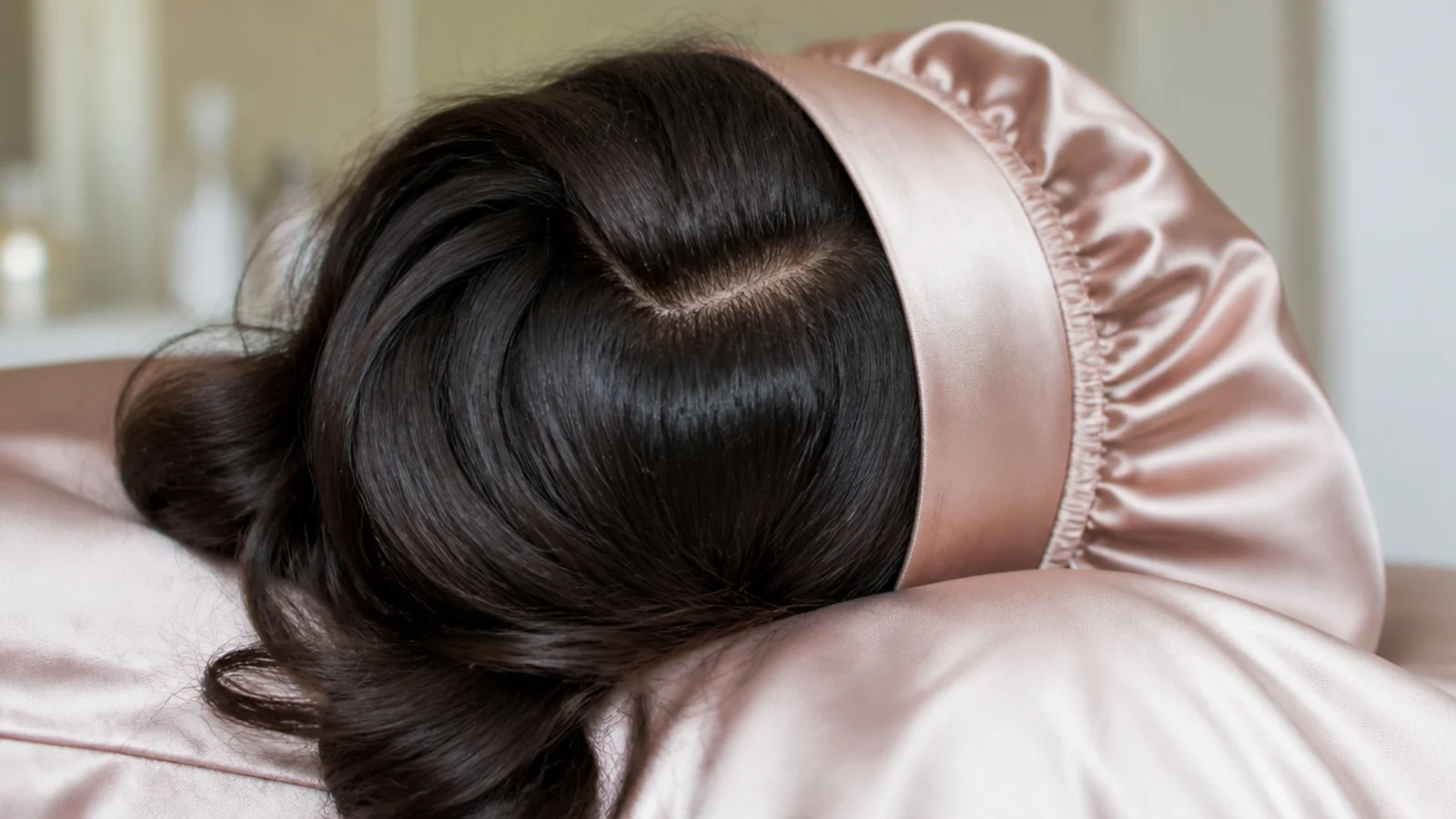
Cotton pillowcases grab and abrade the fine forehead hairs across seven or eight hours of movement, and a satin pillowcase in the 10 to 25 dollar band removes that friction for good. The catch is the bonnet: a tight elastic band sitting right on the hairline is a nightly traction device. Choose a wide, soft, adjustable band, position it above the hairline rather than clamped on it, and replace it when the elastic has gone hard. Satin scarves tied at the front edge cause the same problem when knotted tightly. Satin is also the top overnight habit in 25 genius hair growth tips.
Who it suits: Every hair type, but especially coily, curly and fine hair.
Tip: If you wake with a red groove across your forehead, the band is too tight.
8. Wash the Hairline Twice a Week to Clear Gel Buildup
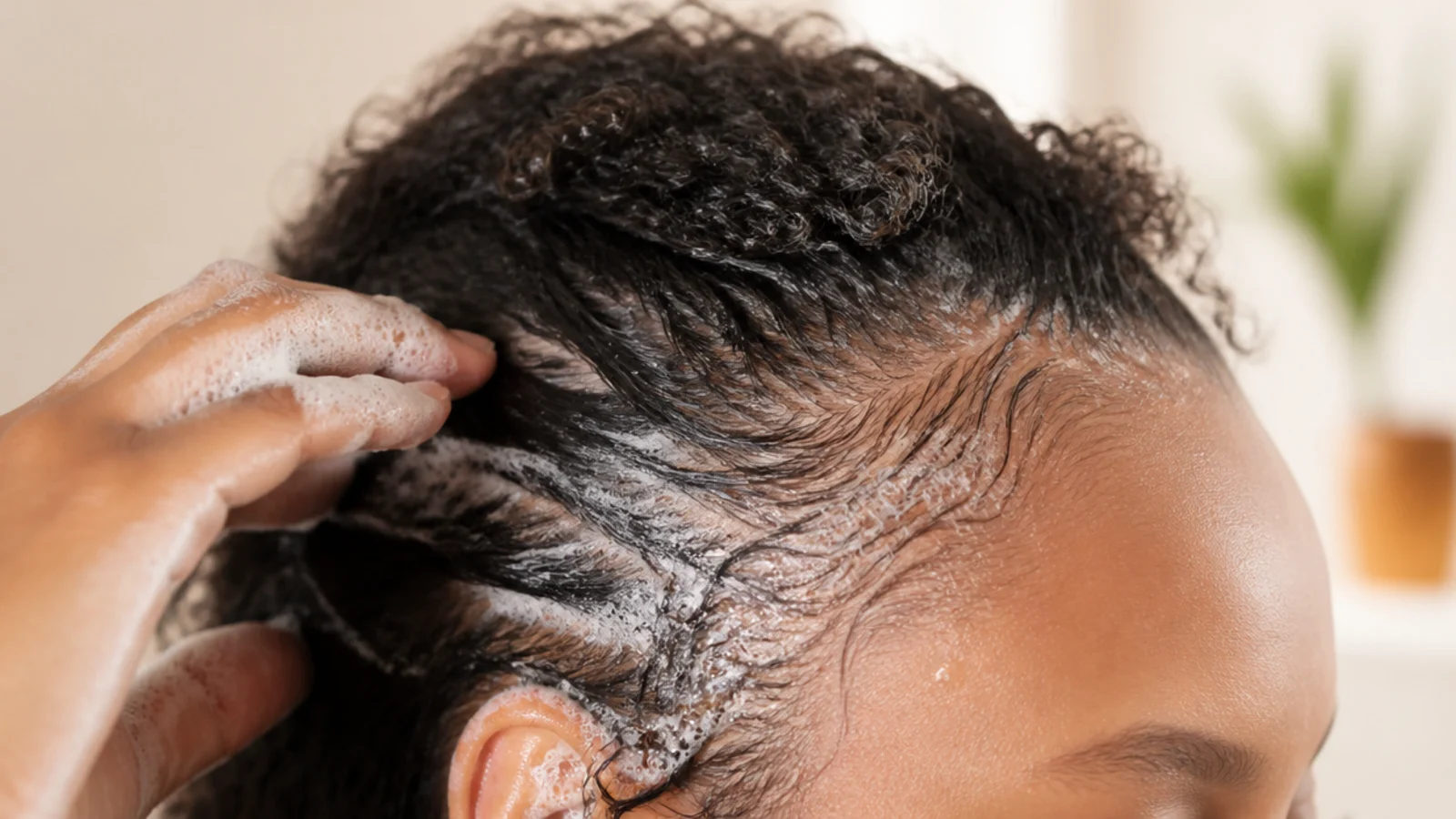
Product sits on the hairline more than anywhere else because that is where gel, edge control, sunscreen and foundation all land. Buildup does not directly stop growth, but it feeds flaking and itch, and scratching an itchy front line breaks hairs and inflames follicles. Cleanse the hairline specifically twice a week with fingertips, and use a clarifying shampoo once or twice a month if you use heavy hold products. Rinse for longer than feels necessary, since residue left at the front is the usual culprit behind persistent white flakes. A calmer scalp also cuts the halo of static breakage covered in how to fix frizzy hair.
Who it suits: Edge control users, gel users and anyone wearing foundation to the hairline.
Tip: Wash the hairline even during a wash-day skip week; it takes 90 seconds at the sink.
9. Get Ferritin and Vitamin D Tested Before Buying Supplements
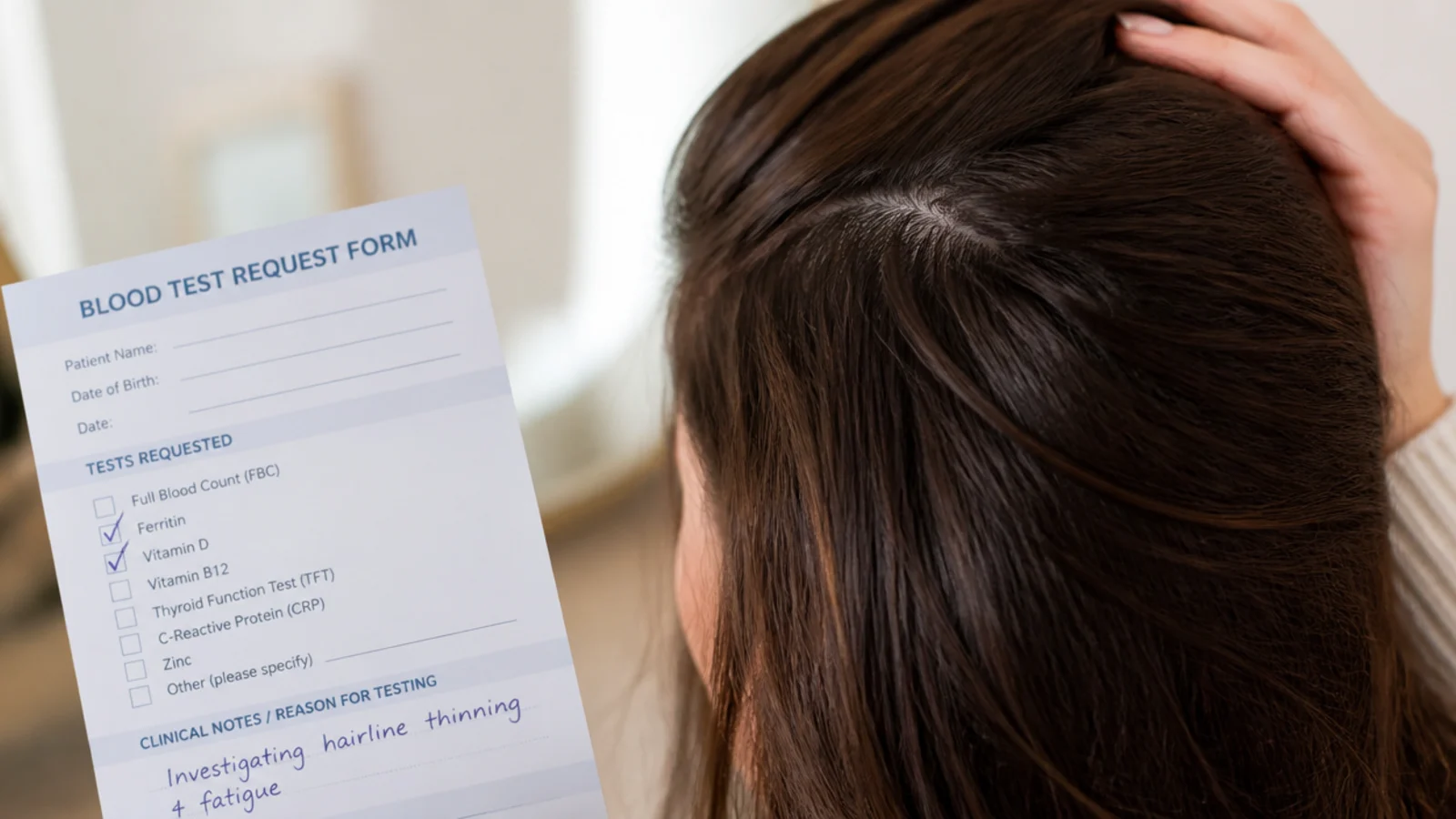
Supplements help when a deficiency exists and do essentially nothing when one does not. Low iron stores measured as ferritin, low vitamin D, low zinc and thyroid problems all show up as diffuse shedding, and the front hairline is where thinning becomes visible first. A blood panel costs less than three months of a subscription gummy and tells you whether there is anything to correct. Biotin in particular is oversold: unless you are genuinely deficient, which is rare, it will not thicken your hairline. The same honest limits apply across hair growth tips faster.
Who it suits: Anyone shedding more than usual, especially with fatigue or heavy periods.
Tip: Tell your doctor you take biotin, because it can distort thyroid blood test results.
10. Swap Bobby Pins and Metal Clips for Snag-Free Spiral Ties
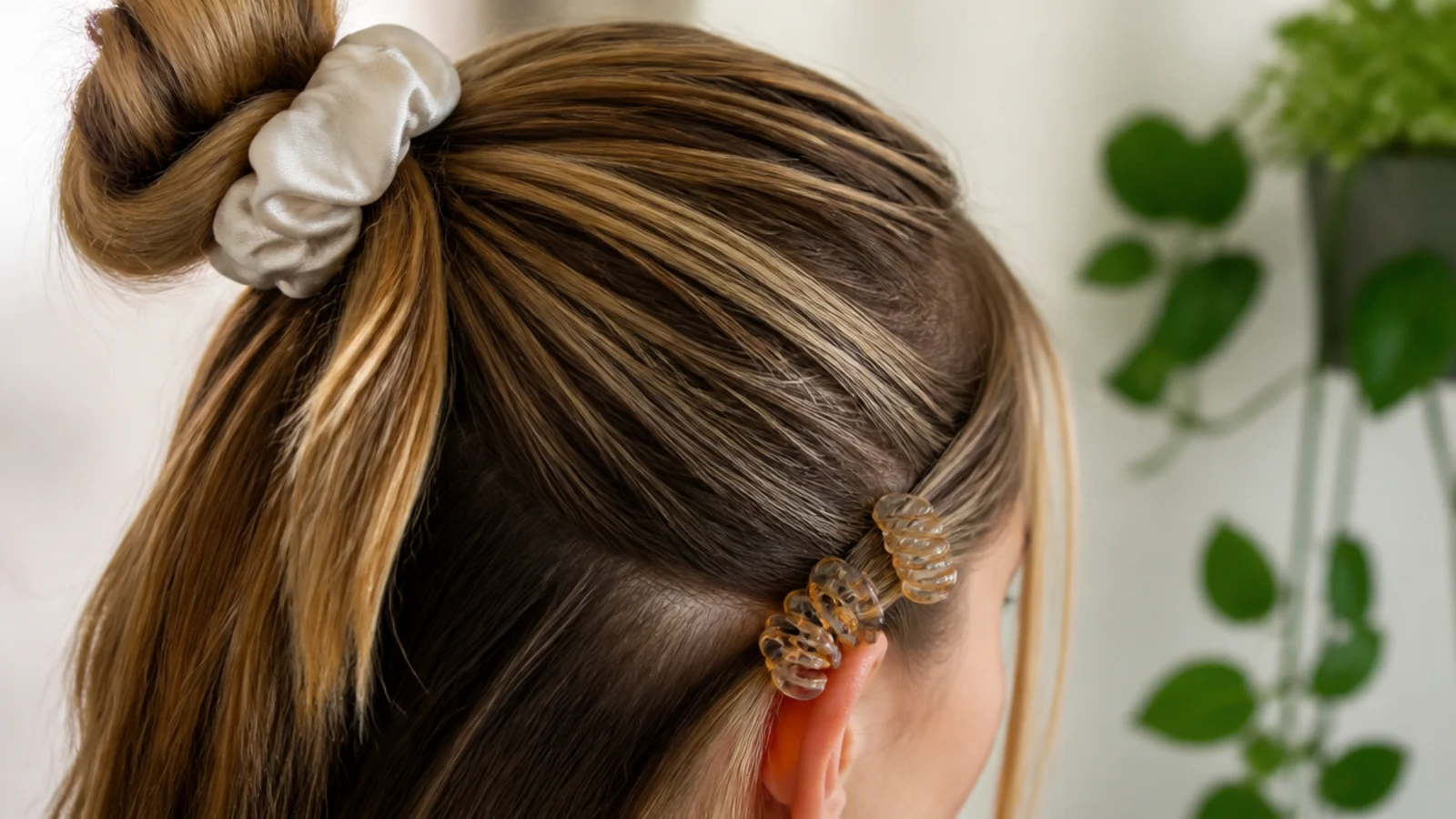
Small hardware does slow, invisible damage right where you least want it. Metal-barred elastics saw through hair at the point of tension, and bobby pins pushed into the same spot above the temple every day snap the exact hairs you are trying to keep. Replace them with spiral coil ties, seamless elastics or silk scrunchies, all of which sit in the 5 to 15 dollar range. If you must pin the front, move the pin position half an inch each day rather than driving it into the same millimeter of scalp. Growing-out fringe strategies are in short curtain bangs for fine hair.
Who it suits: Anyone pinning back a fringe, flyaways or a growing-out front section.
Tip: Throw out any elastic with a visible metal join; it is the worst offender you own.
11. Skip Bleach and Relaxer Along the Front Hairline
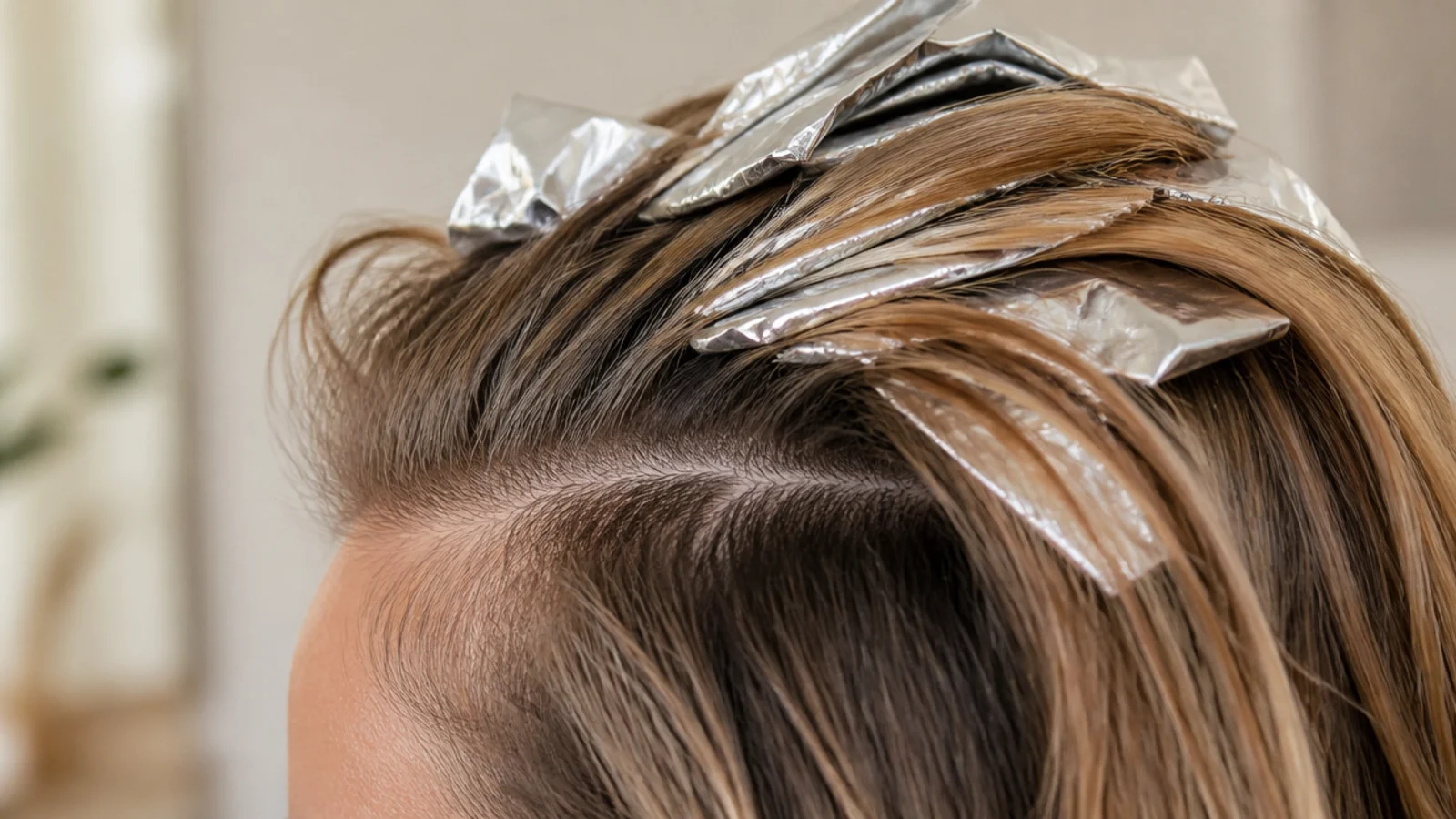
The hairs at the front are the finest on your head, which means chemical processing hits them hardest and fastest. Face-framing money pieces, bleached babylights and relaxer smoothed right up to the edge are all common causes of a hairline that suddenly looks sparse. Ask your colorist to keep bleach a quarter inch back from the hairline and to use a lower developer on the front sections. If you relax, the front should be the last area touched and the first rinsed, never the base to base default. Color-damaged front sections also drive the roughness discussed in frizzy hair routine.
Who it suits: Anyone coloring, bleaching or chemically relaxing their hair.
Tip: Say the words keep the bleach off my baby hairs at the start of the appointment, not the end.
12. Use a Soft Baby Brush Instead of a Toothbrush on Edges
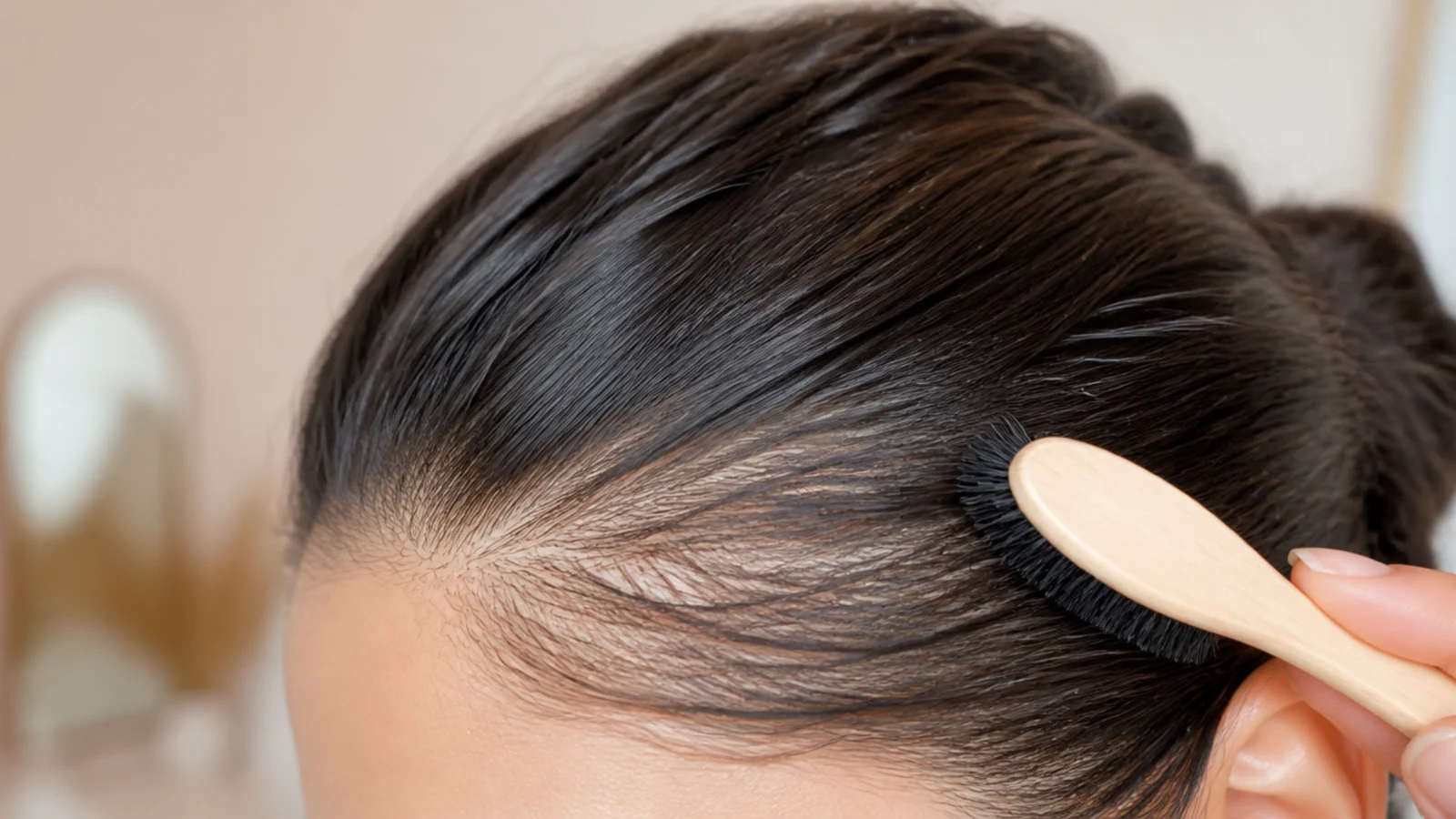
The toothbrush trick for laying edges is popular and it is rough. Nylon bristles designed for enamel are stiff enough to abrade the cuticle of a hair thinner than sewing thread, and the repetitive back and forth motion is exactly the mechanical stress that snaps baby hairs. A soft boar bristle baby brush costs about 6 to 12 dollars, moves product with far less force, and gives the same smoothed shape. Brush in one direction, in short strokes, on damp hair with a little product rather than dry. Gentler handling underpins every entry in hair growth tips for Black women.
Who it suits: Anyone styling baby hairs or laying edges regularly.
Tip: If bristles are stiff enough to scratch your inner wrist, they are too stiff for your hairline.
13. Give Postpartum Hairline Shedding a Full 12 Months
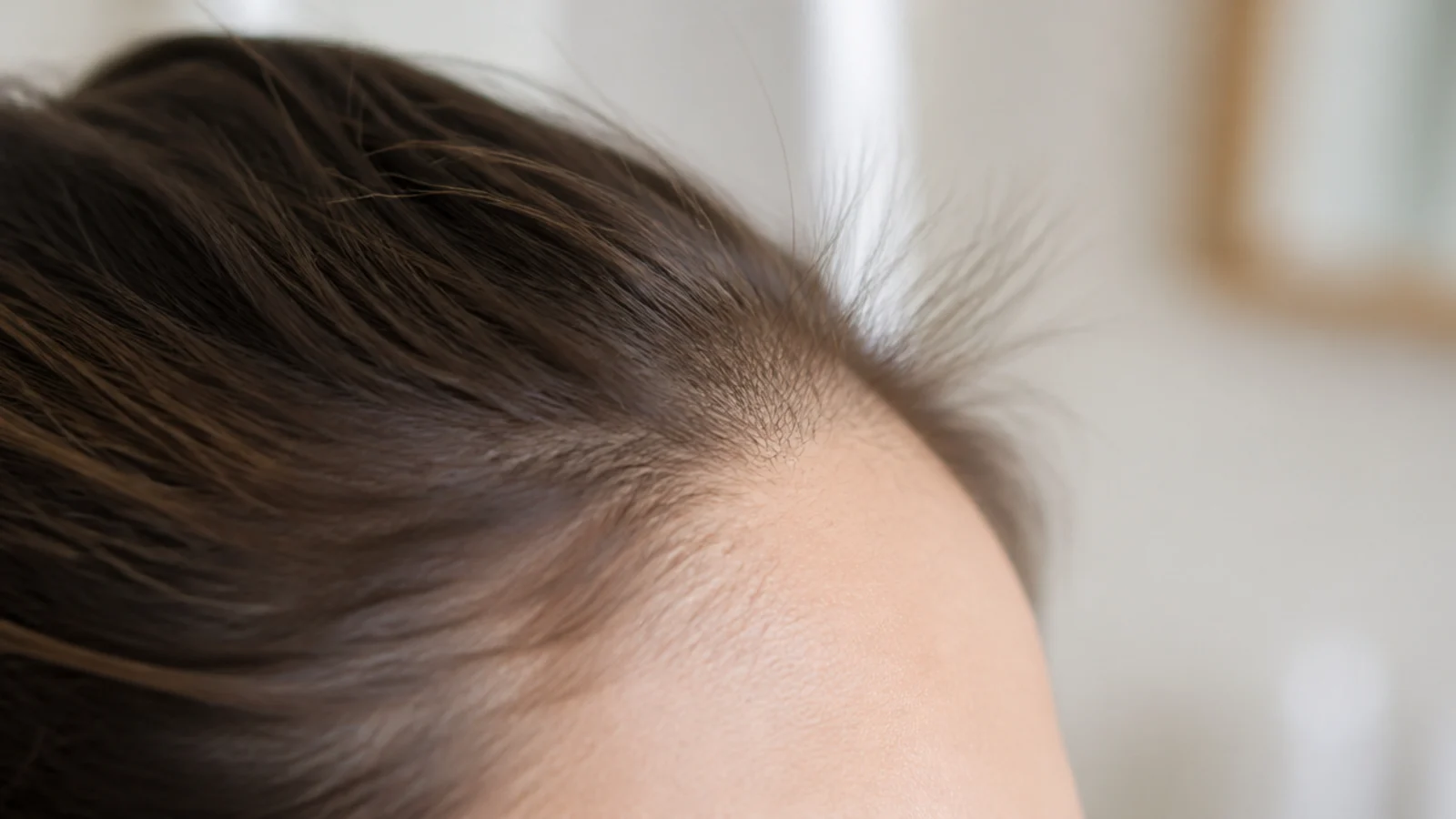
Postpartum shedding concentrates at the temples and forehead, and it frightens people into aggressive treatment at the exact moment nothing is needed. Hormone levels drop after birth, a large group of hairs that were held in the growing phase all shed together, and the regrowth arrives as a halo of short spiky hairs at the front. It typically peaks a few months after delivery and resolves over the following year. Support it with gentle handling, low tension styles and a good diet, and let time do the work. A low messy ponytail keeps the regrowth halo out of your face without pulling.
Who it suits: New mothers seeing sudden temple and hairline thinning.
Tip: Photograph the halo of short regrowth hairs; seeing it fills the anxiety gap better than any product.
14. Keep Flat Irons Off the Front Two Inches
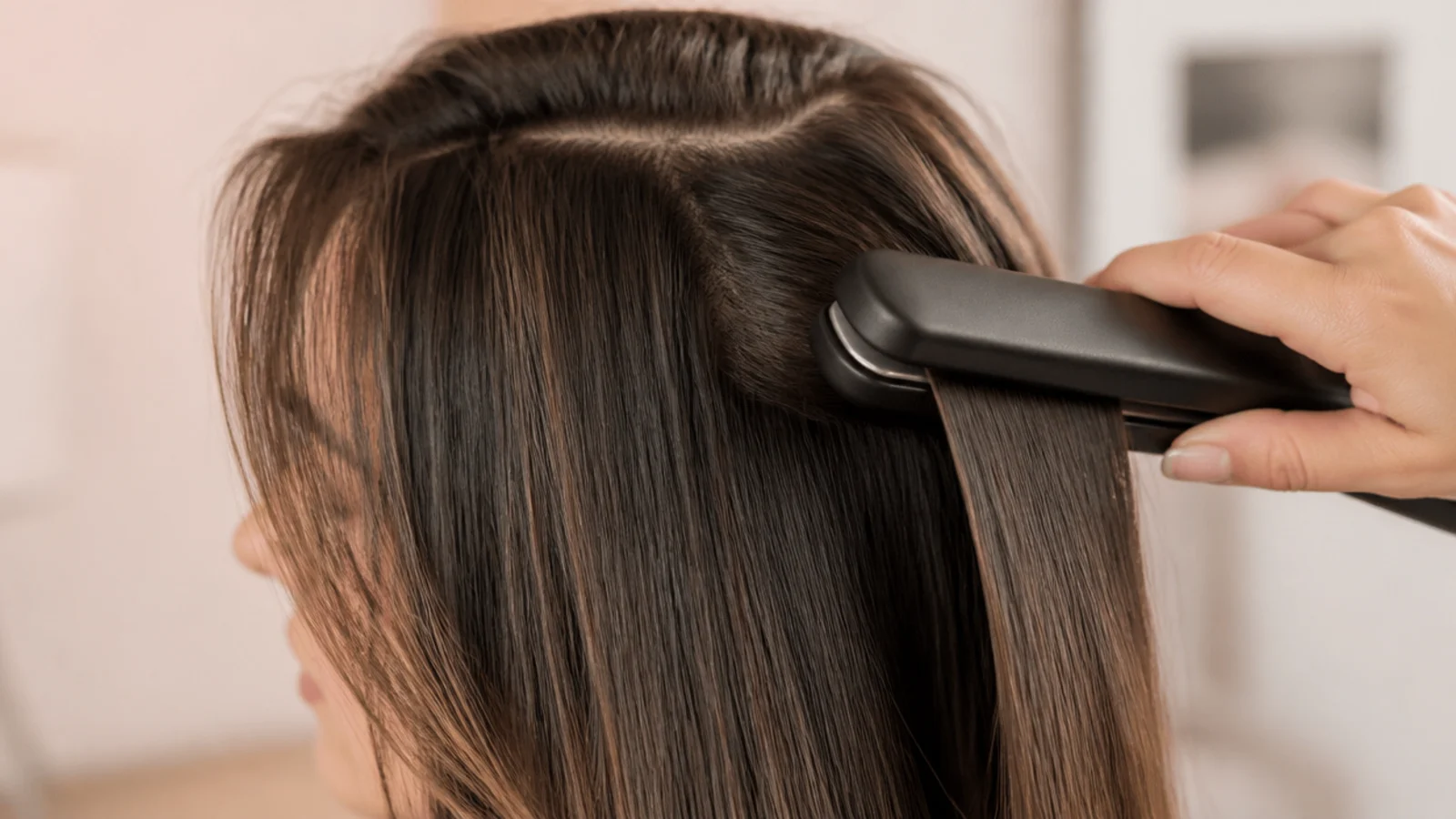
The front section gets flat ironed more often than any other because it is the part you see in the mirror, and it is the section least able to survive it. Fine hairs at the hairline heat through faster than the bulk of your hair, so the same 400 degree pass that a mid-length section tolerates fries them. Drop the temperature to about 300 to 320 degrees for the front, use one pass only, always with heat protectant, and consider a flexi rod or a smoothing cream instead on the front two inches. Heat-free shaping options are covered in mid length haircut for fine hair.
Who it suits: Anyone who touches up the front daily between wash days.
Tip: Never flat iron the front on a hairline you have just laid with gel; the product bakes on.
15. Photograph Your Hairline Monthly in the Same Light
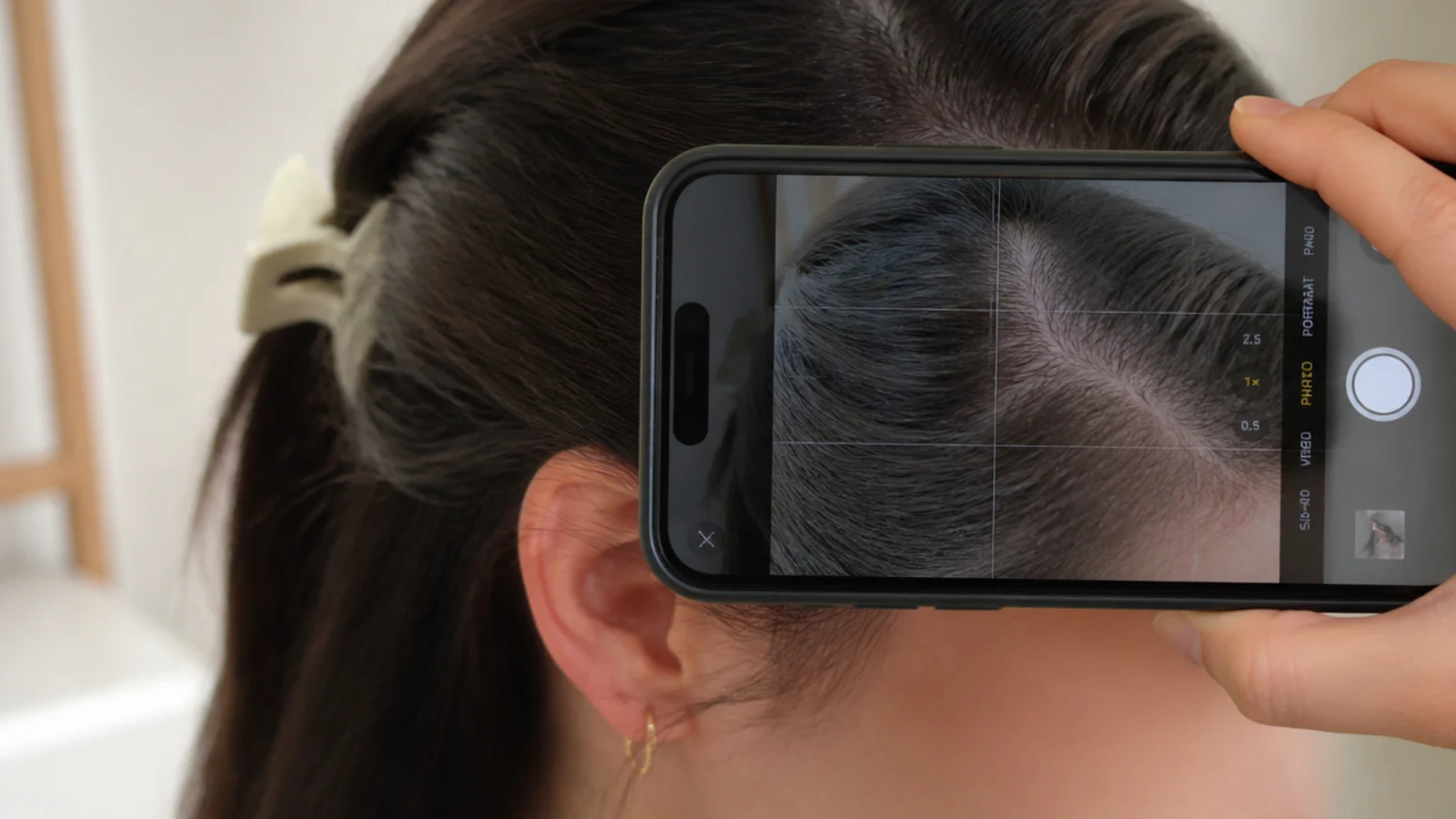
You cannot see half an inch a month happening in a mirror, and daily checking makes a stable hairline look like it is receding. Take one photo on the first of every month: same window, same daylight, hair dry and pulled back the same way, phone at the same distance. Four months of photos tell you the truth that four months of anxious mirror checks never will, and they are also the single most useful thing to hand a dermatologist if you eventually book an appointment. Tracking is the habit that makes the rest of the hair growth tips hub pay off.
Who it suits: Anyone starting any of the other 14 tips on this list.
Tip: Add a hair tie or ruler in the frame for scale so you can compare regrowth length between shots.
Why Forehead Hair Disappears: The Five Common Causes
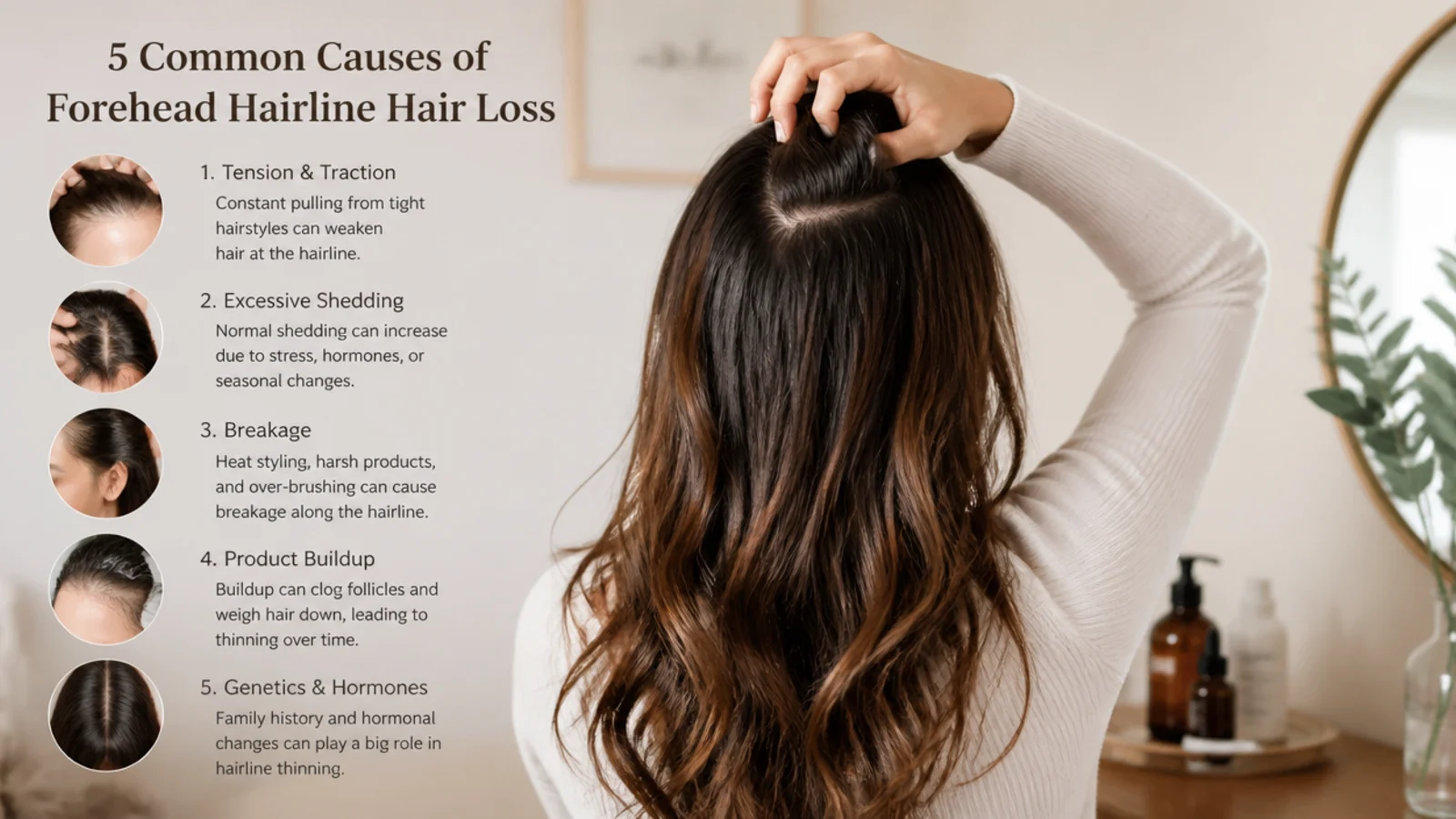
Almost every forehead hairline problem falls into one of five buckets, and the right response is completely different for each. Traction alopecia comes from pulling, shows up at the temples first, and reverses if you catch it before the follicle scars. Telogen effluvium is a diffuse shed triggered by illness, surgery, crash dieting or major stress, arriving two to three months after the trigger and resolving on its own. Postpartum shedding is a specific version of the same thing. Androgenetic recession is genetic and progressive, and it moves the whole front line back in a pattern rather than thinning patchily. Scarring alopecias, including frontal fibrosing alopecia, destroy the follicle and need a doctor early. Notice that only one of those five responds meaningfully to anything you buy in a beauty aisle. Working out which one you are dealing with is more valuable than any product, which is why the comparison table above is the most useful thing on this page. General length protection is covered in the hair growth tips hub.
Can Bald Forehead Hair Grow Back? The Honest Answer
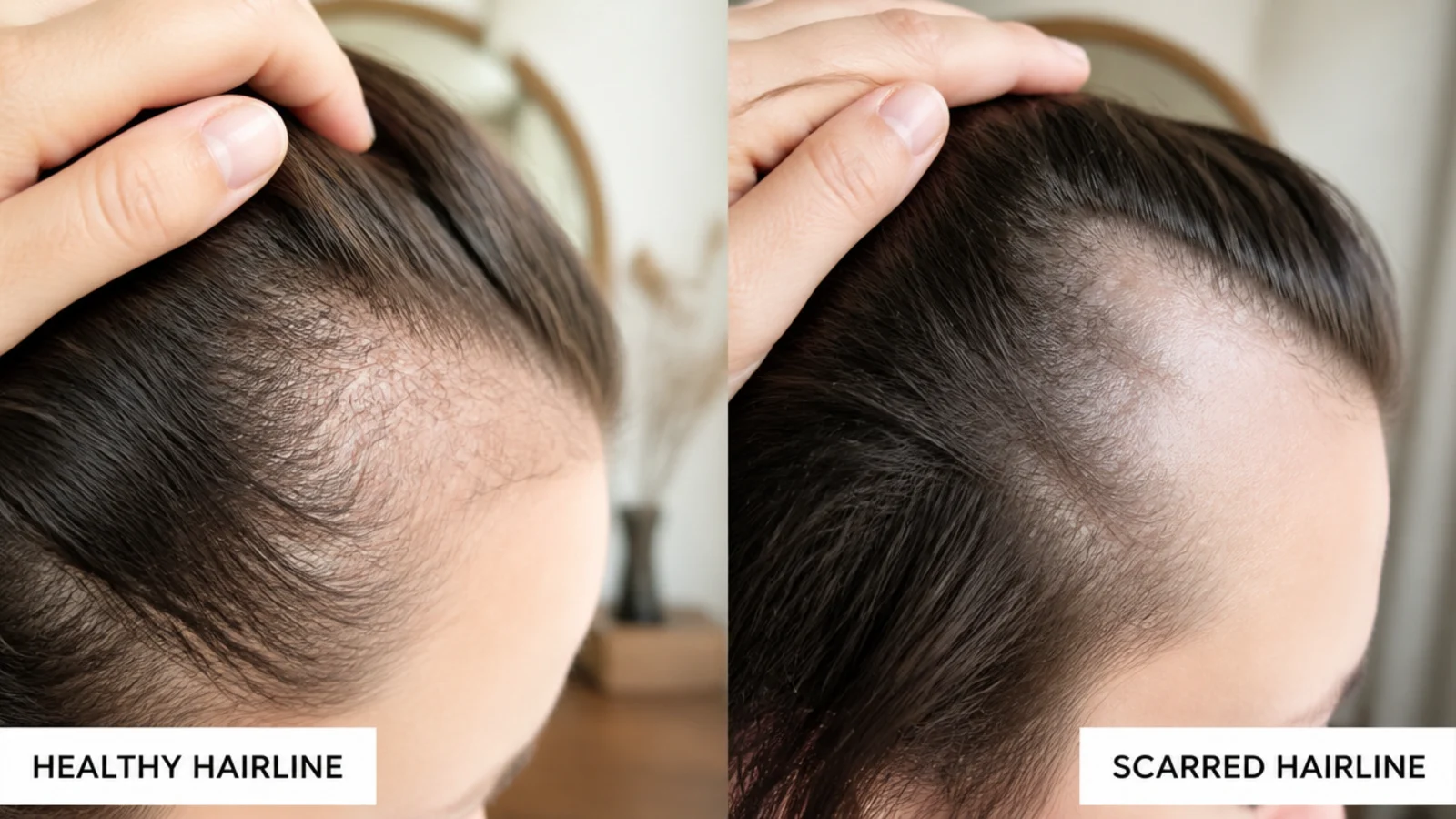
This is the question behind most forehead searches, and the honest answer has two halves. If the follicle is still alive, yes, hair can come back, and removing whatever is suppressing it is what makes that happen. If the follicle has scarred, no. Scarring replaces the follicle with fibrous tissue, and no oil, serum, supplement or massage regrows hair from tissue that no longer contains a follicle. You can often tell the difference by looking closely in bright light. Skin with tiny visible pores and even the faintest short hairs still has live follicles. Skin that looks smooth, shiny and slightly pale, with no visible openings at all, suggests scarring. Every page promising that onion juice regrows a scarred hairline is selling you a delay, and delay is the one thing that actually costs hair in scarring conditions. If you see the shiny, poreless look, book a dermatologist this month rather than trying remedies for six.
Traction Alopecia: The Warning Signs to Catch Early
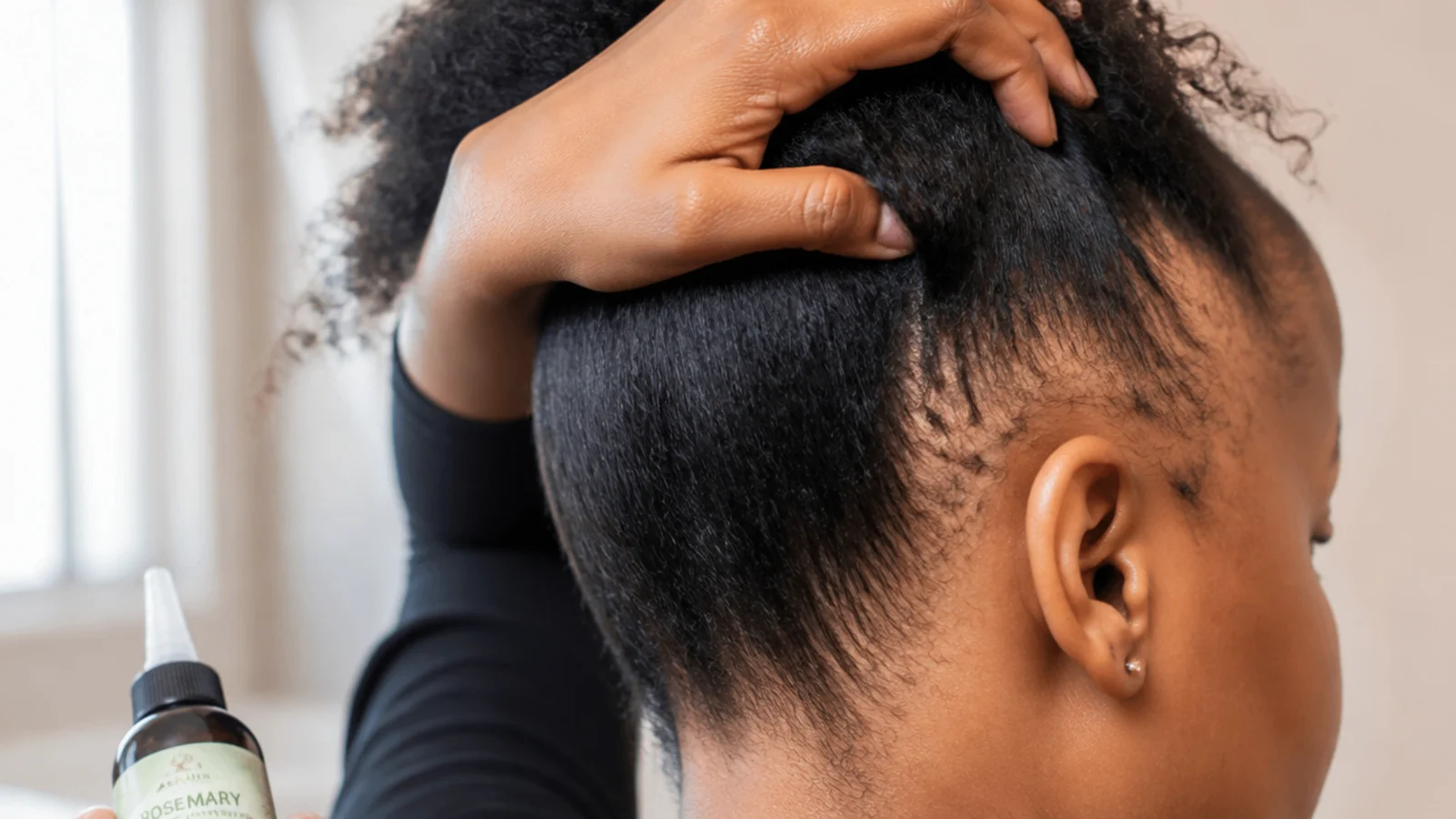
Traction alopecia is the most preventable cause of forehead hair loss and the one most often ignored until it is permanent. The early signs are specific. Your scalp aches or tingles for hours after a style goes in. You get small tender bumps along the hairline a day or two after an install. The temples look thinner than the rest of the hairline. Short broken hairs stand up in a fringe where longer hairs used to be. There is a thin remaining line of hair right at the very edge with a bare band behind it, which clinicians call the fringe sign. Any of these means the style is too tight, and pain is never the price of a good install. The fix is boring and free: take it out, keep the hair loose for a few weeks, and change the styles you rotate rather than just loosening the same one. Caught early, this recovers. Left running for years, it scars. More tension-safe styling ideas sit in hair growth tips for Black women.
How to Grow Baby Hairs on the Forehead
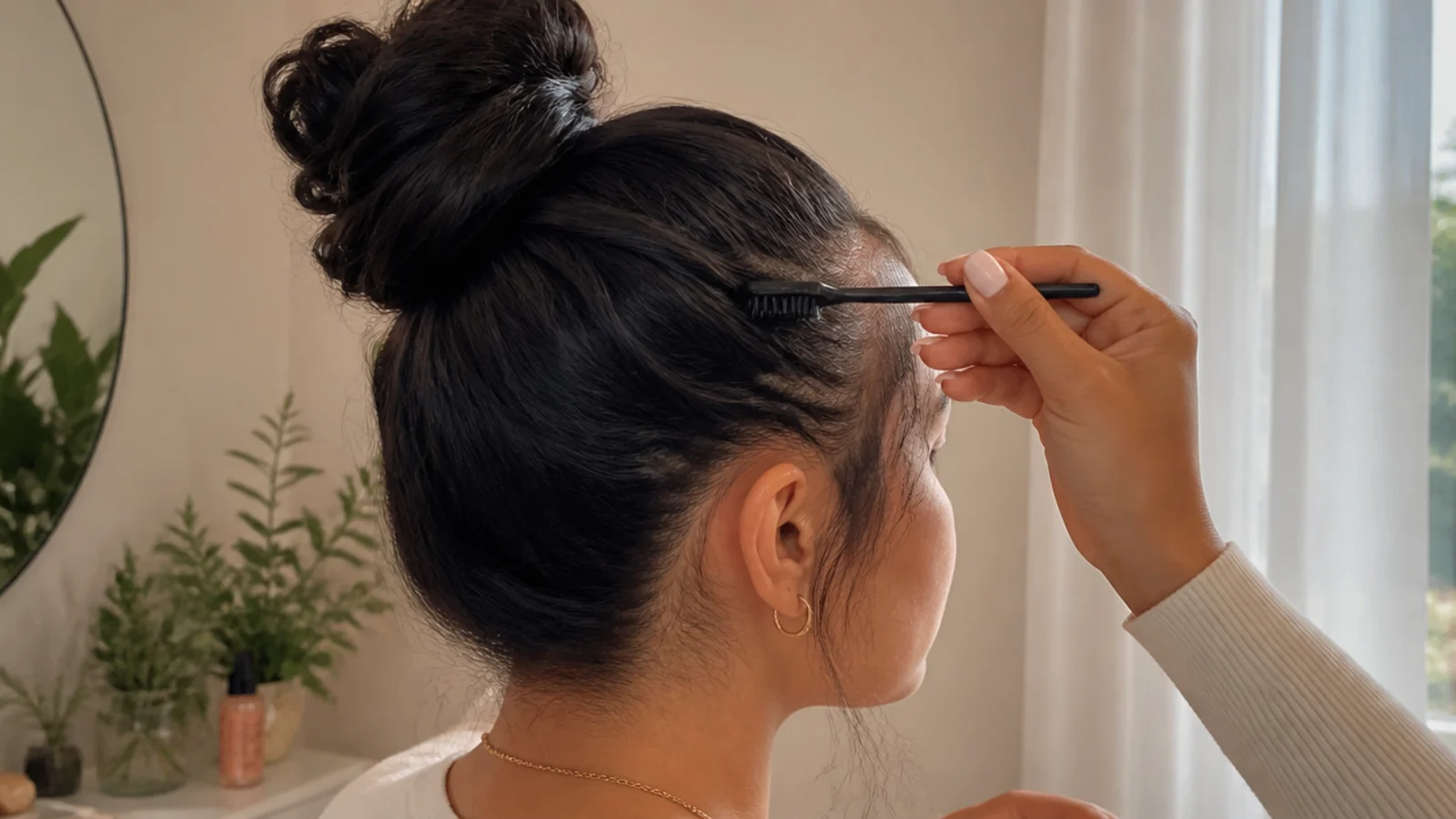
Baby hairs are not a separate species of hair. They are short, fine, often wispy hairs at the perimeter of the hairline that are genetically programmed to stay short, which is why they never reach the length of the hair behind them. That matters, because it means the goal is keeping them, not lengthening them. They break first, they get pulled out first, and they are the visible cost of every tight style you wear. Protect them by leaving the front perimeter out of tension styles entirely, cleansing product off them properly, and styling them with a soft brush and a light gel rather than a stiff brush and a hard hold. If yours have vanished and the follicles are healthy, they come back on the same schedule as anything else, roughly half an inch a month, which means visible change at three to four months. Softer everyday styling ideas are in natural hair growth tips and the low-tension low messy ponytail.
What Castor, Rosemary and Onion Oils Can and Cannot Do

The forehead search results are full of oils, so here is a fair grading. Rosemary essential oil has the strongest support of the group, from a small trial, and it is worth trying at a 2 percent dilution. Scalp massage, which is how you apply any oil, has its own modest support and is free. Castor oil is thick and conditioning, it coats and protects fragile edge hairs from breakage, and there is no good evidence it grows hair; it is a protector, not a stimulant. Coconut oil reduces protein loss from the hair shaft, which again is protection rather than growth. Onion juice appears in nearly every forehead article on the basis of one small study, and it smells strongly enough that almost nobody sustains it. Peppermint oil tingles, which people mistake for evidence. None of these outperform genetics, and none of them rebuild a scarred follicle. Used sensibly, they support what you already have. Compare approaches in hair growth tips faster at home.
When to See a Dermatologist or Trichologist
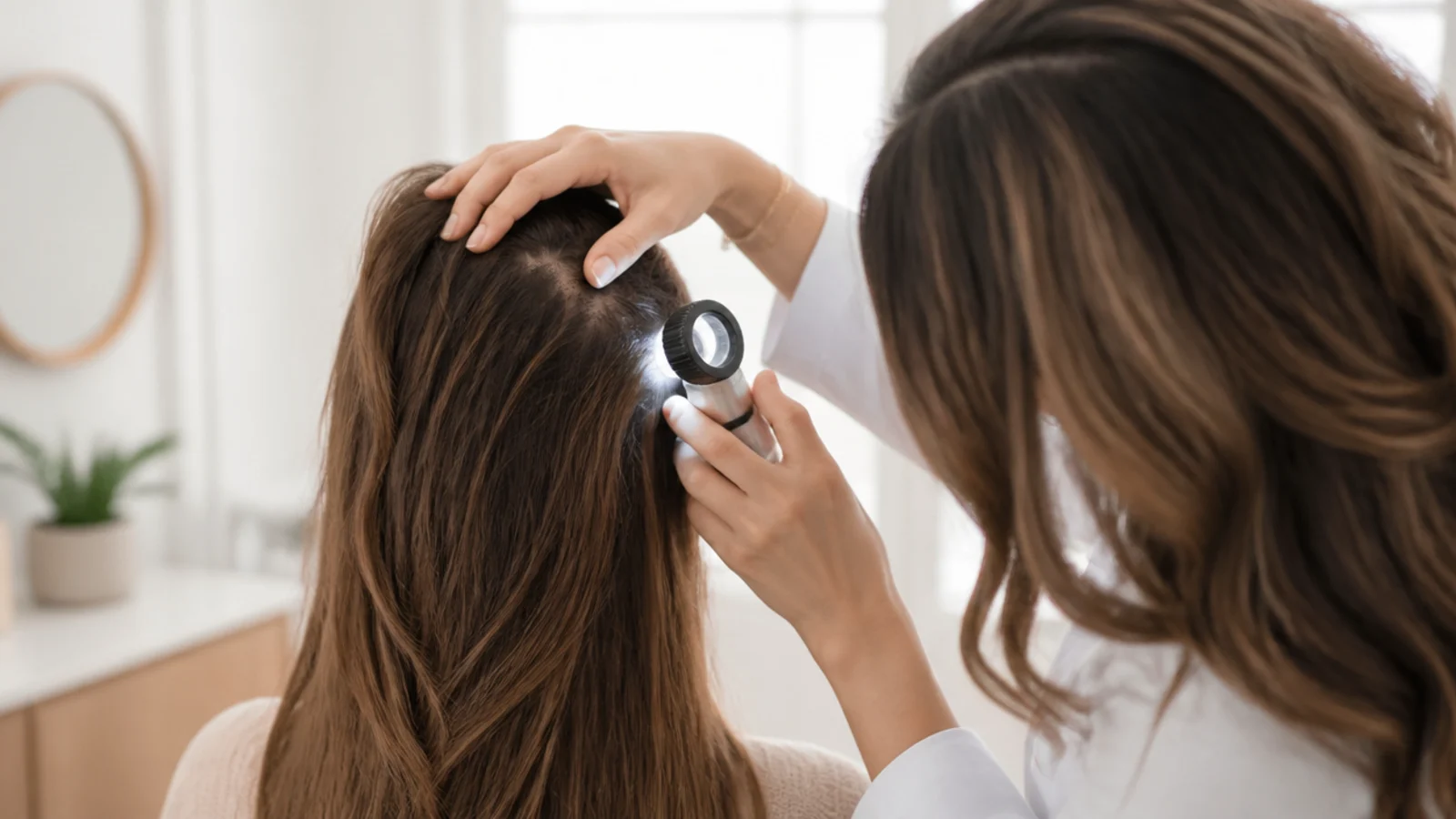
Book an appointment rather than buying another product if any of the following is true. The hairline keeps receding even after you have removed all tension for three months. The skin at the front looks smooth, shiny and poreless. Your eyebrows or eyelashes are thinning at the same time. There is redness, scaling, burning, itching or persistent bumps along the hairline. Hair is coming out in distinct round patches rather than thinning evenly. Shedding started suddenly and heavily and has not slowed after three months. Or you have other symptoms alongside it, such as fatigue, weight change, irregular periods or a new medication. A dermatologist can examine the scalp with a dermatoscope, order the blood work that matters, and distinguish scarring from non-scarring loss, which is the one distinction that changes everything about what happens next. Bring your monthly photographs. This is not the topic to self-treat for a year first, because in scarring conditions the hair you keep is determined by how early someone looks at it. More on the general picture in tips for hair growth.
Frequently Asked Questions
Can bald forehead hair grow back?
It depends entirely on whether the follicle survived. If you can see tiny pores and faint short hairs in bright light, the follicles are alive and hair can return once you remove whatever is suppressing it. If the skin looks smooth, shiny and poreless, that suggests scarring, and scarred follicles do not regrow. A dermatologist can tell you which you have.
What can I do to regain hair on the frontal region of my scalp?
Start by removing every source of tension: tight ponytails, buns, braids past eight weeks, pinning in the same spot and stiff brushing on edges. Add a four minute daily hairline massage and satin at night. Get ferritin, vitamin D and thyroid checked. If nothing improves after three to four months of that, see a dermatologist about minoxidil or prescription options.
What is an over-the-counter option to get my forehead hairline back?
Minoxidil is the only over-the-counter product with strong repeated evidence behind it for hairline density. It is a daily commitment that must continue indefinitely, and it causes a temporary shed in the first weeks. It also is not right for every cause of hairline loss, so ask a doctor whether your pattern is scarring or non-scarring before you start.
Is it possible to grow hair on the forehead?
You can regrow hair on the hairline where follicles still exist, but you cannot grow hair on the smooth forehead skin itself, because there are no terminal hair follicles there. Anything promising a brand new hairline lower than your natural one is not describing something biology allows. The realistic goal is restoring the density and baby hairs you had.
How do you grow baby hairs on the forehead?
Mainly by not destroying them. Keep the front perimeter out of tight styles, stop the toothbrush and hard-hold gel routine, cleanse product off twice a week, and sleep on satin with a loose bonnet band. If the follicles are healthy they regrow at the usual rate of about half an inch a month, so expect visible wispy regrowth around three to four months.
How long does it take for edges to grow back?
Nobody can promise a timeline, and be skeptical of anyone who does. Hair grows roughly half an inch a month, and edge hairs are short by design, so meaningful visible change usually takes several months of consistently removing tension. Monthly photographs in the same light are the only reliable way to judge progress. If there is no change at all after six months, get it assessed.
Does castor oil grow forehead hair?
There is no good evidence that castor oil grows hair. What it does well is coat and soften fragile edge hairs so they break less, which can make the hairline look fuller over time simply because you are losing fewer hairs. Treat it as a protective conditioner rather than a growth treatment, and never apply it undiluted onto an irritated scalp.
Why is my hairline receding as a woman?
The most common reasons are traction from tight styles, female pattern hair loss, postpartum or stress-related shedding, and scarring conditions such as frontal fibrosing alopecia, which often thins the eyebrows at the same time. Because the treatment is completely different for each one, a dermatologist visit is worth far more than experimenting with remedies for a year.
Do supplements help forehead hair growth?
Only if you are genuinely deficient. Low ferritin, low vitamin D, low zinc and thyroid problems all cause shedding that shows at the hairline first, and correcting them helps. Taking biotin or a hair gummy without a deficiency does not thicken a hairline. Get blood work before you subscribe to anything, and tell your doctor if you already take biotin.
Which hair growth tips look are you saving?
If you take one thing from these 15 forehead hair growth tips, make it this: stop the pulling before you buy anything. Loosen the ponytail, take braids down at six to eight weeks, retire the toothbrush on your edges, and sleep on satin. Give it four to six months of photographs before you judge whether it is working, because half an inch a month is the real speed limit and the hairline is the slowest area on your head. Rosemary oil and a nightly four minute massage are reasonable additions; minoxidil is the one over-the-counter option with genuine evidence behind it. And if the line keeps moving back, or the skin looks smooth and shiny, book a dermatologist rather than another oil. More on protecting length overall in the hair growth tips hub.